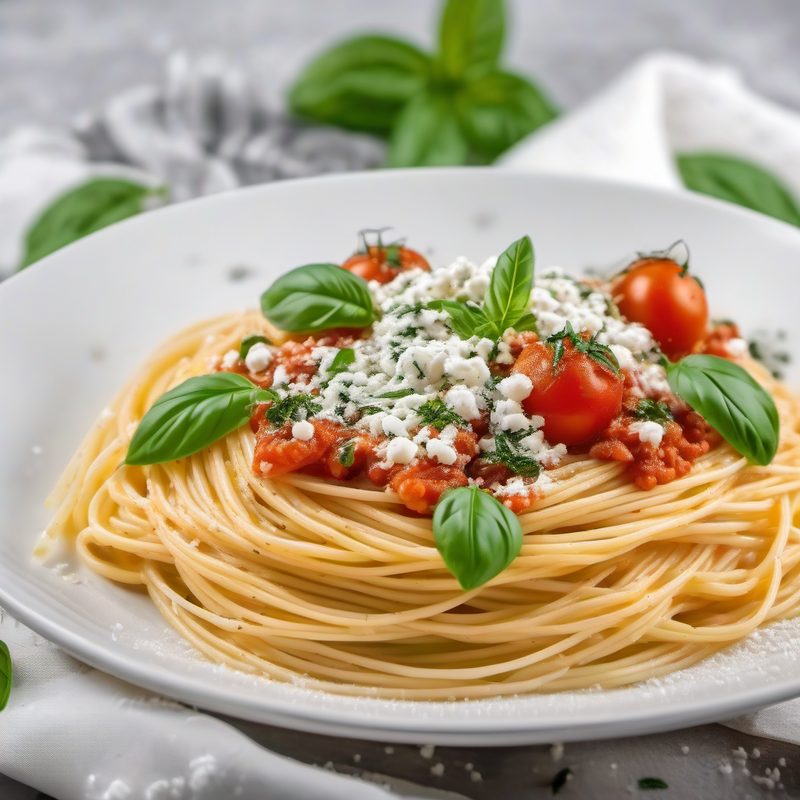
Spaghetti Fresh Tomato Stracciatella
No-cook tomato sauce meets creamy stracciatella in a pasta that tastes like high summer — ready before your water even boils, if you make the sauce first.
| Amount | Ingredient |
|---|---|
| 2 tbsp | Extra-virgin olive oil |
| 4-6 | Fresh basil leaves, for garnish |
| Flaky sea salt | For finishing |
> Note: The basil oil can be made up to 2 days ahead. The tomato sauce is best freshly made but can stand at room temperature for up to 1 hour.
Fresh Tomato Sauce
Basil Oil
For the Pasta
For Serving
🥘 Equipment
- High-speed blender or food processor
- Fine-mesh sieve
- Cheesecloth or nut milk bag
- Large pot (6-qt)
- Colander
- Large skillet or sauté pan (12-inch)
- Medium saucepan (for basil blanching)
- Slotted spoon
- Kitchen spider or tongs
📋 Preparation
Step 1: Make the Basil Oil
Bring a medium saucepan of water to a rolling boil. Fill a small bowl with ice water.
Drop the basil leaves into the boiling water for exactly 30 seconds — this sets their bright green color. Immediately transfer with a slotted spoon to the ice bath. Let sit 1 minute, then drain and squeeze firmly with your hands to remove as much water as possible (wet basil dilutes the oil).
Transfer the blanched, squeezed basil to a blender. Add the neutral oil and blend on high for 60 seconds until smooth and bright green. Line a fine-mesh sieve with cheesecloth (or use a nut milk bag) and strain the oil into a small bowl or jar, pressing gently to extract every drop. Discard the solids. Set aside.
Why blanch? Raw basil turns brown in oil. A quick blanch locks in that vivid green color and brightens the flavor.
Step 2: Make the Fresh Tomato Sauce
Rinse and dry the blender or food processor. Add the cherry tomatoes and blend until completely smooth — about 45 seconds. Pour through a fine-mesh sieve into a large bowl, pressing and stirring with a rubber spatula to force the liquid through. Discard the seeds and skins that remain in the sieve. You should have about 3 cups of smooth tomato liquid.
Season the tomato sauce with ½ tsp kosher salt and ¼ tsp pepper. Add the torn basil leaves and let it sit at room temperature while you cook the pasta.
No cooking? That's right. This is a raw (crudo) sauce — the heat of the pasta alone will warm it through. Cooking it would dull the bright, fresh flavor.
Step 3: Cook the Pasta
Bring 4 quarts of water to a rolling boil in a large pot. Add 2 tablespoons of kosher salt. Add the spaghetti and cook according to package directions until just shy of al dente — about 1 minute less than the package suggests. The pasta will finish cooking in the sauce.
Reserve 1 cup of the pasta cooking water before draining. Drain the spaghetti well (don't rinse — you want that starch).
Step 4: Finish the Pasta in the Sauce
Place your largest cold skillet (12-inch or wider) on the counter. Pour in the fresh tomato sauce (including the basil leaves). Add a pinch of salt and a grind of pepper. Add the drained spaghetti and toss gently with tongs to coat.
Starting cold is intentional. The gentle heat-up allows the pasta to absorb the tomato flavor without shocking the raw sauce.
Now turn the heat to medium-high. Add ½ cup of the reserved pasta water and cook, tossing constantly, for 2-3 minutes until the sauce has warmed through and the pasta is perfectly al dente. The sauce should cling to each strand — if it looks dry, add more pasta water 2 tablespoons at a time.
Step 5: Finish Off Heat
Remove the pan from the heat. Drizzle in 3 tablespoons of the basil oil and toss vigorously to emulsify. The oil should turn the sauce a pale, creamy green and give it a glossy sheen.
Step 6: Serve
Divide the pasta among 4 warm bowls. Top each serving with generous torn pieces of stracciatella cheese, allowing the creamy curds to drape over the pasta. Drizzle with the remaining basil oil and a swirl of extra-virgin olive oil. Garnish with fresh basil leaves and a pinch of flaky sea salt. Serve immediately — the stracciatella should be cool and creamy against the warm pasta.
🧑🍳 Chef's Tips
- Stracciatella sourcing: Look for stracciatella at the specialty cheese counter of Whole Foods, Eataly, or Trader Joe's (seasonal). Burrata is an excellent substitute — use the creamy insides only, discarding the firmer outer pouch.
- Tomato quality is everything: Since there's no cooking to concentrate flavor, use the ripest, sweetest cherry tomatoes you can find. In winter, Campari tomatoes on the vine are a reliable alternative.
- Don't skip the straining: Blended tomato seeds add bitterness and a gritty texture. The 2-minute strain step makes the difference between a polished restaurant dish and a rustic mash.
- Cold pan, not hot: Adding the sauce to a cold pan and heating it gradually lets the pasta drink up the tomato flavor. A screaming-hot pan would cook the raw sauce into a jammy reduction — not what we want here.
❌ Common Mistakes
| Mistake | Why | Fix |
|---|---|---|
| Cooking the tomato sauce | Heat destroys the fresh, bright flavor of raw tomatoes | Let the hot pasta warm the sauce — never pre-cook it |
| Skipping the basil blanch | Raw basil in oil turns brown and loses its vibrant flavor | The 30-second blanch is non-negotiable for color and freshness |
| Adding stracciatella too early | The cheese melts into a puddle instead of staying creamy and distinct | Add it as a final cold topping, never toss it in the hot pan |
| Over-thinning the sauce | A watery sauce won't cling to the spaghetti | Use pasta water sparingly — start with ½ cup and add more only if needed |
💡 Variations
- Add protein: Top with grilled shrimp, seared scallops, or shredded cold-poached chicken — the fresh tomato and basil oil complement seafood beautifully.
- Make it vegetarian/GF: Already vegetarian. For gluten-free, use high-quality rice or corn spaghetti. The sauce is naturally gluten-free.
- Spicy kick: Add ½ tsp red pepper flakes to the tomato sauce before blending, or ¼ tsp Calabrian chili paste.
- Burrata version: Replace stracciatella with two whole burrata balls, split open at the table so each diner gets the creamy center.
❄️ Storage
This pasta is best eaten immediately — the fresh tomato sauce and basil oil lose their vibrancy when refrigerated. Leftovers can be stored in an airtight container for up to 1 day. To refresh, bring to room temperature and add a splash of fresh olive oil — never microwave, as it will cook the raw sauce and melt the stracciatella into a mess.
🍷 Wine Pairing
| Wine | Why |
|---|---|
| Vermentino di Sardegna | Bright citrus and herbal notes mirror the fresh basil and tomato |
| Grillo (Sicily) | Floral, slightly nutty, with enough body to stand up to the creamy stracciatella |
| Rosé di Toscana | A dry rosé bridges the freshness of the tomatoes and the richness of the cheese |
| Lambrusco Grasparossa | A chilled, fizzy red — the acidity cuts through the stracciatella like a dream |
🍺 Beer Pairing
| Beer | Why |
|---|---|
| Italian Pilsner | Clean, crisp, high carbonation — a palate cleanser between creamy bites |
| Saison | Spicy, fruity notes that don't compete with the basil and tomato |
🥗 Suggested Sides
- Grilled zucchini ribbons with lemon and mint
- Arugula and shaved Parmigiano salad with balsamic
- Crostini with olive tapenade
- Marinated white beans with rosemary and garlic
📊 Nutrition (per serving)
| Calories | Protein | Fat | Carbs | Fiber |
|---|---|---|---|---|
| 420 | 16 g | 18 g | 52 g | 4 g |
❓ FAQ
Can I make the basil oil ahead of time?
Yes — it keeps in the refrigerator for up to 3 days in an airtight container. Bring to room temperature before using. The color may dull slightly but the flavor stays bright.
What if I can't find stracciatella?
Substitute burrata (use only the creamy insides) or fresh mozzarella torn into small pieces with a splash of heavy cream. It won't be identical but it'll be delicious.
Can I use canned tomatoes instead of fresh?
This recipe is designed for the brightness of raw fresh tomatoes. Canned tomatoes are cooked and will produce a heavier, less vibrant sauce. If you must substitute, use high-quality San Marzano whole peeled tomatoes (drained) but the result will be different.
Why start in a cold pan?
Adding the raw tomato sauce to a hot pan would cook and concentrate it into a jam, losing the fresh-from-the-garden character. Starting cold and heating gently lets the pasta absorb the sauce while keeping the tomatoes tasting just-picked.
🔗 Related Recipes
- Spaghetti al Pomodoro — The Simple Classic
- Pasta with Burrata & Roasted Cherry Tomatoes
- Linguine with Pesto Genovese
- Cacio e Pepe — The Roman Original
🏷️ Search Tags
Recipe from The Italian Kitchen by Vita Milanese — Volume 1 · Pasta Perfetto. Discover all volumes on the ebook page.