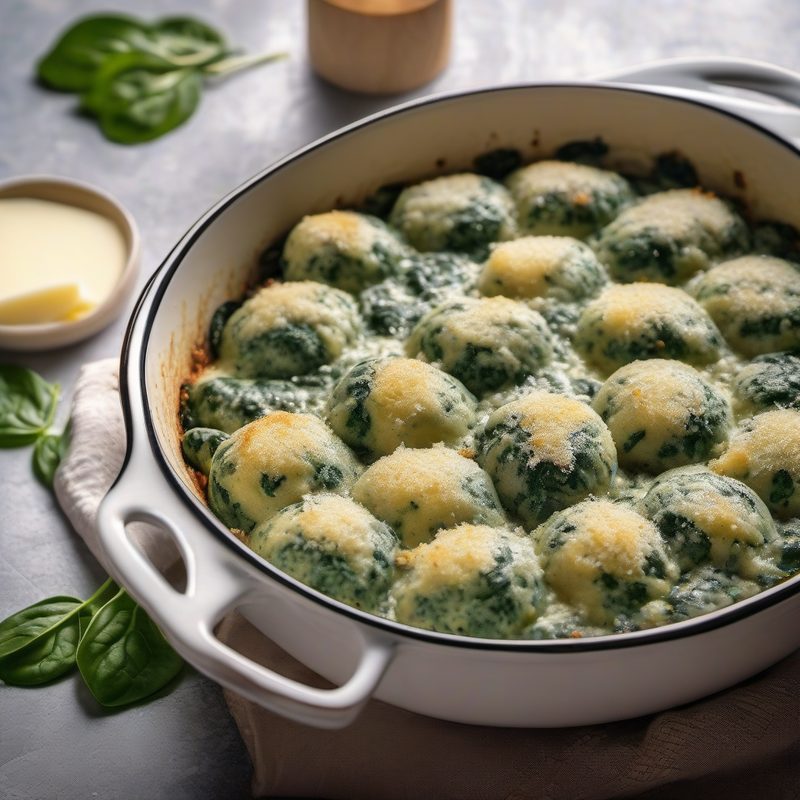
Green Roman Gnocchi
Semolina gnocchi get a verdant upgrade with fresh spinach folded into the dough, creating pillowy coins of green that bake under a golden crust of butter, cheese, and herbs. A Roman classic made better by the addition of greens.
| Amount | Ingredient |
|---|---|
| 2 tbsp (28 g) | Unsalted butter, cut into small pieces |
| ¼ cup (25 g) | Grated Parmigiano-Reggiano or Pecorino Romano |
| 4-6 sprigs | Fresh thyme |
| 6-8 | Fresh sage leaves |
| Black pepper, freshly ground |
Spinach and Semolina Baked Gnocchi
Classic Gnocchi alla Romana is a paradox — a gnocchi that requires no potato, no flour, and no rolling. Semolina is cooked into a thick porridge with milk, enriched with butter, cheese, and egg yolks, then spread into a slab, cut into discs, and baked until the tops are shatteringly crisp and the interiors stay soft and tender. The green version takes that magnificent blank canvas and adds a purée of wilted spinach, turning the gnocchi a pale, appetizing green while adding a whisper of earthy flavor that plays beautifully with the nuttiness of browned butter and the piney scent of fresh sage. The technique is almost meditative: cook the spinach, blend the semolina, shape the logs, chill until firm, then slice and bake. Most of the work happens ahead of time — the gnocchi can be shaped a day in advance and baked just before serving, making this an ideal dinner-party dish that requires only 20 minutes of oven time before it hits the table. At roughly 320 calories per serving, it's one of the most elegant ways to get your greens without feeling like you're eating a salad.
> Note: The gnocchi logs can be prepared, wrapped, and refrigerated up to 24 hours in advance. The assembled baking dish can stand at room temperature for 30 minutes before baking. Do not assemble more than 1 hour ahead or the discs will soften and lose their shape.
For the Gnocchi
For the Topping
Use standard US measuring cups and spoons. All produce is medium unless specified. Fine semolina (sometimes labeled "semolina flour for gnocchi/polenta" or "cream of wheat" style) is essential — coarse semolina will produce a gritty texture.
🥘 Equipment
- Large pot or Dutch oven (5- to 6-quart)
- Immersion blender or counter blender
- Large wooden spoon or silicone spatula
- Whisk
- Chef's knife and cutting board
- 2 sheets parchment paper (about 12 × 16 inches each)
- 18 × 25 cm (7 × 10 inch) baking dish or gratin dish
- Sharp knife or bench scraper
- Cooling rack
- Small bowl
- Measuring cups and spoons
- Colander
📋 Preparation
Step 1 — Wilt the Spinach (5 minutes)
Melt 4 tablespoons butter in a large pot or Dutch oven over medium heat. Add the washed spinach (it can be wet from its last rinse — the clinging water helps it steam), ½ teaspoon salt, ¼ teaspoon pepper, and nutmeg. Cook, stirring constantly with a wooden spoon, until the spinach is completely wilted and has released its liquid — about 1 to 2 minutes.
Do not drain. The liquid that releases from the spinach is part of the cooking liquid and contributes flavor to the gnocchi.
Step 2 — Cook the Semolina Base (10 minutes)
Add the whole milk to the pot with the wilted spinach. Increase the heat to medium-high and bring the mixture to a gentle simmer, stirring occasionally — about 4 to 5 minutes. You'll see small bubbles forming around the edges and the milk steaming.
Remove the pot from the heat. Using an immersion blender, blend the mixture until completely smooth — the spinach should be fully incorporated, turning the milk a uniform pale green. (If using a counter blender, let the mixture cool for 2 minutes, then blend in batches, filling the pitcher no more than halfway. Remove the center cap from the lid and cover with a kitchen towel to release steam.)
Return the pot to medium heat. With the milk mixture at a gentle simmer, pour in the semolina in a thin, steady stream while whisking constantly with a whisk. This is critical — pouring too fast or failing to whisk will result in lumps. Continue whisking as the mixture thickens dramatically, about 1 to 2 minutes. The semolina should pull away from the sides of the pot and form a thick, cohesive mass that holds its shape when mounded on a spoon.
Remove from heat. Add 1 cup grated cheese and stir vigorously until fully melted and incorporated. Let the mixture cool for 2 minutes, then stir in the egg yolks until completely combined. The mixture should be thick, smooth, and a pale sage green.
The brief cooling before adding the egg yolks is essential — if the mixture is too hot, the yolks will scramble instead of enriching the dough.
Step 3 — Shape the Gnocchi Logs (10 minutes)
Lay a sheet of parchment paper (about 12 × 16 inches) on your work surface. Using a spatula, transfer half the semolina mixture onto the parchment. Using the parchment as a sling, shape the mixture into a log about 1¼ inches (3 cm) in diameter and roughly 10 inches (25 cm) long. Roll the parchment tightly around the log, then twist the ends firmly like a candy wrapper to compress the mixture into a tight, uniform cylinder. Repeat with the second sheet of parchment and the remaining mixture.
Place both wrapped logs on a plate or baking sheet and refrigerate until completely firm — at least 20 minutes in the freezer or 1 hour in the refrigerator. For best results, refrigerate overnight (up to 24 hours). The logs must be fully set before slicing, or the discs will fall apart.
The parchment twist method is the most reliable way to get perfectly cylindrical gnocchi. If the log has air pockets, tap the wrapped parchment gently on the counter before twisting the ends to settle the mixture.
Step 4 — Slice and Assemble (10 minutes)
Preheat the oven to 400°F (200°C) with a rack in the upper third.
Butter the baking dish generously — this ensures the bottom crust becomes golden and releases easily.
Unwrap the chilled semolina logs. Using a sharp knife, slice each log crosswise into ½-inch (1 to 1.5 cm) thick discs. The discs should be cleanly cut and hold their shape.
Arrange the discs in the buttered baking dish in slightly overlapping rows, like shingles on a roof. This overlapping arrangement creates crispy edges where the discs touch while keeping the interiors tender.
Dot the surface with the 2 tablespoons butter (cut into small pieces). Sprinkle with ¼ cup grated cheese. Scatter the thyme sprigs and sage leaves over the top. Finish with a generous grind of black pepper.
The herbs go on top, not in the dough. Sage and thyme brown and crisp in the oven, releasing their aromas into the butter as it melts over the gnocchi. If you bury them, they steam instead of crisping.
Step 5 — Bake and Gratinate (22 to 25 minutes)
Bake the gnocchi on the upper rack at 400°F (200°C) for 20 minutes, until the butter is bubbling, the cheese has melted, and the edges of the gnocchi are beginning to turn golden.
Switch the oven to broil/grill (high setting) and broil for 2 to 3 minutes — watch carefully. The top should develop a deep golden, crispy crust, but can burn quickly. Rotate the dish halfway through broiling if your oven has hot spots.
Remove from the oven and let rest for 3 minutes before serving. The rest allows the molten butter and cheese to settle and the gnocchi to firm up slightly so they hold together when served.
Serve directly from the baking dish, spooning the browned butter from the bottom of the dish over each portion. The ideal serving has a shatteringly crisp top, a tender-creamy interior, and pools of herb-scented butter at the bottom of the dish.
🧑🍳 Chef's Tips
- Don't skip the nutmeg. Nutmeg is the quiet hero of this dish — its warm, aromatic notes elevate the earthy spinach and milky semolina in a way that's barely perceptible but deeply missed if absent. Freshly grate it for the best flavor.
- Chill thoroughly before slicing. The logs must be refrigerator-cold (or freezer-firm) before you cut them. Warm semolina will squish under the knife, producing ragged discs that don't hold their shape in the dish. If in doubt, chill an extra 30 minutes.
- Sage + thyme is not optional. The combination of woody thyme and piney sage, both crisping in the hot butter, creates an aromatic crust that makes this dish unforgettable. If you only have one, use sage — its flavor is more assertive and traditional with Roman-style gnocchi.
- Use fine semolina, not coarse. Coarse semolina (the kind used for pasta dough) produces a gritty, sandy texture. Look for fine semolina, sometimes labeled "gnocchi semolina" or "cream of wheat" style. The grains should be small and uniform, like fine cornmeal.
- Blend thoroughly. Any unblended spinach leaves will appear as green flecks — which isn't necessarily bad — but a completely smooth purée gives the gnocchi an elegant, uniform color and a velvety texture throughout.
- Warm the serving plates. This dish loses its magic quickly as it cools. Warm your plates in a 200°F oven for 5 minutes, or fill them with hot water while the gnocchi bakes.
❌ Common Mistakes
| Mistake | Why It Hurts | The Fix |
|---|---|---|
| Adding semolina too quickly | Instant lumps that can't be whisked out, resulting in a grainy, uneven dough. | Pour the semolina in a slow, steady stream while whisking constantly. Patience here is everything. |
| Skipping the chilling step | The logs are too soft to slice cleanly — you'll get squashed, misshapen discs that won't overlap properly. | Chill the wrapped logs for at least 1 hour (overnight is ideal). Freeze for 20 minutes in a pinch. |
| Overcrowding the baking dish | The gnocchi steam instead of crisping, producing a soft, pale top instead of a golden crust. | Use a single layer with slight overlap. If you have too many discs, use two smaller dishes. |
| Adding egg yolks to hot mixture | The yolks scramble instantly, creating yellow curds in the dough. | Let the semolina mixture cool for 2 minutes off the heat before stirring in the yolks. |
| Burning the broiler step | The high heat of broiling can turn a perfect golden crust into a charred mess in 30 seconds. | Watch the dish constantly — rotate halfway through and remove at the first sign of deep gold color. |
| Using pre-shredded cheese | Pre-shredded cheese contains anti-caking agents (cellulose, potato starch) that prevent smooth melting. | Grate your Parmigiano-Reggiano or Pecorino from a block. It takes 60 seconds and makes a significant difference. |
| Not buttering the dish thoroughly | The gnocchi stick to the dish, tearing when you try to serve them and losing the crispy bottom crust. | Use the full 2 tablespoons of butter for the dish, making sure to coat the bottom and sides completely. |
💡 Variations
| Variation | How To |
|---|---|
| Classic (Non-Green) Gnocchi alla Romana | Omit the spinach and nutmeg entirely. Melt the butter in the pot, then add the milk directly (no spinach) and proceed from Step 2. The gnocchi will be a pale golden color. |
| Add Garlic | Add 2 minced garlic cloves to the butter 30 seconds before adding the spinach in Step 1. The garlic infuses the milk and adds a subtle savory depth. |
| Crispy Prosciutto or Guanciale Topping | While the gnocchi bake, fry 4 oz (113 g) of diced guanciale or prosciutto in a skillet until crisp. Scatter over the finished dish before serving for a salty, crunchy counterpoint. |
| Swap the Greens | Replace spinach with 10 oz of Swiss chard (stems removed and leaves roughly chopped) or young kale. Both will need about 1 minute extra wilting time. The flavor will be slightly more robust. |
| Cheese Swap | Use a 50/50 mix of Parmigiano-Reggiano and Pecorino Romano in the dough, but use all Parmigiano for the topping (Pecorino browns too quickly under the broiler). Fontina in the dough adds extra creaminess. |
| Herb Variations | Replace sage and thyme with rosemary (finely chopped, 1 sprig) or 1 teaspoon dried oregano mixed into the topping butter. Each herb changes the character — rosemary is woodsy, oregano is punchy. |
| Individual Portions | Instead of a large dish, arrange the discs in individual buttered ramekins or small gratin dishes (overlapping in a single layer). Reduce bake time to 15 minutes and broil as directed. Perfect for dinner parties. |
| Make It a Main Course | Add 8 oz (225 g) of cooked, crumbled Italian sausage or a handful of sautéed mushrooms as a layer between the gnocchi discs before baking. Serve with a simple green salad and a glass of red wine. |
❄️ Storage & Leftovers
| Method | Details |
|---|---|
| Refrigerator (Unbaked) | The wrapped gnocchi logs keep in the refrigerator for up to 24 hours. Slice and bake directly from the fridge — add 5 minutes to the initial bake time to compensate for the cold start. |
| Refrigerator (Baked) | Store leftovers in an airtight container for up to 2 days. The crispy top will soften overnight but the flavor remains excellent. |
| Reheating | Reheat in a 350°F (175°C) oven for 10-12 minutes, covered with foil for the first 8 minutes, then uncovered for the last 4 to re-crisp the top. Do not microwave — it turns the gnocchi rubbery and destroys the contrast between crisp top and tender interior. |
| Freezer (Unbaked Logs) | Wrap the parchment logs tightly in a layer of plastic wrap and then foil. Freeze for up to 1 month. Thaw in the refrigerator overnight before slicing and baking. Do not bake from frozen — the discs will not cook evenly. |
| Freezer (Baked) | Not recommended. Baked gnocchi alla Romana becomes waterlogged and loses its texture upon thawing. |
🍷 Wine Pairing
| Wine | Why |
|---|---|
| Verdicchio dei Castelli di Jesi | A mineral-driven white from Le Marche with lemon zest and almond notes. Its bright acidity cuts through the butter and cheese, while its saline finish echoes the saltiness of the Pecorino. |
| Frascati Superiore (Lazio) | From the hills just outside Rome, this crisp, slightly nutty wine is the classic pairing for Roman-style gnocchi. Its gentle bitterness stands up to the browned butter and sage, while its medium body doesn't overpower the delicate spinach. |
| Gavi di Gavi (Piedmont) | A steely, elegant white with green apple and citrus notes that refresh the palate between rich, buttery bites. The subtle herbaceous quality works beautifully with the sage and thyme. |
| Soave Classico (Veneto) | A medium-bodied white with almond blossom and lemon curd notes. Its gentle creaminess mirrors the silky texture of the gnocchi, while its bright acidity keeps each bite feeling light. |
| Pinot Nero / Pinot Noir (Light, Chilled) | If you prefer red, go for a light, chilled Pinot Nero from Alto Adige. Serve slightly cool (55°F / 13°C) to emphasize bright red fruit and acidity over tannin. The berry notes create a surprising but harmonious contrast with the herb-crusted gnocchi. |
🍺 Beer Pairing
| Beer | Why |
|---|---|
| Italian Pilsner (e.g., Birra Moretti, Menabrea) | Clean, crisp, high carbonation. Each sip acts as a palate cleanser between the rich, buttery gnocchi bites, resetting your palate for the next forkful. |
| Saison | Spicy, slightly fruity, with a dry finish. The peppery notes from the yeast complement the nutmeg and black pepper in the gnocchi, while the moderate carbonation cuts through the butter. |
| Belgian Blonde Ale | A gently sweet, moderately strong ale with subtle spice notes. The malt character echoes the browned butter, and the low bitterness lets the delicate spinach and herb flavors shine. |
| German Helles | A soft, malty lager with just enough hop bitterness to balance the richness. Its gentle carbonation and smooth finish make it an ideal companion for the creamy, tender gnocchi. |
🥗 Suggested Side Dishes
- Arugula, fennel, and shaved Parmigiano salad with lemon vinaigrette — the peppery arugula and bright acidity cut through the butter and cheese
- Sautéed broccolini with garlic and red pepper flakes — the slight bitterness and heat provide contrast to the richness
- Roasted cherry tomatoes with fresh oregano — burst tomatoes add acidity and sweetness that brightens each bite
- Grilled lemon wedges alongside the dish — a squeeze of lemon over the gnocchi at the table lifts the whole dish
- Fennel and orange salad with black olives and a shallot vinaigrette — the citrus and licorice notes are a surprising but perfect match for sage and browned butter
- Crusty sourdough or ciabatta — for sopping up every last drop of herb-infused browned butter from the bottom of the dish
- Simple steamed haricots verts with a pat of butter and flaky salt — a clean, green side that echoes the spinach in the gnocchi without competing
📊 Nutrition (per serving, estimated)
| Calories | Protein | Fat | Carbs | Fiber |
|---|---|---|---|---|
| 320 | 14 g | 18 g | 28 g | 2 g |
Nutrition is an estimate based on standard ingredient quantities. Values will vary with cheese brand, butter absorption, and semolina brand. Using Pecorino instead of Parmigiano adds approximately 15 mg of sodium per serving.
❓ Frequently Asked Questions
Can I use frozen spinach instead of fresh?
Yes. Thaw 10 oz (280 g) of frozen chopped spinach and squeeze it completely dry in a clean kitchen towel. Skip the wilting step; add the dry spinach directly to the milk after it comes to a simmer, then blend as directed. Frozen spinach produces a slightly more concentrated green color and a marginally less sweet flavor.
What is fine semolina, and where do I find it?
Fine semolina (semolina rimacinata or semola rimacinata di grano duro) is finely ground durum wheat. It's not the coarse, sandy semolina used for pasta dough. Look for it in Italian grocery stores, specialty sections of large supermarkets, or online. In a pinch, Cream of Wheat (the original, not instant) is an acceptable substitute — use the same quantity and cook as directed.
Why are my gnocchi discs falling apart when I slice them?
The logs weren't chilled long enough, or the semolina mixture wasn't cooked long enough to fully hydrate the grains. Next time, cook the semolina for the full 2 minutes after it thickens, making sure it pulls cleanly away from the sides of the pot. Chill the logs for at least 1 hour (preferably overnight) before slicing.
Can I use a different baking dish size?
The recipe is designed for an 18 × 25 cm (7 × 10 inch) dish — essentially a small gratin or baking dish that holds the discs in a single layer with slight overlap. A 9 × 9 inch square dish works well. A larger dish will spread the discs too thin; a smaller dish will pile them too deep and they'll steam instead of crisping.
Can I make this gluten-free?
Yes, but with caveats. Substitute the fine semolina with a gluten-free fine polenta (cornmeal) or certified gluten-free fine semolina (some brands exist). The texture will be slightly different — denter, with a more pronounced corn flavor — but the technique and result are otherwise identical. Do not use rice flour or all-purpose gluten-free flour blends; they behave completely differently when cooked.
The top of my gnocchi is burning before the inside is hot. What's wrong?
Your oven runs hot or your dish was too close to the broiler element. Next time, bake at 375°F (190°C) for 22 minutes, then broil for 1 to 2 minutes instead of 3. Every oven is different — know yours and adjust accordingly.
Can I prepare the entire dish ahead and bake later?
Yes. Slice the gnocchi, arrange them in the buttered dish with the toppings (butter, cheese, herbs), cover with plastic wrap, and refrigerate for up to 8 hours. When ready to bake, uncover and add 5 minutes to the initial bake time to compensate for the cold dish.
What's the difference between Gnocchi alla Romana and potato gnocchi?
Everything. Gnocchi alla Romana is made from cooked semolina — it's baked in a dish, not boiled in water. The texture is softer and more tender than potato gnocchi, almost like a savory polenta cake. Potato gnocchi are boiled, have a denser, chewier texture, and are typically served with sauce rather than baked with a crispy topping. Both are delicious. They are different beasts entirely.
🔗 Related Recipes
- Gnocchi alla Romana (Classic Baked Semolina Gnocchi) — the original, non-green version
- Ricotta Gnocchi with Peas, Pecorino, and Guanciale — page 42
- Baked Pasta with Eggplant and Mozzarella (Pasta alla Norma) — page 40
- Chicken Cream, Leeks, and Mushrooms (Pollo in Crema) — page 45
- Pasta del Carcerato (Prison-Style Pasta with Caciocavallo and Guanciale) — page 44
- Ravioli di Ricotta al Burro e Salvia (Ricotta Ravioli with Brown Butter and Sage)
- Gratin Dauphinois (French Creamy Potato Bake) — for technique comparison
- Spaghetti with Fresh Tomato and Stracciatella — page 48
🏷️ Search Tags
| Photo | Notes |
|---|---|
| `vol1_49.png` | A rectangular ceramic gratin dish filled with overlapping pale-green semolina discs, their edges and tops bronzed to a deep golden brown. Melted butter pools at the edges of the dish, studded with crisped sage leaves and thyme sprigs. Steam rises from the surface. Rustic cream-colored baking dish on a linen-draped wooden table, warm natural overhead lighting, shallow depth of field with the foreground gnocchi in sharp focus. A small ramekin of extra grated Parmigiano sits beside the dish. |
Recipe from "The Italian Kitchen" by Vita Milanese — Volume 1: Pasta Perfetto
Recipe from The Italian Kitchen by Vita Milanese — Volume 1 · Pasta Perfetto. Discover all volumes on the ebook page.