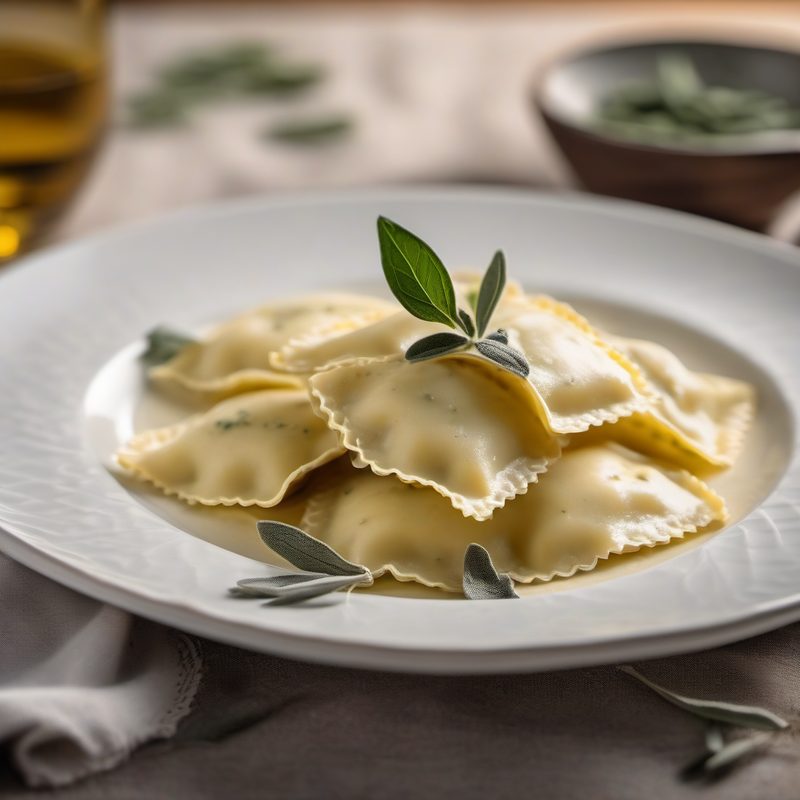
Potato Onion Ravioli Castelmagno
Tender half-moon ravioli filled with silky potato and sweet caramelized onion, kissed with thyme and finished with a luscious Castelmagno cream sauce — a Northern Italian classic that transforms humble ingredients into pure elegance.
| Amount | Ingredient |
|---|---|
| 1½ tbsp | Kosher salt (for pasta water) |
| 2 tbsp | Unsalted butter |
| ½ cup (120 ml) | Reserved pasta cooking water |
Ravioli di patate e cipolla con crema al formaggio
This is pasta making as a weekend project worth every minute. You'll start by boiling potatoes until tender, then run them through a ricer for the fluffiest possible texture. While they cook, you'll slowly caramelize julienned onions until they're deep golden and sweet — this takes patience but pays dividends in flavor. The fresh pasta dough comes together from just flour, egg yolks, and salt; a brief rest relaxes the gluten, then you roll it thin and cut into 3-inch discs. The filling is simple: riced potatoes, caramelized onions, salt, pepper, and fresh thyme, piped onto each disc before folding into perfect half-moons. A quick bath in salted water — just 2 to 3 minutes — and the ravioli are finished in a pan with butter and a splash of pasta water. The crowning touch is a warm Castelmagno cream sauce: grated aged cheese melted into heavy cream until velvety smooth, spooned over the ravioli with a final scattering of fresh thyme. At roughly 520 calories per serving, it's a first course that satisfies like a main.
For the Fresh Pasta
For the Filling
For the Castelmagno Cream
For Cooking and Assembly
Use level tablespoons and standard US measuring cups. All produce is medium unless specified.
🥘 Equipment
- Large chef's knife
- Cutting board
- Medium pot (for boiling potatoes)
- Potato ricer or food mill
- Large skillet or sauté pan (12-inch, for caramelizing onions)
- Large bowl
- Fine-mesh strainer or food processor (for grating cheese)
- Small saucepan (for Castelmagno cream)
- Whisk
- Large mixing bowl (for pasta dough)
- Fork or dough scraper
- Plastic wrap
- Rolling pin or pasta machine
- 3-inch (7 cm) round cutter or glass
- Piping bag or small zip-top bag
- Baking sheet (for holding filled ravioli)
- Kitchen towel (not terry cloth)
- Large pot (6-quart or larger, for cooking ravioli)
- Slotted spoon or spider strainer
- Large skillet or sauté pan (12-inch, for finishing ravioli)
- Measuring cups and spoons
- Box grater or Microplane (for finishing cheese)
📋 Preparation
Step 1 — Boil the Potatoes (30 to 40 minutes)
Place the potatoes in a medium pot and cover with cold water by 1 inch. Bring to a boil over high heat, then reduce to medium-high and cook until the potatoes are tender all the way through and a knife slides in with no resistance — 30 to 40 minutes depending on size.
Drain the potatoes and let them sit in the colander until cool enough to handle but still warm — about 5 minutes. Peel the skins off with your fingers or a paring knife.
Starting the potatoes in cold water ensures even cooking from edge to center. Hot water would cook the outside before the inside is done.
Step 2 — Caramelize the Onions (10 to 15 minutes)
While the potatoes cook, heat 2 tablespoons olive oil in a large skillet over medium heat. Add the julienned onions and cook, stirring occasionally, until deeply golden, softened, and sweet — 10 to 15 minutes. Do not rush this step; the color should be an even golden brown with no burnt edges.
Remove from heat. Transfer the caramelized onions to a cutting board and finely chop them. Set aside.
Properly caramelized onions are sweet and jammy, not browned and bitter. If they start to stick, add a tablespoon of water and scrape up the fond.
Step 3 — Make the Filling (5 minutes)
Pass the warm peeled potatoes through a potato ricer or food mill into a large bowl — this is essential for a light, fluffy filling with no lumps.
Add the finely chopped caramelized onions, ½ teaspoon salt, ¼ teaspoon pepper, and 1 tablespoon fresh thyme. Stir gently to combine. Taste and adjust seasoning.
Transfer the filling to a piping bag (or a zip-top bag with the corner snipped off). Set aside at room temperature.
Using a ricer instead of mashing ensures a smooth, uniform filling. Lumps would create weak spots that can burst during cooking.
Step 4 — Make the Fresh Pasta (15 minutes, plus 20 minutes rest)
On a clean work surface, mound the flour and form a wide well in the center. Add the egg yolks and ½ teaspoon salt into the well.
Using a fork, gently beat the yolks, gradually incorporating flour from the inner walls of the well. When the mixture becomes too stiff to stir with the fork, use your hands to bring the dough together into a shaggy mass.
If the dough feels dry and won't come together, add water 1 tablespoon at a time — no more than 3 tablespoons total. The dough should feel firm but pliable.
Knead the dough on a lightly floured surface until smooth and elastic — about 8 to 10 minutes. Wrap tightly in plastic wrap and let rest at room temperature for 20 minutes.
After resting, divide the dough into 4 pieces. Work with one piece at a time, keeping the rest covered. Using a pasta machine or rolling pin, roll the dough to a thickness of about 2 mm (setting 6 on most Atlas pasta machines). The dough should be thin enough to see your hand through but not translucent.
Resting the dough is non-negotiable. It relaxes the gluten so the dough rolls out easily and doesn't snap back. A well-rested dough is a joy to work with; a non-rested dough will fight you every step.
Step 5 — Form the Ravioli (20 minutes)
Lay a sheet of rolled pasta dough on a lightly floured work surface. Using a 3-inch (7 cm) round cutter, cut out circles. Gather the scraps, re-roll, and cut more circles until all the dough is used — you should get about 50 discs.
Working one at a time: place a disc on your work surface. Pipe a 1-teaspoon dollop of filling in the center, leaving a ½-inch border. Lightly brush the edge of the disc with water. Fold the disc in half to form a half-moon, pressing firmly around the filling to expel any air. Press the edges to seal, then crimp with a fork for a decorative finish.
Place finished ravioli in a single layer on a baking sheet dusted with flour and cover loosely with a clean kitchen towel. Do not let the ravioli touch each other or they'll stick.
Sealing is everything. Press out every bubble of air — trapped air expands during cooking and can burst the ravioli. A tight seal means a perfect finished pasta every time.
Step 6 — Make the Castelmagno Cream (10 minutes)
While the ravioli rest, finely grate the Castelmagno cheese using a box grater or Microplane.
In a small saucepan, heat the heavy cream over medium heat until steaming and small bubbles form around the edges — about 3 minutes. Do not let it boil.
Reduce the heat to low. Add the grated Castelmagno a handful at a time, whisking constantly until each addition is fully melted before adding the next. Continue whisking until the sauce is smooth, thick enough to coat the back of a spoon, and all the cheese is incorporated — about 5 to 7 minutes.
Season with a pinch of salt and pepper. Remove from heat, cover, and set aside. It will thicken slightly as it cools.
Low heat and patience are critical. High heat will cause the cheese proteins to seize, giving you an oily, grainy sauce instead of a silky, emulsified cream.
Step 7 — Cook and Finish the Ravioli (5 minutes)
Bring a large pot of water to a rolling boil. Add 1½ tablespoons kosher salt — the water should taste like the sea.
Gently drop the ravioli into the boiling water in batches — do not overcrowd the pot. Cook until they float to the surface and the pasta is tender but firm, 2 to 3 minutes.
While the ravioli cook, melt 2 tablespoons butter in a large skillet over medium heat. Reserve ½ cup of pasta cooking water.
Using a slotted spoon or spider strainer, transfer the cooked ravioli directly to the skillet with the melted butter. Add ¼ cup of the reserved pasta water. Gently toss the skillet off the heat — the butter and starchy water will emulsify into a light sauce that coats each raviolo. If the pan seems dry, add more pasta water 1 tablespoon at a time.
Divide the ravioli among warm bowls. Spoon the Castelmagno cream generously over each serving. Garnish with fresh thyme leaves and, if desired, a final grating of Castelmagno. Serve immediately.
The butter-and-pasta-water toss is the secret to restaurant-quality ravioli. It creates a silky, emulsified coating that helps the Castelmagno cream cling to every nook and cranny of the pasta.
🧑🍳 Chef's Tips
- Use a ricer, not a masher. A potato ricer produces the lightest, fluffiest texture with no lumps. Mashing can leave chunks that create weak spots in the ravioli, and over-mashed potatoes turn gluey. If you don't have a ricer, pass the potatoes through a fine-mesh food mill or even a coarse sieve.
- Don't skip the caramelization. The onions need a full 10 to 15 minutes over medium heat to develop their natural sweetness. Rushing this step with high heat will give you browned, bitter onions instead of sweet, jammy ones — and that sweetness is the backbone of the filling.
- Seal ravioli tightly. Press every bit of air out when folding — air pockets expand during cooking and can burst your ravioli. A fork crimp not only looks pretty but creates a stronger seal. Let formed ravioli rest uncovered for 5 minutes before cooking so the edges dry slightly and seal even more firmly.
- Work in batches when cooking. Crowding the pot drops the water temperature and the ravioli will cook unevenly. Cook in 2 to 3 batches, and use a spider strainer — never pour ravioli into a colander; the weight of the water can tear them.
- Castelmagno matters. This aged, crumbly Piedmontese blue cheese has a distinctive sharp, savory character that no substitute fully replicates. If you must substitute, use a combination of equal parts Gorgonzola dolce and aged Pecorino for a similar balance of creamy funk and salty bite.
- Warm your bowls. This dish loses heat quickly. Warm serving bowls in a 200°F oven for 5 minutes or fill them with hot water while the pasta cooks.
❌ Common Mistakes
| Mistake | Why It Hurts | The Fix |
|---|---|---|
| Overfilling the ravioli | Too much filling prevents proper sealing and causes ravioli to burst open during cooking. Too little filling leaves sad, flat pasta. | Use exactly 1 teaspoon (about the size of a hazelnut) per raviolo. Pipe it in the center and leave a clean ½-inch border. |
| Not pressing out air | Trapped air expands dramatically in boiling water and ruptures the pasta — you'll end up with empty ravioli skins floating in your pot. | After folding, press gently from the center outward before crimping. The filling should be snug against the pasta with no visible air pockets. |
| Boiling the cream for Castelmagno sauce | Boiling causes the cheese proteins to seize and the sauce to break into an oily, grainy mess instead of a silky emulsion. | Heat the cream only until steaming with small bubbles at the edges. Add cheese off the heat or over the lowest possible flame. |
| Overcooking the ravioli | Fresh pasta cooks in seconds — 2 to 3 minutes is all it needs. Overcooking turns the pasta into mushy, doughy packets that fall apart when sauced. | As soon as the ravioli float to the surface (about 90 seconds), test one. It should be tender but firm. They're done within 30 seconds of floating. |
| Skipping the pasta water toss | Going straight from boiling water to sauce without the butter-and-starch toss results in slippery ravioli that the sauce slides right off of. | The butter and starchy water create a light emulsion that helps the Castelmagno cream cling to the pasta. Don't skip this step. |
| Using dried herbs | Dried thyme has a dusty, muted flavor that can't compete with the sweet onions and savory cheese. The delicate anise-and-pine notes of fresh thyme are essential here. | Always use fresh thyme for the filling and garnish. A 1-tablespoon bunch from the grocery store is perfect. |
💡 Variations
| Variation | How To |
|---|---|
| Swap the Cheese | Replace Castelmagno with Gorgonzola dolce (creamier, milder) or a mix of Gorgonzola piccante and Parmigiano-Reggiano (sharper, more complex). For a non-blue option, use Fontina Val d'Aosta for its nutty, alpine character. |
| Add Sage Butter | Instead of plain butter, brown 2 tablespoons of butter with 8 to 10 fresh sage leaves until the butter is nutty and the sage is crisp. Toss the ravioli in this instead of plain butter. |
| Herb Variations | Replace thyme in the filling with fresh rosemary (finely minced), sage, or a combination of oregano and marjoram. Each brings a different aromatic profile. |
| Add Walnuts | Toast ½ cup of chopped walnuts and sprinkle over the finished ravioli along with the thyme. The crunch and earthy bitterness are lovely against the rich Castelmagno cream. |
| Make it Vegetarian | It already is vegetarian! But to make it vegan-friendly, use a cashew cream (soaked cashews blended with water, lemon, and nutritional yeast) in place of the Castelmagno cream, and use a vegan pasta dough. |
| Ricotta Addition | Add ½ cup of fresh whole-milk ricotta to the potato filling for extra creaminess. Reduce the potatoes slightly to compensate — aim for a 1:1 potato-to-ricotta ratio by volume. |
| Pumpkin Ravioli Twist | Replace half the potatoes with roasted butternut squash. The sweetness of the squash complements the caramelized onions beautifully. Use sage instead of thyme. |
❄️ Storage & Leftovers
| Method | Details |
|---|---|
| Refrigerator (Uncooked Ravioli) | Arrange uncooked ravioli in a single layer on a floured baking sheet, cover loosely with plastic wrap, and refrigerate for up to 24 hours. They may darken slightly from oxidation — this is harmless. |
| Freezer (Uncooked Ravioli) | Freeze ravioli in a single layer on a floured baking sheet until solid (about 2 hours), then transfer to a freezer-safe bag or container. Freeze for up to 1 month. Cook directly from frozen, adding 1 extra minute to the cooking time. |
| Refrigerator (Cooked Ravioli) | Store cooked ravioli and sauce separately in airtight containers for up to 2 days. The ravioli will soften and absorb sauce if stored together. |
| Reheating | Reheat ravioli in a skillet with a splash of cream or pasta water over medium-low heat, gently tossing until warmed through — about 3 minutes. Reheat the Castelmagno cream separately over low heat, whisking gently. Do not microwave — it will toughen the pasta. |
🍷 Wine Pairing
| Wine | Why |
|---|---|
| Arneis (Piedmont) | A medium-bodied white with pear, almond, and white flower notes. Its subtle nuttiness and bright acidity complement both the sweet caramelized onions and the funky, salty Castelmagno. |
| Gavi di Gavi (Piedmont) | A crisp, mineral-driven white from Cortese grapes. The steely acidity cuts through the rich cream sauce while the lemon-curd fruit echoes the sweetness of the onions. |
| Langhe Nebbiolo (Piedmont) | A light, approachable red with rose, red cherry, and tar notes. Its firm acidity and gentle tannins stand up to the Castelmagno without overwhelming the delicate ravioli. Serve slightly cool (55°F / 13°C). |
| Vermentino (Liguria or Sardinia) | A briny, citrusy white with a touch of herbaceous bitterness. The saline finish contrasts beautifully with the creamy sauce, while the herbal notes mirror the fresh thyme. |
| Dolcetto d'Alba (Piedmont) | A juicy, low-tannin red with blackberry and violet notes. Its soft fruit and vibrant acidity make it an unexpected but delightful partner for the Castelmagno cream. |
🍺 Beer Pairing
| Beer | Why |
|---|---|
| Italian Pilsner (e.g., Birrificio Italiano Tipopils) | Clean, crisp, and lightly bitter — the noble hop bitterness cuts through the cream while the crackery malt doesn't compete with the filling. |
| Belgian Saison | The peppery, spicy yeast character and dry finish are a natural match for the thyme and the funky Castelmagno. The moderate carbonation cleans the palate between bites. |
| Helles Lager | A smooth, malty lager with gentle sweetness that echoes the caramelized onions. Low bitterness lets the cheese and pasta shine. |
🥗 Suggested Side Dishes
- A simple arugula salad with lemon vinaigrette and shaved Parmigiano-Reggiano — the peppery greens and bright acid balance the richness
- Sautéed spinach with garlic and a pinch of nutmeg — the earthiness of the spinach complements the sweet onions
- Roasted asparagus with olive oil, salt, and lemon zest — the slight bitterness and bright citrus are perfect against the creamy Castelmagno
- Fennel and blood orange salad with black olives — the licorice notes and citrus acidity provide a refreshing counterpoint
- Grilled radicchio wrapped in prosciutto — the bitterness of the radicchio and saltiness of the prosciutto cut through the cream beautifully
- Crusty sourdough or grissini (breadsticks) — to clean the plate of every last drop of Castelmagno cream
📊 Nutrition (per serving, estimated)
| Calories | Protein | Fat | Carbs | Fiber |
|---|---|---|---|---|
| 520 | 18 g | 28 g | 52 g | 4 g |
❓ Frequently Asked Questions
Why do I need a potato ricer? Can't I just mash the potatoes?
You can, but you won't get the same result. A ricer produces the lightest, fluffiest texture because it breaks the potatoes into tiny, uniform pieces without developing starch. Mashing — especially with a masher or food processor — can overwork the starch and make the filling gluey. If you don't have a ricer, a food mill is the next best option, followed by passing the potatoes through a coarse sieve with the back of a spoon.
Do I have to make fresh pasta? Can I use wonton wrappers or store-bought pasta dough?
You can substitute wonton wrappers (look for round ones, about 3 inches in diameter, or cut square ones into rounds) for a shortcut version. The texture won't be the same — fresh egg pasta is more tender and supple — but the filling is good enough to carry the dish. Square wonton wrappers folded diagonally make triangular ravioli. Cook time will be shorter, about 1½ to 2 minutes. Store-bought fresh pasta sheets from the refrigerated section of a good grocery store are a middle ground.
Castelmagno is hard to find. What's the best substitute?
The best substitute depends on what's available near you. Gorgonzola dolce (sweet, creamy, mild blue) mixed with an equal amount of grated aged Pecorino comes closest to Castelmagno's unique balance of creamy funk and salty, crystalline bite. Alternatively, Roquefort (more pungent and salty) worked into a béchamel instead of cream can approximate the texture. Stilton or Gorgonzola piccante both work but are stronger — use 4 ounces instead of 6. For a non-blue alternative, aged Fontina Val d'Aosta with its nutty, alpine character is superb.
Can I make the ravioli ahead of time for a dinner party?
Absolutely. Make the ravioli up to 24 hours in advance and refrigerate them on a floured baking sheet, covered loosely with plastic wrap. You can also freeze them (see Storage section). The Castelmagno cream can be made up to 2 days ahead and refrigerated — reheat gently over low heat, whisking until smooth. On the day of your dinner party, all you need to do is boil water, cook the ravioli, and finish with butter and pasta water.
The filling seems dry. Should I add something?
If your potatoes are waxy or older, the filling can indeed feel dry. Two fixes: (1) Make sure the potatoes are still warm when you rice them — warm potatoes absorb the onion oil better. (2) Add 1 to 2 tablespoons of the rendered onion oil (the oil left in the pan after caramelizing) to the filling. This adds moisture and layers the onion flavor. Do not add raw olive oil — it won't emulsify and will make the filling greasy.
My ravioli burst during cooking. What went wrong?
Three common culprits: (1) Too much filling — stick to 1 teaspoon per raviolo. (2) Trapped air — press firmly from the center outward when sealing. (3) The seal wasn't tight — wet the edges thoroughly, press firmly, and crimp with a fork. Also make sure the water is at a gentle rolling boil, not a violent one, when you drop the ravioli in. A furious boil can tear delicate fresh pasta.
Can I double this recipe?
Yes. The pasta dough and filling both double easily. The caramelized onions take the same amount of time regardless of quantity — just use a larger skillet so they're in a single layer. For the ravioli assembly, recruit a helper: one person pipes and folds while the other cuts and seals. Cook in batches and keep finished ravioli warm in a 200°F oven while the rest cook.
🔗 Related Recipes
- Pasta with Potato Cream, Brie, and Guanciale — page 47
- Ricotta and Spinach Ravioli with Sage Brown Butter — page 52
- Pumpkin and Amaretti Ravioli with Gorgonzola Sauce — page 48
- Gnocchi al Castelmagno — page 60
- Pasta del Carcerato (Prison-Style Pasta with Caciocavallo and Guanciale) — page 46
- Fettuccine with Porcini Cream and Thyme — page 55
🏷️ Search Tags
| Photo | Notes |
|---|---|
| `vol1_50.png` | A close-up of golden half-moon ravioli arranged in a shallow bowl, napped in a creamy ivory Castelmagno sauce and scattered with fresh green thyme leaves. The filled pasta is visible through a thin veil of sauce, with a single raviolo cut open to reveal the creamy potato-onion filling. Warm, soft lighting, rustic ceramic bowl, steam rising gently. |
Recipe from "The Italian Kitchen" by Vita Milanese — Volume 1: Pasta Perfetto
Recipe from The Italian Kitchen by Vita Milanese — Volume 1 · Pasta Perfetto. Discover all volumes on the ebook page.