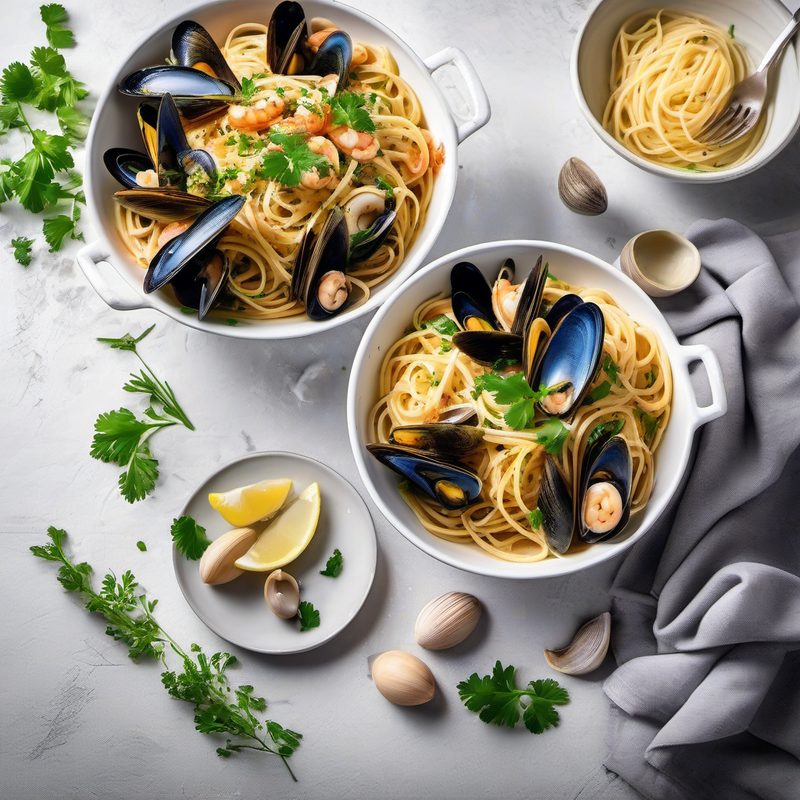
Spaghetti Cetarese
Category: Primi piatti, Cucina campana
| Amount | Ingredient |
|---|---|
| Calories | ~485 kcal |
| Protein | 16 g |
| Total Fat | 18 g |
| Saturated Fat | 3 g |
| Carbohydrates | 65 g |
| Dietary Fiber | 3 g |
| Sugars | 2 g |
| Sodium | 680 mg |
| Cholesterol | 12 mg |
Region: Campania — Cetara, Amalfi Coast
Serves: 4
Active Time: 25 minutes
Total Time: 30 minutes
Why This Recipe Works
Spaghetti alla Cetarese is the signature pasta dish of the tiny fishing village of Cetara on the Amalfi Coast — a place where anchovies are not merely an ingredient but an identity. Unlike the heavy, cream-bound pasta dishes of northern Italy, this southern classic celebrates the sea's briny intensity through a handful of pantry staples. The key to greatness lies in three pillars: anchovies that melt into the oil rather than clump, breadcrumbs toasted to a deep, nutty gold that provide crackling contrast, and pasta water that binds the emulsion into a glossy, clingy sauce. The chili pepper adds a gentle warmth that sharpens the anchovy's savoriness without overpowering it. Traditional Cetarese cooks use mollica, the stale breadcrumbs ground from leftover loaves — a thrifty fisherman's trick that elevates texture while keeping the dish firmly rooted in cucina povera.
Before You Begin
- Anchovy quality matters. Use anchovies packed in oil (not salt-packed whole), preferably from Cetara or the Sicilian coast. Rinse salt-packed anchovies if substituting, debone, and pat dry before using.
- Breadcrumbs must be homemade. Pre-packaged dried breadcrumbs will not achieve the same texture. Grate day-old rustic Italian bread (crust removed) on a box grater or pulse in a food processor until coarse — think fine sand, not powder.
- Toast breadcrumbs in a separate pan. They need undivided attention to reach an even golden-brown without scorching. A nonstick skillet works best.
- Pasta water is the glue. The starch in the reserved cooking water binds the oil-and-anchovy emulsion into a sauce that coats every strand. Salt the pasta water generously (about 1½ tbsp per 4 quarts).
- Work fast when tossing. The pasta should go directly from the colander into the skillet; the residual heat helps the sauce emulsify. Do not rinse the pasta — you want that starch.
Essential Tools
- Large pasta pot (6–8 quart)
- 12-inch skillet or sauté pan
- Small nonstick skillet (for breadcrumbs)
- Box grater or food processor (for breadcrumbs)
- Spider or colander
- Liquid measuring cup (for reserving pasta water)
- Chef's knife and cutting board
What You Need to Know: Keys to Technique
Melting Anchovies for Maximum Savory Impact
Anchovy fillets are salt-cured and oil-packed, which means they are already "cooked" in a sense. The goal in the pan is not to fry them but to dissolve them into the oil. Press them with the back of a wooden spoon as they heat — they will break apart into a rusty-brown paste in under a minute. If they smell overly fishy or acrid, the heat is too high. Gentle medium heat is all that is required.
The Perfect Toasted Breadcrumb (La Mollica)
In Cetara, mollica (toasted breadcrumbs) are traditional. The crumbs should be golden all the way through — pale crumbs add no flavor, burnt crumbs add bitterness. The moment they hit a deep tan color (think the shade of a paper bag), pull them off the heat; residual heat in the pan will carry them another shade darker. A pinch of salt tossed into the crumbs as they toast seasons them from the inside.
Emulsifying a Fat-Based Sauce with Starch Water
Unlike tomato-based sauces, this sauce is primarily olive oil and anchovy fat. To make it clingy rather than greasy, you must add starchy pasta water a tablespoon at a time while tossing vigorously. The starch molecules link the oil and water into a temporary emulsion. Look for the sauce to turn slightly opaque and creamy — that is the signal that the emulsion has formed.
Step-by-Step Instructions
- Prepare the breadcrumbs. In a small nonstick skillet, heat 1 tablespoon olive oil over medium heat. Add the breadcrumbs and cook, stirring constantly, for 3–4 minutes until deep golden brown. Transfer to a small bowl and set aside. Wipe out the skillet.
- Bring pasta water to a boil. Fill a large pot with 4 quarts (3.8 L) of water. Add 1½ tablespoons fine sea salt and bring to a rolling boil over high heat.
- Cook the spaghetti. Add the spaghetti to the boiling water and cook until al dente (about 1 minute less than package directions). Stir occasionally to prevent sticking.
- Build the anchovy sauce while the pasta cooks. While the pasta is cooking, heat 3 tablespoons olive oil in a 12-inch skillet over medium-low heat. Add the sliced garlic and whole chili pepper (or red pepper flakes). Cook, stirring frequently, until the garlic is fragrant and just barely golden — about 2 minutes. Do not let the garlic brown or it will turn bitter.
- Melt the anchovies. Add the anchovy fillets to the skillet. Using a wooden spoon, press and stir the fillets until they dissolve completely into the oil, about 1 minute. The mixture should look like a rustic, brick-red paste suspended in oil. Reduce heat to low.
- Reserve pasta water and drain. Just before the pasta is done, ladle out 1 cup (240 ml) of the starchy pasta water and set aside. Drain the spaghetti (do not rinse) and transfer it directly to the skillet with the anchovy sauce.
- Emulsify and toss. Increase heat to medium. Add 2–3 tablespoons of the reserved pasta water to the skillet and toss the pasta vigorously using tongs for about 30–45 seconds. The sauce should transform from a separated oil slick into a creamy, clingy coating on every strand. If the pasta looks dry, add more pasta water 1 tablespoon at a time.
- Finish and serve. Remove the whole chili pepper if using. Divide the pasta among warm bowls. Top each serving with a generous sprinkle of toasted breadcrumbs and a shower of fresh parsley. Serve immediately. Pass additional breadcrumbs and chili flakes at the table.
Troubleshooting
| Problem | Likely Cause | Solution |
|---|---|---|
| Sauce is greasy and pools on plate | Not enough pasta water emulsified into the oil | Add another 1–2 tablespoons pasta water and toss vigorously off heat |
| Breadcrumbs taste raw or pale | Not toasted long enough or heat too low | Return to skillet over medium heat and stir until amber; they darken off the heat |
| Anchovy flavor is weak | Anchovies not fully dissolved or too few | Press fillets firmly into the hot oil; use 8 fillets instead of 6 |
| Pasta clumps together | No stirring during cooking or sauce too dry | Add a splash of pasta water and toss immediately |
| Garlic is bitter | Garlic browned (overcooked) | Keep heat at medium-low; garlic should turn straw-colored at most |
| Breadcrumbs are greasy or soggy | Added to finished pasta too early or too much oil | Keep breadcrumbs separate and sprinkle only at serving; reduce oil to 2 tsp |
Variations
Spaghetti alla Cetarese con Pomodorini
Add 200 g (1 cup) of halved cherry tomatoes to the skillet after the anchovies have melted. Cook for 2–3 minutes until they soften and release their juices, then proceed with the pasta toss. This is a common summertime variant on the Amalfi coast.
Spaghetti con Alici e Finocchietto
Substitute 2 tablespoons of wild fennel fronds (finocchietto selvatico) for the parsley. Wild fennel grows abundantly along the Campanian coast and adds an anise-like brightness that pairs beautifully with anchovies.
Bucatini alla Cetarese (Alla Chitarra Variation)
Replace spaghetti with bucatini or chitarra-cut egg pasta. Bucatini's hollow center catches the sauce, making each bite intensely savory. Reduce cooking time by 30 seconds if using fresh pasta.
Gluten-Free Adaptation
Use a high-quality gluten-free spaghetti (preferably rice-and-corn blend). Increase pasta water by 2 tablespoons, as GF pasta releases less starch and needs extra help emulsifying.
Vegan Adaptation
Substitute anchovies with 2 tablespoons capers (rinsed, chopped) plus 1 tablespoon soy sauce and 1 sheet of nori (crumbled and dissolved in 2 tbsp warm water). The nori adds the sea-like umami that the anchovies provide. The result is different but satisfying in its own right.
Make Ahead
- Toasted breadcrumbs can be made up to 3 days in advance and stored in an airtight container at room temperature. Re-crisp in a dry skillet over medium heat for 1 minute before using.
- Anchovy-garlic oil can be prepared up to 2 hours ahead. Keep covered at room temperature. Reheat gently over low heat before tossing with pasta.
- Do not cook the pasta ahead. Spaghetti alla Cetarese must be dressed immediately after draining. Reheated leftovers will be dry and clumpy.
Serving Suggestions
- Serve as primo (first course) in a traditional Italian meal, followed by a simply grilled fish (branzino or orata) or a mixed seafood grill.
- A bright, acidic contorno of marinated zucchini with lemon and mint balances the richness.
- For a one-dish meal, pair with a crisp fennel and orange salad dressed with lemon and olive oil.
- Crusty bread for scarpetta — sopping up every last drop of sauce from the plate — is mandatory.
Nutritional Information (per serving)
Values are estimates based on standard ingredient profiles.
Equipment Recommendations
- Pasta pot: An 8-quart stainless steel or enameled stockpot with a pasta insert basket makes draining effortless.
- Skillet: A 12-inch stainless steel or carbon steel skillet is ideal. Nonstick works but will not develop any fond — not a problem here since this sauce does not rely on fond, but nonstick makes breadcrumb cleanup easier.
- Tongs: Long, locking tongs with silicone grips for tossing the pasta without splashing hot oil.
- Wooden spoon: A flat-edge wooden spoon is best for mashing anchovies into the oil thoroughly.
- Box grater: A Microplane or traditional box grater for the breadcrumbs; avoid pre-shredded breadcrumbs sold in cans.
Anchovies (Alici)
The heart of this dish. Buy anchovy fillets in olive oil (or sunflower oil) from a reputable Italian brand. The best come from Cetara itself — look for "Alici di Cetara" on the label. Whole salt-packed anchovies require rinsing, boning, and patting dry before use; while more labor-intensive, they deliver superior depth. One salt-packed anchovy equals roughly one oil-packed fillet.
Breadcrumbs (Mollica di Pane)
Day-old rustic bread (preferably a Pugliese, ciabatta, or country loaf) with the crust removed yields the best texture. The interior crumb should be airy but not too open. Pulse in a food processor until coarse — you want some variation in grain size for textural interest. Panko may be substituted in a pinch but lacks the rustic character.
Chili Pepper (Peperoncino)
The classic Calabrian dried red chili (peperoncino calabrese) is traditional across southern Italy. It adds gentle heat without overwhelming. Fresher dried chilies are fruitier; older ones are hotter. Adjust to taste. A fresh red Fresno or red Thai bird chili can be substituted — use whole and remove before serving.
Olive Oil
Use a good-quality extra-virgin olive oil from Campania or elsewhere in southern Italy. The oil is a primary flavor here, not just a cooking medium. Grassy, medium-intensity oils work best; overly peppery oils can clash with the anchovies.
Wine Pairings
- Greco di Tufo (Campania DOCG): The wine of the region. Its mineral backbone and almond-citrus finish cut through the anchovy richness without competing. Serve chilled (10–12°C / 50–54°F).
- Fiano di Avellino (Campania DOCG): Slightly fuller-bodied than Greco, with notes of honeydew, pear, and hazelnut. Excellent for standing up to the garlic and chili.
- Verdicchio dei Castelli di Jesi (Marche DOC): If Campanian wines are unavailable, this crisp, saline white from the Adriatic coast is a worthy substitute. Its distinct bitter almond finish echoes the breadcrumbs beautifully.
- Pecorino (Abruzzo DOC): Not the cheese — the grape. A bright, herbal white with good acidity and a touch of sea-salt minerality.
- Lambrusco di Grasparossa (Secco): For red-wine drinkers, a chilled, dry Lambrusco's gentle fizz and tart red fruit provides a surprising but delightful contrast.
- Franciacorta Brut (Lombardia DOCG): A celebratory sparkler. The high acidity and persistent bubbles scrub the palate clean between bites.
Related Recipes
- Pasta con le Sarde (Sicilian Pasta with Sardines, Fennel, and Pine Nuts) — Recipe #62
- Spaghetti Aglio, Olio e Peperoncino — Recipe #48
- Spaghetti alle Vongole (Clams, White Wine, Garlic) — Recipe #53
- Bucatini all'Amatriciana — Recipe #45
- Tonnarelli Cacio e Pepe — Recipe #42
- Alici marinate (Marinated Fresh Anchovies) — antipasto companion
Notes
- Regional authenticity: In Cetara, this dish is sometimes called Spaghetti con Alici e Mollica. Local cooks often use alici sotto sale (salt-packed anchovies) rather than oil-packed; the extra step of rinsing and deboning is considered part of the ritual. The breadcrumbs are traditionally made from "pane cafone" — a rustic, unsalted country bread.
- History: Cetara has been a center for anchovy fishing and processing since the Middle Ages. The town's colatura di alici (anchovy garum, a fermented fish sauce) dates back to Roman times and is sometimes drizzled over this pasta as an extra umami booster — akin to adding a dash of fish sauce to a Thai dish. One teaspoon stirred into the sauce before the pasta goes in transforms the depth of flavor.
- Seasonality: Best made with spring-caught anchovies (March–June), when the fish are at their fattiest and sweetest. In winter, oil-packed fillets are perfectly acceptable — the dish was born of preserved ingredients precisely because fresh anchovies were not always available.
- Leftover sauce: If you have leftover anchovy-garlic oil (unlikely, but possible), toss it with blanched greens like broccoli rabe or escarole the next day for an instant contorno.
Recipe from The Italian Kitchen by Vita Milanese — Volume 1 · Pasta Perfetto. Discover all volumes on the ebook page.