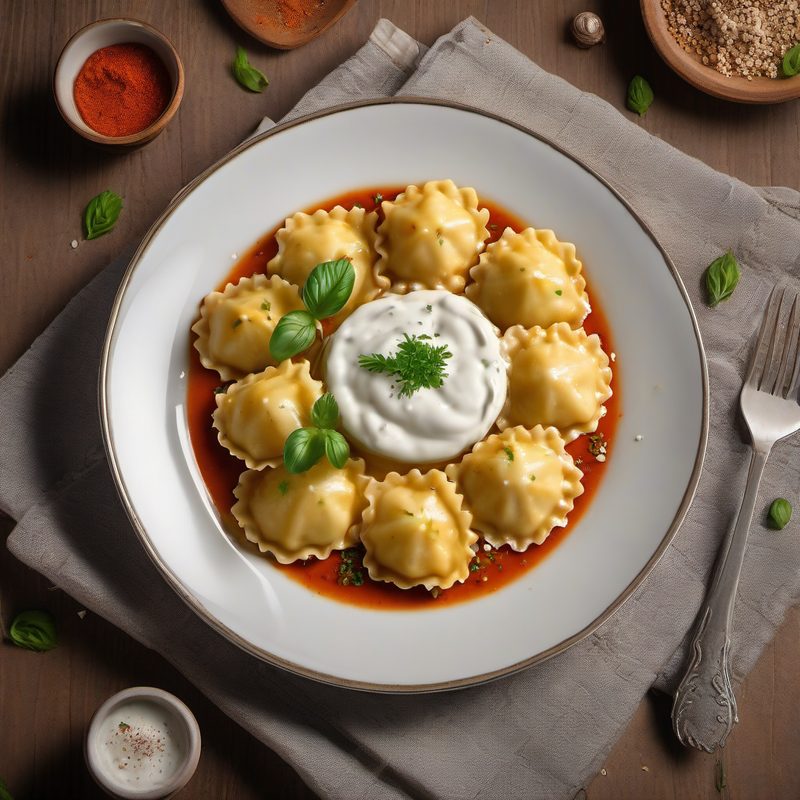
Manti Turkish Ravioli
Tiny, hand-pinched Turkish dumplings filled with spiced ground lamb, boiled until tender, then crowned with a cool garlic yogurt sauce and a sizzling butter-paprika drizzle — a labour of love that rewards every minute of folding with a transcendent, multi-textural bite.
| Amount | Ingredient |
|---|---|
| Kosher salt (for the cooking water) |
Manti are the soul of Turkish home cooking — delicate, time-honoured parcels that transform simple ingredients into something far greater than the sum of their parts. Unlike Italian ravioli, which prizes a high filling-to-pasta ratio, Turkish manti are defined by their tiny size and thin, silky wrappers: ideal manti should be small enough to fit several on a spoon, each one a perfect morsel of tender dough and savoury meat. The filling here is intentionally minimalist — ground lamb (or beef), grated onion, salt, pepper, and a whisper of paprika — so the meat's natural richness speaks clearly. The magic happens at the table: a generous blanket of garlicky yogurt, a drizzle of sizzling butter infused with tomato paste and paprika, and a final shower of dried mint. The temperature contrast — cool yogurt, hot dumplings, bubbling butter — is the defining experience. Yes, the folding takes patience. But the first bite makes every pleat worth it.
Dough
Filling
Garlic Yogurt Sauce
Butter-Paprika Drizzle
For Boiling
🥘 Equipment
- Large mixing bowl
- Box grater
- Rolling pin
- Chef's knife or pastry wheel / bench scraper
- Baking sheet, lightly floured (for holding shaped manti)
- Kitchen towel (for covering dough)
- Large pot (6-quart) for boiling
- Slotted spoon or spider skimmer
- Small skillet (for the butter drizzle)
- Small bowl (for yogurt sauce)
- Serving plates or a large shallow bowl
📋 Preparation
Step 1 — Make the Dough
In a large mixing bowl, combine 300 g (2½ cups) all-purpose flour and ½ tsp kosher salt. Make a well in the centre and add the beaten egg and 100 ml (⅓ cup + 1 tbsp) water. Using your fingers or a fork, gradually incorporate the flour into the liquid until a shaggy dough forms.
Turn the dough onto a lightly floured work surface and knead for 8 to 10 minutes until smooth, elastic, and no longer sticky — it should feel supple and spring back when poked. If the dough feels dry and crumbly, add water 1 teaspoon at a time. If it feels sticky, dust with a little more flour.
The dough for manti is firmer than pasta dough — it needs to hold its shape during rolling and folding without tearing. A slightly stiff dough is better than a soft one.
Step 2 — Rest the Dough
Shape the dough into a ball, wrap tightly in plastic wrap or cover with a damp kitchen towel, and let it rest at room temperature for 30 minutes. This resting period relaxes the gluten, making the dough easier to roll paper-thin without snapping back.
While the dough rests, prepare the filling and sauce components — this keeps the workflow efficient.
Step 3 — Make the Filling
While the dough rests, grate 1 medium yellow onion on the large holes of a box grater directly into a medium bowl. (Grater rather than chopper — you want the onion to release its juice, which keeps the filling moist.) Add 250 g (½ lb) ground lamb or beef, ½ tsp kosher salt, ½ tsp black pepper, and ½ tsp sweet paprika.
Mix with your hands until all ingredients are evenly combined — about 30 seconds. Do not overmix, or the filling will become dense. Set aside at room temperature.
Step 4 — Make the Garlic Yogurt Sauce
In a small bowl, combine 200 g (¾ cup) plain full-fat yogurt, 2 minced garlic cloves (mashed to a paste with the side of your knife), and a pinch of salt. Stir until smooth. Set aside at room temperature — serving the yogurt at room temperature rather than cold allows its flavour to bloom.
Step 5 — Roll the Dough
Divide the rested dough into 4 equal pieces. Keep the pieces you are not working with covered under a damp towel to prevent drying.
On a lightly floured surface, roll one piece of dough into a large, very thin rectangle — aim for 1–2 mm (about 1/16 inch) thickness. The dough should be translucent enough to see your hand through when held up to the light. Roll from the centre outward, rotating and flipping the dough occasionally to ensure even thinness, dusting with flour as needed to prevent sticking.
This is the most technique-critical step. Manti wrappers must be thin — thick dough overwhelms the delicate filling-to-wrapping ratio. Take your time and roll evenly.
Step 6 — Cut and Fill the Dumplings
Using a chef's knife or pastry wheel, cut the rolled dough into small squares — about 2.5 cm (1 inch) . A pizza cutter makes quick, clean work of this.
Place a pea-sized amount of filling (about ½ teaspoon — err on the side of less rather than more) in the centre of each square. Bring two opposite corners together to form a triangle and pinch the edges firmly to seal. Then bring the remaining two corners together and pinch; you should have a small, plump parcel with four sealed seams. For the classic manti shape, gently pinch the bottom corners together so the dumpling has a slight boat-like curve.
Transfer each finished manti to a lightly floured baking sheet, arranging them in a single layer without touching. Repeat with the remaining dough pieces and filling. As you work, occasionally dust the baking sheet with more flour to prevent sticking.
This is the time-intensive step. Expect to make about 60–80 tiny manti from this recipe. Enlist help if you can — manti-making is a social, meditative kitchen tradition in Turkey. If the dough edges start to dry out while you work, brush them lightly with water to help the seals stick.
Step 7 — Boil the Manti
Fill a large pot with 4 quarts of water and add 1½ tablespoons of kosher salt. Bring to a rolling boil over high heat.
Working in two batches (to avoid crowding), carefully drop half the manti into the boiling water. Stir gently once with a wooden spoon to prevent sticking to the bottom. Boil for 10 to 12 minutes — the manti should be tender but not mushy, and the filling should be cooked through. Freshly made manti cook on the shorter end; if you have rested them in the refrigerator, use the longer time.
Test one dumpling at the 10-minute mark: cut it open — the dough should be silky and tender with no raw flour taste, and the filling should be cooked through and juicy.
Using a slotted spoon or spider skimmer, transfer the cooked manti to a colander, letting them drain briefly but not completely dry. Keep warm in a serving bowl while you cook the second batch.
Step 8 — Make the Butter-Paprika Drizzle
While the manti boil, melt 50 g (3½ tbsp) unsalted butter in a small skillet over medium heat. Add 1 tbsp tomato paste and 1 tsp sweet paprika (or Aleppo pepper). Cook, stirring constantly, for 45 to 60 seconds — the butter will foam, the tomato paste will deepen to a rich brick red, and the paprika will release its fragrance into the fat. Remove from heat immediately — burnt paprika turns bitter.
Step 9 — Assemble and Serve
Divide the hot, drained manti among 4 warm serving plates or arrange on a large shallow platter. Spoon the garlic yogurt sauce generously over the top — enough to coat the dumplings in a thick, creamy blanket. Drizzle the hot butter-paprika mixture over the yogurt in a zigzag pattern. Finish with a sprinkle of dried mint, crumbled between your fingers to release its oils.
Serve immediately, while the manti are still hot and the yogurt is cool. Traditional Turkish presentation calls for each person to have their own small plate with a spoon — the manti should float in the sauce, not sit on top of it. Provide extra yogurt and butter sauce on the side for those who want more.
🧑🍳 Chef's Tips
- Grate the onion, don't chop it. Grating releases the onion's juices, which hydrate the ground meat and create a tender, almost creamy filling. Chopped onion stays crunchy and dry — the texture is noticeably inferior. Squeeze the grated onion gently if it seems overly watery, but don't wring it dry.
- Dough thickness is everything. Manti wrappers must be thinner than standard pasta — 1–2 mm is the target. A thicker wrapper dominates the delicate parcel and makes the final dish feel doughy and leaden rather than light and ethereal. Roll confidently and check translucency frequently.
- Pinch seals tightly. An unsealed manti will burst open during boiling, releasing its filling into the cooking water. Press the edges firmly and, if the dough feels dry, moisten with a drop of water. The seal should be invisible after pinching.
- Don't crowd the pot. Boiling too many manti at once lowers the water temperature and increases the chance of sticking. Cook in two batches, stirring gently after adding. The water should return to a boil within 30 seconds of adding the dumplings.
- Serve at room temperature or warm — not cold. The yogurt sauce should be at room temperature, not straight from the refrigerator. Cold yogurt numbs the palate and masks the subtle flavours of the filling and spices. Let the yogurt sit out for 20 minutes before serving.
- Dried mint over fresh. Fresh mint is too delicate and green for this application. Dried mint, crumbled between your fingers, has a concentrated, almost floral intensity that pairs perfectly with the butter-paprika drizzle. Look for Turkish or Middle Eastern dried mint — it's leafier and more aromatic than the dusty jars found in standard supermarkets.
- Smaller is better. Traditional Turkish mantı are folded so small that 30–40 fit on a single spoon. While our 2.5 cm (1-inch) squares are a practical home-kitchen compromise, the smaller you can fold them, the more impressive and authentic the result. Each tiny dumpling should be a single, perfect bite.
❌ Common Mistakes
| Mistake | Why | Fix |
|---|---|---|
| Dough too thick | Thick wrappers dominate the delicate filling-to-pasta balance, making the dish doughy and heavy. | Roll the dough to 1–2 mm — translucent enough to see your hand through. Err on the side of thinner. |
| Filling too large | Overfilled manti burst during boiling or have raw centres by the time the wrapper is cooked. | Use no more than ½ teaspoon (pea-sized) of filling per square. Less is more. |
| Seals not tight | Unsealed edges open in the boiling water, releasing the filling into the pot. | Pinch edges firmly; if dry, moisten with a drop of water. Test-seal one before committing to the batch. |
| Overcooking | 15+ minutes of boiling turns the delicate wrappers into soft, mushy paste. | Boil for 10–12 minutes and test at the 10-minute mark. Fresh manti cook faster than rested ones. |
| Burning the paprika | Paprika turns bitter when burnt — the butter drizzle goes from fragrant to acrid in seconds. | Cook the butter-tomato-paprika mixture for 45–60 seconds only, over medium heat, and remove from heat the moment the butter foams and the tomato paste darkens. |
| Serving yogurt straight from the fridge | Cold yogurt numbs the palate and muffles the flavours of the filling and spices. | Let the yogurt come to room temperature for 20 minutes before serving. |
💡 Variations
| Variation | How To |
|---|---|
| Beef Only | Substitute ground beef (80/20) for the lamb. The flavour is milder and less gamey — add an extra ¼ teaspoon of paprika and a small pinch of allspice or cumin to compensate. |
| Lamb and Beef Blend | Use 125 g ground lamb and 125 g ground beef for a balanced flavour — lamb's richness tempered by beef's leaner structure. This is a common Turkish home-cooking approach. |
| Spicy Manti | Add ½ teaspoon of red pepper flakes or ¼ teaspoon of cayenne pepper to the filling. For the drizzle, use Aleppo pepper instead of sweet paprika — it adds gentle heat without bitterness. |
| Herb-Infused Filling | Add 2 tablespoons finely chopped fresh parsley and 1 tablespoon finely chopped fresh mint to the filling mixture. The herbs brighten the meat and add a green, aromatic lift. |
| Süzme Yogurt (Strained Yogurt) | Use Turkish süzme yoğurt or labneh instead of regular yogurt for an extra-thick, almost cheese-like sauce. Thin with a splash of cold water if needed to reach a spoonable consistency. |
| Vegetarian (Mushroom & Walnut) | Replace the meat with 200 g finely chopped mushrooms (sautéed until dry), 50 g finely chopped walnuts, and 1 additional small grated onion. Season with salt, pepper, paprika, and ½ teaspoon cumin. The earthy mushroom-walnut filling is surprisingly meaty. |
| Baked Instead of Boiled | Arrange the uncooked manti in a single layer in a buttered baking dish. Pour the garlic yogurt sauce over the top and bake at 180°C (350°F) for 20–25 minutes until the yogurt is set and the edges are golden. Drizzle with the butter-paprika mixture and serve. This is a regional variation from Central Anatolia. |
| Chicken Manti | Substitute 250 g ground chicken for the lamb. Add 1 tablespoon finely chopped fresh dill and ½ teaspoon ground coriander. Chicken manti are lighter and more delicate — cook for only 8–10 minutes. |
❄️ Storage & Leftovers
| Method | Details |
|---|---|
| Uncooked Manti (Freezer) | Arrange uncooked manti in a single layer on a floured baking sheet and freeze until solid — about 1 hour. Transfer to a zip-top freezer bag, squeezing out as much air as possible. Freeze for up to 3 months. Cook directly from frozen — add 2–3 minutes to the boiling time. Do not thaw before boiling, or the wrappers will become soggy. |
| Cooked Manti (Refrigerator) | Store cooked manti (without sauce) in an airtight container in the refrigerator for up to 2 days. The texture will soften, but they remain pleasant. |
| Reheating | The best method: reheat cooked manti in a skillet with a splash of water over medium heat, covered, for 2–3 minutes until warmed through. Alternatively, reheat in the microwave at 70% power in 30-second intervals. Do not re-boil — the wrappers will disintegrate. |
| Yogurt Sauce | The garlic yogurt sauce can be made up to 1 day in advance and stored in the refrigerator. Bring to room temperature before serving. |
| Do Not Freeze Cooked Manti | Cooked and sauced manti do not freeze well — the yogurt separates upon thawing, and the wrappers turn mushy. Freeze only uncooked, unsauced manti. |
🍷 Wine Pairing
| Wine | Why |
|---|---|
| Rakı (anise spirit) | The definitive Turkish companion — the anise-scented spirit cuts through the richness of the yogurt and lamb with a clean, licorice-tinged bite. Serve ice-cold in a narrow glass with a splash of water, which turns it a milky white (the classic aslan sütü — lion's milk). |
| Assyrtiko (Santorini) | High-acid, mineral-driven Greek white with citrus and saline notes — it slices through the creamy yogurt and stands up to the garlic without overpowering the delicate lamb filling. |
| Etna Bianco (Sicily) | A volcanic white with herbal, smoky, and saline character — the minerality echoes the earthiness of the lamb and paprika, while the bright acidity keeps each sip refreshing against the rich sauce. |
| Off-Dry Riesling (Mosel) | A Kabinett-level Riesling with a touch of residual sweetness tames the garlic's bite and the paprika's warmth, while the piercing acidity cuts through the yogurt. The apple and peach fruit notes are a lovely counterpoint to the savoury, spiced filling. |
| Lambrusco (Emilia-Romagna, dry) | A chillable, frizzante red with high acidity and low tannins — the bubbles scrub the palate clean between bites, and the dark berry fruit harmonises with the lamb. Serve slightly chilled (12–14°C / 54–57°F). |
🍺 Beer Pairing
| Beer | Why |
|---|---|
| Efes Pilsener (Turkey) | The classic Turkish lager — crisp, clean, and light-bodied with low bitterness. Its straightforward refreshing character is the perfect foil for the rich, multi-layered manti experience. A cold Efes is to manti what a cold beer is to tacos: simple, perfect, unarguable. |
| Saison | The peppery, spicy yeast character of a farmhouse ale echoes the paprika and dried mint, while the high carbonation and dry finish scrub the palate clean. A classic pairing for dumplings of any culture. |
| Hefeweizen | A Bavarian wheat beer's banana and clove notes are an unexpected but harmonious match with the garlic yogurt and lamb. The low bitterness and creamy mouthfeel complement the dish's textures. |
🥗 Suggested Side Dishes
- Simple tomato and cucumber salad (Çoban Salatası) — finely diced tomatoes, cucumber, green pepper, and red onion tossed with lemon juice, olive oil, salt, and dried mint. The bright, acidic crunch provides a perfect contrast to the rich, creamy manti.
- Pickled chillies or Turkish turşu (mixed pickles) — the sharp vinegar and heat cut through the yogurt and butter like a knife. A few pickled peppers on the side transform each bite.
- Warm pide or flatbread — for sopping up the leftover yogurt-garlic-butter sauce pooling at the bottom of the bowl. Brush with olive oil and warm in a 180°C (350°F) oven for 5 minutes.
- Fresh herbs plate — a small plate of fresh mint sprigs, parsley, and basil leaves on the table for diners to add as they eat. This is a common Turkish table habit and adds brightness to each bite.
- Mercimek çorbasi (Red Lentil Soup) — a light, lemony red lentil soup makes an ideal starter before the richness of manti. Turkish tradition often pairs these two dishes in a single meal.
📊 Nutrition (per serving, estimated)
| Calories | Protein | Fat | Carbs | Fiber |
|---|---|---|---|---|
| 550 | 28 g | 26 g | 52 g | 3 g |
Nutrition is an estimate based on standard ingredient quantities. Using ground beef instead of lamb will reduce fat slightly; adding extra yogurt or butter will increase it. Each serving is about 15–20 manti.
❓ Frequently Asked Questions
Help! My dough is too dry and won't come together.
Turkish manti dough is intentionally firm, but if it's truly crumbly and won't form a cohesive ball, add water 1 teaspoon at a time while kneading. The dough should feel smooth and pliable, like play-dough, not stiff and cracking. Humidity and flour protein content affect hydration — adjust as needed.
Can I use a pasta machine to roll the dough?
Yes, and it's a wonderful time-saver. After resting, divide the dough into 4 pieces and run each through a pasta roller, starting at the widest setting and progressing through the settings until you reach the thinnest (typically setting 6 or 7 on most machines). The dough should be thin enough to see through. Then lay the sheet on a floured work surface and cut it into squares. This method produces remarkably consistent, thin wrappers with minimal effort.
Why did my manti burst open during boiling?
Three common causes: (1) the filling was too large — use no more than ½ teaspoon; (2) the edges weren't sealed tightly enough — moisten with water if the dough is dry; (3) the water was boiling too aggressively — a gentle, steady boil is better than a violent rolling boil. Also, make sure your manti are well-floured on the baking sheet so they don't stick and tear when lifted.
Can I make these gluten-free?
Yes, but the texture will differ. Substitute a 1:1 gluten-free all-purpose flour blend that contains xanthan gum (such as Bob's Red Mill 1-to-1 or King Arthur Measure for Measure). Add an extra 1–2 tablespoons of water, as gluten-free flours absorb more liquid. The dough will be softer and more fragile to roll — work gently and roll between two sheets of parchment paper to prevent sticking. Boil for 8–10 minutes rather than 10–12, as GF wrappers cook faster and turn mushy if overboiled.
What's the difference between manti and ravioli?
Several key distinctions: (1) Manti are much smaller — traditional Turkish manti are pea-sized; ravioli are typically 4–5 cm squares. (2) Manti dough is firmer and contains egg, but is rolled thinner than most pasta dough. (3) Manti filling is usually a simple single-protein mixture without cheese, herbs, or breadcrumbs. (4) Manti are served with yogurt and a butter sauce rather than a tomato or cream sauce. (5) Manti are a central Asian dish that arrived in Anatolia with Turkic migrations; ravioli are Italian, with documented origins in medieval Italy.
Can I use store-bought wonton wrappers instead of making dough from scratch?
In a pinch, yes — but the result won't be authentic. Wonton wrappers are thinner and contain different ratios of egg and starch. If using wonton wrappers (square ones, about 3 inches / 7.5 cm), place ½ teaspoon of filling in the centre, brush the edges with water, fold into a triangle, and pinch the seams. Then bring the two bottom corners together and pinch. Boil for only 3–4 minutes — wonton wrappers cook much faster than fresh dough. The texture is lighter and more delicate, but lacks the characteristic chew and flavour of handmade manti dough.
I have leftover dough / filling — what do I do with it?
Leftover dough can be wrapped tightly in plastic wrap and refrigerated for up to 2 days — use it to make extra manti, or roll it thin, cut into strips, and boil as simple noodles (erişte). Leftover filling can be shaped into small meatballs and pan-fried for a quick snack, or frozen for up to 3 months.
🔗 Related Recipes
- Turkish Red Lentil Soup (Mercimek Çorbası)
- Spinach and Feta Börek (Ispanaklı Börek)
- Lamb Köfte with Spiced Tomato Sauce
- Homemade Spinach and Ricotta Ravioli
- Garlic-Yogurt Sauce (Cacık)
- Sütlaç — Turkish Baked Rice Pudding
- Pide — Turkish Flatbread with Egg and Cheese
🏷️ Search Tags
Photo reference: `vol1_469.png` — A shallow white ceramic bowl of manti, generously blanketed with creamy garlic yogurt sauce and drizzled with deep red butter-paprika oil. A sprinkle of dried mint dots the surface. The manti are tiny, hand-pinched dumplings visible through the yogurt. Warm, golden-hour lighting on a rustic wooden table with a small copper saucer of extra paprika butter and a glass of çay (Turkish tea) on the side. Shallow depth of field — the manti are sharply in focus against a softly blurred Anatolian-style kilim table runner.
Recipe from "The Italian Kitchen" by Vita Milanese — Volume 1: Pasta Perfetto
Recipe from The Italian Kitchen by Vita Milanese — Volume 1 · Pasta Perfetto. Discover all volumes on the ebook page.