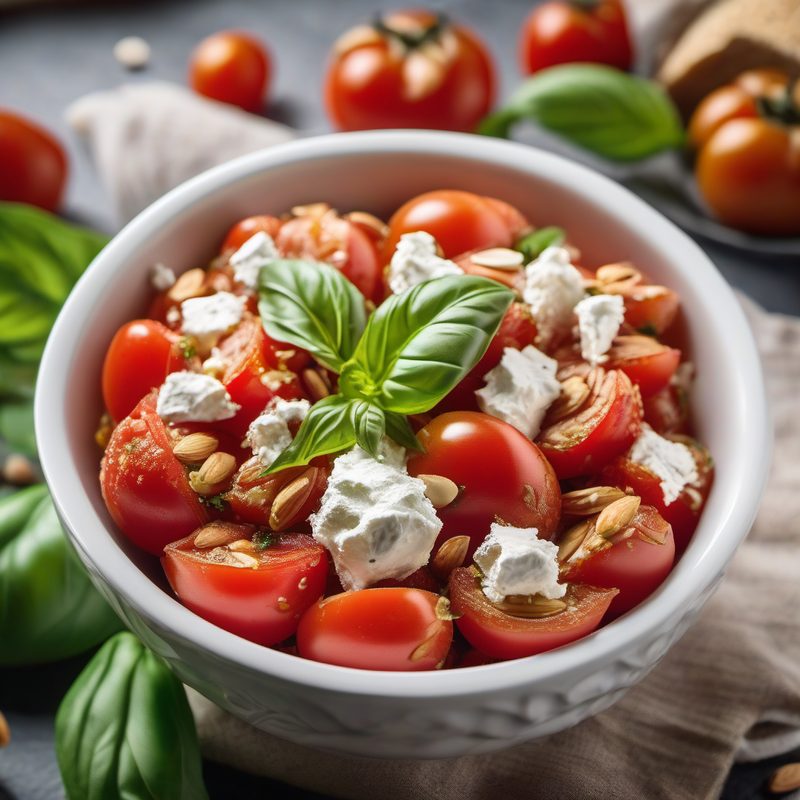
Sicilian Pesto
While Genoese pesto is a grassy, garlicky celebration of summer basil, its Sicilian cousin transforms the sauce into something altogether sunnier — ripe tomatoes, creamy sheep's-milk ricotta, and toasted almonds create a pesto that is fruitier, silkier, and more substantial, requiring no cheese grating and no laborious mortar work.
| Amount | Ingredient |
|---|---|
| Forgetting to reserve pasta water | The sauce is too thick to coat pasta evenly Always reserve at least ½ cup (120 ml) of pasta cooking water before draining |
| Salting before tasting Pecorino | Pecorino is very salty and can make the dish inedible Season after adding cheese, and taste first |
Sicily's cuisine is defined by the marriage of land and sea, sweet and savory, and this pesto embodies that philosophy perfectly. Instead of pine nuts, we use almonds — a legacy of the island's Arab-influenced pastry tradition. Instead of hard cheese alone, we fold in fresh sheep's-milk ricotta, making the sauce luxuriously creamy without any cream. And instead of relying solely on basil's sharpness, we add blanched, peeled tomatoes for sweetness and body. The result is a sauce that clings to pasta like a velvet cloak, brightened by basil and enriched by almonds, able to be made in the time it takes to boil water. It is pesto reimagined for the sun-drenched kitchen.
Use level tablespoons and standard US measuring cups.
- Food processor
- Medium pot for blanching tomatoes
- Bowl of ice water
- Sharp paring knife
- Cutting board
- Large serving bowl
- Spatula
- Blanch and prepare the tomatoes — 5 minutes. Bring a small pot of water to a boil. Cut a shallow X on the bottom of each tomato with a paring knife. Lower the tomatoes into the boiling water for exactly 30 seconds. Transfer immediately to a bowl of ice water. When cool enough to handle, peel off the skins, halve the tomatoes, scoop out the seeds with a spoon, and roughly chop the flesh. Pro tip: Use the ripest, most fragrant tomatoes you can find — this is the backbone of the sauce, and pale winter tomatoes will yield a flat, watery pesto.
- Pulse the aromatics — 30 seconds. In a food processor, combine the basil leaves, blanched almonds, and peeled garlic clove. Pulse 6 to 8 times in 1-second bursts until coarsely chopped. Scrape down the sides once. Pro tip: If using a mortar and pestle, pound the garlic and almonds first to a paste, then add the basil leaves and grind in a circular motion until fragrant.
- Add tomatoes, cheese, and oil — 30 seconds. Add the chopped tomatoes, grated Pecorino Romano or Parmigiano-Reggiano, and the extra-virgin olive oil. Pulse 4 to 5 more times, scraping down the sides once, until combined but still chunky. The sauce should be textured, not a smooth purée. Pro tip: A few small chunks of tomato and almond are desirable — they create pockets of flavor and texture that a smooth sauce lacks.
- Finish with ricotta — 10 seconds. Add the fresh sheep's-milk ricotta and pulse once or twice, just to incorporate. Do not over-process; the ricotta should remain distinct and creamy, marbled through the sauce. Pro tip: If the ricotta is very wet (watery whey pooling on top), drain it in a fine-mesh sieve lined with cheesecloth for 15 minutes before adding.
- Season and adjust — 1 minute. Transfer the pesto to a bowl. Season generously with salt and freshly ground black pepper to taste. Stir gently to combine. The sauce should be thick but spoonable — if it seems too stiff, stir in 1 to 2 tablespoons of the reserved pasta cooking water. Pro tip: Pecorino Romano is saltier than Parmigiano, so taste before seasoning — you may need less salt when using Pecorino.
- Serve — 2 minutes. Toss immediately with 500 g (1 lb) of hot pasta such as trofie, busiate, or spaghetti, reserving ½ cup (120 ml) of pasta water to loosen the sauce if needed. Alternatively, use as a spread on grilled bruschetta, or as a dip for raw vegetables.
- Tossed with busiate or trofie pasta, with extra grated Pecorino on top
- Spread generously on grilled or toasted bruschetta, drizzled with olive oil
- As a dip for raw vegetables, fennel sticks, or endive leaves
- Dolloped onto grilled chicken, fish, or lamb chops
- Layered in a sandwich with grilled eggplant and fresh mozzarella
- Swirled into minestrone or tomato soup for a basil-ricotta finish
- Quality of tomatoes is everything. This pesto relies on the sweetness and acidity of ripe tomatoes. Out-of-season supermarket tomatoes produce a watery, bland sauce. Use canned San Marzano tomatoes (well-drained) as a reliable winter substitute.
- Toast the almonds for deeper flavor. While the recipe uses blanched almonds raw, toasting them in a dry skillet over medium heat for 3 to 4 minutes until fragrant adds a nutty depth that transforms the pesto. Let them cool completely before processing.
- Do not over-process the sauce. Sicilian pesto should be coarse and textured, not smooth like a French pistou. Each pulse should be brief; stop while you can still see individual pieces of almond and tomato.
- Use sheep's-milk ricotta for authenticity. Cow's-milk ricotta is thinner and less flavorful. Sheep's-milk ricotta (ricotta di pecora) has a tangy, grassy richness that defines this sauce. It's widely available at Italian grocers and specialty markets.
- Reserve extra pasta water. The starchy water is essential for loosening the sauce to the right consistency. Add it gradually — 1 to 2 tablespoons at a time — until the sauce coats the pasta without pooling at the bottom of the bowl.
- Serve immediately. Unlike basil-only pesto, this tomato-and-ricotta version does not keep its bright color or texture overnight. Make it fresh for the best result.
- A food processor is preferred over a blender. A blender's high speed and narrow blade base can over-process the almonds and tomatoes into a paste, destroying the desired rustic texture.
| Mistake | Why It Hurts | The Fix |
|---|---|---|
| Using underripe or pale tomatoes | Low sugar content produces a sour, watery sauce | Only use deeply red, fragrant, in-season tomatoes; substitute good-quality canned San Marzano (drained) in winter |
| Over-processing the sauce | Turns the pesto into a baby-food purée with no texture | Pulse in short bursts and stop while you can still see distinct pieces; 4 to 5 pulses is usually enough |
| Adding ricotta before the oil | The ricotta can seize and become grainy when hit with cold oil | Always add oil with the tomatoes and cheese, then fold in ricotta last |
| Using wet ricotta without draining | Watery ricotta thins the sauce and dilutes flavor | Drain ricotta in a cheesecloth-lined sieve for 15 minutes before using |
- Pesto alla Trapanese (Sicilian tomato-basil pesto without ricotta): Omit the ricotta. Use 80 g (⅔ cup) almonds and 60 g (⅔ cup) Pecorino. The sauce will be drier and more intensely tomato-and-nut flavored.
- Pesto alla Norma-style: Add 100 g (3.5 oz) of roasted, chopped eggplant to the finished pesto for a nod to Pasta alla Norma. Serve with ricotta salata on top.
- Pistachio-Ricotta Pesto: Replace the almonds with 40 g (⅓ cup) shelled, unsalted pistachios. The green color and subtle sweetness pair beautifully with the ricotta.
- Spicy Arrabbiata Pesto: Add ½ to 1 teaspoon of red pepper flakes (or one small dried peperoncino, crumbled) with the garlic in step 2.
- Mint and Almond Pesto: Replace half the basil with fresh mint. Serve with lamb or grilled zucchini.
- Vegan Sicilian Pesto: Omit the ricotta and Pecorino. Add 60 g (¼ cup) of raw cashew cream (cashews blended with 3 tablespoons water) and 2 tablespoons of nutritional yeast. Use smoked almonds for extra depth.
- Sun-Dried Tomato Pesto: Replace fresh tomatoes with 100 g (3.5 oz) of oil-packed sun-dried tomatoes, drained. Reduce the olive oil by 2 tablespoons, as the tomatoes add their own oil.
| Method | Details |
|---|---|
| Refrigerator | Store in an airtight container, covered with a thin layer of olive oil to prevent oxidation, for up to 3 days |
| Best Before | Consume within 24 hours for the brightest color and freshest flavor |
| Reviving | Stir in 1 tablespoon of warm water or pasta water to loosen the sauce if it thickens in the fridge |
| Freezing | Not recommended — the ricotta separates and becomes grainy upon thawing, and the tomatoes lose their fresh character |
- Etna Rosso (Nerello Mascalese) — the volcanic, smoky red from Sicily's Mount Etna mirrors the sauce's rustic character
- Grillo (Sicily) — a crisp, herbal white that stands up to the basil and tomatoes without overpowering the ricotta
- Vermentino di Sardegna — saline and mineral, with enough body to carry the almond richness
- Cerasuolo d'Abruzzo — a bright, cherry-driven rosé that bridges the acidity of tomatoes and the creaminess of ricotta
| Calories | Protein | Fat | Carbs | Fiber |
|---|---|---|---|---|
| 220 per ¼ cup (60 ml) serving | 7 g | 19 g | 5 g | 1 g |
Q: Can I make this pesto in a mortar and pestle?
A: Absolutely — and many Sicilian cooks prefer it. Pound the garlic and almonds to a paste first, then add the basil and grind in a circular motion. Add the tomatoes and cheese, work them into a coarse paste, then stir in the oil and fold in the ricotta. Expect this to take 10 to 15 minutes.
Q: What pasta shapes work best with Sicilian pesto?
A: Short, twisted, or ridged shapes that catch the chunky sauce are ideal. Trofie, busiate, casarecce, gemelli, or cavatappi are traditional choices. Spaghetti works too, but you'll need to toss vigorously and use extra pasta water.
Q: My pesto tastes bitter — what went wrong?
A: Two likely causes: (1) The garlic was old or had a green sprout — remove the sprout before using. (2) The extra-virgin olive oil was too grassy or peppery — use a milder Sicilian or Ligurian olive oil next time.
Q: Can I use cow's-milk ricotta instead of sheep's-milk?
A: You can, but the result will be noticeably thinner and less tangy. If using cow's-milk ricotta, drain it thoroughly and consider adding an extra tablespoon of grated Pecorino to compensate for the lost flavor.
Q: Is this pesto the same as Pesto alla Trapanese?
A: They are closely related but not identical. Pesto alla Trapanese (from Trapani, Sicily) typically omits the ricotta and uses more almonds and garlic — it's drier and punchier. This version, with ricotta, is a broader Sicilian home-style preparation.
- Pesto alla Genovese (Volume 1, Recipe #10)
- Pesto alla Trapanese (Volume 2, Recipe #85)
- Pasta alla Norma (Volume 2, Recipe #54)
- Caponata Siciliana (Volume 2, Recipe #42)
- Bruschetta al Pomodoro (Volume 1, Recipe #8)
- Arancini al Ragu (Volume 2, Recipe #38)
Recipe from "The Italian Kitchen" by Vita Milanese — Volume 2: Sunday Sauce
Recipe from The Italian Kitchen by Vita Milanese — Volume 2 · Sunday Sauce. Discover all volumes on the ebook page.