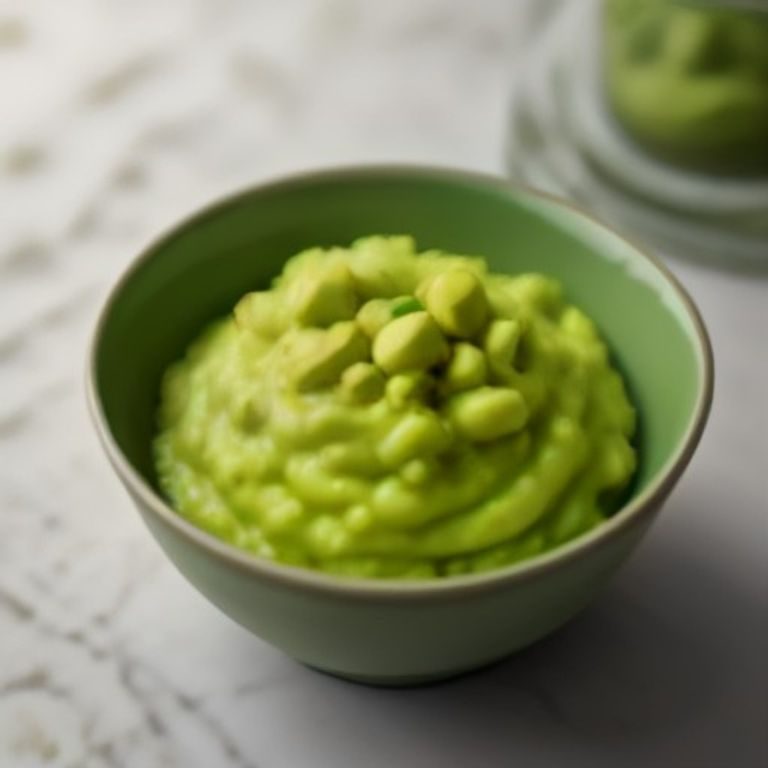
Pistachio Pesto
A luxuriously creamy, nutty Sicilian-style pesto that swaps pine nuts for toasted pistachios, yielding a vibrant green sauce that is simultaneously rich, herbaceous, and subtly sweet — ready in 10 minutes and equally at home on pasta, bruschetta, or grilled fish.
| Amount | Ingredient |
|---|---|
| 100 g (¾ cup) | shelled pistachios, unsalted |
| 50 g (½ cup) | Parmigiano-Reggiano, finely grated |
| 1 clove | garlic, peeled |
| 1 small bunch (about 15 g) | fresh basil leaves |
| 120 ml (½ cup) | extra-virgin olive oil |
| ¼ tsp (1.5 g) | kosher salt, plus more to taste |
| 1 tsp (5 ml) | fresh lemon juice (optional) |
This glorious pistachio pesto is a beloved specialty of Sicily, where the prized bright-green pistachios of Bronte (near Mount Etna) are folded into a silky emulsion of Parmigiano-Reggiano, fresh basil, garlic, and extra-virgin olive oil. Unlike traditional Genovese pesto, which relies on the delicate sweetness of pine nuts, pistachio pesto delivers a fuller, more buttery nuttiness with a faintly floral undertone that complements the basil and garlic beautifully. A quick dry-toast of the pistachios awakens their essential oils and deepens their flavor, while a squeeze of lemon (optional but recommended) cuts through the richness with a bright, citrusy finish. The result is a pesto that is simultaneously familiar and surprising — familiar enough to pair with your favorite pasta shape, surprising enough to spark conversation at the table. Spread it on crusty bread, spoon it over grilled swordfish or chicken, or simply eat it by the spoonful straight from the food processor (we will not tell).
Ingredient notes: Use unsalted, shelled pistachios — salted pistachios will make the pesto overly salty. Bronte pistachios from Sicily are ideal for their vibrant color and sweet, delicate flavor, but any high-quality unsalted pistachio will work. Grate your Parmigiano-Reggiano fresh from a block; pre-grated cheese contains anti-caking agents that prevent smooth emulsification. Use the smallest, freshest garlic clove you can find — older garlic can be harsh and bitter. Fresh basil leaves only; do not substitute dried basil, which will turn the pesto musty and brown. Use a fruity, medium-intensity extra-virgin olive oil — a grassy, peppery oil can overpower the delicate pistachio flavor.
- Food processor (mini or full-size)
- Dry skillet or frying pan (nonstick preferred)
- Rubber spatula
- Chef's knife and cutting board
- Measuring cups and spoons
- Citrus juicer or reamer (if using lemon)
- Airtight storage container or jar
- Toast the pistachios (3 min). Place the shelled pistachios in a dry skillet over medium heat. Toast, shaking the pan frequently or stirring with a wooden spoon, until the pistachios are fragrant and just beginning to take on a deeper golden color, about 2 to 3 minutes. Do not let them brown or burn — the color should shift from pale green to warm golden-green. Immediately transfer the pistachios to a plate to cool completely, about 5 minutes. This step is essential: toasting awakens the pistachios' volatile oils, intensifying their nutty flavor and aroma.
- Process the pistachios, garlic, and basil (1 min). Transfer the cooled pistachios to the bowl of a food processor. Add the peeled garlic clove and the fresh basil leaves. Pulse 6 to 8 times (1-second pulses) until the mixture is coarsely ground with some texture remaining. The pistachios should be broken down into small, gravelly pieces — not a smooth paste. Stop and scrape down the sides of the bowl with a rubber spatula once during this step.
- Add cheese and oil (1 min). Add the finely grated Parmigiano-Reggiano and the extra-virgin olive oil to the food processor. Process continuously for 20 to 30 seconds, until the pesto is creamy, emulsified, and smooth but still retains a pleasant, slightly textured consistency (not a completely homogenous purée). Stop and scrape down the sides of the bowl once more.
- Season and finish (30 sec). Add the kosher salt and, if using, the fresh lemon juice. Pulse 2 or 3 times to incorporate. Taste the pesto on a plain cracker or a piece of bread (not directly from the processor — the oil can coat your tongue and mask the salt). Adjust salt if needed. The optional lemon juice brightens the pesto and cuts through the richness; add it drop by drop to your preference.
- Serving Suggestions. Toss with 340 g (12 oz) of cooked pasta (trofië, linguine, busiate, or gemelli are excellent choices), reserving pasta water to loosen the sauce as needed; spread generously on warm bruschetta or crostini; dollop over grilled or roasted fish (swordfish, salmon, or sea bass); spoon over grilled chicken breasts or thighs; use as a sandwich spread in place of mayonnaise; serve as a dip for raw vegetables or breadsticks; or swirl into a bowl of hot minestrone for a nutty, herby finish.
- Toast the pistachios — do not skip. Raw pistachios are pleasant but mild; toasting unlocks their full aromatic potential. Watch them carefully, as they can go from perfectly toasted to burnt in seconds due to their high oil content.
- Cool the pistachios completely before processing. Warm pistachios added to the food processor can cause the olive oil and cheese to separate, resulting in a greasy, broken pesto. Spread them in a single layer on a plate to cool rapidly.
- Use the finest grate on your Parmigiano. A Microplane or the fine side of a box grater yields a fluffy, powdery cheese that emulsifies seamlessly into the pesto. Coarsely grated cheese will leave gritty, unincorporated pockets.
- Reserve pasta water. When using this pesto on pasta, always reserve about ½ cup of the starchy pasta cooking water before draining. A few tablespoons stirred in at the end will loosen the pesto into a silky, clinging sauce.
- Do not over-process. The ideal pistachio pesto has a slightly rustic texture — you want to see small flecks of pistachio and basil, not a perfectly smooth paste. Over-processing generates heat that can dull the bright green color and make the pesto taste flat.
- Taste for salt carefully. Parmigiano-Reggiano is already quite salty, and the amount of salt you need will depend on the saltiness of your cheese and whether you are using salted or unsalted pistachios. Always taste before adding extra salt.
- Pistachio quality matters. The color and flavor of your pesto are directly tied to the quality of your pistachios. If your pistachios are old, stale, or pale, your pesto will be dull and lackluster. Seek out bright-green, plump, freshly harvested pistachios.
| Mistake | Why It Hurts | The Fix |
|---|---|---|
| Over-toasting the pistachios | Burnt pistachios impart a bitter, acrid flavor that cannot be masked | Toast over medium heat and shake the pan constantly; remove the moment they become fragrant and deepen in color |
| Using salted pistachios | The pesto becomes overly salty, often to the point of being inedible | Always use unsalted pistachios; if only salted are available, rinse them under cold water, dry thoroughly, and reduce or omit the added salt |
| Processing while the pistachios are still warm | The heat can cause the oil and cheese to separate, breaking the emulsion | Spread toasted pistachios on a plate and let them cool completely (about 5 minutes) before adding to the processor |
| Adding too much oil at once | The pesto becomes thin, greasy, and prone to separation | Pour the olive oil in a steady stream with the motor running for the best emulsion |
| Using pre-grated Parmesan | Contains anti-caking agents (cellulose, potato starch) that prevent smooth emulsification and create a gritty texture | Always grate Parmigiano-Reggiano from a block using a Microplane or fine grater |
| Storing pesto with air exposure | The basil and pistachios oxidize, turning the pesto brown and dulling the flavor | Press plastic wrap directly onto the surface of the pesto before sealing the container, or top with a thin layer of olive oil |
| Blending for too long | Friction heat from prolonged blending destroys the vibrant green color and fresh, grassy flavor | Process just until creamy — 20 to 30 seconds total. Stop sooner rather than later |
- Spicy Pistachio Pesto: Add ¼ to ½ teaspoon of red pepper flakes or 1 small dried Calabrian chili (crumbled) to the food processor along with the garlic for a warm, peppery kick.
- Minty Pistachio Pesto: Replace half of the basil with fresh mint leaves for a cooler, fresher version that pairs beautifully with lamb or grilled vegetables.
- Vegan Pistachio Pesto: Omit the Parmigiano-Reggiano and substitute 2 tablespoons of nutritional yeast plus an additional 2 tablespoons of olive oil for a dairy-free, vegan version that is still creamy and savory.
- Lemony Pistachio Pesto: Increase the lemon juice to 1 full tablespoon and add 1 teaspoon of finely grated lemon zest for a brighter, more citrus-forward pesto.
- Arugula Pistachio Pesto: Replace the basil with an equal amount of fresh arugula (rocket) for a peppery, slightly bitter pesto that pairs well with rich meats and hearty pastas.
- Sun-Dried Tomato Pistachio Pesto: Add 3 to 4 oil-packed sun-dried tomatoes (drained and roughly chopped) to the food processor along with the garlic for a sweet, tangy, umami-rich variation.
- Creamy Pistachio Pesto: Stir in 2 tablespoons of full-fat Greek yogurt or mascarpone just before serving for an extra-lush, spoonable sauce that doubles as a dip.
| Storage Method | Details |
|---|---|
| Refrigerator | Transfer the pesto to an airtight container. Press a piece of plastic wrap directly onto the surface of the pesto (this prevents oxidation and browning) before sealing. Refrigerate for up to 5 days. The color will darken slightly over time — this is natural and does not affect the flavor. Stir well before using. |
| Freezer | Freeze in an ice cube tray (about 2 tablespoons per cube) for up to 3 months. Once frozen, pop the cubes out and transfer them to a zip-top freezer bag. Thaw individual cubes as needed in the refrigerator (overnight) or at room temperature (about 30 minutes). The texture and color will be slightly less vibrant than fresh, but the flavor remains excellent. |
| Oil layer method | For refrigerator storage, you can pour a thin layer (about 2 mm) of extra-virgin olive oil over the top of the pesto before sealing. This creates an airtight seal that prevents oxidation. Stir the oil into the pesto when you are ready to use it. |
This vibrant, nutty pesto pairs beautifully with a range of wines. The richness of the pistachios and Parmigiano calls for wines with enough acidity and structure to cut through the fat:
- Vermentino di Sardegna — The herbaceous, saline notes of this Mediterranean white mirror the basil and garlic while cutting through the nutty richness.
- Etna Bianco (Carricante) — Grown on the volcanic slopes of Mount Etna, this wine's mineral-driven acidity and citrus notes are a natural match for the Sicilian soul of this pesto.
- Gavi di Gavi (Cortese) — A crisp, elegant white with bright acidity and subtle almond notes that echo the pistachio character.
- Soave Classico (Garganega) — Floral, nutty, and medium-bodied, with enough subtlety to support rather than overpower the delicate pistachio flavor.
- Franciacorta Brut (Sparkling) — The lively bubbles and high acidity of Franciacorta make this a surprising and delightful pairing when the pesto is served as an appetizer on crostini.
- For pasta dishes: A light, unoaked Chardonnay or a dry Rosé from Provence complements the creamy texture of the pesto-coated pasta beautifully.
| Per Serving (about 2 tablespoons / 30 ml) | |
|---|---|
| Calories | 185 |
| Protein | 5 g |
| Fat | 18 g |
| Carbohydrates | 4 g |
| Fiber | 1 g |
Nutrition values are approximate and based on a 2-tablespoon serving with the lemon juice option included. Actual values will vary based on pistachio brand, olive oil type, and exact measurements. The majority of calories come from the pistachios and extra-virgin olive oil.
Can I use salted pistachios?
It is not recommended. Salted pistachios will almost certainly make the pesto too salty, especially when combined with the salt in Parmigiano-Reggiano. If salted pistachios are all you have, rinse them thoroughly under cold water, pat them dry, toast them (they will toast more slowly since they are damp), and reduce or omit the added salt entirely — but be warned that the texture and flavor will not be as clean as with unsalted pistachios.
Can I make this without a food processor?
Yes — the traditional method uses a mortar and pestle. Start by grinding the pistachios with the garlic and a pinch of salt into a coarse paste, then add the basil leaves one handful at a time, grinding them against the sides of the mortar in a circular motion. Once the basil is incorporated, add the Parmigiano and work it in, then slowly drizzle in the olive oil while stirring continuously with the pestle. This method takes more time (about 15 minutes of active work) but produces a superior texture and allows you to feel the sauce coming together by hand.
Why is my pesto brown instead of bright green?
Several factors can cause browning: (1) Over-processing creates friction heat that oxidizes the basil and pistachios; (2) Using old or bruised basil leaves; (3) Exposing the pesto to air for too long without a protective surface layer of plastic wrap or oil. For the brightest color, use the freshest basil possible, process as briefly as you can, and always press plastic wrap directly onto the surface of the finished pesto before storing.
Can I use this pesto as a marinade?
Yes, but with caution. The olive oil and garlic make it a flavorful marinade for chicken, fish, or vegetables, but the acidity from the optional lemon juice can begin to "cook" proteins if left too long. Marinate for no more than 30 minutes at room temperature, or up to 2 hours in the refrigerator. Do not marinate overnight.
What pasta shapes work best with pistachio pesto?
The creaminess of pistachio pesto clings best to pasta shapes with ridges, grooves, or twists that can catch the sauce. Excellent choices include trofië (the classic Ligurian pasta for pesto), busiate (Sicilian twisted pasta), gemelli, radiatore, casarecce, or orecchiette. Long, smooth pasta like spaghetti can work, but the pesto tends to slide off rather than coat.
Can I add cream to this pesto?
You can, but it is not traditional and will dilute the pure pistachio and basil flavor. If you want a creamier sauce for pasta, stir in 1 to 2 tablespoons of the starchy pasta cooking water rather than cream — the starch emulsifies the pesto into a silky, clinging sauce without masking its delicate flavor.
- Classic Genovese Pesto (Volume 1)
- Almond Pesto (Volume 2, #32)
- Sicilian Pesto (Volume 2, #77)
- Arugula Pesto (Volume 2, #59)
- Sun-Dried Tomato Pesto with Stracchino (Volume 2, #40)
- Lemon Pesto (Volume 2, #52)
- Grilled Swordfish with Pistachio Pesto (Volume 2)
Recipe from "The Italian Kitchen" by Vita Milanese — Volume 2: Sunday Sauce
Recipe from The Italian Kitchen by Vita Milanese — Volume 2 · Sunday Sauce. Discover all volumes on the ebook page.