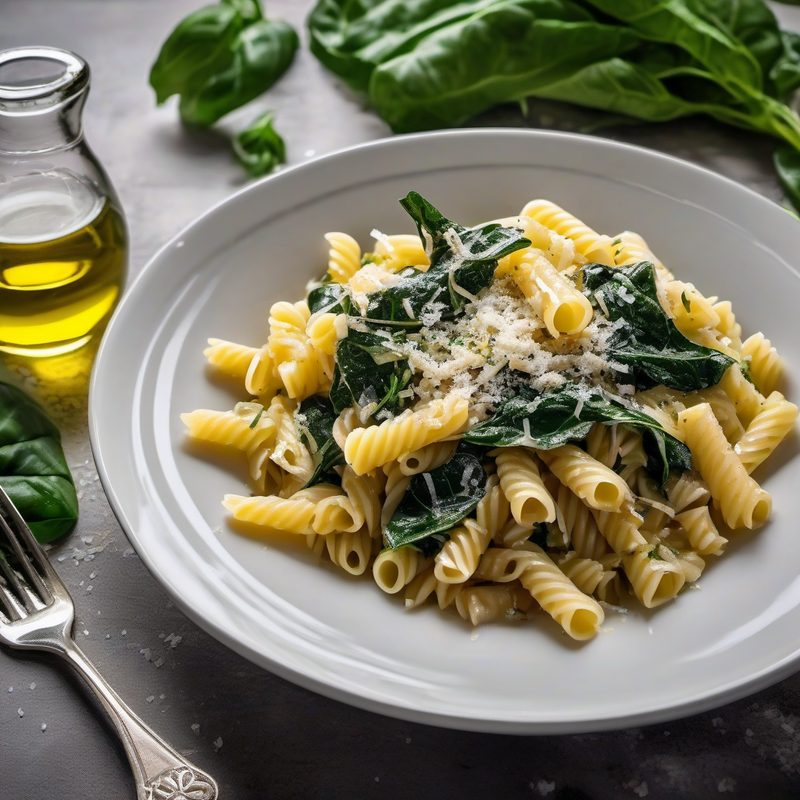
Pasta Swiss Chard
A rustic Ligurian-inspired pasta that turns humble Swiss chard into something remarkable — earthy greens, fragrant garlic, a whisper of chili, and salty Pecorino clinging to every strand.
| Amount | Ingredient |
|---|---|
| 350 g (12 oz) | Long pasta — linguine, spaghetti, or spaghettini |
| 400 g (14 oz) | Swiss chard (coste), about 1 large bunch |
| 2 | Garlic cloves, thinly sliced |
| 1 | Fresh chili pepper (such as peperoncino or red Fresno), finely chopped, or ½ tsp red pepper flakes |
| 4 tbsp | Extra-virgin olive oil |
| 50 g (½ cup) | Pecorino Romano, finely grated |
| To taste | Salt |
| To taste | Black pepper, freshly ground |
> Note: This is a classic primi piatti — serve as a first course with a second vegetable or protein dish, or double the portions for a satisfying main.
🥘 Equipment
- Large pot (6-qt)
- Colander
- Large skillet or sauté pan (12-inch)
- Chef's knife and cutting board
- Microplane or fine grater
📋 Preparation
Step 1: Prepare the Swiss Chard
Separate the chard leaves from the stems. Finely chop the stems (about ¼-inch pieces). Roughly chop the leaves into 2-inch pieces. Keep stems and leaves separate — they cook at different rates.
Why separate? Stems are fibrous and need a head start; leaves are tender and wilt quickly.
Step 2: Cook the Pasta
Bring a large pot of generously salted water to a rolling boil (about 1½ tbsp salt per 4 quarts water). Cook the pasta until firmly al dente — about 1 minute less than the package directions. Reserve 1 cup of the starchy pasta water before draining.
Step 3: Sauté the Aromatics
While the pasta cooks, heat 4 tbsp olive oil in a large skillet over medium heat. Add the sliced garlic and chopped chili. Cook, stirring constantly, until the garlic is fragrant and just beginning to turn golden at the edges — about 1 minute. Do not let the garlic brown or burn, or it will turn bitter.
Step 4: Cook the Chard Stems
Add the chopped chard stems to the skillet. Season with a pinch of salt. Cook, stirring occasionally, until the stems have softened and are beginning to brown slightly, about 3 minutes.
Step 5: Wilt the Leaves
Add the roughly chopped chard leaves to the skillet. They will seem to fill the pan entirely at first — that's fine. Cook, stirring frequently, until the leaves have completely wilted and are tender, about 4-5 minutes. The chard will release some liquid; let it cook off until the pan is nearly dry.
Step 6: Combine and Dress
Add the drained pasta directly to the skillet with the chard. Sprinkle the grated Pecorino Romano over the top and add ½ cup of the reserved pasta water. Toss vigorously for 30-45 seconds — the starch from the water and the cheese will create a silky emulsion that coats every strand.
If the pasta seems dry, add more pasta water a splash at a time until the sauce flows freely but clings to the pasta.
Step 7: Serve
Season with freshly ground black pepper. Divide among warm bowls. Finish each serving with an extra drizzle of olive oil and a generous grating of Pecorino Romano.
🧑🍳 Chef's Tips
- The chili is a matter of taste: A single fresh peperoncino gives a gentle warmth. For more heat, use 2 chilies or add ½ tsp red pepper flakes. For no heat, omit entirely — the dish is still deeply savory.
- Don't crowd the chard: It looks like a mountain when you first add the leaves, but they wilt down to almost nothing. Trust the process and keep stirring.
- Pasta shape matters: Long, thin pastas (linguine, spaghetti) are traditional with this preparation — the sauce clings better than it would to short shapes. That said, penne or gemelli also work well.
- Reserve extra pasta water: The chard sometimes continues releasing liquid after combining. If the sauce thins too much, add a splash more pasta water and toss vigorously to re-emulsify.
- Salt the chard late: The leaves release liquid quickly — season the stems early and the leaves only at the end to control moisture.
❌ Common Mistakes
| Mistake | Why | Fix |
|---|---|---|
| Overcooking the garlic | Bitter, harsh flavor | Remove the skillet from heat briefly if garlic is browning too fast |
| Adding leaves and stems together | Stems stay crunchy, leaves turn to mush | Always cook stems first for 3 minutes before adding leaves |
| Skipping the pasta water | Sauce pools in the bottom instead of clinging to pasta | The starchy water binds the cheese and oil into a creamy emulsion |
| Using too little cheese | Flat, one-dimensional flavor | Pecorino Romano is the backbone — don't skimp |
| Draining the pasta fully dry | Dry, clumpy pasta that won't absorb the sauce | Reserve water and transfer pasta directly with some water clinging to it |
💡 Variations
- Pasta con le bietole (with beet greens): Substitute beet greens for Swiss chard — same technique, earthier flavor.
- Add pine nuts: Toast 2 tbsp pine nuts in the skillet before adding the garlic, then proceed. Scatter on top at serving.
- Add anchovy: Add 2-3 anchovy fillets with the garlic and chili. Cook until they dissolve into the oil — they add deep umami without fishiness.
- Breadcrumb topping: Toast ½ cup fresh breadcrumbs in 1 tbsp olive oil until golden. Sprinkle over the finished dish for crunch.
- Make it vegetarian/vegan: Already vegetarian. For vegan, substitute a high-quality vegan Parmesan-style cheese or omit the cheese and finish with a squeeze of lemon and extra olive oil.
❄️ Storage
Refrigerate leftovers in an airtight container for up to 2 days. The chard will continue releasing moisture, so the pasta will soften. To reheat, warm gently in a skillet with a splash of pasta water or broth, tossing until heated through. The texture won't be quite as perfect as fresh, but the flavor remains excellent.
🍷 Wine Pairing
| Wine | Why |
|---|---|
| Verdicchio dei Castelli di Jesi | Bright acidity and almond notes mirror the chard's earthiness |
| Gavi di Gavi | Crisp, mineral-driven — cuts through the Pecorino beautifully |
| Soave Classico | Light-bodied with a hint of bitterness that stands up to the chili |
| Barbera d'Alba | For a red option — high acidity, low tannins, and red fruit that pairs with greens |
🍺 Beer Pairing
| Beer | Why |
|---|---|
| Peroni Nastro Azzurro | Classic Italian lager — clean, crisp, high carbonation cuts through the oil and cheese |
| Italian Pilsner | Subtle herbal notes from noble hops complement the swiss chard |
| Saison | Peppery, spicy notes echo the chili without adding heat |
🥗 Suggested Sides
- Simple arugula salad with lemon, shaved Parmigiano, and toasted pine nuts
- Focaccia al rosmarino — rosemary focaccia for soaking up every drop of sauce
- Roasted cherry tomatoes — halved, tossed in olive oil and salt, roasted at 200°C (400°F) for 15 minutes
- Grilled zucchini with a squeeze of lemon and fresh mint
📊 Nutrition (per serving)
| Calories | Protein | Fat | Carbs | Fiber |
|---|---|---|---|---|
| 425 | 15 g | 18 g | 52 g | 5 g |
❓ FAQ
Can I use frozen Swiss chard?
Fresh is strongly preferred — frozen chard releases too much water and turns mushy. The texture of fresh, lightly wilted leaves is a key part of the dish.
What if I can't find Pecorino Romano?
Parmigiano-Reggiano is the closest substitute. The flavor will be nuttier and less salty — adjust salt accordingly. Grana Padano also works well.
Can I use short pasta instead of long?
Yes — penne, fusilli, or gemelli all work. The cooking technique stays the same. Toss thoroughly to coat every piece.
Is this dish spicy?
Not aggressively so. A single fresh chili gives a gentle background warmth. Adjust the amount (or omit it entirely) to your preference.
What's the best way to clean Swiss chard?
Fill a large bowl with cold water and submerge the leaves, swishing gently to dislodge any grit. Lift out, leaving the dirt behind in the water. Repeat if necessary. Dry in a salad spinner or on a clean kitchen towel.
Can I use rainbow chard instead of green chard?
Absolutely. Rainbow chard, with its colorful stems (red, yellow, pink), makes for a stunning presentation. Cook the stems as directed — the colored stems may be slightly more tender, so keep an eye on them.
🔗 Related Recipes
- Orecchiette con Cime di Rapa — Pasta with Broccoli Rabe
- Spaghetti Aglio, Olio e Peperoncino — The Original
- Pasta con le Sarde — Pasta with Sardines, Fennel, and Pine Nuts
- Risotto con le Bietole — Risotto with Beet Greens
- Linguine con Pesto alla Genovese
🏷️ Search Tags
Recipe from The Italian Kitchen by Vita Milanese — Volume 1 · Pasta Perfetto. Discover all volumes on the ebook page.