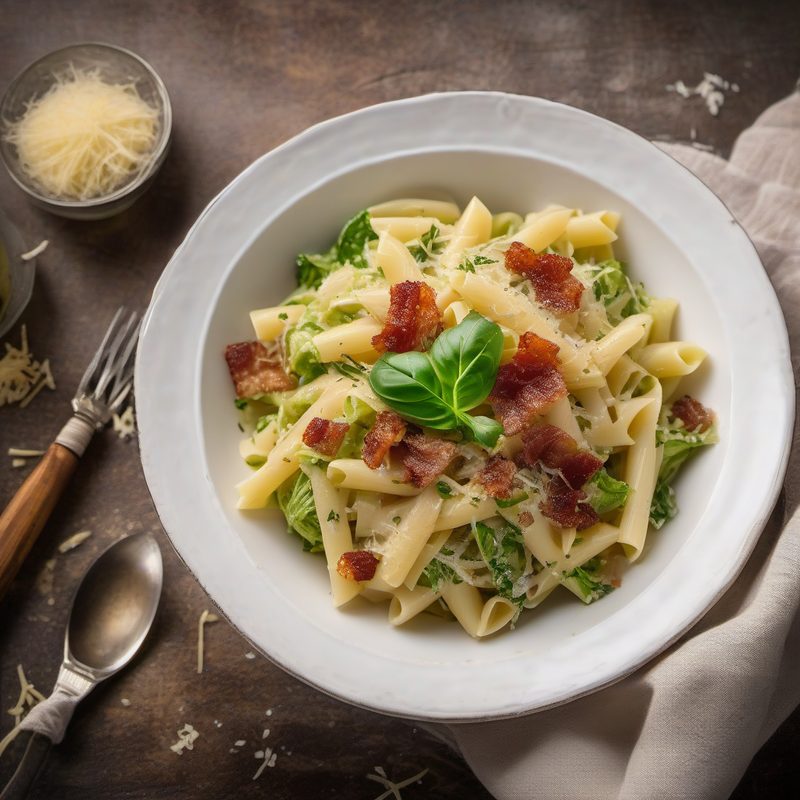
Pasta Cabbage Sauce
Category: Primi piatti
| Amount | Ingredient |
|---|---|
| 350 g (12 oz) | Dried pasta (rigatoni, casarecce, fusilli, or spaghetti) |
| ½ head | Green cabbage, about 400 g (14 oz) |
| 1 medium | Onion, finely chopped (about 150 g / 1 cup) |
| 2 cloves | Garlic, thinly sliced |
| 4 tbsp (60 ml) | Extra-virgin olive oil |
| 50 g (1¾ oz) | Pancetta, diced into ¼-inch (6 mm) pieces (optional) |
| 50 g (½ cup) | Parmesan (Parmigiano-Reggiano), finely grated, plus more for serving |
| To taste | Kosher salt |
| To taste | Freshly ground black pepper |
Yield: 4 servings
Prep time: 10 min
Cook time: 20 min
Difficulty: Easy
A humble, soul-warming Italian pasta dish that transforms ordinary green cabbage into something extraordinary — slowly caramelized with onion, garlic, and pancetta until sweet and buttery, then tossed with al dente pasta and a shower of Parmesan.
This is cucina povera at its most brilliant: a few inexpensive ingredients — cabbage, onion, garlic, olive oil, and a bit of cured pork — coaxed into a deeply satisfying sauce that clings to every strand of pasta. The key is patience. As the cabbage cooks over medium heat, its sharp, sulfurous edge melts away, replaced by a gentle sweetness and a velvety, almost buttery texture. The pancetta contributes its rendered fat and savory richness, while the onion and garlic build a fragrant foundation. A final hit of salty, nutty Parmigiano-Reggiano ties everything together, elevating humble cabbage into a dish you'll crave on cold nights. It's quick enough for a weeknight, satisfying enough for a Sunday supper, and proof that great Italian cooking is about technique, not extravagance.
⏱️ Quick Overview
Choose a firm, dense green cabbage with tightly packed leaves and no wilting or browning — a half head should yield about 400 g after trimming the core. Savoy cabbage, with its crinkled leaves and milder flavor, is an excellent substitute and caramelizes even more quickly. If using pancetta, ask for it sliced thick (about ¼ inch / 6 mm) so you can dice it neatly — thin-sliced pancetta renders too fast and may burn. For a vegetarian version, omit the pancetta and the dish is still deeply satisfying thanks to the caramelized cabbage and rich olive oil. The pasta shape matters less here than in some sauces; short, chunky shapes like rigatoni, casarecce, or cavatappi are ideal for catching the tender cabbage ribbons, but long pasta like spaghetti or linguine works beautifully too — the sauce clings lightly rather than pooling.
🥘 Equipment
- Large pot (6 qt / 6 L minimum) for boiling pasta
- Large skillet or sauté pan (12-inch / 30 cm, preferably with a lid)
- Chef's knife and cutting board
- Colander or strainer
- Microplane or fine grater (for Parmesan)
- Wooden spoon or heat-resistant spatula
- Liquid measuring cup
- Ladle (for pasta water)
📋 Preparation
Step 1 — Prep the Cabbage and Aromatics (5 min)
Prepare the cabbage: Cut the ½ head of cabbage in half through the core, then cut out the hard triangular core from each wedge. Place each wedge cut-side down and slice crosswise into ¼-inch (6 mm) ribbons. The pieces should separate naturally into thin, flexible strips — aim for uniformity so they cook at the same rate. Set aside.
Finely chop the onion. Thinly slice the garlic (slicing rather than mincing prevents it from burning during the longer cooking time). Dice the pancetta into ¼-inch (6 mm) pieces, if using.
The crosswise cut is important: slicing across the cabbage's natural grain produces shorter ribbons that integrate into the sauce rather than forming long, stringy strands. Don't skip removing the core — it stays tough and woody even after extended cooking. Savoy cabbage's crinkled leaves naturally separate into beautiful ribbons and need even less cooking.
Step 2 — Bring Pasta Water to a Boil (concurrent)
Fill a large pot with generously salted water (about 1½ tablespoons kosher salt per 4 quarts / 4 liters — it should taste like the sea) and bring it to a rolling boil over high heat. You'll add the pasta in Step 5, so have it ready.
Step 3 — Sauté Aromatics and Render Pancetta (6 min)
Heat a large skillet or sauté pan over medium heat. Add the 4 tablespoons olive oil and, if using, the diced pancetta. Cook, stirring occasionally, until the pancetta renders its fat and turns golden at the edges — about 3 to 4 minutes.
Add the chopped onion and sliced garlic to the skillet. Reduce the heat slightly if needed and cook, stirring frequently, until the onion is softened and translucent — about 2 to 3 minutes. The garlic should soften without browning.
Rendering the pancetta before adding the aromatics builds the dish's savory foundation. The rendered pork fat mingles with the olive oil to create a cooking medium that carries flavor deep into the cabbage. If omitting the pancetta, heat the olive oil alone and proceed — the dish will still have wonderful depth from the caramelized cabbage and Parmesan.
Step 4 — Caramelize the Cabbage (15 min)
Add all the shredded cabbage to the skillet — the pan will seem heaped, but the cabbage will wilt dramatically. Season with ½ teaspoon kosher salt and a generous grind of black pepper. Toss to coat the cabbage in the oil and pancetta fat.
Cook over medium heat, stirring every 2 to 3 minutes, until the cabbage is deeply wilted and beginning to caramelize — about 12 to 15 minutes. At first the cabbage will release its water and steam; as the liquid evaporates, the leaves will begin to sizzle in the remaining oil and take on golden-brown spots. The cabbage should be very tender, almost silky, with a sweet, nutty aroma. Taste and adjust salt.
This is the most important step in the recipe — don't rush it. The cabbage needs time to shed its raw, sulfurous character and transform into something sweet and mellow. If the pan looks dry at any point, add a splash of water (or a ladleful of pasta water when it's ready) to deglaze any browned bits and keep the cabbage from scorching. The finished texture should be soft, tender, and luscious — think of it as a vegetable confit. 🥬
Step 5 — Cook the Pasta (8–10 min, concurrent with Step 4)
When the salted water is at a rolling boil, add the 350 g pasta and cook according to package directions until al dente — typically 8–10 minutes for short shapes, 9–11 minutes for long pasta like spaghetti.
Just before draining, reserve 1½ cups (375 ml) of the starchy pasta cooking water. Drain the pasta well (do not rinse).
Cook the pasta 1 minute less than the package suggests — it will finish cooking in the hot cabbage sauce, absorbing flavor as it rests. The reserved pasta water is your emulsion secret weapon; its starch helps bind the sauce to the pasta for a glossy, cohesive finish.
Step 6 — Combine Pasta and Cabbage Sauce (2 min)
Add the drained pasta directly to the skillet with the caramelized cabbage. Increase the heat to medium. Add ½ cup (125 ml) of the reserved pasta water and sprinkle in the 50 g grated Parmesan.
Using tongs or a wooden spoon, toss vigorously for 45 to 60 seconds. The cabbage will break apart slightly, the cheese will melt into the starchy water, and everything will emulsify into a cohesive, luscious sauce that coats the pasta evenly. If the sauce seems dry or tight, add more pasta water ¼ cup at a time, tossing between additions, until it reaches a creamy, flowing consistency — the sauce should cling to the pasta but still pool slightly at the bottom of the pan.
The tossing phase is where the dish comes together. The heat, residual starch, and emulsifying power of the Parmesan create a sauce that's far silkier than the sum of its parts. The cabbage ribbons should be evenly distributed throughout the pasta, not clumped. Work quickly and confidently — the pasta should absorb the sauce, not sit in it. 🍝
Step 7 — Taste, Adjust, and Serve (2 min)
Taste the finished pasta. Add a final pinch of kosher salt and a crack of freshly ground black pepper if needed. A final drizzle of extra-virgin olive oil adds gloss and a fresh, grassy finish.
Divide among four warm shallow bowls. Top each serving with a generous shower of freshly grated Parmesan and a few cracks of black pepper. Serve immediately.
The final Parmesan shower isn't optional — it provides the salty, nutty finish that balances the cabbage's sweetness and rounds the whole dish. Serve at once: this pasta continues to absorb sauce as it sits, and cabbage waits for no one. 🍽️
🧑🍳 Chef's Tips
- Thinly slice the cabbage. Aim for ¼-inch (6 mm) ribbons — too thick and the cabbage stays crunchy; too thin and it disintegrates. Uniform slices ensure even cooking.
- Don't rush the caramelization. Fifteen minutes over medium heat is the sweet spot. The cabbage needs to shed its water, then sizzle in the remaining oil to develop golden-brown spots. Stir every 2–3 minutes and be patient — the transformation from raw, sulfurous shreds to sweet, silky ribbons is remarkable.
- Use a wide skillet. A 12-inch (30 cm) pan gives the cabbage room to wilt and caramelize evenly. In a narrow pot, the cabbage steams in its own liquid rather than browning.
- Reserve more pasta water than you need. You'll likely use ½ to 1 cup, but having 1½ cups on hand lets you adjust perfectly. The starch in the water is essential for a creamy, emulsified sauce.
- Slice the garlic, don't mince it. Thin slices of garlic soften and sweeten during the longer cabbage cooking time without burning. Minced garlic would brown and turn bitter.
- Grate Parmesan from a wedge. Pre-grated cheese contains anti-caking agents that prevent smooth melting, leaving the sauce gritty. A microplane takes seconds and makes a dramatic difference.
- Try Savoy cabbage for an even milder flavor. Its crinkled leaves caramelize slightly faster and have a naturally sweeter, more delicate character than standard green cabbage.
- Add red pepper flakes for heat. A pinch (¼ to ½ teaspoon) of red pepper flakes added with the garlic gives the dish a gentle warmth that plays beautifully against the sweet cabbage and nutty Parmesan.
- Warm your serving bowls. Cold bowls cool this pasta in seconds. Warm them in a low oven (150°F / 65°C) or fill with hot water while you cook, then dry just before plating.
- The sauce thickens as it sits. If serving later, keep a little extra pasta water on hand to loosen it before serving. A splash of hot water and a vigorous toss will revive it.
❌ Common Mistakes
| Mistake | Why It Hurts | The Fix |
|---|---|---|
| Slicing cabbage too thick | Thick ribbons stay crunchy and never soften into a silky sauce | Slice into ¼-inch (6 mm) ribbons — no thicker |
| Rushing the caramelization | Cabbage retains its raw, sulfurous flavor and the sauce tastes harsh | Cook over medium heat for a full 12–15 minutes until golden-brown spots appear |
| Burning the garlic | Turns acrid and bitter, ruining the sauce's sweet character | Slice garlic thinly (not minced) and add with the onion so it cooks gently |
| Overcooking the pancetta | Becomes hard, brittle, and loses its meaty richness | Render over medium heat just until golden at the edges, about 3–4 minutes |
| Draining pasta completely without reserving water | No starch to emulsify the sauce — cabbage slides off the pasta | Always reserve 1½ cups of pasta water before draining |
| Undersalting the pasta water | The pasta itself is bland, and the sauce relies on properly seasoned pasta | Salt the water generously — it should taste like the sea |
| Overcooking the pasta | Mushy noodles can't support the tender cabbage sauce | Cook to firm al dente (1 minute less than package time) |
| Skipping the Parmesan finish | The dish lacks the salty, nutty umami that balances the cabbage's sweetness | Always finish with a generous shower of freshly grated Parmigiano-Reggiano |
| Serving without warming bowls | Cold bowls cool the pasta instantly, dulling its flavors | Warm bowls in a low oven or with hot water before plating |
💡 Variations
| Variation | How To |
|---|---|
| Spicy Cabbage Pasta | Add ½ to 1 teaspoon red pepper flakes along with the garlic for gentle heat that cuts through the cabbage's sweetness |
| Extra-Herby | Stir in ¼ cup chopped fresh parsley or 2 tablespoons chopped fresh sage just before serving. Sage is a classic partner for cabbage |
| Add White Wine | After the cabbage has wilted (about 8 minutes in), deglaze the pan with ½ cup (125 ml) dry white wine — Pinot Grigio, Verdicchio, or Sauvignon Blanc. Let it reduce by half before continuing. The acidity brightens the whole dish |
| Make it Richer | Stir in 1 tablespoon butter at the very end for an extra-velvety, luxurious finish. Alternatively, add ¼ cup heavy cream after the pasta water and toss to create a creamier sauce |
| Swap the Meat | Replace pancetta with guanciale (richer, more intensely porky), speck (smoked, for a bacony note), or thick-cut bacon (smokier). For a lighter option, use 50 g of chopped prosciutto ends |
| Make it Vegetarian | Omit the pancetta. Add 1 tablespoon tomato paste with the garlic and stir in 1 tablespoon capers (rinsed) or ½ cup pitted black olives at the end for savory depth |
| Add Anchovies | Add 2–3 anchovy fillets (or 1 teaspoon anchovy paste) to the oil with the garlic. They dissolve into the sauce, adding an unmistakable savory depth without tasting fishy |
| Use a Different Cabbage | Substitute Savoy cabbage (milder, faster-cooking), red cabbage (more colorful, slightly earthier — add a splash of vinegar to preserve the color), or napa cabbage (very mild, delicate, cooks in half the time) |
| Add Toasted Breadcrumbs | Toast ½ cup panko or coarse breadcrumbs in 2 tablespoons olive oil over medium heat until golden (about 3 minutes). Sprinkle over each serving for a crunchy, savory topping |
| Go Gluten-Free | Use gluten-free pasta (rice, corn, or legume-based). Cook according to package directions minus 1 minute, then finish in the skillet with the sauce and extra pasta water as directed |
| Add a Poached Egg | Top each serving with a softly poached or fried egg — the runny yolk enriches the cabbage sauce into something deeply luxurious |
| Add Lemon | A squeeze of fresh lemon juice (about 1 teaspoon) and ½ teaspoon finely grated lemon zest stirred in just before serving brightens the dish and cuts through the richness |
❄️ Storage & Leftovers
| Method | Details |
|---|---|
| Refrigerator | Store in an airtight container for up to 3 days. The cabbage continues to soften and meld with the sauce; many find the leftovers even more flavorful |
| Reheating | Reheat in a nonstick skillet over medium-low heat with a splash of water or reserved pasta water, tossing frequently, until warmed through (about 4–5 minutes). Add a fresh drizzle of olive oil and a sprinkle of Parmesan before serving. Avoid the microwave — uneven heating can separate what little sauce there is and make the pasta gummy |
🍷 Wine Pairing
| Wine | Why |
|---|---|
| Pinot Grigio (Alto Adige, Friuli) | Crisp, clean, and mineral-driven with white flower and green apple notes. The wine's bright acidity cuts through the pancetta richness and cabbage's sweetness, while its delicate fruit doesn't overwhelm the dish's gentle character |
| Verdicchio dei Castelli di Jesi | Lean, citrusy, with lemon zest, almond, and a characteristic bitter-almond finish that mirrors the cabbage's caramelized edge. Excellent acidity refreshes the palate |
| Soave Classico (Pieropan, Inama) | Light-bodied with orchard fruit, almond, and herb notes. The wine's gentle florality and mineral core complement the cabbage's sweet notes without competing |
| Gavi di Gavi (La Scolca, Broglia) | Elegant and crisp with green apple, pear, and a subtle saline note. The clean finish and high acidity are perfect for cutting through the pancetta and Parmesan |
| Franciacorta Brut (non-vintage) | The fine bubbles and sharp acidity of méthode traditionnelle sparking wine cut through richness while the toasty, yeasty notes echo the Parmesan's nuttiness. A celebratory pairing |
| Lambrusco Grasparossa (semi-secco) | Slightly fizzy, fruity, and low in tannins with bright red berry and violet notes. The gentle sweetness and bubbles provide a surprising but delightful counterpoint to the savory cabbage and pancetta |
| Chianti (Fèlsina, Monsanto) | Sangiovese's bright cherry, leather, and dried herb notes with firm acidity. A light-bodied red that can handle the pancetta without overwhelming the delicate cabbage |
| Nero d'Avola (Sicily) | Sun-drenched red with dark cherry, plum, and spice notes. The wine's generous fruit and moderate tannins provide a warm, southern counterpoint to the dish's rustic simplicity |
🍺 Beer Pairing
| Beer | Why |
|---|---|
| Italian Pilsner (Birrificio Italiano Tipopils, Menabrea) | Crisp, dry, high carbonation — the clean bitterness and bubbles refresh the palate between bites of the rich, caramelized cabbage |
| Helles Lager (Augustiner, Weihenstephaner) | Soft, malty, and gently sweet with low bitterness — a gentle, unobtrusive partner that lets the cabbage shine |
| Kolsch (Reissdorf, Früh) | Delicate, crisp, with subtle fruitiness and a dry finish — elegant enough for the dish's gentle flavors, bracing enough to cleanse the palate |
| Vienna Lager (Negra Modelo, Dos Equis Ambar) | Toasty, malt-forward, with caramel and a clean finish — the malt profile echoes the cabbage's caramelized sweetness |
| Saison / Farmhouse Ale | Peppery, spicy, and dry with moderate carbonation. The rustic yeast character and subtle spice notes harmonize with the garlic and black pepper |
| Belgian Blonde Ale (Leffe Blonde, Grimbergen) | Smooth, slightly sweet, with notes of honey, clove, and gentle spice — the malt sweetness and low bitterness let the cabbage's natural flavors take center stage |
🥗 Suggested Side Dishes
- Simple green salad with lemon vinaigrette — A handful of mixed greens tossed with lemon juice, extra-virgin olive oil, flaky salt, and a pinch of pepper. The bright, acidic dressing cuts through the richness of the pancetta and cheese while the fresh greens provide a crisp textural contrast to the silky cabbage
- Crusty ciabatta or sourdough with olive oil — Essential for sopping up every last smear of the cabbage-infused oil and melted Parmesan from the bottom of the bowl
- Roasted cauliflower with garlic and lemon — Cauliflower florets tossed with olive oil, sliced garlic, and lemon zest, roasted at 425°F (220°C) until golden and tender (about 25 minutes). The nutty, caramelized cauliflower echoes the cabbage's character while adding another vegetable dimension
- Fennel and orange salad — Thinly sliced fennel bulb tossed with orange segments, good olive oil, flaky salt, and black olives. Bright, crunchy, and refreshing — a perfect palate cleanser between bites of the rich, savory pasta
- Sautéed mushrooms with thyme — Cremini or oyster mushrooms quickly sautéed in olive oil with fresh thyme and garlic. The earthiness of the mushrooms is a natural partner for the sweet, caramelized cabbage
- Sautéed spinach with garlic — Quick, simple, and bright green — the mild, earthy spinach provides a gentle contrast to the assertively flavored cabbage pasta
- Grilled radicchio wedges — Quartered radicchio heads brushed with olive oil and grilled until char-marked and slightly softened, finished with balsamic glaze. The bittersweet charred radicchio is a stunning companion to the sweet, mellow cabbage
📊 Nutrition (per serving, estimated)
| Calories | Protein | Fat | Carbs | Fiber |
|---|---|---|---|---|
| 520 | 18 g | 20 g | 66 g | 6 g |
Nutrition values are estimates based on 4 servings using 350 g dried pasta, 400 g green cabbage, 1 onion, 2 garlic cloves, 4 tbsp olive oil, 50 g pancetta (optional), and 50 g Parmigiano-Reggiano. Actual values will vary based on specific brands, pasta shape, oil absorption, and portion sizes. Cabbage is a cruciferous vegetable rich in vitamin C, vitamin K, fiber, and sulfur-containing compounds (glucosinolates) associated with anti-inflammatory and antioxidant benefits. The olive oil provides heart-healthy monounsaturated fats and polyphenols, while Parmesan contributes calcium, phosphorus, and protein. For a lighter version, reduce the olive oil to 3 tablespoons and omit the pancetta — the dish loses about 120 calories and 8 g of fat per serving.
❓ Frequently Asked Questions
What's the best cabbage for this recipe?
Green cabbage is ideal — it's widely available, holds its shape well during caramelization, and has the right balance of sweetness and mild cabbage character. Savoy cabbage, with its crinkled leaves and naturally milder, sweeter flavor, is an excellent substitute and caramelizes even faster (about 10 minutes instead of 15). Red cabbage works too but turns the sauce an unusual grayish-purple color — add a splash of white wine vinegar at the end to preserve its vibrant hue. Napa cabbage is too delicate and watery for the long caramelization time.
Can I make this without the pancetta?
Absolutely. The pancetta adds savory depth and richness, but this dish is still wonderfully satisfying without it. If omitting the pancetta, keep the full 4 tablespoons of olive oil (or increase to 5) to compensate for the missing fat. For extra savory depth, add 2–3 anchovy fillets with the garlic (they dissolve into the oil and add incredible umami without tasting fishy) or stir in 1 tablespoon of capers at the end.
My cabbage is taking forever to soften — what's wrong?
You may be cooking at too high a heat, which evaporates the liquid too quickly without actually softening the cabbage fibers. Reduce the heat to medium and add a splash of water (2–3 tablespoons) to the pan, then cover with a lid for 5 minutes. The trapped steam will help soften the cabbage, after which you can remove the lid and continue caramelizing. Also check that your cabbage is sliced thinly enough — ribbons thicker than ¼ inch (6 mm) will take significantly longer to soften.
What pasta shape is best for this sauce?
Short, chunky shapes that catch tender cabbage ribbons work best: rigatoni, casarecce, cavatappi, fusilli, or gemelli are all excellent. The sauce is relatively light and clings to the nooks and crannies of shaped pasta better than to long, smooth strands. That said, spaghetti, linguine, or fettuccine work perfectly well too — the sauce coats them lightly and evenly. Avoid very delicate pasta like angel hair or capellini, which can't support the texture of the caramelized cabbage.
The finished pasta seems dry — what did I do wrong?
You likely didn't reserve enough pasta water or didn't add enough when tossing. The starchy pasta water is essential for creating a cohesive sauce that coats the pasta. Next time, be generous with the pasta water — start with ½ cup and add more until the pasta is glossy and the sauce flows like thick cream. If the dish has already been plated, toss it with a splash of hot water, a drizzle of olive oil, and a little extra Parmesan — this will revive the sauce.
Can I add other vegetables to this dish?
Yes. This recipe is very adaptable. Try adding: 1 diced carrot (sautéed with the onion) for sweetness; 200 g of diced potatoes (cooked in the pasta water and added with the pasta) for a heartier, more rustic dish — a classic Italian combination with cabbage; ½ fennel bulb (thinly sliced and sautéed with the cabbage) for a mild anise note; or 100 g of mushrooms (sliced and sautéed with the cabbage) for earthiness.
Is this a traditional Italian dish?
Yes — pasta with cabbage is a beloved rustic dish throughout Northern Italy, particularly in Lombardy, Veneto, and Friuli-Venezia Giulia, where cabbage is a winter staple. Variations appear under names like pasta e verza (pasta and cabbage) or pasta con la verza throughout the northern regions. Some versions include beans (pasta e verza con fagioli), sausages, or even a splash of the red wine that the region is famous for. It's a true cucina povera classic — thrifty, nourishing, and deeply flavorful.
Can I prepare this ahead for meal prep?
Yes, with a smart strategy. Make the caramelized cabbage (through Step 4) up to 3 days in advance and refrigerate. When you're ready to serve, reheat the cabbage in a large skillet over medium heat with a splash of water, cook fresh pasta al dente, and toss together. The finish step takes less than 5 minutes, so you get a fresh-tasting pasta dinner with almost no last-minute effort.
Can I freeze this dish?
The caramelized cabbage freezes well — freeze it (without pasta) in an airtight container for up to 2 months. The finished pasta dish does not freeze well; the pasta absorbs moisture and turns mushy upon thawing. If you want to freeze individual portions, freeze the cabbage base in small containers and cook fresh pasta when you're ready to eat.
What can I do with leftover cabbage if I only used half a head?
Cabbage keeps well. Wrap the remaining half tightly in plastic wrap and refrigerate for up to a week. Use it for: coleslaw; stir-fry; added to soups (minestrone, ribollita); braised with apples and onions; stuffed cabbage rolls; or simply roasted as wedges with olive oil and salt. You could also double this recipe — the caramelized cabbage freezes beautifully, and having it ready to go makes for an incredibly fast weeknight pasta.
🔗 Related Recipes
- Pasta e Fagioli (Pasta and Beans) — Another hearty, rustic Italian primo that benefits from the same slow-simmered, deeply savory approach
- Pasta con Cavolo Riccio (Pasta with Kale and Pecorino) — Another earthy, leafy-green pasta that showcases how simple ingredients can become extraordinary
- Tagliatelle al Ragoù Bolognese (Tagliatelle with Bolognese Sauce) — The meat-sauce archetype that all Italian ragu recipes look to
- Pasta all'Amatriciana (Pasta with Tomato, Guanciale, and Pecorino) — The Roman classic that shares the pancetta foundation with a different approach
- Pasta alla Norcina (Pasta with Sausage and Cream) — Umbrian comfort food with a similarly rustic, pork-enriched character
- Orecchiette con Cime di Rapa (Pasta with Broccoli Rabe) — A Pugliese classic pairing bitter greens with garlic, chili, and breadcrumbs
- Risotto alla Verza (Cabbage Risotto) — The risotto version of this same flavor combination, equally beloved in Northern Italy
- Pasta con le Sarde (Pasta with Sardines, Fennel, and Breadcrumbs) — A bittersweet Sicilian primo that balances assertive greens with savory depth
- Minestrone alla Milanese (Milanese Vegetable Soup) — A hearty winter soup that also features cabbage as a star ingredient
- Pasta con la Zucca (Pasta with Pumpkin Sauce) — Another sweet, caramelized vegetable pasta from the Northern Italian tradition
🏷️ Search Tags
📸 Photo Reference
Photo reference: `vol1_311.png` — A warm, slightly angled overhead shot of a wide, shallow ceramic bowl (cream or pale sage green) filled with short pasta — rigatoni or casarecce — each piece generously coated in a glossy, pale golden-green sauce flecked with tender, caramelized ribbons of green cabbage and small, golden bits of pancetta. A generous thick drift of freshly grated Parmigiano-Reggiano sits in an irregular pile across the center, catching the light, with a glossy thread of golden-green extra-virgin olive oil drizzled in a slow spiral across the surface. Some individual caramelized cabbage ribbons are visible — their edges tinged golden-brown — resting on top of the pasta for texture and visual contrast. A curl of steam rises from the center. The background is a dark, rustic wood table, slightly out of focus, with a linen napkin folded casually beside the bowl, a small cruet of olive oil, and a crust of crusty bread. The lighting is soft, diffused, and warm — golden hour through a gauze-curtained window, casting gentle highlights on the glossy cheese and sauce. The mood is rustic, cozy, and deeply comforting — the kind of soul-warming Italian cooking that tastes like a winter evening by the fire in a Lombard farmhouse.
Recipe from "The Italian Kitchen" by Vita Milanese — Volume 1: Pasta Perfetto 🍝
Recipe from The Italian Kitchen by Vita Milanese — Volume 1 · Pasta Perfetto. Discover all volumes on the ebook page.