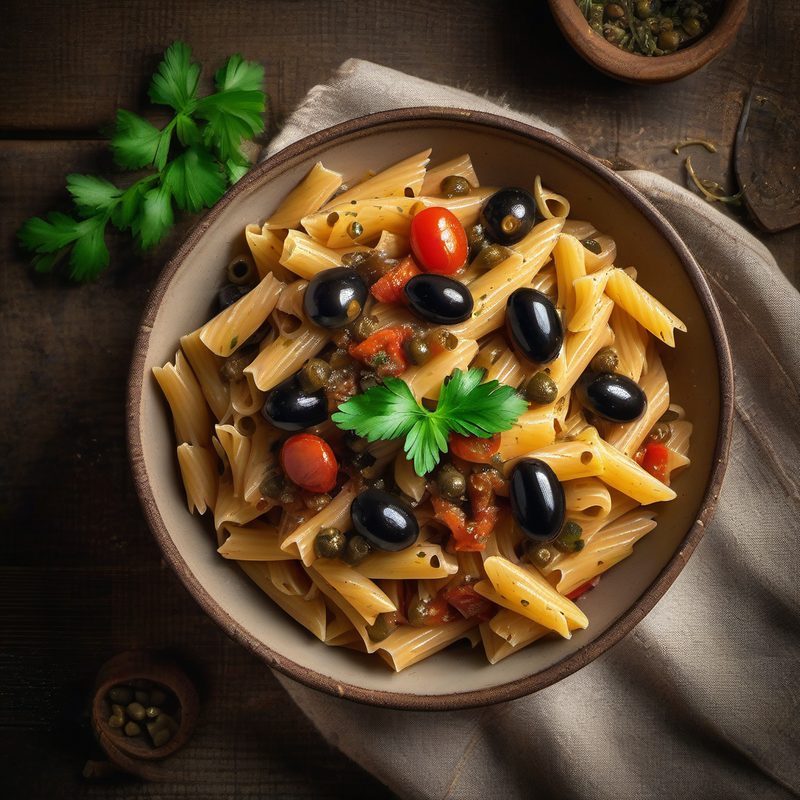
Penne Creamy Garlic Sauce
A Bruno Barbieri-inspired pasta that proves garlic can be delicate, not aggressive — a silky cream of garlic, ham, and Parmigiano, enriched with egg yolks at the very last moment for a sauce that clings like velvet. This is not the pungent, sharp garlic you might expect — it's garlic slowly mellowed in olive oil until sweet and golden, then steeped in milk and cream until the whole sauce becomes a pale, fragrant canvas for salty ham and nutty Parmigiano.
| Amount | Ingredient |
|---|---|
| 12 oz (340 g) | Penne rigate |
| 7 oz (200 g) | Cooked ham (prosciutto cotto), sliced ¼-inch thick |
| 3 | Garlic cloves |
| 1 cup (250 ml) | Heavy cream |
| 1 cup (250 ml) | Whole milk |
| ½ cup (120 ml) | Extra-virgin olive oil, divided |
| 4 | Large egg yolks |
| ½ cup (50 g) | Grated Parmigiano-Reggiano, plus more for serving |
| ⅓ cup (20 g) | Fresh flat-leaf parsley, finely chopped |
| Kosher salt, to taste | |
| Freshly ground black pepper, to taste |
Garlic gets a bad reputation in Italian-American cooking — all burn and bitterness, the result of hitting high heat too hard and too fast. Bruno Barbieri, the Michelin-starred Italian chef known for his precise, thoughtful technique, takes a different approach here: the garlic is minced fine, then browned slowly in olive oil until it takes on a toasted, almost nutty quality. From there it's simmered with milk and cream for a full ten minutes — long enough for the garlic to surrender completely into the liquid, leaving behind a faint, sweet perfume with zero sharp edges. The finishing touch is a classic mantecatura off the heat: beaten egg yolks and grated Parmigiano stirred in at the last possible moment, creating a sauce that's simultaneously rich, silky, and surprisingly light. The ham adds savory pockets of salt, and the parsley brings a fresh green note through the cream. It's the kind of pasta that feels like a white-tablecloth indulgence but comes together in the time it takes to boil water.
Use level tablespoons and standard US measuring cups. All produce is medium unless specified.
🥘 Equipment
- Large pot (6-quart) for pasta
- Medium saucepan or sauté pan (3-quart)
- Colander
- Chef's knife and cutting board
- Wooden spoon or silicone spatula
- Fine grater or Microplane (for Parmigiano)
- Small bowl (for egg yolks)
- Whisk
📋 Preparation
Step 1 — Mince the Garlic and Prepare the Ham (5 minutes)
Mince the garlic: Peel the 3 garlic cloves and mince them as finely as possible — aim for a paste-like consistency. A garlic press works in a pinch, but hand-mincing produces a more even texture that disperses evenly into the cream.
Cut the ham: Stack the ham slices and cut them crosswise into ⅛-inch-wide strips (julienne). You should have about 1 cup of ham strips. Set aside.
The ham should be cut into thin, even strips so they distribute evenly throughout the sauce without overwhelming any single bite. Prosciutto cotto (cooked ham) is ideal — it's mild, tender, and slightly sweet. Avoid smoked ham, which would compete with the delicate garlic cream.
Step 2 — Sauté the Garlic (3 minutes)
Place the medium saucepan over medium-low heat and add ¼ cup (60 ml) of olive oil. Add the minced garlic and cook, stirring constantly, until the garlic is golden and fragrant — about 2 to 3 minutes. The garlic should sizzle gently without browning too quickly; if it starts to color aggressively, reduce the heat.
The key to this dish is patience with the garlic. Cooking it slowly over medium-low heat transforms its pungent, raw bite into a sweet, nutty, almost caramelized flavor. If the garlic browns too fast, it becomes bitter and acrid — and that bitterness will permeate the entire sauce.
Step 3 — Cook the Ham (1 minute)
Add the julienned ham to the pan with the garlic. Stir and cook for 1 minute — just long enough to warm the ham through and let it absorb some of the garlic oil. Do not let the ham crisp or brown; you want it tender and supple.
Step 4 — Build the Cream Sauce (10 minutes)
Pour in the 1 cup of whole milk and 1 cup of heavy cream. Season with ½ teaspoon of kosher salt and a pinch of black pepper. Stir to combine, scraping up any garlic bits from the bottom of the pan.
Bring the mixture to a gentle simmer over medium heat — small bubbles should break the surface, but the liquid should not boil vigorously. Reduce the heat to low and cook, stirring occasionally, for 10 minutes. The sauce will thicken slightly and take on a pale ivory color. Taste and adjust salt.
Simmering the milk and cream with the garlic for a full 10 minutes is what turns this from "milk with garlic in it" into a cohesive garlic cream. The garlic infuses the dairy completely, and the gentle heat concentrates the flavors. Don't rush this step — it's the foundation of the dish.
Step 5 — Add the Parsley and Cook the Pasta (10 minutes, concurrent)
Finish the sauce: Remove the saucepan from the heat. Stir in the chopped parsley. The residual heat will wilt the parsley gently, releasing its bright, herbaceous aroma into the cream. Set aside, covered, while you cook the pasta.
Cook the pasta: Meanwhile, bring a large pot of generously salted water (about 1½ tablespoons kosher salt per 4 quarts of water) to a rolling boil over high heat. Add the penne and cook until al dente — about 1 minute less than the package directions indicate.
Just before draining, reserve 1 cup of the starchy pasta cooking water. Drain the penne well (do not rinse).
Step 6 — Toss and Mantecare with Egg Yolks (2 minutes)
Return the saucepan with the garlic cream to low heat. Add the drained penne directly into the sauce and toss with a wooden spoon or tongs until every piece is coated and the pasta is reheated — about 1 minute.
Remove the saucepan from the heat completely. In a small bowl, lightly beat the 4 egg yolks with 2 tablespoons of the grated Parmigiano. Pour the egg yolk mixture over the pasta and toss vigorously for 30 to 45 seconds. The residual heat from the pasta and sauce will cook the yolks into a silky, golden emulsion — not scrambled eggs, but a lush, custard-like coating that clings to every piece of penne.
If the sauce seems too thick, add a splash of the reserved pasta water and toss again until it loosens. The starch in the pasta water helps stabilize the egg emulsion.
This is the mantecatura — the crucial off-heat finishing technique that transforms simple ingredients into a luxurious sauce. The heat of the pasta cooks the yolks gently and evenly. Working off the heat (not over the flame) is non-negotiable: direct heat will scramble the yolks into bits rather than emulsifying them into a creamy sauce.
Step 7 — Serve
Divide among warm shallow bowls. Top each serving with a generous shower of the remaining grated Parmigiano-Reggiano and a crack of fresh black pepper. Serve immediately — this pasta waits for no one, and the egg-enriched cream will thicken as it cools.
🧑🍳 Chef's Tips
- Go low and slow with the garlic. This is the single most important rule of the dish. Medium-low heat, constant stirring, and patience. Golden, nutty garlic = success. Brown, bitter garlic = starting over.
- Use prosciutto cotto, not prosciutto crudo. Cooked ham is mild, tender, and slightly sweet — it melts into the background of the cream. Cured prosciutto crudo is too salty and would dominate the delicate sauce.
- Work completely off the heat when adding the egg yolks. The pasta and sauce must be hot enough to cook the yolks, but any direct flame will scramble them. Remove the pan from the burner, count to 10, then add the yolks.
- Temper the egg yolks before adding. Beating the yolks with a little grated Parmigiano before adding them to the pasta helps them incorporate smoothly and prevents shocking the sauce.
- Reserve plenty of pasta water. The starchy water is your safety valve — if the sauce tightens up (which it will as it sits), a splash of pasta water will bring it back to a silky, pourable consistency.
- Serve in warm bowls. Cold bowls will cause the egg-enriched sauce to seize up and thicken unpleasantly. Warm your serving bowls in a 200°F (95°C) oven for 5 minutes before plating.
- Don't skip the parsley. The fresh parsley isn't just a garnish — its bright, grassy flavor cuts through the richness of the cream and eggs, providing essential balance.
❌ Common Mistakes
| Mistake | Why It Hurts | The Fix |
|---|---|---|
| Browning the garlic too quickly | Burnt garlic becomes bitter and acrid, ruining the entire sauce | Cook garlic over medium-low heat, stirring constantly; if it starts to darken fast, remove from heat immediately |
| Adding egg yolks over direct heat | The yolks scramble into tiny curds instead of emulsifying into a creamy sauce | Always remove the pan from the burner before adding the egg mixture |
| Using low-fat milk | The sauce lacks body and richness; the egg yolks alone can't create a silky emulsion | Use whole milk and heavy cream — the fat content is essential for the sauce's texture |
| Overcooking the ham | The ham becomes dry and tough, losing its tender, supple texture | Cook the ham for just 1 minute — it only needs to warm through |
| Skipping the pasta water reserve | Without the starchy water, there's no way to loosen the sauce if it thickens too much | Always reserve at least 1 cup of pasta water before draining |
| Draining the pasta too early | The pasta sits and cools while you build the sauce, leading to a gummy texture when combined | Time the pasta so it finishes exactly when the sauce is ready — or undercook it slightly and finish it in the sauce |
| Not mincing the garlic finely enough | Large garlic pieces won't fully infuse the cream and will leave harsh, raw pockets of flavor | Mince the garlic to a near-paste consistency; a garlic press works well in a pinch |
💡 Variations
| Variation | How To |
|---|---|
| Make it Spicy | Add ½ teaspoon red pepper flakes to the garlic in Step 2. The gentle heat contrasts beautifully with the creamy sauce |
| Add Mushrooms | Sauté 8 oz (225 g) cremini mushrooms, thinly sliced, in 1 tablespoon butter until golden, then add to the sauce with the ham in Step 3 |
| Swap Ham for Pancetta | Substitute 5 oz (140 g) diced pancetta for the cooked ham. Render the pancetta in the olive oil first (about 4-5 minutes), then proceed with the garlic — skip the separate ham step |
| Go Vegetarian | Omit the ham entirely. Add 1 cup (150 g) frozen peas to the sauce in Step 4 — they'll cook gently in the cream and add sweet pops of color and texture |
| Use a Different Pasta Shape | Rigatoni, fettuccine, or paccheri all work beautifully. Avoid delicate shapes like angel hair — the sauce is too rich and needs a sturdy pasta to carry it |
| Add Lemon Zest | Stir in 1 teaspoon freshly grated lemon zest with the parsley in Step 5. The bright citrus cuts through the richness and lifts the whole dish |
| Herb Swap | Replace the parsley with a combination of fresh chives and tarragon (2 tablespoons each, finely chopped) for a more complex, anise-tinged herbal note |
| Smoked Variation | Use smoked ham and add ¼ teaspoon smoked paprika with the milk. The subtle smokiness adds another dimension to the creamy sauce |
❄️ Storage & Leftovers
| Method | Details |
|---|---|
| Refrigerator | Store in an airtight container for up to 1 day. The egg-enriched sauce will thicken considerably and may separate slightly upon cooling |
| Reheating | Reheat gently in a nonstick skillet over low heat with a splash of milk or pasta water, tossing constantly until warmed through (about 3-4 minutes). Do not microwave — the high heat will scramble the egg yolks and ruin the sauce's silky texture |
| Freezing | Not recommended. The egg-cream emulsion breaks irreversibly upon thawing, leaving a grainy, separated sauce. This dish is best enjoyed the day it's made |
🍷 Wine Pairing
| Wine | Why |
|---|---|
| Soave Classico (Veneto) | Garganega's signature almond blossom and lemon-curd notes echo the creamy garlic sauce and Parmigiano. Medium-bodied with enough texture to carry the richness, but bright enough to cut through the egg yolks |
| Gavi di Gavi (Piedmont) | Light-bodied with green apple, citrus, and wet stone — clean and precise. The steely acidity stands up to the creamy sauce without overwhelming the delicate ham |
| Verdicchio dei Castelli di Jesi (Marche) | Crisp, herbal, and mineral-driven with a subtle almond bitterness. The bright acidity and savory notes complement both the garlic and the Parmigiano beautifully |
| Orvieto Classico (Umbria) | Medium-bodied with floral and honeyed notes balanced by a pleasant almond-bitter finish. The subtle sweetness plays off the sweet, slow-cooked garlic |
| Franciacorta Brut (Lombardy) | Italy's sparkling wine, with fine bubbles and brioche notes — the effervescence scrubs the palate clean between bites of rich, creamy pasta, making each bite taste as fresh as the first |
🍺 Beer Pairing
| Beer | Why |
|---|---|
| Italian Dry Lager (Moretti, Peroni) | Crisp, clean, and highly carbonated — the dryness and effervescence cut through the creamy, egg-enriched sauce and reset the palate |
| Belgian Witbier | The subtle coriander and orange peel notes echo the parsley and complement the garlic's gentle sweetness. The hazy, slightly creamy body mirrors the sauce's texture |
| Czech-style Pilsner | Assertive hop bitterness (Saaz) with floral and spicy notes stands up to the richness of the egg yolks and cream without overpowering the dish |
🥗 Suggested Side Dishes
- Simple arugula salad with lemon — A handful of peppery arugula tossed with fresh lemon juice, good olive oil, and shaved Parmigiano-Reggiano. The sharp, peppery greens cut through the creamy pasta beautifully
- Crusty sourdough or ciabatta with olive oil — Essential for sopping up every last smear of garlic cream from the bottom of the bowl
- Roasted asparagus with lemon zest — Asparagus spears roasted at 425°F (220°C) for 8-10 minutes until tender and lightly charred, finished with lemon zest and flaky salt
- Blistered cherry tomatoes — Cherry tomatoes halved and charred in a hot skillet with olive oil until blistered and caramelized. Their sweet acidity is a perfect counterpoint to the rich cream sauce
- Fennel and orange salad — Thinly sliced raw fennel bulb tossed with segments of orange, extra-virgin olive oil, and flaky salt. Bright and crunchy, it offers a refreshing counterpoint
- Sautéed spinach with garlic — A handful of fresh spinach wilted in a hot pan with olive oil and a whisper of garlic. Light, nutritious, and in keeping with the garlic theme
📊 Nutrition (per serving, estimated)
| Calories | Protein | Fat | Carbs | Fiber |
|---|---|---|---|---|
| 720 | 28 g | 42 g | 52 g | 3 g |
Nutrition is an estimate based on 4 servings using 12 oz dried penne, 7 oz cooked ham, 1 cup heavy cream, 1 cup whole milk, 4 egg yolks, ½ cup Parmigiano-Reggiano, and ¼ cup olive oil. Actual values will vary with brands, substitutions, and portion sizes.
❓ Frequently Asked Questions
Why do I add the egg yolks off the heat? Isn't the stove needed to cook them?
The residual heat from the just-drained pasta and the warm cream sauce is more than enough to gently cook the egg yolks into a creamy emulsion. Adding them over direct heat, even low heat, risks scrambling the yolks into tiny, unpleasant curds. The off-heat technique (mantecatura) is the same method used for carbonara and cacio e pepe — it's all about harnessing the pasta's heat, not the stove's.
Can I use pre-minced garlic from a jar?
Fresh garlic is strongly preferred. Pre-minced garlic is often preserved in acid or oil, which alters its flavor and prevents it from browning properly. The slow-golden sauté that is the foundation of this dish requires fresh garlic.
My sauce separated when I added the egg yolks. What went wrong?
Two possible causes: (1) the pan was too hot — the yolks cooked too fast and broke the emulsion; or (2) the pasta was too dry — not enough pasta water was present to help the egg yolks emulsify smoothly. Next time, remove the pan from the heat and let it sit for 10 seconds before adding the yolks, and keep that reserved pasta water handy.
Can I make this ahead for a dinner party?
This dish is best enjoyed immediately — the egg-enriched sauce doesn't hold well. However, you can prepare the garlic cream base (Steps 1-4) up to 1 day ahead, refrigerate it, and then reheat it gently while you cook the pasta. Add the egg yolks and serve immediately when your guests are seated.
What if I don't eat pork? Can I substitute the ham?
Absolutely. Replace the prosciutto cotto with 7 oz (200 g) of cooked turkey breast, cut into thin strips, or omit the meat entirely for a vegetarian version. For a more robust flavor, add ½ cup of sautéed mushrooms in place of the ham.
Is there a dairy-free version of this recipe?
The dairy (cream, milk, Parmigiano) and egg yolks are structural to this sauce — they cannot simply be swapped. For a dairy-free garlic pasta, consider a different preparation like spaghetti aglio e olio (garlic, oil, and chili) or a garlic and walnut pesto.
Can I use pre-grated Parmigiano from a bag?
Pre-grated Parmigiano is coated with anti-caking agents (cellulose powder, potato starch) that prevent it from melting smoothly into the egg and cream emulsion. Grate your Parmigiano from a wedge for the silkiest, most cohesive sauce — it makes a real difference.
The sauce seems thin. Should I simmer it longer?
The sauce may look thin before you add the egg yolks — that's normal. The egg yolks and Parmigiano will thicken and enrich the sauce dramatically. If it's still thin after the mantecatura, that means there's too much liquid; next time, drain the pasta a little more firmly (don't let excess water cling to the pasta) or reduce the cream-milk mixture by cooking it for a minute or two longer before adding the pasta.
🔗 Related Recipes
- Spaghetti Carbonara (page 12)
- Penne alla Vodka (page 4)
- Cacio e Pepe (page 11)
- Pasta with Creamy Tuscan Garlic Sauce (page 78)
- Tagliatelle with Prosciutto and Cream (page 22)
- Fettuccine Alfredo with Parmigiano-Reggiano (page 55)
- Pasta alla Gricia (page 15)
🏷️ Search Tags
📸 Photo Reference
Photo reference: `vol1_123.png` — A wide, shallow white ceramic bowl filled with penne rigate coated in a pale ivory garlic cream sauce. Thin julienne strips of cooked ham are distributed throughout, with flecks of fresh parsley adding bright green contrast. A generous shower of grated Parmigiano-Reggiano sits on top, with a final crack of black pepper visible against the creamy surface. Shot from a 45-degree overhead angle in warm golden-hour light on a rustic wooden table, with a linen napkin and a glass of Soave Classico alongside. The pasta glistens with the silky egg-and-cream emulsion, steam rising gently. Elegant and inviting — a bowl that promises comfort and indulgence.
Recipe from "The Italian Kitchen" by Vita Milanese — Volume 1: Pasta Perfetto
Recipe from The Italian Kitchen by Vita Milanese — Volume 1 · Pasta Perfetto. Discover all volumes on the ebook page.