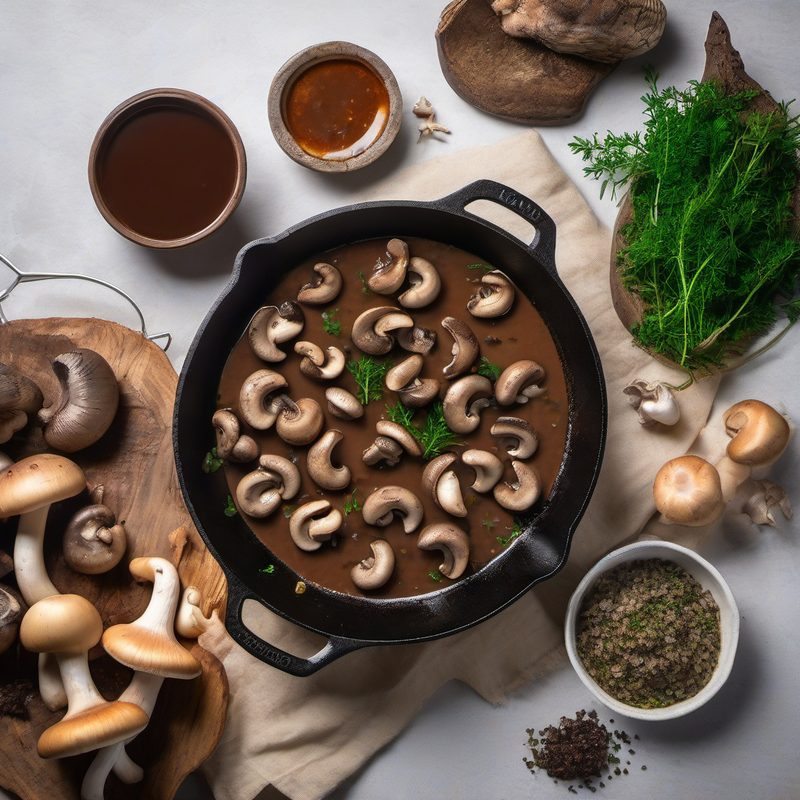
Mushroom Sauce (Sugo ai funghi)
A deeply savory, earthy Italian mushroom sauce built on a classic soffritto base, two types of fresh mushrooms, and rehydrated dried porcini — rich enough for pasta, versatile enough for polenta, and robust enough to stand beside a roast — all simmered into a thick, woodsy ragù in under 40 minutes.
| Amount | Ingredient |
|---|---|
| 80 g (1 oz) | dried porcini mushrooms |
| 250 g (8 oz) | white mushrooms, sliced |
| 200 g (7 oz) | portobello mushrooms, sliced |
| 300 g (1¼ cups) | tomato passata (strained tomatoes) |
| 80 g (½ cup) | shallot, finely chopped |
| 100 g (½ cup) | carrot, finely diced |
| 80 g (½ cup) | celery, finely diced |
| as needed | dry white wine |
| as needed | olive oil |
| to taste | kosher salt |
| to taste | freshly ground black pepper |
This is the kind of sauce that proves mushrooms need very little help to be extraordinary. Dried porcini provide an intense, concentrated flavor base — their soaking liquid is liquid umami, and no pantry shortcut can replicate their deep, almost truffle-like aroma. Fresh white mushrooms and portobellos contribute meaty texture and mild earthiness, while a finely diced soffritto of shallot, carrot, and celery creates a savory foundation that is classically Italian without overwhelming the mushrooms. A splash of dry white wine deglazes the pan and lifts the flavors; tomato passata (strained tomatoes) adds just enough acidity and body to pull everything together without making the sauce taste like a tomato sauce. The result is a mushroom-forward ragù that is equally at home tossed with pappardelle, spooned over soft polenta, or served alongside a roasted chicken or pork loin.
Ingredient notes: Dried porcini are the flavor anchor of this sauce — do not skip them or substitute other dried mushrooms. They are available in the produce or dried-goods section of most grocery stores and Italian markets. White mushrooms (sometimes labeled as "button mushrooms") are the standard mild mushroom; cremini (brown) mushrooms can be used in their place for slightly deeper flavor. Portobellos are simply mature cremini — their larger caps and denser texture make them ideal for sauces where you want recognizable, meaty mushroom pieces. Tomato passata is a smooth, uncooked tomato purée sold in jars or cartons; if unavailable, substitute crushed tomatoes pulsed briefly in a food processor until smooth (do not use tomato paste — it is too concentrated, and tomato sauce is too thick and often seasoned). Use a dry, unoaked white wine such as Pinot Grigio, Sauvignon Blanc, or a simple Italian white like Orvieto. The alcohol evaporates during cooking, leaving behind acidity and subtle fruit that balance the earthy mushrooms.
- Large skillet or Dutch oven (at least 12-inch / 30 cm)
- Small bowl (for soaking porcini)
- Fine-mesh strainer (for straining porcini soaking liquid)
- Chef's knife and cutting board
- Wooden spoon or flat spatula
- Measuring cups and spoons
- Kitchen towel or paper towels (for cleaning mushrooms)
- Rehydrate the porcini (20 min — do this first). Place the dried porcini in a small bowl and cover with cold water. Let soak for 20 minutes until softened. Lift the porcini out of the water, squeezing gently over the bowl to release excess liquid. Reserve the soaking liquid. Rinse the porcini briefly under cold water to remove any grit, then chop finely. Strain the soaking liquid through a fine-mesh strainer lined with a paper towel or coffee filter to remove any remaining grit. Set both aside.
- Prepare the soffritto (5 min). Finely chop the shallot, carrot, and celery. The pieces should be small and uniform — roughly ¼-inch (5 mm) dice — so they cook evenly and melt into the sauce. (See tips below for the proper soffritto technique.)
- Sauté the soffritto (8 min). In a large skillet or Dutch oven, heat 2 tablespoons of olive oil over medium heat. Add the soffritto and cook, stirring occasionally, until the vegetables are softened and translucent — about 8 minutes. The soffritto should not brown; reduce the heat if it starts to take on color.
- Cook the fresh mushrooms (8 min). Add the sliced white and portobello mushrooms to the pan. (If the pan seems crowded, cook in two batches.) Season with a pinch of salt. Cook, stirring occasionally, until the mushrooms release their liquid, the liquid evaporates, and the mushrooms begin to brown — about 8 minutes. The mushrooms will shrink significantly and develop a golden, caramelized exterior.
- Add the porcini (2 min). Add the chopped rehydrated porcini to the pan. Cook for 2 minutes, stirring, until fragrant.
- Deglaze with wine (1 min). Pour in about ½ cup (120 ml) of dry white wine. Stir and scrape up any browned bits stuck to the bottom of the pan. Let the wine bubble and reduce until the pan is nearly dry — about 1 minute.
- Simmer the sauce (20–25 min). Add the tomato passata and about ¼ cup (60 ml) of the strained porcini soaking liquid. Stir to combine. Bring to a gentle simmer, then reduce the heat to low. Cook, stirring occasionally, for 20–25 minutes, until the sauce has thickened and the flavors have melded. The sauce should be thick enough to coat the back of a spoon — not watery, but not as dense as a meat ragù.
- Season and serve (1 min). Remove from heat. Season generously with kosher salt and freshly ground black pepper to taste. Serve immediately.
- Serving Suggestions. Toss with pappardelle, tagliatelle, fettuccine, or pici for a classic pasta dish; spoon over soft, creamy polenta topped with grated Parmesan or pecorino; serve alongside roasted chicken, pork loin, or a seared ribeye steak; use as a filling for crepes or cannelloni with béchamel; layer in a lasagna between sheets of fresh pasta and béchamel; or serve over crusty toasted bread as a rustic crostini topping.
- Clean mushrooms with a brush or dry cloth, never water. Mushrooms are like sponges — rinsing them under running water causes them to absorb moisture, which they will then release into the pan, steaming instead of browning. Use a dry pastry brush, a soft-bristled mushroom brush, or a slightly damp paper towel to wipe away any dirt. If they are very dirty, rinse quickly and pat dry immediately.
- Do not overcrowd the pan when cooking mushrooms. Mushrooms need space to make contact with the hot surface and develop color. If you add too many at once, they steam in their own liquid and turn grey and soggy. Cook them in two batches if your pan is not large enough to hold them in a single, even layer.
- The soffritto should soften, not brown. A traditional Italian soffritto is cooked gently over medium heat until the vegetables are soft and translucent — about 8 minutes. If the soffritto browns, the flavor becomes heavy and caramelized rather than delicate and aromatic. Stir frequently and lower the heat if needed.
- Reserve more porcini liquid than you think you need. The strained soaking liquid is packed with mushroom flavor. You will use about ¼ cup in the sauce, but keeping the rest allows you to adjust the consistency or add an extra flavor boost at the end. Freeze leftover liquid in ice cube trays for future soups, risottos, or sauces.
- Let the sauce rest before serving. Like most Italian sauces, this one benefits from 5–10 minutes off the heat before serving. The flavors continue to meld, and the sauce thickens slightly as it cools.
- Grate fresh Parmesan or pecorino over the finished dish — it is non-negotiable. A shower of hard, sharp Italian cheese adds saltiness, umami, and a creamy richness that ties the sauce together. Serve the cheese on the table so everyone can add their own.
| Mistake | Why It Hurts | The Fix |
|---|---|---|
| Rinsing fresh mushrooms under water | Waterlogged mushrooms steam instead of browning, producing a grey, soggy, watery sauce | Clean mushrooms with a dry brush or slightly damp towel — never submerge them |
| Skipping the dried porcini | The sauce lacks depth, complexity, and the unmistakable earthy-umami note that only dried porcini provide | Dried porcini are the backbone of this sauce — there is no substitute for their concentrated mushroom flavor |
| Using the porcini soaking liquid without straining | Grit and sand from the dried mushrooms end up in the sauce, ruining the texture | Always strain the soaking liquid through a fine-mesh strainer lined with paper towel or a coffee filter |
| Burning the soffritto | Browned, caramelized soffritto gives the sauce a heavy, bitter flavor rather than a clean, aromatic foundation | Cook the soffritto over medium heat, stirring often — it should soften and become translucent, not brown |
| Not cooking the mushrooms long enough | Mushrooms that have not released and reabsorbed their liquid will be rubbery and watery, and will dilute the sauce | Cook the fresh mushrooms for a full 8 minutes until their liquid has evaporated and they are golden and browned |
| Adding the wine too early or skipping the deglaze | The fond (browned bits) from the mushrooms and soffritto stays stuck to the pan — these are packed with flavor that the wine would have lifted | Always deglaze after the mushrooms are cooked, while the pan is still hot and the fond is loose |
| Using too much passata or simmering too briefly | The sauce becomes thin, watery, and tomato-forward, masking the mushroom flavor | Stick to 300 g (1¼ cups) of passata and simmer for a full 20–25 minutes until the sauce has thickened and concentrated |
| Serving the sauce too hot | The flavors are muted and the mushroom complexity is masked by the heat | Let the sauce rest for 5 minutes off the heat before serving — the flavor will bloom as it cools slightly |
- Creamy Mushroom Sauce: Stir in ½ cup (120 ml) of heavy cream or crème fraîche during the last 5 minutes of simmering. The sauce becomes rich, velvety, and luxurious — perfect for pasta or as a sauce for chicken.
- Herb & Garlic Mushroom Sauce: Add 3 finely chopped garlic cloves along with the porcini, and stir in 2 tablespoons of fresh parsley and 1 teaspoon of fresh thyme at the end. The garlic and herbs add brightness and complexity.
- Mushroom & Sausage Sugo: Brown 200 g (7 oz) of sweet or spicy Italian sausage (casings removed) in the pan before adding the soffritto. Crumble the sausage finely and proceed. The sausage adds richness, spice, and a meaty depth that pairs beautifully with the mushrooms.
- Wine-Forward Mushroom Sauce: Double the white wine to 1 cup (240 ml) and let it reduce by half before adding the passata. The extra wine adds acidity and complexity — use a good-quality, dry wine that you would drink.
- Mushroom & Truffle Sauce: Stir in 1–2 teaspoons of truffle oil (white or black) just before serving, off the heat. The truffle aroma amplifies the mushroom character to an almost decadent degree. Do not cook the truffle oil — heat will destroy its delicate aroma.
- Mushroom & Rosemary Sauce: Add 1 tablespoon of finely chopped fresh rosemary along with the porcini. Rosemary and mushrooms are a classic pairing, especially for a sauce served alongside roasted meats.
- Vegetarian/Vegan Version: The recipe as written is already vegan if you omit the Parmesan garnish. Use a good-quality vegan Parmesan or a sprinkle of nutritional yeast for the cheesy-umami finish.
| Storage Method | Details |
|---|---|
| Refrigerator | Store in an airtight container for up to 5 days. The flavor deepens significantly overnight as the mushrooms continue to release their essence into the sauce. |
| Freezer | Freeze in an airtight container or zip-top freezer bag (lay flat to save space) for up to 3 months. Thaw overnight in the refrigerator. The sauce retains its texture and flavor exceptionally well after freezing. |
| Reheating | Reheat gently in a saucepan over medium-low heat, stirring occasionally. Add a splash of water, broth, or porcini soaking liquid if the sauce has thickened too much. Do not microwave — it heats unevenly and can make the mushrooms rubbery. |
| Make ahead | This sauce is an excellent make-ahead dish. Make it 1–3 days ahead and refrigerate. Reheat gently before serving — the flavor will be even better than the day it was made. |
This is a sauces, not a wine-drinking dish on its own, so pairings depend on the meal it accompanies:
- With pasta (pappardelle or tagliatelle): A medium-bodied, earthy red like a Barbera d'Alba or a Dolcetto from Piedmont — the wine's bright acidity cuts through the mushroom richness while its earthy notes mirror the porcini.
- With polenta: A Nebbiolo (Langhe or Barbaresco) or a Sangiovese (Chianti Classico) — the wine's structure and savory, truffle-like character are a classic match for earthy mushroom dishes and creamy polenta.
- With roasted chicken or pork: An unoaked or lightly oaked Chardonnay — the wine's body and subtle fruit support the mushrooms without overpowering the meat.
- With a steak: A full-bodied red like a Super Tuscan or a Cabernet-Merlot blend from the right bank of Bordeaux — the wine's tannins and dark fruit handle both the mushrooms and the beef.
- Non-alcoholic: A dry, tannic black tea or a mushroom-ginger broth (yes, mushroom tea with mushroom sauce — earthy flavor synergy).
| Per Serving (about ½ cup / 120 ml) | |
|---|---|
| Calories | 120 |
| Protein | 4 g |
| Fat | 7 g |
| Carbohydrates | 10 g |
| Fiber | 2 g |
| Sugar | 5 g |
| Sodium | 310 mg |
Nutrition values are approximate and based on dried porcini, white mushrooms, portobello mushrooms, olive oil, tomato passata, and dry white wine. Actual values will vary based on mushroom quantities, oil used, and passata brand. Serving size does not include pasta, polenta, or cheese.
Can I use only one type of fresh mushroom?
Yes. If you cannot find portobellos, use 450 g (1 lb) of white mushrooms or cremini mushrooms. The texture will be slightly less varied, but the sauce will still be delicious. If using only one type, choose cremini (brown) mushrooms for their deeper flavor.
What if I cannot find dried porcini?
Dried porcini are essential to this recipe — they provide a depth of flavor that no other mushroom can replicate. If you cannot find them, the closest substitute is a combination of dried shiitake mushrooms (for umami) and dried morels (for earthy complexity). Soak and chop them the same way. The sauce will be different but still delicious.
Can I use this sauce as a pizza topping?
Absolutely. Spread the sauce (cooled and slightly reduced) over pizza dough instead of tomato sauce, then top with fresh mozzarella, sautéed mushrooms, and a drizzle of truffle oil. Bake at 500°F / 260°C until bubbly and golden.
What pasta shape works best?
Wide, flat noodles are ideal — pappardelle, tagliatelle, fettuccine, or pici. The sauce clings to the broad surfaces and nestles in the folds. Short pasta like rigatoni, penne, or fusilli also works well — the sauce catches inside the tubes and ridges. Avoid very thin pasta like angel hair or spaghetti — the sauce is too hearty and will slide off.
How do I make this sauce thicker?
Simmer it for an additional 5–10 minutes uncovered, stirring occasionally, until it reaches your desired consistency. Alternatively, mash a few of the mushroom pieces against the side of the pan with a wooden spoon to release their starches, which will naturally thicken the sauce.
How do I make this sauce thinner?
Stir in additional strained porcini soaking liquid, vegetable broth, or water 2 tablespoons at a time until you reach your desired consistency. Remember that the sauce will thicken slightly as it cools.
Can I add cream to make it a creamy mushroom sauce?
Yes. Stir in ½ cup (120 ml) of heavy cream or crème fraîche during the last 5 minutes of simmering. If the sauce looks too thin after adding cream, simmer for an additional 2–3 minutes. For a dairy-free version, stir in ½ cup of unsweetened coconut cream or cashew cream.
- Wild Mushroom Risotto (Volume 2)
- Mushroom Gravy (Volume 2)
- Creamy Mushroom Pasta Sauce (Volume 2)
- Truffle Mushroom Sauce (Volume 3)
- Soffritto: The Foundation (Volume 1)
Recipe from "The Italian Kitchen" by Vita Milanese — Volume 2: Sunday Sauce
Recipe from The Italian Kitchen by Vita Milanese — Volume 2 · Sunday Sauce. Discover all volumes on the ebook page.