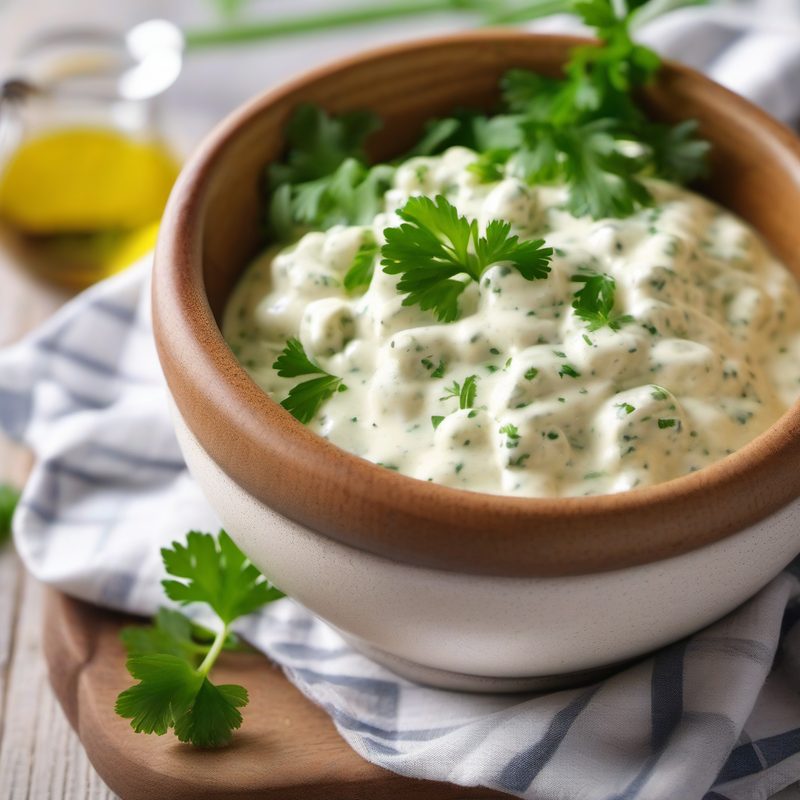
Creamy Quark Mustard Dressing
A light, tangy, protein-packed dressing that transforms simple boiled potatoes into a creamy, bright potato salad — and works equally well as a coleslaw dressing, vegetable dip, or sandwich spread. Ready in 5 minutes with no cooking required.
| Amount | Ingredient |
|---|---|
| 100 g (½ cup) | quark or Greek yogurt |
| 2 tbsp (30 ml) | plain yogurt |
| 1 tbsp (15 ml) | Dijon mustard |
| 1 tbsp (5 g) | fresh parsley, chopped |
| 1 tsp (5 ml) | white wine vinegar |
| to taste | kosher salt |
| to taste | white pepper |
This dressing is a refreshing departure from heavy, mayonnaise-based potato salads. Quark (or Greek yogurt) provides a thick, creamy base with a fraction of the fat and calories of traditional dressings, while its tangy profile pairs beautifully with sharp Dijon mustard. A touch of plain yogurt thins the consistency to the perfect coating texture, white wine vinegar adds bright acidity, and fresh parsley lends a clean, herbal finish. The result is a dressing that clings to every wedge of warm potato without weighing it down — light enough for summer picnics, substantial enough to stand up to hearty sausage or roasted chicken on the side.
Ingredient notes: Quark is a fresh, soft cheese with a texture between yogurt and cream cheese — it is widely available in European and specialty markets, and increasingly in mainstream supermarkets (look near the specialty cheeses or dairy aisle). If you cannot find quark, full-fat Greek yogurt is the best substitute; it has a similar tang and thickness. Do not use nonfat or low-fat Greek yogurt — the dressing will be thin and watery. Plain yogurt provides the right pourable consistency; use whole-milk or 2% yogurt for the best texture and flavor. Dijon mustard is essential here — its sharp, creamy heat is the backbone of the dressing. Yellow or spicy brown mustard lack the proper acidity and will produce a flat, one-dimensional result. White wine vinegar can be substituted with an equal amount of apple cider vinegar for a fruitier note, or Champagne vinegar for a more delicate acidity. White pepper is preferred over black pepper because it blends visually into the creamy white dressing without speckling it.
- Small mixing bowl
- Whisk (or fork)
- Rubber spatula
- Measuring spoons
- Chef's knife and cutting board
- Airtight storage container
- Whisk the base (2 min). In a small bowl, combine the quark (or Greek yogurt), plain yogurt, Dijon mustard, white wine vinegar, and a pinch of salt and white pepper. Whisk vigorously until the mixture is completely smooth, homogenous, and slightly thickened — about 30 seconds of brisk whisking.
- Add the parsley (1 min). Fold in the chopped fresh parsley with a rubber spatula until evenly distributed. Taste and adjust seasoning with additional salt, white pepper, or a drop more vinegar if desired.
- Use immediately or chill (2 min). The dressing is ready to use right away. For the best results with potato salad, toss with warm boiled potatoes while the dressing is at room temperature — the warmth helps the dressing coat the potatoes evenly. Alternatively, cover and refrigerate for up to 3 days. If chilling, let the dressing sit at room temperature for 10 minutes before using, then whisk briefly to re-emulsify.
- Serving Suggestions. Toss with warm, boiled waxy potatoes (such as Yukon Gold or Red Bliss) for a classic German-style potato salad; use as a creamy coleslaw dressing for shredded cabbage and carrots; serve as a dip for raw vegetables, potato wedges, or warm soft pretzels; spread on sandwiches or wraps in place of mayonnaise; dollop over grilled sausages, bratwurst, or roasted chicken; or spoon onto baked potatoes as a lighter alternative to sour cream.
- Use room-temperature ingredients. Cold yogurt and quark straight from the fridge will not whisk into a smooth, cohesive dressing — the fat solidifies and the texture turns grainy. Let all dairy ingredients sit at room temperature for 15 minutes before starting.
- Taste and adjust vinegar. The acidity of white wine vinegar varies by brand. Start with 1 teaspoon, stir, and taste. If the dressing needs more brightness, add another ½ teaspoon. The finished dressing should be tangy but not mouth-puckeringly sour.
- Season generously with salt. Potatoes (and cabbage, if using this as coleslaw dressing) need a surprising amount of salt to taste their best. The dressing should be slightly more seasoned than you think necessary — it will be diluted when tossed with the other ingredients.
- Fold the parsley in at the end, not earlier. If you whisk the parsley into the dressing from the start, the herbs can break down and turn the dressing green. Folding them in at the end preserves their bright color and fresh flavor.
- Let dressed potato salad rest before serving. After tossing the dressing with warm potatoes, let the salad sit for at least 15 minutes at room temperature (or up to 2 hours in the fridge). This allows the potatoes to absorb the dressing and the flavors to meld. Before serving, taste and add another pinch of salt or a splash of vinegar if needed.
- Do not overdress. Start with about two-thirds of the dressing and toss. Add more gradually — the potatoes should be evenly coated and glossy, not swimming in dressing. Any leftover dressing keeps well for another use.
| Mistake | Why It Hurts | The Fix |
|---|---|---|
| Using nonfat or low-fat yogurt | The dressing turns thin, watery, and lacks the creamy body needed to coat potatoes or vegetables | Use full-fat quark and whole-milk yogurt for proper thickness and richness |
| Skipping the salt | The dressing tastes flat and the potatoes remain bland — salt is what makes the tangy, creamy flavors pop | Season the dressing generously and taste before tossing with potatoes |
| Adding parsley too early or chopping too finely | The parsley discolors the dressing green and its flavor becomes muted and grassy | Fold in coarsely chopped parsley at the very end — larger pieces stay bright and fresh-tasting |
| Whisking without emulsifying | Oil-less dressings like this one do not emulsify, but if the yogurt and mustard are not fully blended, the texture is lumpy and uneven | Whisk for a full 30 seconds until the mixture is perfectly smooth and homogenous |
| Using black pepper instead of white | Black specks mar the clean white appearance of the dressing | Use freshly ground white pepper for flavor without visual distraction; or omit pepper entirely if you do not have white pepper |
| Tossing cold dressing onto cold potatoes | The dressing slides off rather than clinging to the potato surface | Toss with warm potatoes (just cool enough to handle) — the warmth helps the dressing adhere |
- Herb Garden: Substitute or supplement the parsley with 1 tablespoon each of chopped fresh chives, dill, or tarragon. Dill is especially good for potato salad; tarragon pairs beautifully with chicken sandwiches.
- Garlic & Shallot: Add ½ teaspoon of finely minced garlic or 1 teaspoon of grated shallot to the dressing. Let the dressing rest for 10 minutes after mixing to allow the garlic or shallot flavor to mellow and infuse.
- Lemon & Herb: Replace the white wine vinegar with an equal amount of fresh lemon juice, and add ½ teaspoon of finely grated lemon zest. The bright, citrusy notes are wonderful with fish or roasted vegetables.
- Horseradish Kick: Stir in 1 teaspoon of prepared horseradish (drained) for a sharp, sinus-clearing heat that pairs beautifully with roast beef sandwiches or hearty potato salad.
- Smoky Mustard: Replace the Dijon mustard with whole-grain mustard and add ¼ teaspoon of smoked paprika. The smoky, rustic character is excellent with grilled sausages or as a burger sauce.
- Creamy Herb Dip: Thin the dressing with an extra tablespoon of plain yogurt and serve as a dip for crudités, pita chips, or soft pretzels. Add a pinch of garlic powder and onion powder for a ranch-style profile.
- Vegan Version: Use plain, unsweetened vegan yogurt (coconut- or soy-based) in place of both the quark and the plain yogurt. The dressing will be slightly thinner and have a different flavor profile, but it still works beautifully as a potato salad dressing or dip.
| Storage Method | Details |
|---|---|
| Refrigerator | Store in an airtight container for up to 3 days. The parsley will darken slightly over time but the flavor remains bright. Stir or whisk briefly before using — the dressing may separate slightly upon standing. |
| Freezer | Not recommended — the dairy base will separate and become grainy upon thawing, and the fresh parsley will lose all color and texture. |
| Make ahead | The dressing can be made up to 24 hours in advance. Leave the parsley out until just before serving for the brightest color and flavor. If making further ahead, prepare the base without parsley and fold it in fresh. |
This dressing is a condiment and not typically paired with wine on its own. When served as part of a potato salad or alongside a main dish:
- With potato salad (as a side): A dry Riesling (Kabinett or Spätlese Trocken) — the wine's bright acidity and subtle fruit mirror the tangy, creamy dressing without overwhelming the potatoes.
- With grilled sausages or bratwurst: A crisp, hoppy German-style Pilsner or a Kölsch — the carbonation and bitterness cut through the richness of both the sausage and the creamy dressing.
- With roasted chicken: An unoaked Chardonnay or a Grüner Veltliner — the wine's medium body and white pepper notes echo the dressing's mustard and white pepper character.
- Non-alcoholic: A sparkling water with a squeeze of lemon and a pinch of salt — the bubbles and acidity refresh the palate between bites of creamy potato salad.
| Per Serving (about 2 tbsp / 30 ml) | |
|---|---|
| Calories | 35 |
| Protein | 3 g |
| Fat | 1.5 g |
| Carbohydrates | 2 g |
| Fiber | 0 g |
| Sugar | 1.5 g |
| Sodium | 150 mg |
Nutrition values are approximate and based on full-fat quark (or Greek yogurt) and whole-milk plain yogurt. Actual values will vary based on yogurt brand and fat content. Serving size assumes dressing only, not including potatoes or other ingredients.
Can I use sour cream instead of quark?
Yes. Sour cream has a similar tang and fat content to quark, though it is slightly thinner. If using sour cream, reduce the plain yogurt to 1 tablespoon to compensate for the looser consistency. The dressing will be slightly more tangy and less creamy than the quark version.
What is the best potato variety for this dressing?
Waxy potatoes are ideal — Yukon Gold, Red Bliss, or fingerling potatoes hold their shape when boiled and have a creamy, dense texture that absorbs the dressing beautifully without turning mushy. Starchy potatoes (russet or Idaho) will fall apart and absorb too much liquid, resulting in a gummy, heavy salad.
Can I use dried parsley instead of fresh?
Fresh parsley is strongly recommended — its bright color and clean, grassy flavor are a key component of the dressing. Dried parsley will rehydrate into small, dark, unappealing flecks with a dusty, hay-like flavor. If fresh parsley is unavailable, substitute fresh chives, dill, or tarragon.
How do I thin the dressing if it is too thick?
Stir in plain yogurt, milk, or water 1 teaspoon at a time until you reach your desired consistency. Remember that the dressing will thicken slightly when chilled, so thin it just beyond your ideal consistency if you plan to refrigerate it before serving.
Can I double this recipe?
Yes. The dressing scales perfectly for larger quantities. Whisk in a larger bowl and adjust salt and vinegar to taste after combining. The dressing keeps well for up to 3 days, making it a great make-ahead option for entertaining.
- Classic Buttermilk Ranch Dressing (Volume 1)
- Herbed Yogurt Sauce (Volume 1)
- German Potato Salad (Volume 2)
- Quick Coleslaw with Creamy Dressing (Volume 1)
- Whole-Grain Mustard Vinaigrette (Volume 1)
Recipe from "The Italian Kitchen" by Vita Milanese — Volume 2: Sunday Sauce
Recipe from The Italian Kitchen by Vita Milanese — Volume 2 · Sunday Sauce. Discover all volumes on the ebook page.