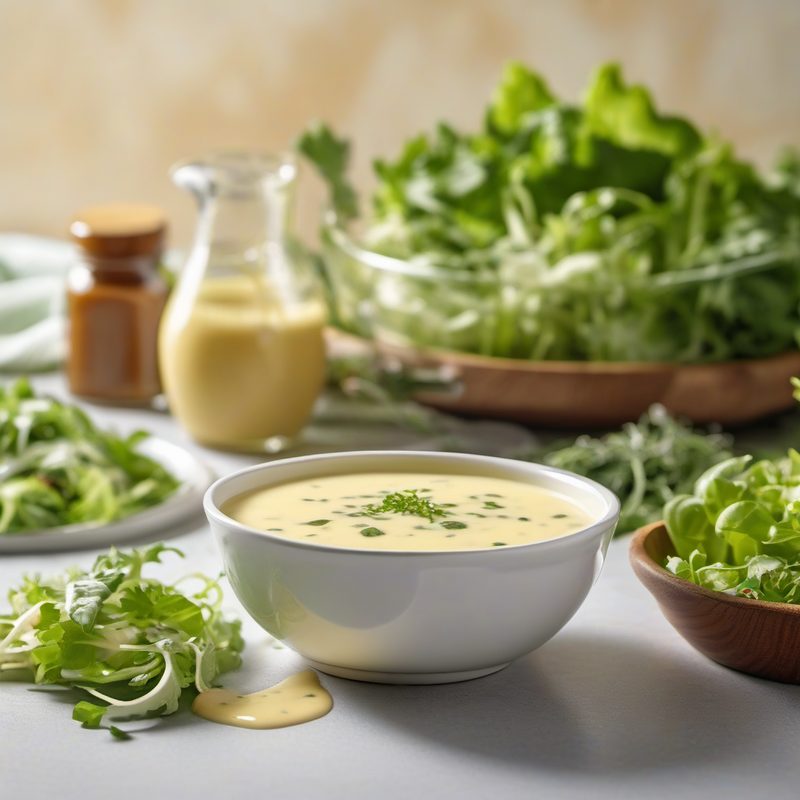
Yogurt Honey Mustard Dressing
1. Why This Recipe Works
Yogurt honey mustard dressing is a creamy, tangy, and subtly sweet sauce that deserves a place in every home cook's rotation. We wanted a dressing that was luscious enough to coat sturdy greens and roasted vegetables yet light enough to serve as a dip for crudités or chicken tenders. Full-fat Greek yogurt provides richness and a thick, spoonable body without the heaviness of mayonnaise. Dijon mustard delivers sharp, clean heat, while millefiori honey offers floral sweetness that complements—rather than overpowers—the yogurt's tang. A splash of apple cider vinegar brightens the whole mixture, and optional garlic and chili flakes let you dial up the savory or spicy notes to suit the occasion. The result is a five-minute dressing that tastes far greater than the sum of its parts.
2. Yield
Makes about ⅔ cup (160 ml), enough for 4 to 6 servings of salad
3. Total Time
Active time: 5 minutes
Total time: 10 minutes (includes 5-minute resting time)
- 150 ml (⅔ cup) plain full-fat yogurt (preferably Greek-style)
- 2 tsp Dijon mustard
- 2 tsp honey (preferably millefiori or another mild wildflower honey)
- 2 tsp apple cider vinegar
- 1 garlic clove, minced (optional)
- Dried chili flakes (optional)
- Salt, to taste
5. Before You Begin
Use full-fat yogurt for the creamiest result; low-fat or nonfat yogurt will produce a thinner, more acidic dressing. If you have time, let the finished dressing rest for 5 to 10 minutes before serving—this allows the honey and mustard to marry with the yogurt and the garlic (if using) to mellow. This dressing is best served the same day but can be refrigerated for up to 3 days; whisk in a teaspoon of water or milk if it thickens too much after chilling.
- Yogurt: Full-fat Greek yogurt is ideal for its thick, creamy texture and mild tang. Plain whole-milk yogurt (not Greek) will produce a thinner dressing; if using it, reduce the vinegar to 1½ teaspoons to avoid excess acidity.
- Dijon Mustard: Smooth Dijon mustard made from brown or black mustard seeds and white wine is essential. Avoid yellow ballpark-style mustard, which is too mild and vinegary. Whole-grain mustard can be substituted for a more textured dressing.
- Honey: Millefiori (wildflower) honey has a complex floral flavor that pairs beautifully with yogurt. Acacia or orange blossom honey also works well. Strong, dark honeys like buckwheat or chestnut will overpower the dressing.
- Apple Cider Vinegar: Unfiltered apple cider vinegar with "the mother" adds fruity brightness. White wine vinegar or fresh lemon juice can be substituted in equal measure.
- Garlic: Use only fresh garlic, finely minced or grated on a microplane. Garlic powder (¼ tsp) can be used in a pinch, but it lacks the fresh pungency.
- Chili Flakes: Red pepper flakes or Aleppo pepper add gentle warmth without overwhelming heat. Calabrian chili paste (¼ tsp) is a fine substitute.
7. Key Equipment
- Small mixing bowl
- Whisk
- Microplane or fine grater (for garlic)
- Measuring spoons
- Liquid measuring cup
8. Step-by-Step Instructions
- Combine the base: In a small mixing bowl, combine the yogurt, Dijon mustard, honey, and apple cider vinegar.
- Whisk until smooth: Whisk vigorously until the mixture is completely smooth, uniform in color, and free of streaks. The dressing should have a thick but pourable consistency.
- Add aromatics (optional): If using, add the minced garlic and/or dried chili flakes. Whisk again to distribute evenly.
- Season: Add salt to taste—start with ¼ teaspoon and adjust upward. Whisk to incorporate.
- Rest and adjust: Let the dressing rest at room temperature for 5 minutes so the flavors can meld. Taste and adjust the balance: add more honey for sweetness, more mustard for pungency, more vinegar for brightness, or more salt to sharpen the overall flavor.
- Serve: Use immediately as a salad dressing, drizzle over grilled vegetables, or serve as a dip.
9. Storage
Refrigerate in an airtight container for up to 3 days. The dressing will thicken as it chills; stir in 1 to 2 teaspoons of water, milk, or buttermilk to restore the desired consistency. Do not freeze.
10. Make Ahead / Leftovers
This dressing is best made fresh but can be prepared up to 1 day in advance. If making ahead, omit the garlic and chili flakes until just before serving—their flavors intensify and can become harsh overnight. Leftover dressing makes an excellent dip for chicken tenders, roasted potato wedges, or raw vegetables. It can also be thinned with additional vinegar and olive oil to create a vinaigrette.
11. Serving Suggestions
- Toss with mixed greens, sliced apples, toasted walnuts, and crumbled blue cheese for a classic fall salad.
- Drizzle over warm grilled asparagus, zucchini, or bell peppers.
- Serve as a dip for crispy baked chicken tenders, roasted cauliflower, or fresh crudités (carrot sticks, cucumber, bell pepper strips).
- Spoon over grain bowls with quinoa, roasted sweet potatoes, chickpeas, and arugula.
- Use as a sandwich spread in place of mayonnaise on turkey, ham, or roasted vegetable sandwiches.
- Dress a simple coleslaw made with shredded cabbage, carrot, and fresh dill.
12. Recipe Variations
- Creamy Herb Version: Add 1 tablespoon each of finely chopped fresh chives, parsley, and dill. Reduce the honey to 1 teaspoon for a more savory dressing.
- Smoky Yogurt Mustard: Substitute 1 teaspoon of the Dijon mustard with smoked Dijon or add ¼ teaspoon smoked paprika. Omit the chili flakes.
- Lemon-Honey Mustard: Replace the apple cider vinegar with an equal amount of fresh lemon juice and add ½ teaspoon finely grated lemon zest.
- Spicy Harissa Version: Add 1 teaspoon harissa paste and reduce the chili flakes to a pinch (or omit). The harissa's smoky heat pairs beautifully with the honey.
- Vegan Version: Substitute the yogurt with plain unsweetened vegan yogurt (coconut or soy-based) and use maple syrup or agave nectar in place of honey.
13. Science of the Recipe
The emulsion in this dressing relies on the natural emulsifying properties of yogurt. Casein proteins in dairy yogurt act as emulsifiers, allowing the water-soluble vinegar and the fat-soluble compounds in the mustard and honey to form a stable, creamy suspension. The acidity of the yogurt and vinegar denatures some of the yogurt's whey proteins, which increases the dressing's viscosity—a phenomenon called acid-set thickening. Honey's high sugar content (primarily fructose and glucose) also contributes to body by increasing the liquid phase's surface tension. If using garlic, its allicin compound (released when the clove is crushed) gradually mellows in the acidic environment, softening its pungency over the first few minutes after mixing.
14. Troubleshooting
- Dressing is too thin: Whisk in 1 to 2 additional tablespoons of full-fat Greek yogurt. Alternatively, let the dressing rest for 10 minutes; it will thicken slightly as the yogurt proteins relax.
- Dressing is too thick after refrigeration: Stir in 1 to 2 teaspoons of water, milk, or buttermilk at a time until the desired consistency is reached.
- Dressing is too tart: Add more honey, ½ teaspoon at a time, to balance the acidity. A pinch of sugar can also help.
- Dressing is too sweet: Add more mustard or vinegar, ¼ teaspoon at a time, until the balance is restored.
- Garlic flavor is too strong: If the dressing has been resting for more than 15 minutes and the garlic is still harsh, add 1 teaspoon of olive oil and a pinch of sugar to mask the edge. For next time, reduce the garlic to half a clove or use a 10-second blanch in boiling water to tame the raw allicin.
- Dressing separated: Whisk vigorously to re-emulsify. If it continues to separate, the yogurt may be too low in fat; whisk in 1 tablespoon of full-fat yogurt or a teaspoon of mayonnaise as a stabilizer.
15. Nutritional Information (per 2-tablespoon serving)
- Calories: 45
- Total Fat: 1.5 g
- Saturated Fat: 1 g
- Cholesterol: 5 mg
- Sodium: 95 mg
- Total Carbohydrates: 6 g
- Dietary Fiber: 0 g
- Sugars: 5 g
- Protein: 2 g
16. Related Recipes
- #9 Low-Fat Buttermilk Ranch Dressing
- #22 Yogurt Gochujang Fusion Sauce
- #24 Cilantro-Lime Crema
- #55 Classic Honey Mustard Sauce
- #86 Lemon-Tahini Yogurt Dressing
17. Test Kitchen Notes
- We tested this dressing with yogurts of varying fat contents. Full-fat Greek yogurt provided the best balance of creaminess and tang; 2% Greek yogurt was acceptable but noticeably thinner, while nonfat Greek yogurt tasted sharp and slightly astringent.
- The type of honey matters. Mild, floral honeys (millefiori, orange blossom, acacia) produced a balanced dressing. Strong, dark honeys overwhelmed the yogurt's delicate tang.
- A 5-minute rest before serving is non-negotiable in our testing. At 0 minutes, the dressing tastes disjointed; at 5 minutes, the flavors are harmonious; after 1 hour in the refrigerator, the garlic becomes noticeably stronger.
- For the best texture, whisk, do not stir. Vigorous whisking temporarily aerates the yogurt, creating a lighter, fluffier dressing that coats greens more evenly.
18. Recipe Source
Developed by the Sunday Sauce Test Kitchen. Inspired by classic Italian salsa allo yogurt preparations and the honey-mustard traditions of northern Europe.
Recipe from The Italian Kitchen by Vita Milanese — Volume 2 · Sunday Sauce. Discover all volumes on the ebook page.