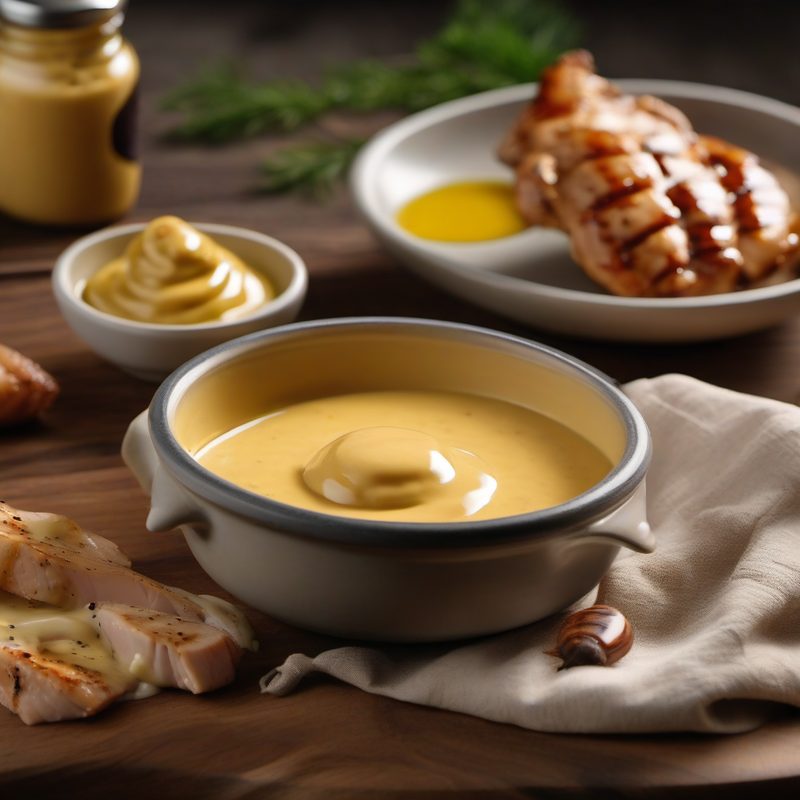
Honey Mustard Sauce
A silky, emulsified sauce that balances the sharp heat of Dijon mustard with the floral sweetness of honey, brightened by apple cider vinegar — this five-ingredient, five-minute sauce elevates grilled chicken, pork, salmon, or roasted vegetables and doubles as a stellar salad dressing.
| Amount | Ingredient |
|---|---|
| Using extra-virgin olive oil that is too peppery | A fruity, grassy, or very peppery olive oil can clash with the mustard and honey, creating a harsh finish Use a mild, buttery extra-virgin olive oil or substitute half the olive oil with a neutral oil like grapeseed or avocado for a cleaner flavor. |
| Skipping the vinegar | The sauce will be one-dimensional — just sweet and hot, without the bright acidity that lifts and balances the flavors The vinegar is essential for cutting through the honey's sweetness and the mustard's heat. Do not reduce the vinegar by more than 1 teaspoon. |
Honey mustard sauce is one of those perfect, simple things — a condiment that appears effortless but delivers an astonishing depth of flavor for the minimal effort involved. At its core, it is a simple vinaigrette-style emulsion of Dijon mustard and honey, with apple cider vinegar providing acidity and extra-virgin olive oil lending body and fruitiness. The mustard provides both the base and the emulsifier: mustard seeds contain mucilage (a natural thickening agent) that helps the oil and vinegar bind into a creamy, stable sauce without the need for egg yolks or lecithin. The result is a sauce that is simultaneously sharp, sweet, tangy, and rich — a universal condiment that works as a glaze, a dipping sauce, a marinade, or a salad dressing. Unlike many commercial versions that rely on corn syrup and stabilizers, this homemade version tastes vibrantly of its four core ingredients, each playing a distinct role in perfect harmony.
Ingredient notes: Use a good-quality Dijon mustard — the classic French variety from Burgundy (such as Maille or Grey Poupon) has a clean, sharp heat and a smooth, creamy texture that is perfect for emulsifying the sauce. Coarse-grain mustard (like whole-grain or Meaux mustard) can be used for a more rustic, textured sauce, but reduce it to 80 g (⅓ cup) and combine it with 20 g (2 tbsp) of smooth Dijon for the best balance of texture and emulsification. Do not use yellow American mustard, which is too sweet, thin, and acidic for this recipe. For the honey, a mild, floral variety like acacia, clover, or orange blossom works beautifully — avoid strong, dark honeys like buckwheat or manuka, which can overpower the mustard. Apple cider vinegar is preferred for its mild, fruity acidity; white wine vinegar or champagne vinegar are excellent substitutes, but white distilled vinegar is too harsh.
- Small mixing bowl (or jar with a tight-fitting lid)
- Whisk (or immersion blender for a perfectly stable emulsion)
- Measuring spoons
- Rubber spatula
- Airtight jar or squeeze bottle for storage
- Combine the mustard, honey, and vinegar (1 min). In a small mixing bowl, combine the Dijon mustard, honey, and apple cider vinegar. Whisk until they are fully blended into a smooth, uniform paste. The mixture will be thin and look slightly separated at this stage — this is normal.
- Emulsify with the olive oil (3 min). While whisking continuously, drizzle in the extra-virgin olive oil in a very slow, steady stream. Whisk vigorously as you pour — the mustard's natural emulsifiers will bind the oil into the mixture, creating a thick, creamy, cohesive sauce. If you are using a jar, you can simply add all the ingredients, seal the lid, and shake vigorously for 30–45 seconds. For the most stable emulsion, use an immersion blender in a tall jar and process for 20 seconds.
- Season and adjust (1 min). Season with a small pinch of salt and a few grinds of black pepper. Whisk once more, then taste. The sauce should be sharp and tangy from the mustard and vinegar, sweet from the honey, and smooth from the olive oil. Adjust the balance to your liking: add more honey for a sweeter sauce, more vinegar for sharper acidity, or more mustard for a hotter kick. Add salt sparingly — Dijon mustard is already salted.
- Store and serve. Transfer the sauce to an airtight container or a squeeze bottle. Use immediately or refrigerate. The sauce will thicken slightly as it chills. Before using after refrigeration, let it sit at room temperature for 10 minutes and whisk or shake briefly to restore the emulsified texture.
- Whisk with confidence. If the sauce looks thin or separated during the initial whisking of mustard, honey, and vinegar, do not worry — the oil will thicken and stabilize it. The mustard acts as a powerful emulsifier; it is very difficult to break this emulsion.
- Use room-temperature ingredients. Cold mustard, honey, or oil can make the emulsion harder to form. If your ingredients are refrigerator-cold, let them sit at room temperature for 15 minutes before starting.
- Shake method works beautifully. For the ultimate no-mess, no-cleanup approach: add all ingredients to a jar, seal the lid, and shake vigorously for 30 seconds. The result is nearly identical to whisking, and you can store it in the same jar.
- Adjust the honey based on use. For a dipping sauce (chicken tenders, fries), use the full amount of honey for a sweeter, more rounded sauce. For a salad dressing, reduce the honey by half and increase the vinegar by 1 tablespoon for a tarter, more vinaigrette-like consistency.
- Make it a day ahead. The flavors meld and mellow beautifully overnight. The sharpness of the mustard and vinegar softens, and the honey's sweetness becomes more integrated. This is one of those rare sauces that truly improves with an overnight rest.
- Control the heat. If you want a spicier sauce, add ¼ to ½ teaspoon of dry mustard powder (like Colman's) dissolved in 1 teaspoon of warm water, or use a hotter mustard such as a sharp English mustard blended with the Dijon at a 1:3 ratio.
| Mistake | Why It Hurts | The Fix |
|---|---|---|
| Using yellow American mustard | Too thin, too sweet, and too acidic — the sauce will lack body, emulsify poorly, and taste one-dimensionally sour | Use real Dijon mustard. It is the backbone of the sauce and cannot be substituted. |
| Pouring the oil too quickly | The oil separates from the mustard-vinegar base instead of emulsifying, resulting in a thin, greasy sauce | Drizzle the oil in a slow, steady stream while whisking constantly. If the sauce breaks, add 1 teaspoon of Dijon mustard to a clean bowl and slowly whisk the broken mixture back into it. |
| Using crystallized honey | The honey will not dissolve properly, leaving gritty, grainy bits in the otherwise silky sauce | Warm the honey gently (place the jar in a bowl of hot water for 5 minutes) until it liquefies. Do not microwave honey, which can destroy its delicate flavor compounds. |
- Spicy Honey Mustard. Add ½ teaspoon of cayenne pepper, 1 teaspoon of finely grated fresh horseradish, or 1–2 tablespoons of sriracha for a fiery kick that is excellent with fried chicken or grilled shrimp.
- Herb Honey Mustard. Stir in 1 tablespoon of finely chopped fresh tarragon, dill, or chives after emulsifying. Tarragon's anise-like notes are especially good with salmon and chicken.
- Smoky Honey Mustard. Substitute the apple cider vinegar with 1½ tablespoons of sherry vinegar and add ½ teaspoon of smoked paprika. Perfect for pork chops, ribs, or roasted vegetables.
- Garlic Honey Mustard. Add 1 small garlic clove (finely grated on a Microplane) or ¼ teaspoon of garlic powder for savory depth. Let it rest for 15 minutes before serving to mellow the raw garlic.
- Lemon-Honey Mustard. Replace the apple cider vinegar with an equal amount of fresh lemon juice and add 1 teaspoon of lemon zest. Brighter and more citrus-forward — ideal with fish or as a salad dressing.
- Creamy Honey Mustard. Add 2 tablespoons of full-fat Greek yogurt or sour cream after emulsifying for a thicker, tangier, creamier sauce that is perfect as a dip for fries, onion rings, or chicken tenders.
- Maple-Mustard Sauce. Replace the honey with pure maple syrup (Grade A or B) for a deeper, more complex sweetness with woody, caramel notes. Especially good with pork and roasted root vegetables.
- Whole-Grain Honey Mustard. Use 50 g (¼ cup) of whole-grain mustard instead of Dijon for a more rustic texture and milder heat. The whole mustard seeds add pops of mild spiciness and visual appeal.
| Storage Method | Details |
|---|---|
| Refrigerator | Store in an airtight jar or squeeze bottle for up to 2 weeks. The sauce will thicken slightly as it chills. Let it sit at room temperature for 10 minutes before using and shake or whisk to restore the emulsion. |
| Freezer | Not recommended — the emulsion can break upon thawing, and the texture of the honey and mustard will degrade. The refrigerated shelf life is long enough that freezing is unnecessary. |
| Room temperature | Can be left at room temperature for up to 3 hours (for a party or serving buffet). After that, return to the refrigerator. The acidity from the vinegar acts as a natural preservative, but the olive oil can go rancid if left at room temperature for extended periods. |
Honey mustard sauce is a remarkably versatile condiment. Here are some of its best uses:
- With grilled chicken: Brush it on chicken thighs or breasts during the last 2 minutes of grilling, and serve extra on the side. The honey caramelizes beautifully over the heat.
- With pork: A classic match — serve with grilled pork chops, roasted pork tenderloin, or pan-fried pork cutlets. The sweetness of the honey complements pork's natural savoriness.
- With salmon: Spread a thin layer on salmon fillets before baking or grilling. The mustard forms a crust while the honey glazes the fish.
- As a salad dressing: Thin the sauce with 1–2 tablespoons of additional apple cider vinegar (or water) to reach a drizzle-able consistency. It is outstanding on a simple green salad with shaved Parmesan.
- With roasted vegetables: Toss roasted Brussels sprouts, carrots, or sweet potatoes with honey mustard sauce before serving. The sharp-sweet balance makes vegetables irresistible.
- As a dip: Serve with chicken tenders, fries, onion rings, soft pretzels, spring rolls, or crudité.
- In sandwiches: Spread on turkey, ham, or roast beef sandwiches. It is also spectacular on a grilled cheese or a Cubano.
- Wine pairing: An off-dry Riesling (Kabinett or Spätlese) or a Vouvray Demi-Sec — the slight residual sugar in the wine mirrors the honey, while the acidity cuts through the mustard's heat. For beer, a Belgian witbier or a hefeweizen complements the sauce's bright, tangy character.
| Per Serving (about 2 tablespoons / 30 ml) | |
|---|---|
| Calories | 90 |
| Protein | 1 g |
| Fat | 6 g |
| Carbohydrates | 9 g |
| Fiber | 0 g |
| Sugar | 8 g |
Nutrition values are approximate and based on standard Dijon mustard, clover honey, apple cider vinegar, and extra-virgin olive oil. Actual values will vary based on the specific ingredients used.
Can I use a different vinegar?
Yes. Apple cider vinegar is ideal for its mild, fruity acidity, but white wine vinegar, champagne vinegar, or sherry vinegar all work well. Red wine vinegar will add a darker color and slightly more pungent acidity. Avoid white distilled vinegar, which is too harsh and one-dimensional.
My sauce separated — can I fix it?
Yes — separated honey mustard sauce is almost always fixable. Place 1 teaspoon of fresh Dijon mustard in a clean bowl and slowly whisk the broken sauce into it, a few drops at a time, until the emulsion reforms. Alternatively, use an immersion blender: transfer the broken sauce to a tall jar, add 1 teaspoon of Dijon, and blend for 10 seconds.
Can I make this vegan?
Yes. Replace the honey with an equal amount of maple syrup, agave nectar, or a combination of both. Agave nectar is closer to honey in sweetness and consistency. Use a vegan-certified Dijon mustard (most are, but check the label — some contain honey).
Is this sauce gluten-free?
Most Dijon mustards are gluten-free, but some brands may contain malt vinegar or wheat-based thickeners. Check the label of your Dijon mustard to be sure. The remaining ingredients (honey, vinegar, olive oil) are naturally gluten-free.
How can I thicken the sauce?
The sauce as written has a pourable, vinaigrette-like consistency. To thicken it for use as a dip, add 1 tablespoon of Greek yogurt, sour cream, or mayonnaise after emulsifying. For a thicker, more spreadable consistency, increase the mustard by 20 g (2 tbsp) and reduce the vinegar by 1 tablespoon.
Can I scale this recipe?
Absolutely. Honey mustard sauce scales linearly — double or triple all ingredients and whisk or shake in a larger container. The proportions remain the same. For large batches, use an immersion blender in a tall jar for the quickest, most stable emulsification.
- Dijon Mustard Vinaigrette (Volume 1)
- Classic Mayonnaise (Volume 2)
- Fish Taco Sauce (Volume 2)
- Creamy Quark Mustard Dressing (Volume 2)
- Maple-Balsamic Glaze (Volume 3)
Recipe from "The Italian Kitchen" by Vita Milanese — Volume 2: Sunday Sauce
Recipe from The Italian Kitchen by Vita Milanese — Volume 2 · Sunday Sauce. Discover all volumes on the ebook page.