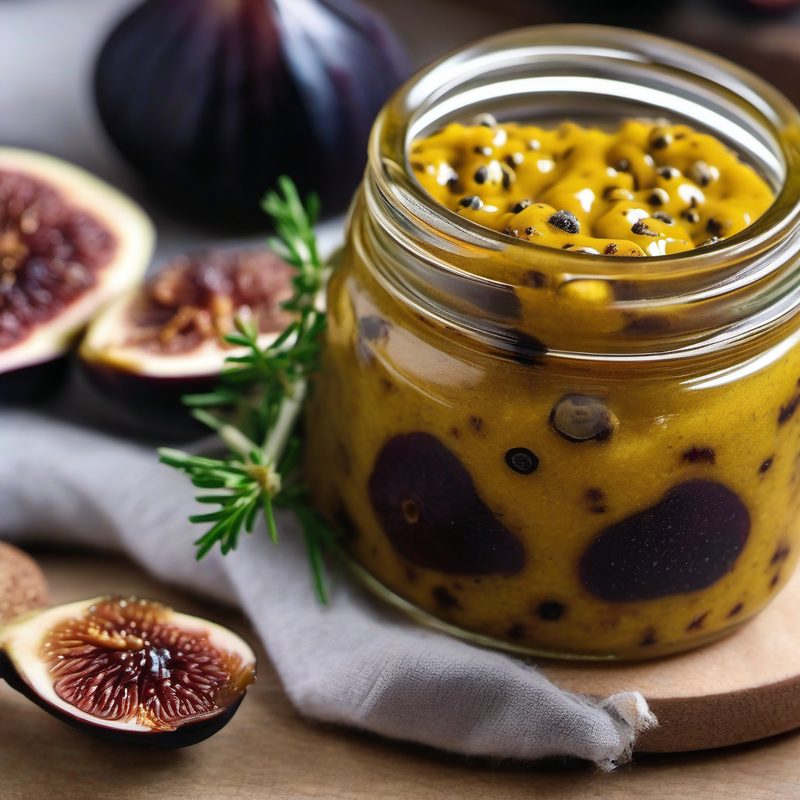
Fig Mustard (Senape ai fichi)
1. Why This Recipe Works
Fig Mustard—senape ai fichi in Italian—is a rustic, sweet-and-spicy condiment that bridges the gap between fruit preserves and whole-grain mustard. We wanted a thick, spoonable conserve with tender fig pieces suspended in a warmly spiced mustard syrup. Fresh figs provide natural sweetness and a jammy texture when sautéed in butter before being simmered with red wine and balsamic vinegar. Whole yellow mustard seeds contribute bursts of pungent heat that mellow as they cook, while fennel seeds and fresh thyme add aromatic depth. A brief blitz in the food processor gives you control over the final texture, from chunky to nearly smooth. The result is a versatile accompaniment that elevates everything from aged cheeses and salumi to roasted pork or grilled sausages.
2. Yield
Makes about 2 cups (480 ml)
3. Total Time
Active time: 15 minutes
Total time: 35 minutes
- 3 tbsp raw sugar
- 400 g (14 oz) fresh figs, stems removed, quartered
- ½ tsp fennel seeds
- ¼ tsp black pepper, freshly ground
- ½ tsp salt
- 2 tsp fresh thyme leaves
- 1 tbsp balsamic vinegar
- 40 g (3 tbsp) yellow mustard seeds
- ½ tbsp unsalted butter
- 1 dl (scant ½ cup) dry red wine
5. Before You Begin
Use ripe but firm figs that hold their shape during cooking. Overly soft or bruised figs will break down too quickly and produce a mushy texture. This mustard can be made chunky or smooth; the instructions below detail both options. Sterilize your jars by boiling them for 10 minutes or running them through a hot dishwasher cycle. For longer shelf life, process the filled jars in a boiling-water bath for 10 minutes.
- Figs: Fresh Black Mission or Brown Turkey figs work best. Dried figs can be substituted (rehydrate in warm water for 20 minutes and drain before using), but the texture will be denser and the flavor more concentrated.
- Mustard Seeds: Yellow mustard seeds are mild and slightly pungent. Brown or black mustard seeds are much hotter and will produce a significantly sharper mustard; use half the quantity if substituting.
- Red Wine: A dry red such as Merlot, Cabernet Sauvignon, or Chianti adds body and acidity. Avoid sweet or fortified wines.
- Raw Sugar: Turbinado or demerara sugar adds subtle molasses notes. Granulated white sugar can be substituted.
7. Key Equipment
- Medium saucepan (2–3 quart)
- Wooden spoon or silicone spatula
- Food processor
- Sterilized glass jars with tight-fitting lids (2 half-pint jars or 1 pint jar)
- Canning funnel (optional, for filling jars)
8. Step-by-Step Instructions
- Sauté the figs: In a medium saucepan, heat the butter over medium heat until foaming. Add the quartered figs and cook, stirring occasionally, until they soften and release some of their juices, about 5 minutes.
- Simmer the base: Add the red wine, balsamic vinegar, raw sugar, and salt to the saucepan. Stir to combine, then reduce the heat to low. Cover and cook, stirring occasionally, for 10 minutes. The figs will continue to soften and the liquid will deepen in color.
- Add the spices: Remove the lid and stir in the yellow mustard seeds, fennel seeds, black pepper, and fresh thyme leaves. Cook uncovered over low heat, stirring frequently, until the mixture thickens to a jam-like consistency and the mustard seeds are tender, about 5 minutes more.
- Cool slightly: Remove the saucepan from the heat and let the mixture cool for 5 to 10 minutes. It should still be warm but not steaming.
- Process to desired consistency: Transfer the warm mixture to a food processor. Pulse 4 to 6 times for a chunky texture with visible fig pieces and mustard seeds. For a smoother mustard, process continuously for 15 to 20 seconds. For a completely smooth passata-style mustard, process for 30 to 45 seconds. Do not overfill the processor bowl; work in batches if necessary.
- Jar and store: Spoon the fig mustard into sterilized jars, leaving ¼ inch (6 mm) headspace. Wipe the rims clean, seal tightly with the lids, and let cool to room temperature. Refrigerate immediately.
9. Storage
Refrigerate for up to 3 months. Once opened, always use a clean, dry spoon to avoid introducing bacteria. The mustard will continue to mellow and deepen in flavor over the first week.
10. Make Ahead / Leftovers
Fig mustard tastes best after resting for at least 24 hours to allow the flavors to meld. It can be made up to 3 months in advance and kept refrigerated. Leftover mustard can be stirred into vinaigrettes, used as a glaze for roasted vegetables, or thinned with olive oil and lemon juice for a quick salad dressing.
11. Serving Suggestions
- Spread on a cheese board alongside aged Parmigiano-Reggiano, pecorino, Gorgonzola, or sharp cheddar.
- Serve with cured meats such as prosciutto, salami, soppressata, or coppa.
- Glaze roasted pork loin, pork chops, or ham during the last 10 minutes of cooking.
- Spoon over grilled sausages or bratwurst.
- Dollop onto crostini with fresh ricotta and a drizzle of honey.
- Stir into braised lentils or white beans for a sweet-savory kick.
12. Recipe Variations
- Spiced Fig Mustard: Add 1 star anise pod, 1 cinnamon stick, and 2 whole cloves to the saucepan during the simmering step. Remove before processing.
- Herbed Fig Mustard: Replace thyme with 2 teaspoons fresh rosemary or 1 teaspoon fresh sage, finely chopped.
- Fig and Port Mustard: Substitute the red wine with an equal amount of ruby port for a sweeter, richer flavor.
- Fig Mostarda (Italian-style): Add 1 teaspoon whole black peppercorns, 1 teaspoon mustard oil (or 1 additional tablespoon mustard seeds), and 2 tablespoons honey for a classic Italian mostarda di fichi.
13. Science of the Recipe
Mustard seeds contain the enzyme myrosinase, which reacts with glucosinolates when crushed and moistened to produce allyl isothiocyanate—the compound responsible for mustard's pungent heat. In this recipe, the whole seeds are cooked in liquid, which gradually denatures the myrosinase, resulting in a milder, more rounded heat than freshly ground mustard. The pectin naturally present in figs (particularly in the skin and seeds) helps thicken the mixture as it simmers, while the reduction of red wine concentrates its acidity and tannins, balancing the sweetness of the fruit.
14. Troubleshooting
- Mustard is too thick: Stir in 1 to 2 tablespoons of warm water or white wine until the desired consistency is reached.
- Mustard is too thin: Return the mixture to the saucepan and simmer uncovered for 3 to 5 minutes, stirring constantly, until thickened.
- Mustard is too bitter: Add 1 to 2 teaspoons of honey or maple syrup to balance the bitterness from the mustard seeds or wine.
- Mustard is too sharp/vinegary: Let it rest for 24 to 48 hours in the refrigerator; the flavors will mellow. If still too sharp, stir in a pinch of sugar or a small amount of applesauce.
- Figs didn't soften: Ensure the figs were ripe and cut into uniform quarters. If using slightly underripe figs, increase the covered simmering time by 5 minutes.
15. Nutritional Information (per 1-tablespoon serving)
- Calories: 35
- Total Fat: 0.5 g
- Saturated Fat: 0.2 g
- Cholesterol: 1 mg
- Sodium: 75 mg
- Total Carbohydrates: 7 g
- Dietary Fiber: 1 g
- Sugars: 5 g
- Protein: 0.5 g
16. Related Recipes
- #37 Cocktail Sauce
- #59 Whole-Grain Mustard with Honey
- #67 Quick Pickled Figs with Thyme and Balsamic
- #85 Fig and Walmostarda (Mostarda di Fichi e Noci)
- #91 Balsamic Onion Marmalade
17. Test Kitchen Notes
- We tested this recipe with both dried and fresh figs. Fresh figs yielded a brighter, fruitier mustard with a more tender texture; dried figs produced a denser, more candied result that worked well but required an extra ¼ cup of wine to rehydrate properly.
- Letting the mustard rest overnight is critical—the heat of the mustard seeds recedes and the balsamic and fig flavors come forward.
- If you prefer a very smooth mustard, strain the processed mixture through a fine-mesh sieve to remove the fig seeds, then re-season with salt and pepper to taste.
- For a non-alcoholic version, substitute the red wine with equal parts pomegranate juice and water plus 1 tablespoon of red wine vinegar.
18. Recipe Source
Developed by the Sunday Sauce Test Kitchen. Inspired by traditional senape ai fichi from the Emilia-Romagna and Marche regions of Italy.
Recipe from The Italian Kitchen by Vita Milanese — Volume 2 · Sunday Sauce. Discover all volumes on the ebook page.