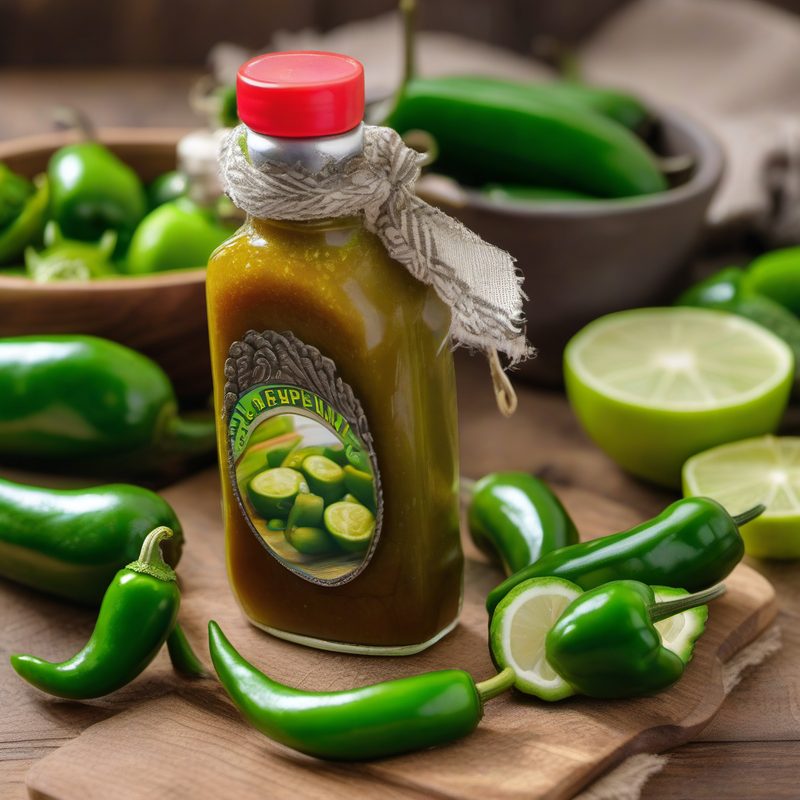
Jalapeño Hot Sauce
A bright, fiery jalapeño sauce that delivers fresh chile heat with surprising nuance — nutty from hazelnut oil, gently sweet from simple syrup, and vibrantly acidic from lime juice, this silky emulsion is the all-purpose hot sauce you never knew you needed.
| Amount | Ingredient |
|---|---|
| 450 g (1 lb) | fresh jalapeño peppers |
| 15 cl (⅔ cup) | grapeseed oil |
| 8 cl (⅓ cup) | hazelnut oil |
| 6 cl (¼ cup) | simple syrup |
| 3 cl (2 tbsp) | fresh lime juice (from about 1 lime) |
| to taste | kosher salt |
| to taste | cayenne pepper |
| as needed | water |
This is not your standard vinegary hot sauce. Inspired by the vibrant, fruit-forward salsas of Mexico, this jalapeño sauce takes a different path: fresh jalapeños are gently softened in grapeseed oil, then blended with hazelnut oil (for a subtle, toasty richness), simple syrup (for balance, not sweetness), and fresh lime juice (for acidity and brightness). The result is a hot sauce that is simultaneously spicy, complex, and surprisingly versatile — it adds a kick of heat and a layer of flavor to everything from tacos and eggs to grilled fish and roasted vegetables. The hazelnut oil is the secret weapon here: its nutty, slightly sweet character rounds out the jalapeño's grassiness and adds a luxurious mouthfeel that standard hot sauces lack.
Ingredient notes: Fresh, firm jalapeños with smooth, glossy skin are best — avoid peppers that are wrinkled or soft. This recipe yields a medium-heat sauce; for a milder version, remove all seeds and ribs; for a hotter version, leave some or all of the seeds in. Grapeseed oil is chosen for its neutral flavor and high smoke point; do not substitute olive oil, which will overpower the delicate chile flavor. Hazelnut oil is the signature ingredient here — it adds a toasty, nutty depth that is unique; look for it in the specialty oil section of well-stocked supermarkets or online. Do not substitute other nut oils (walnut, almond) as they have distinctly different flavors. Simple syrup (equal parts sugar and water, dissolved) balances the heat without adding a granular texture.
- Kitchen gloves (mandatory — see safety note)
- Chef's knife and cutting board
- Medium saucepan
- Blender (high-speed preferred)
- Fine-mesh sieve (optional, for smoother sauce)
- Sterilized glass bottle or jar with tight-fitting lid
- Measuring cups and spoons
- Rubber spatula
- Prepare the jalapeños (15 min). Wearing kitchen gloves (the capsaicin in jalapeños can cause severe skin and eye irritation), stem the jalapeños. Halve each pepper lengthwise. Using a small spoon or the tip of a knife, scrape out the seeds and white ribs (the pith). For a hotter sauce, reserve some or all of the seeds to add later. Slice the jalapeño halves crosswise into ¼-inch (6 mm) strips.
- Cook the jalapeños (5 min). Heat the grapeseed oil in a medium saucepan over medium heat. Add the sliced jalapeños and cook, stirring frequently, until they are softened and just beginning to turn a shade darker, about 5 minutes. The peppers should be tender but not browned — do not let them fry or crisp.
- Blend the sauce (2 min). Transfer the cooked jalapeños and all of the grapeseed oil from the saucepan to a blender. Add the hazelnut oil, simple syrup, fresh lime juice, a generous pinch of kosher salt, and cayenne pepper to taste (start with ⅛ teaspoon for mild heat, ¼ teaspoon for medium, ½ teaspoon for hot). Blend on high speed until completely smooth and emulsified, about 1 to 2 minutes. The sauce should look like a thick, creamy pale-green emulsion.
- Adjust consistency (1 min). With the blender running on low speed, add water 1 tablespoon at a time until the sauce reaches your desired consistency. For a standard pourable hot sauce, add about 3 to 4 tablespoons of water total. For a thicker sauce (more like a salsa or condiment), add less water or none at all.
- Taste and adjust (1 min). Taste the sauce and adjust seasoning: add more salt for savory depth, more lime juice for brightness, more cayenne for heat, or a few drops more simple syrup if the sauce tastes harsh. If you reserved jalapeño seeds for extra heat, add them now and blend again for 10 seconds.
- Strain (optional, 2 min). For a silky-smooth, seed-free sauce, pour the blended sauce through a fine-mesh sieve set over a bowl, pressing on the solids with a rubber spatula to extract every drop of liquid. Discard the solids. For a rustic, textured sauce, skip this step.
- Bottle and store (1 min). Transfer the sauce to a sterilized glass bottle or jar with a tight-fitting lid. Let cool to room temperature, then refrigerate. The flavors will meld and deepen over the next 24 hours.
- ALWAYS wear gloves when handling jalapeños. Capsaicin from the seeds and ribs can burn your skin for hours and cause severe eye irritation if you touch your face. Wash your hands thoroughly after removing gloves.
- Do not brown the jalapeños. The peppers should be softened but still bright green. Browning will add an unwanted smoky-bitter note that clashes with the sauce's fresh character.
- Use a high-speed blender for the smoothest emulsion. A standard blender may leave small flecks of jalapeño skin. If using a standard blender, blend for a full 2 minutes and strain for a silky result.
- Taste before adding all the salt. The simple syrup and lime juice both contribute to the sauce's balance. Season gradually.
- Let the sauce rest overnight before serving. Like many sauces, this one improves dramatically after a day in the refrigerator as the flavors meld and the heat distributes evenly.
- Clean your blender immediately. Hot sauce residue can stain plastic blender pitchers. Rinse with warm soapy water and a splash of vinegar immediately after transferring the sauce.
| Mistake | Why It Hurts | The Fix |
|---|---|---|
| Not wearing gloves | Capsaicin burns skin and eyes for hours — a painful mistake | Always wear kitchen gloves; wash hands with dish soap afterward |
| Using olive oil instead of grapeseed | Olive oil's fruity, peppery flavor overpowers the delicate jalapeño and hazelnut notes | Use a neutral oil like grapeseed, canola, or sunflower |
| Overcooking the jalapeños | Burnt peppers add bitterness that cannot be balanced | Cook only until softened, about 5 minutes over medium heat |
| Skipping the hazelnut oil | The sauce loses its signature toasty, nutty depth and becomes one-dimensional | Hazelnut oil is essential — do not substitute with another nut oil |
| Over-thinning with water | A watery sauce lacks body and won't cling to food | Add water 1 tablespoon at a time; stop when it reaches a consistency slightly thicker than you want (it thins as it rests) |
| Blending while too hot | Hot liquids expand in the blender, creating pressure that can blow the lid off | Let the cooked jalapeños cool for 5 minutes before blending, and always start on low speed |
| Storing in a non-sterilized container | Bacteria can grow in the sauce, leading to spoilage within days | Sterilize bottles by boiling for 5 minutes or running through a dishwasher cycle |
- Smoky Chipotle Style: Substitute half the jalapeños (225 g / 8 oz) with canned chipotle peppers in adobo sauce (drained). The smoky, dried heat of chipotles adds a dramatically different, south-of-the-border flavor profile.
- Mango-Habanero: Replace the simple syrup with ½ cup (120 g) of ripe mango purée and substitute 2 jalapeños with 2 habanero peppers (seeds removed for less heat). The sweetness of the mango and the floral heat of habanero create a tropical, intensely flavorful sauce.
- Roasted Jalapeño: Instead of pan-cooking the jalapeños, roast them under a broiler (or on a gas flame) until the skin is charred and blistered. Place in a bowl, cover with plastic wrap for 10 minutes, then peel off the blackened skin. The roasted flavor adds a smoky, slightly sweet character.
- Herb-Infused: Add a handful of fresh cilantro (stems and all) and 2 tablespoons of fresh lime zest to the blender. The cilantro adds a bright, grassy note that is wonderful on tacos and grilled fish.
- Tomatillo Verde: Replace 4 of the jalapeños with 4 medium tomatillos (husked, rinsed, and roughly chopped). Add the tomatillos to the pan along with the jalapeños. The tomatillos add a tangy, citrusy acidity that makes the sauce brighter and more complex.
- Garlic Lover's: Add 4 peeled garlic cloves to the pan along with the jalapeños. Roast until softened and lightly golden. The sweet, mellow garlic adds a savory underpinning.
| Storage Method | Details |
|---|---|
| Refrigerator | Store in a sterilized glass bottle or jar for up to 1 month. The sauce's acidity and salt content act as natural preservatives. Shake well before each use (the oils may separate slightly). |
| Freezer | Freeze in ice cube trays, then transfer the frozen cubes to a zip-top freezer bag. Freeze for up to 3 months. Thaw individual cubes as needed. The emulsion may break upon thawing — whisk or blend briefly to re-combine. |
This jalapeño sauce is a condiment, not a main-course sauce, so a full wine pairing is unusual. But for the dishes it typically accompanies:
- Crisp, dry Riesling (Germany or Alsace) — The slight residual sugar in an off-dry Riesling balances the heat while the acidity refreshes the palate.
- Mexican Lager (Modelo Especial or Pacifico) — The clean, crisp maltiness of a lager is the classic partner for anything with chile heat.
- Hazy IPA — The tropical fruit notes in a New England-style IPA complement the jalapeño's grassy, vegetal character.
- Margarita (tequila, lime, orange liqueur) — This is the cocktail equivalent of the sauce itself: bright, acidic, and gently spicy — a perfect match.
| Per Serving (about 1 tablespoon) | |
|---|---|
| Calories | 45 |
| Protein | 0 g |
| Fat | 4 g |
| Carbohydrates | 2 g |
| Fiber | 0 g |
Nutrition values are approximate and based on 1-tablespoon servings using grapeseed oil, hazelnut oil, simple syrup, and fresh lime juice. Actual values may vary based on specific brands and the amount of seeds retained.
Can I use serrano peppers instead of jalapeños?
Yes, but serranos are significantly hotter (about 2-3 times hotter on the Scoville scale). Use the same weight (450 g / 1 lb) but consider removing all seeds and ribs for a manageable heat level. The sauce will have a brighter, grassier flavor with serranos.
My sauce separated in the refrigerator. Is it ruined?
No — separation is natural in an oil-based emulsion. Simply shake the bottle vigorously before each use. If the sauce has separated completely (oil layer on top, solids on bottom), pour it into a blender and blend on low speed for 10 seconds to re-emulsify.
How can I make this sauce shelf-stable?
This recipe is designed for refrigeration. For shelf stability, you would need to add significant vinegar (changing the flavor profile) and follow proper canning procedures. For best flavor and safety, refrigerate and use within 1 month.
The sauce is too spicy. Can I fix it?
Add more simple syrup (1 tablespoon at a time) and blend again. The sugar balances the heat. You can also dilute the sauce by adding more neutral oil (grapeseed) or blending in a small amount of roasted red bell pepper for body and sweetness.
The sauce is not spicy enough. How can I boost the heat?
Add the reserved jalapeño seeds and blend again. If you discarded them, add a pinch of cayenne pepper or a few drops of a habanero-based hot sauce to taste. Alternatively, substitute 2-3 of the jalapeños with serrano or habanero peppers.
Can I use a food processor instead of a blender?
A food processor will work but will produce a coarser, more rustic sauce. The emulsion will be less stable, and the sauce may separate more quickly. For the smoothest, most stable sauce, a high-speed blender is strongly recommended.
What are the best uses for this sauce?
This is an incredibly versatile sauce. Use it on: tacos (especially fish or chicken tacos), scrambled eggs or huevos rancheros, grilled corn on the cob, roasted or grilled chicken, fish (grilled salmon or mahi-mahi especially), rice and beans, nachos and quesadillas, burgers and hot dogs, roasted vegetables, or as a dipping sauce for empanadas or spring rolls.
- Chimichurri Sauce (Volume 2)
- Harissa (Volume 1)
- Salsa Verde (Volume 1)
- Cilantro-Lime Crema (Volume 2)
- Roasted Tomato Salsa (Volume 3)
Recipe from "The Italian Kitchen" by Vita Milanese — Volume 2: Sunday Sauce
Recipe from The Italian Kitchen by Vita Milanese — Volume 2 · Sunday Sauce. Discover all volumes on the ebook page.