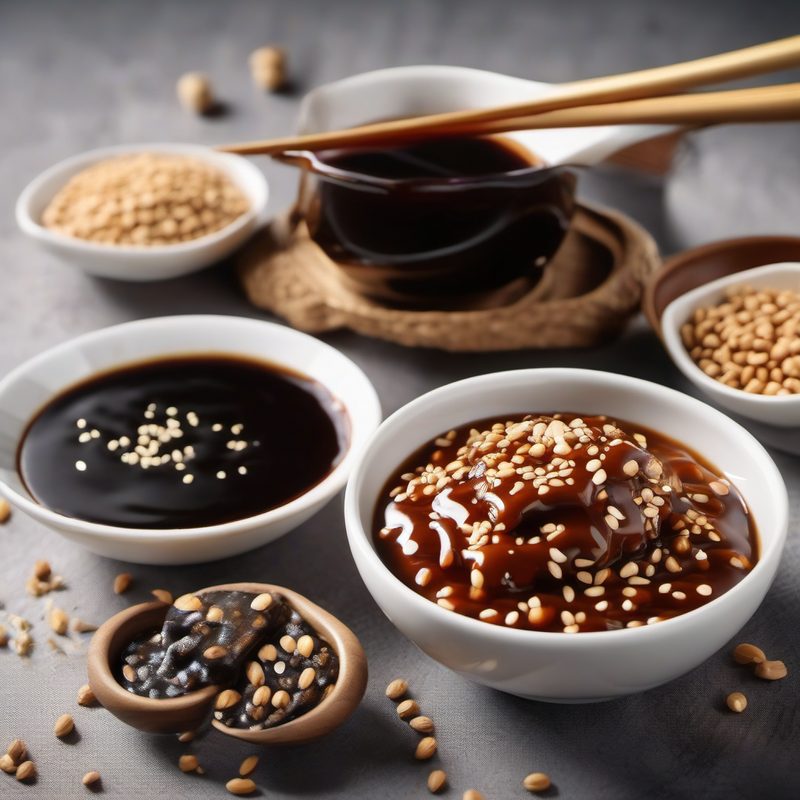
Hoisin Sauce
A deeply savory, sweet-tangy Chinese condiment that's infinitely better than anything from a jar — ready in 2 minutes with pantry staples, and versatile enough for stir-fries, glazes, and dipping sauces.
| Amount | Ingredient |
|---|---|
| ¼ cup | soy sauce (low-sodium recommended) |
| 2 tbsp | creamy peanut butter (natural, no added sugar) |
| 1 tbsp | honey |
| 20 drops | Chinese hot sauce (or Sriracha, to taste) |
| 2 tsp | white vinegar |
| 2 tsp | sesame oil (toasted) |
| ⅛ tsp | garlic powder |
| to taste | freshly ground black pepper |
This homemade version of hoisin sauce blows past the bottled stuff with fresher, brighter flavor and no mystery additives. The secret is balancing five key elements: the salty-umami base of soy sauce, the nutty richness of peanut butter (a surprisingly perfect stand-in for the traditional fermented soybean paste), the sweetness of honey, the fruity acidity of vinegar, and the aromatic warmth of sesame oil. A splash of Chinese hot sauce or Sriracha adds just enough heat to wake up the palate without overpowering the other flavors. The result is a sauce that's simultaneously savory, sweet, tangy, and subtly spicy — the perfect all-purpose condiment for stir-fries, glazes, spring roll dipping, or even brushing onto grilled meats. This recipe makes a small batch that keeps well, so you always have it on hand.
Ingredient notes: Use a low-sodium soy sauce so you control the salt level — regular soy sauce can make the final sauce overly salty. Natural peanut butter (with just peanuts and maybe salt) works best; avoid sweetened or flavored peanut butters. For the hot sauce, Chinese chili garlic sauce (like Lee Kum Kee) or Sriracha both work well. Toasted sesame oil is essential for that nutty, aromatic depth — untoasted sesame oil will not give the same flavor. White vinegar provides clean acidity; rice vinegar can be substituted for a slightly milder tang.
- Small mixing bowl
- Whisk or fork
- Measuring spoons
- Airtight storage container or jar
- Combine the ingredients (2 min). In a small mixing bowl, combine the soy sauce, peanut butter, honey, hot sauce, white vinegar, sesame oil, garlic powder, and a few grinds of black pepper. Whisk vigorously until the peanut butter is fully incorporated and the sauce is smooth, homogeneous, and glossy, about 30–45 seconds. If the peanut butter is stiff, let the mixture sit for 1 minute to soften, then whisk again.
- Taste and adjust. Dip a clean spoon and taste. Adjust the balance to your preference: add more honey for sweetness, more hot sauce for heat, more vinegar for tang, or more pepper for warmth. The sauce should be well-balanced — no single element should dominate.
- Use or store. Use immediately as a stir-fry sauce, glaze for ribs or chicken, or dipping sauce for spring rolls, dumplings, or lettuce wraps. Transfer any leftovers to an airtight container and refrigerate.
- Whisk thoroughly. Peanut butter can be stubborn to incorporate. Whisk with authority, making sure to scrape the bottom and sides of the bowl. If the sauce looks separated or streaky, keep whisking — it will come together.
- Taste before using. The intensity of soy sauce and hot sauce varies by brand. Always taste and adjust the seasoning before serving.
- Let it rest. If the sauce seems too thick after mixing, let it rest for 5 minutes — the peanut butter will soften and the sauce will loosen slightly. If it is still too thick, whisk in 1 teaspoon of warm water at a time.
- Use as a marinade base. This hoisin sauce makes an excellent base for marinades. Combine 3 tablespoons with 1 tablespoon of rice vinegar, 1 teaspoon of grated ginger, and 1 minced garlic clove for a quick Asian-style marinade for chicken, pork, or beef.
| Mistake | Why It Hurts | The Fix |
|---|---|---|
| Using sweetened or flavored peanut butter | Adds unwanted sugar, hydrogenated oils, or artificial flavors that throw off the balance | Use natural peanut butter with no added sugar — just peanuts and salt. |
| Overpowering with hot sauce | The heat masks the subtle interplay of sweet, salty, and nutty flavors | Start with 15 drops, taste, then add more. You can always add heat but cannot remove it. |
| Using untoasted sesame oil | Lacks the deep, nutty aroma that defines authentic hoisin | Always use toasted (dark) sesame oil. Store it in the refrigerator to prevent rancidity. |
| Not whisking thoroughly | The sauce is streaky and gritty instead of smooth and glossy | Whisk vigorously for a full 45 seconds. If needed, use a small blender or immersion blender for guaranteed smoothness. |
| Using too much garlic powder | Raw garlic powder taste dominates and tastes harsh | ⅛ teaspoon is enough. Let the sauce rest 5 minutes — the garlic powder will mellow as it hydrates. |
- Spicy Hoisin: Increase the hot sauce to 30–40 drops (or 1–2 teaspoons) and add ½ teaspoon of red pepper flakes. Great for glazing spicy chicken wings or tossed with noodles.
- Ginger-Garlic Hoisin: Add 1 teaspoon of finely grated fresh ginger and 1 small minced garlic clove (omit the garlic powder). Use within 3 days for maximum freshness.
- Five-Spice Hoisin: Add ¼ teaspoon of Chinese five-spice powder along with the other ingredients. Pairs beautifully with roasted duck or pork belly.
- Citrus Hoisin: Replace the white vinegar with 1 tablespoon of fresh lime juice and add ½ teaspoon of finely grated lime zest. Bright and refreshing for summer spring rolls or grilled shrimp.
- Vegan Hoisin: This recipe is already vegan (use agave or maple syrup instead of honey if desired). Ensure your peanut butter contains no honey-based additives.
- Hoisin Stir-Fry Sauce: Combine this hoisin sauce with 1 tablespoon of rice vinegar, 1 teaspoon of cornstarch, and 2 tablespoons of water. Use as a quick stir-fry sauce for vegetables, tofu, or thinly sliced beef.
| Storage Method | Details |
|---|---|
| Refrigerator | Store in an airtight container or jar for up to 2 weeks. The sesame oil may solidify slightly when cold — simply let the sauce come to room temperature for 10 minutes, then stir well before using. |
| Freezer | Can be frozen for up to 3 months. Portion into ice cube trays for easy single-use portions. Thaw in the refrigerator overnight or at room temperature for 30 minutes. Whisk well after thawing to re-emulsify. |
| Per Serving (1 tbsp / 15 ml) | |
|---|---|
| Calories | 45 |
| Protein | 2 g |
| Fat | 3 g |
| Carbohydrates | 4 g |
| Fiber | 0 g |
| Sugar | 3 g |
| Sodium | 450 mg |
Nutrition values are approximate and based on low-sodium soy sauce, natural peanut butter, honey, and toasted sesame oil. Actual values will vary based on specific brands used.
Can I use almond butter or tahini instead of peanut butter?
Almond butter works well but will produce a milder, less intensely nutty sauce. Tahini (sesame paste) is also a good substitute and will add a pleasant bitterness that pairs well with the honey and soy sauce. The texture will be slightly different — tahini makes a thinner sauce. Start with 2 tablespoons and adjust as needed.
Is this hoisin sauce authentic?
This is a quick, accessible version inspired by the flavors of traditional Chinese hoisin sauce, which is made from fermented soybean paste, five-spice powder, garlic, and chilies. This version uses pantry-friendly ingredients (peanut butter instead of fermented soybean paste) to achieve a similar sweet-savory profile in minutes. If authenticity is your priority, seek out a jar of authentic hoisin sauce from a Chinese grocery — but for everyday cooking, this recipe delivers excellent flavor with ingredients you already have.
How do I make this gluten-free?
Substitute the soy sauce with tamari or coconut aminos (both gluten-free). Ensure your hot sauce, vinegar, and sesame oil are certified gluten-free. Peanut butter is naturally gluten-free.
Why does my sauce taste overly salty?
You likely used regular (not low-sodium) soy sauce. Low-sodium soy sauce gives you control over the salt level. If your sauce is already too salty, balance it with a squeeze of fresh lime juice, a touch more honey, or an extra teaspoon of peanut butter.
Can I double this recipe?
Yes. This recipe scales easily — simply double all ingredients. The sauce keeps well for 2 weeks in the refrigerator, so making a larger batch is convenient.
- Stir-Fry Sauce (Volume 2)
- Sweet and Sour Sauce (Volume 2)
- Char Siu Glaze (Volume 2)
- Chinese Hot Mustard (Volume 2)
- Ginger Scallion Oil (Volume 1)
Recipe from "The Italian Kitchen" by Vita Milanese — Volume 2: Sunday Sauce
Recipe from The Italian Kitchen by Vita Milanese — Volume 2 · Sunday Sauce. Discover all volumes on the ebook page.