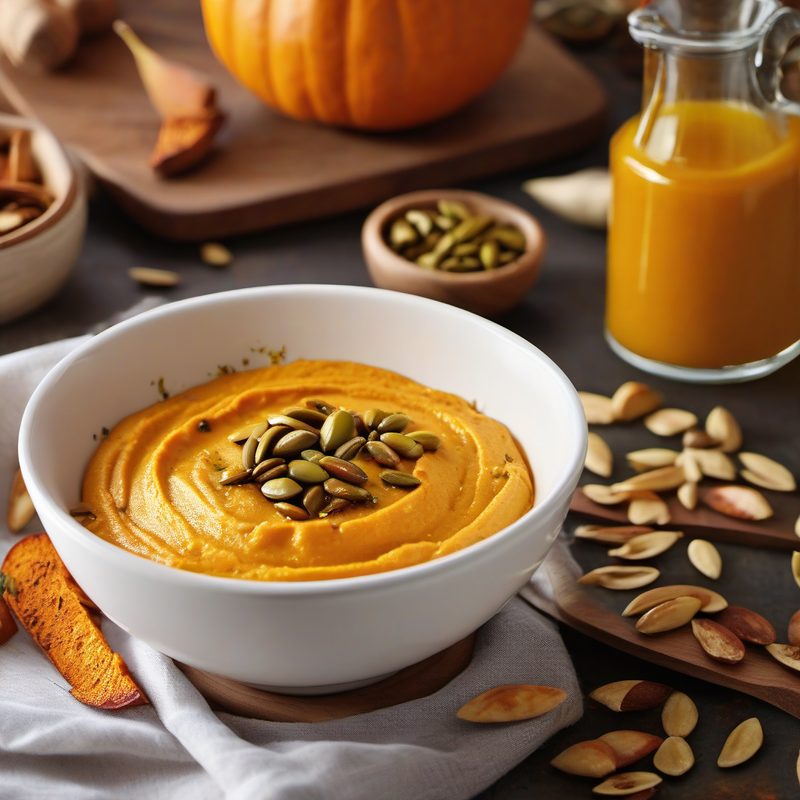
Pumpkin Hummus
Silky, golden, and subtly sweet — this pumpkin hummus pairs the earthy richness of roasted winter squash with classic chickpea-tahini creaminess, creating a vibrant, nutrient-packed dip that is as at home on a holiday table as it is on a weekday snack plate.
Traditional hummus gets its velvety texture from well-processed chickpeas and good tahini. Here, roasted pumpkin or butternut squash is blended into the mix, adding a natural sweetness, a brilliant golden-orange color, and an extra dose of creaminess that makes the dip almost impossibly smooth. The roasting process is key: tossing the pumpkin with olive oil, salt, paprika, and rosemary before it goes into the oven concentrates its flavor, caramelizes its natural sugars, and infuses it with gentle herbaceous warmth. When blitzed in the food processor with chickpeas, tahini, and lemon juice, the result is a hummus that is simultaneously familiar and new — recognizable as hummus but elevated by the sweet, earthy depth of roasted squash. Serve it as a dip with warm pita or crudités, spread it on sandwiches, or use it as a colorful base for roasted vegetables and grilled meats.
Ingredient notes: Delica pumpkin (also known as Kabocha or Japanese pumpkin) has a dense, sweet, almost chestnut-like flesh that works beautifully in this recipe. Butternut squash is an excellent substitute and is available year-round. Do not use canned pumpkin purée — it is too watery and lacks the concentrated flavor that comes from roasting fresh squash. Cooked chickpeas: one 400 g (15 oz) can yields about 230 g (1½ cups) after draining and rinsing. Rinsing removes the starchy, salty liquid that can make the hummus taste tinny. Tahini varies widely by brand — look for one that is pourable and not overly bitter (good-quality tahini lists only sesame seeds as the ingredient). Stir the tahini well before measuring, as the oil and paste separate in the jar. For the best texture, warm the chickpeas slightly before processing (see tips below).
- Chef's knife and cutting board
- Baking sheet
- Parchment paper (optional, for easy cleanup)
- Food processor
- Rubber spatula
- Small bowl (for serving)
- Measuring spoons and cups
- Preheat and prepare the pumpkin (5 min). Preheat the oven to 400°F / 200°C. Cut the pumpkin or butternut squash in half and scoop out the seeds and stringy fibers. (Reserve the seeds — rinse, toss with oil and salt, and roast alongside the squash for a garnish.) Slice the squash into 1–2 cm thick wedges or half-moons. Leave the skin on if using Delica or Kabocha (the skin is edible and softens during roasting); peel butternut squash with a vegetable peeler.
- Roast the pumpkin (25–30 min). Place the squash pieces on a baking sheet. Drizzle generously with olive oil and toss to coat. Sprinkle with salt, paprika, and dried rosemary, turning to coat evenly. Arrange in a single layer, not touching. Roast for 25–30 minutes, flipping halfway through, until the squash is very tender — a fork or knife should slide through with no resistance, and the edges should be lightly caramelized. Remove from the oven and let cool for 5 minutes.
- Process the hummus (2–3 min). In a food processor, combine the roasted pumpkin (discard any rosemary stems if using whole sprigs), the drained and rinsed chickpeas, tahini, lemon juice, 1 tablespoon of olive oil, and a generous pinch of salt. Process for 30 seconds. Scrape down the sides of the bowl with a rubber spatula. Process for another 30–60 seconds until the mixture is very smooth and creamy. If the hummus seems too thick, add water or olive oil 1 tablespoon at a time and process until you reach your desired consistency.
- Season and adjust (1 min). Taste the hummus and adjust the seasoning: add more salt if needed (chickpeas can absorb a surprising amount of salt), more lemon juice for brightness, or more tahini for nuttiness. Blend briefly to incorporate any adjustments.
- Serve (2 min). Transfer the hummus to a serving bowl. Use the back of a spoon to create a swirl on the surface. Drizzle generously with olive oil, sprinkle with paprika and a few fresh rosemary leaves or toasted pumpkin seeds. Serve at room temperature with warm pita bread, crackers, or crudités.
- Serving Suggestions. Serve as a dip with warm pita wedges, pita chips, or flatbread; use as a spread on sandwiches or wraps (try it with roasted vegetables and feta); spoon onto a grain bowl as a creamy dressing alternative; serve alongside grilled lamb, chicken, or falafel; present as part of a meze platter with olives, pickled turnips, fresh herbs, and crunchy vegetables; or use as a colorful base for roasted broccoli, cauliflower, or sweet potatoes.
- Roast the squash until it is very, very tender. This is the single most important step. Under-roasted squash will not blend into a smooth hummus — it will leave fibrous, stringy bits that compromise the texture. The squash should be so tender that a fork meets almost no resistance. When in doubt, roast an extra 5 minutes.
- Warm the chickpeas for the smoothest hummus. Cold chickpeas straight from the can produce a grainy, stiff hummus. Before processing, warm the drained chickpeas in the microwave for 30 seconds or in a small saucepan with a splash of water over medium heat for 2–3 minutes. Warm chickpeas blend into a much silkier, creamier purée.
- Remove the tahini's bitterness. If your tahini tastes noticeably bitter, add a small pinch of sugar along with the salt — the sugar balances the bitterness without making the hummus sweet. Better yet, try a different brand of tahini next time; good tahini should taste nutty and creamy, not bitter or astringent.
- Process longer than you think you need to. Hummus benefits from extended processing — a full 60 to 90 seconds in the food processor after scraping down the sides. This extra time breaks down the chickpea skins and squash fibers into an ultra-smooth paste.
- Reserve some roasted squash for garnish. Before adding all the squash to the processor, set aside a few small cubes. Dice them finely and use them as a garnish on top of the finished hummus — they add visual contrast and a textural reminder of the roasted squash within.
- Adjust the consistency at the end. The perfect hummus should be thick but spreadable — not stiff and not runny. Water loosens the hummus without adding extra oil; olive oil adds richness and flavor. Start with 1 tablespoon of water, process, and check the consistency before adding more.
| Mistake | Why It Hurts | The Fix |
|---|---|---|
| Using canned pumpkin purée | The hummus will be watery, thin, and lack the concentrated caramelized flavor that only comes from roasting fresh squash | Always roast fresh pumpkin or butternut squash — the caramelization is essential for flavor and the dry heat concentrates the sweetness |
| Under-roasting the squash | The squash will not break down completely in the processor, leaving fibrous, stringy pieces in the hummus | Roast until a fork slides through with no resistance — 25–30 minutes minimum, and up to 35 minutes for denser squash |
| Using cold chickpeas | Cold chickpeas yield a grainy, stiff, less-emulsified hummus | Warm the drained and rinsed chickpeas in the microwave for 30 seconds before processing |
| Not stirring the tahini | The separated oil in tahini leaves the hummus with too much paste and not enough fat, resulting in a thick, pasty, unbalanced dip | Always stir tahini thoroughly before measuring — the consistency should be homogeneous and pourable |
| Overdoing the lemon juice | Too much acidity overwhelms the sweet, earthy pumpkin and makes the hummus sour | Start with 1 tablespoon (15 g) — you can always add more, but you cannot take it away |
| Not processing long enough | A 20-second blitz yields a chunky, coarse, unappetizing texture reminiscent of refried beans rather than silky hummus | Process for a full 60–90 seconds after the first scrape-down — the longer you process, the smoother it gets |
- Roasted Garlic Pumpkin Hummus: Wrap 4–6 garlic cloves in foil with a drizzle of olive oil and roast alongside the pumpkin. Squeeze the soft, caramelized cloves into the food processor along with the other ingredients. The garlic adds a mellow, sweet depth that transforms the hummus.
- Smoky Chipotle Pumpkin Hummus: Add 1–2 chipotle peppers in adobo sauce (to taste) when processing. The smoky heat pairs brilliantly with the sweet pumpkin and nutty tahini.
- Curried Pumpkin Hummus: Add 1 teaspoon of curry powder, ½ teaspoon of ground cumin, and ¼ teaspoon of ground turmeric along with the salt. The warm spices complement the pumpkin's natural sweetness and give the hummus a gorgeous golden hue.
- Herb & Lemon Pumpkin Hummus: Add a handful of fresh parsley or cilantro, ½ teaspoon of ground cumin, and an extra squeeze of lemon juice at the end. Bright, herbaceous, and refreshing — perfect for spring.
- Pumpkin Seed (Pepita) Crunch: Toast ¼ cup of pumpkin seeds (pepitas) in a dry skillet over medium heat until they pop and brown, about 3 minutes. Toss with a pinch of salt and smoked paprika. Sprinkle generously over the finished hummus.
- Maple-Brown Butter Drizzle: Instead of plain olive oil, drizzle the finished hummus with browned butter swirled with 1 teaspoon of maple syrup. The nutty, sweet finish is spectacular with the earthy pumpkin and chickpeas.
| Storage Method | Details |
|---|---|
| Refrigerator | Store in an airtight container for up to 5 days. The hummus will firm up as it chills. To restore its creamy texture, let it sit at room temperature for 15–20 minutes, then stir vigorously and add a splash of water or olive oil if needed. |
| Freezer | Freeze in an airtight container for up to 2 months. Thaw overnight in the refrigerator. The texture may be slightly grainier after freezing; process briefly in a food processor with a tablespoon of olive oil or warm water to restore creaminess. |
| Make ahead | This hummus is an excellent make-ahead dish — the flavors meld and deepen overnight. Make it 1–2 days in advance and refrigerate. Bring to room temperature before serving and refresh with a drizzle of olive oil. |
This is a dip, not a main dish, so pairings depend on how it is served:
- As a meze or appetizer with pita and vegetables: A crisp, unoaked white like an Assyrtiko from Santorini or a Sauvignon Blanc from the Loire — the wine's minerality and acidity balance the creamy, sweet richness of the hummus.
- Paired with grilled meats or falafel: A light, chillable red like a Beaujolais (Gamay) or a Frappato from Sicily — serve slightly cool to keep the wine fresh and bright against the dip's earthy-sweet profile.
- For a holiday or fall table: An off-dry Riesling from Germany or Alsace — the wine's touch of sweetness echoes the pumpkin's natural sugars, while its acidity cuts through the tahini's richness.
- As part of a mezze platter with lamb: A medium-bodied, earthy Pinot Noir (Willamette Valley or Burgundy) — the wine's earthy, red-fruit character complements both the lamb and the spiced, roasted pumpkin hummus.
- Non-alcoholic: A sparkling apple cider or a ginger-lemon tonic — the spice and acidity refresh the palate and complement the hummus's warm flavors.
| Per Serving (about ¼ cup / 60 ml) | |
|---|---|
| Calories | 155 |
| Protein | 5 g |
| Fat | 9 g |
| Carbohydrates | 15 g |
| Fiber | 4 g |
| Sugar | 3 g |
| Sodium | 210 mg |
Nutrition values are approximate and based on roasted Delica pumpkin, canned chickpeas (drained and rinsed), tahini, olive oil, and lemon juice. Actual values will vary based on squash type, oil quantity, and tahini brand.
Can I use canned pumpkin purée?
Not recommended. Canned pumpkin purée has a much higher water content than roasted fresh pumpkin and lacks the concentrated, caramelized sweetness that makes this hummus special. The result will be thinner, less flavorful, and a paler color. If you absolutely must use it, roast the purée in a thin layer on a baking sheet at 400°F / 200°C for 15–20 minutes to concentrate it before proceeding.
Can I use sweet potato instead?
Absolutely. Sweet potato is an excellent substitute — it has a similar sweetness and creamy texture when roasted. Peel and cube the sweet potato, toss with oil and spices, and roast for 25–30 minutes until very tender. The hummus will be slightly sweeter and a deeper orange-gold color.
Do I need to peel the chickpeas?
For the absolute smoothest hummus, yes — removing the skins from the chickpeas makes a significant difference. But for most home cooks, it is not necessary. If you are serving this to guests and want a restaurant-smooth texture, pinch the skins off each chickpea (this takes about 5 minutes). If you are making it for a weekday snack, skip it — the extra processing time in the food processor will break down most of the skins.
What if my hummus is too thick?
Add warm water or olive oil 1 tablespoon at a time while the processor is running. Warm liquid incorporates more easily than cold. Process for 20–30 seconds after each addition to fully incorporate. The hummus should be thick but spreadable — it will continue to thicken as it chills.
Can I make this without tahini?
Yes, but the flavor will be different. Substitute with 2 tablespoons of Greek yogurt (for tanginess), 2 tablespoons of sunflower seed butter (for a nutty, tahini-like flavor), or simply omit it and add an extra tablespoon of olive oil. The hummus will be less rich and less nutty, but still delicious.
How do I keep the hummus from drying out in the refrigerator?
Press a piece of plastic wrap directly onto the surface of the hummus before sealing the container. This prevents a skin from forming. When ready to serve, let it come to room temperature, stir well, and drizzle with olive oil to refresh.
- Classic Hummus (Volume 2)
- Red Pepper Hummus (Volume 2)
- Roasted Garlic Hummus (Volume 2)
- Spiced Roasted Carrot Hummus (Volume 3)
- Muhammara (Roasted Red Pepper & Walnut Dip) (Volume 2)
Recipe from "The Italian Kitchen" by Vita Milanese — Volume 2: Sunday Sauce
Recipe from The Italian Kitchen by Vita Milanese — Volume 2 · Sunday Sauce. Discover all volumes on the ebook page.