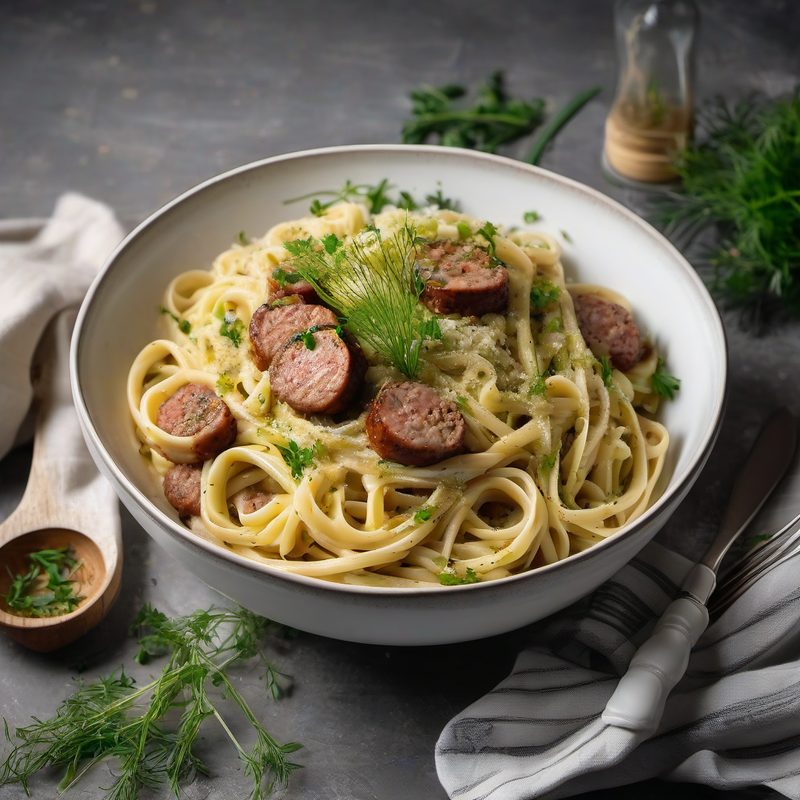
Linguine Sausage Leeks Fennel
Italian sausage meets sweet braised leeks and aromatic wild fennel in a skillet supper that comes together in half an hour—no cream, no tomatoes, just deeply caramelized alliums and savory pork blanketing al dente linguine. This is the weeknight pasta that tastes like it spent all afternoon on the stove.
| Amount | Ingredient |
|---|---|
| 1 lb (450 g) | Sweet or mild Italian sausage, casings removed |
| ½ cup (120 ml) | Light beer (lager or pilsner) |
| 3 large | Leeks (about 1¼ lb / 560 g total), white and light green parts only, sliced into thin rounds |
| ¼ cup | Fresh wild fennel fronds, roughly chopped (or 2 tsp fennel seeds, crushed) |
| 2 tbsp | Extra-virgin olive oil |
| ½ cup (50 g) | Freshly grated Parmigiano-Reggiano, plus more for serving |
| Freshly cracked black pepper |
This is one of those ingenious Italian primi that proves restraint is its own kind of luxury. No heavy sauce, no mountains of cheese—just three main ingredients doing their best work. The sausage renders its fat and browns deeply in a hot nonstick skillet, then a splash of beer deglazes all those caramelized bits from the pan bottom. Leeks sliced into thin rounds cook down until they're sweet and golden, while wild fennel fronds (or fennel seeds, if that's what you've got) weave their subtle licorice perfume through everything. By the time the linguine hits the pan, you've built layers of flavor with almost no hands-on work. A shower of Parmigiano, a crack of black pepper, and you've got a plate of pasta that's somehow both rustic and elegant, hearty and bright all at once.
For the Pasta
For the Sauce
Use level tablespoons and standard US measuring cups. All produce is medium unless specified.
🥘 Equipment
- Large pot (6 qt / 6 L minimum) for boiling pasta
- 12-inch nonstick skillet with lid
- Chef's knife and cutting board
- Colander
- Wooden spoon or heat-resistant spatula
- Microplane or box grater (for Parmigiano)
- Measuring cups and spoons
📋 Preparation
Step 1 — Prepare the Sausage and Leeks (5 minutes)
Remove the casings from the Italian sausage and roughly chop the meat into ½-inch crumbles. Set aside. Trim the leeks: slice off the dark green tops and the root end, halve lengthwise, rinse under cold running water to remove any grit between the layers, then slice crosswise into ¼-inch half-rounds. Chop the fennel fronds and set aside.
Step 2 — Brown the Sausage (8 minutes)
Heat a 12-inch nonstick skillet over medium-high heat. Add the crumbled sausage in a single layer and cook without moving for 2 minutes, until deeply browned on one side. Break the meat apart with a wooden spoon and continue cooking, stirring occasionally, until the sausage is cooked through and well browned all over, about 4 minutes more. Pour in the beer and scrape up any browned bits from the bottom of the pan with your spoon. Let the alcohol simmer off until the liquid is nearly evaporated, about 1 minute.
Don't rush the browning. The deep caramelized crust on the sausage is the backbone of this dish's flavor. A nonstick pan lets you develop that crust without scorching.
Step 3 — Cook the Leeks and Fennel (10 minutes)
Reduce the heat to medium. Add the sliced leeks and chopped wild fennel fronds (or crushed fennel seeds) to the skillet with the sausage. Drizzle in the olive oil and stir to combine. Cook, stirring occasionally, until the leeks are soft, golden, and beginning to caramelize at the edges, about 8–10 minutes. If the pan looks dry, add a tablespoon of water and continue cooking.
The leeks should be jammy and sweet, not crunchy. If they start to brown too quickly, lower the heat and add a splash of water to slow things down.
Step 4 — Cook the Pasta (10 minutes)
While the leeks cook, bring a large pot of generously salted water (about 1½ tablespoons kosher salt per 4 quarts of water) to a rolling boil. Add the linguine and cook until just al dente, 1 minute less than the package directions. Reserve ½ cup of the pasta cooking water, then drain the pasta well.
Step 5 — Combine and Serve (2 minutes)
Add the drained linguine directly to the skillet with the sausage and leeks. Toss vigorously with tongs or a wooden spoon to coat every strand. Add the grated Parmigiano-Reggiano and a generous crack of black pepper, then toss again. If the pasta looks dry, add a splash of the reserved pasta water and toss to create a silky emulsion. Serve immediately in warm bowls with additional grated Parmigiano on the side.
The pasta water is liquid gold—its starch helps the cheese and pan juices cling to every strand. Don't skip it.
🧑🍳 Chef's Tips
- Get the right sausage: Sweet or mild Italian sausage works beautifully here. If you prefer heat, use hot Italian sausage instead — the red pepper flakes in the sausage play nicely with the sweet leeks and fennel.
- Leeks need a good rinse: They're notoriously sandy. After halving lengthwise, hold each half under cold running water and fan the layers open with your fingers to flush out every grain of grit.
- Don't skip the beer: A light lager or pilsner adds subtle malt sweetness and acidity that brightens the rich pork fat. Avoid dark or hoppy beers — they can turn bitter.
- Fresh fennel fronds are worth seeking out: If you can't find wild fennel, look for regular fennel bulbs with the feathery green tops still attached and use the fronds. The bulb itself can be sliced and cooked alongside the leeks for extra fennel flavor.
- Reserve more pasta water than you think you need: It's always better to have too much than too little. The starchy water is what brings everything together into a cohesive, silky sauce.
❌ Common Mistakes
| Mistake | Why It Hurts | The Fix |
|---|---|---|
| Overcooking the linguine | Mushy pasta turns to paste when tossed; structural integrity is lost. | Cook 1 minute less than package directions; the pasta finishes cooking in the skillet. |
| Rinsing the pasta after draining | Rinsing washes away surface starch — the very starch that helps the sauce cling to the noodles. | Never rinse pasta for hot dishes. Drain well and transfer immediately to the skillet. |
| Crowding the skillet during browning | The sausage steams instead of browning, robbing the dish of its fundamental savory flavor. | Use a 12-inch skillet and spread the sausage in a single layer. Work in batches if needed. |
| Adding the leeks too early into the pan | Leeks cook faster than sausage needs to brown; they'll burn before the sausage is done. | Brown the sausage fully first, deglaze, then add the leeks — they only need 10 minutes. |
| Using dark or bitter beer | The caramelized malt and hops overpower the delicate fennel and leek flavors. | Stick with a light lager or pilsner — nothing darker than a pale ale. |
💡 Variations
| Variation | How To |
|---|---|
| Creamy version | Stir in ¼ cup heavy cream along with the Parmigiano in the final step for a richer, saucier pasta. |
| With fennel bulb | Thinly slice 1 small fennel bulb and cook it alongside the leeks. Use the fronds from the same bulb for the garnish. |
| Pasta swap | Replace linguine with fettuccine, bucatini, or pappardelle. Adjust cooking time accordingly. |
| Poultry swap | Substitute 1 lb ground chicken or turkey for the pork sausage. Season generously with fennel seeds, salt, and pepper to compensate for the milder flavor. |
| Add greens | Stir in 3 cups roughly chopped spinach or Swiss chard during the last 2 minutes of cooking the leeks until wilted. |
| Gluten-free | Use your favorite gluten-free linguine. Cook according to package directions and handle gently, as GF pasta is more delicate. |
❄️ Storage & Leftovers
| Method | Details |
|---|---|
| Refrigerator | Store in an airtight container for up to 3 days. The pasta will absorb moisture and soften slightly upon reheating. |
| Freezer | Not recommended — the texture of both the pasta and the leeks degrades significantly upon thawing. |
| Reheating | Reheat in a skillet over medium-low heat with a splash of water or chicken broth. Toss frequently until warmed through, about 3–4 minutes. Add a fresh grating of Parmigiano before serving. |
🍷 Wine Pairing
| Wine | Why |
|---|---|
| Barbera d'Alba | Piedmont's food-friendly red is naturally high in acidity with low tannins — a perfect foil for the rich sausage and sweet leeks. |
| Verdicchio dei Castelli di Jesi | This crisp, slightly herbal white from the Marche region mirrors the fennel notes while cutting through the pork fat. |
| Pinot Nero (Alto Adige) | A light, earthy red from Northern Italy that won't overpower the fennel and leek flavors. Serve slightly cool. |
| Frascati Superiore | Lazio's classic white offers bright citrus and a subtle almond finish that plays nicely with the Parmigiano. |
| Pale Ale or Pilsner | If you prefer beer, a crisp pilsner or mildly hoppy pale ale echoes the beer used in the cooking and cuts the richness beautifully. |
🥗 Suggested Side Dishes
- Arugula salad with lemon vinaigrette and shaved Parmigiano
- Sautéed Swiss chard with garlic and chili flakes
- Roasted cherry tomatoes with fresh basil
- Grilled radicchio drizzled with balsamic glaze
- Warm crusty bread with olive oil for soaking up any remaining pan juices
📊 Nutrition (per serving, estimated)
| Calories | Protein | Fat | Carbs | Fiber |
|---|---|---|---|---|
| 480 | 22 g | 18 g | 54 g | 4 g |
Nutrition values are estimates and will vary based on specific ingredients and portion sizes.
❓ Frequently Asked Questions
Can I use dried fennel seeds instead of fresh wild fennel fronds?
Absolutely. Crush 2 teaspoons of fennel seeds with a mortar and pestle or the flat side of your chef's knife before adding them to the pan. They'll release their oils more effectively when crushed. The flavor will be slightly more concentrated, so you may want to start with 1 teaspoon and adjust to taste.
What beer works best for deglazing?
A light American lager or European pilsner is ideal — think Miller High Life, Pilsner Urquell, or Peroni. You want something crisp and unobtrusive that will evaporate cleanly, leaving behind a faint malt sweetness without competing with the fennel and leeks.
Can I make this dairy-free?
Yes. Omit the Parmigiano-Reggiano and either skip the cheese entirely or substitute a high-quality dairy-free Parmesan alternative. The dish will be lighter but still deeply flavorful thanks to the caramelized leeks and browning on the sausage.
My leeks are huge — how do I know how many to use?
Go by weight rather than count. Three large leeks should total about 1¼ pounds (560 g). If your leeks are particularly enormous, two may be enough. You want roughly 4 cups of sliced leeks once prepped.
Can I use a different shape of pasta?
Yes, though the formula works best with long, strand-like pastas that cling to the pan sauce. Fettuccine, bucatini, or even pappardelle are excellent substitutes. Adjust the cooking time to whatever your chosen pasta package recommends for al dente.
🔗 Related Recipes
- Linguine with Clams and White Wine (Linguine alle vongole)
- Bucatini all'Amatriciana
- Penne with Sausage and Broccoli Rabe
- Orecchiette with Sausage and Peas
- Rigatoni with Fennel and Italian Sausage Ragu
🏷️ Search Tags
Photo reference: `vol1_79.png` — A tangle of golden linguine with browned sausage crumbles and jammy caramelized leeks, twirled neatly in a warm white ceramic bowl. A few feathery fennel fronds scattered on top for contrast. Grated Parmigiano dusted over the top. Shot from a 45° angle, shallow depth of field, with steam rising in soft natural side lighting.
Recipe from "The Italian Kitchen" by Vita Milanese — Volume 1: Pasta Perfetto
Recipe from The Italian Kitchen by Vita Milanese — Volume 1 · Pasta Perfetto. Discover all volumes on the ebook page.