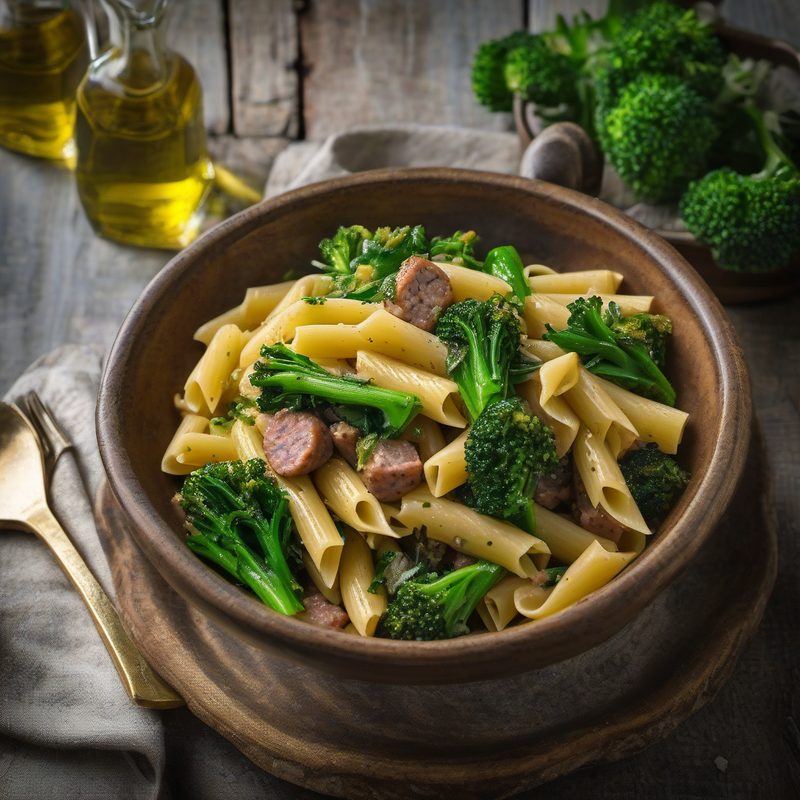
Pasta Sausage Peppers
A clever two-pepper pasta where yellow bell pepper becomes a silky sauce and red bell pepper stays in slices for texture—all while deeply browned sausage crumbles and a whisper of rosemary and mint tie everything together. This is a weeknight pasta that tastes like a Sunday supper, made entirely in one skillet in under 45 minutes.
| Amount | Ingredient |
|---|---|
| 1 lb (450 g) | Sweet or hot Italian sausage, casings removed |
| 3 tbsp (45 ml) | Extra-virgin olive oil, divided |
| 3 cloves | Garlic, smashed |
| 2 sprigs | Fresh rosemary |
| ½ cup (120 ml) | Dry white wine |
| 1 large | Yellow bell pepper, stemmed, seeded, and coarsely diced (about 1½ cups) |
| 1 large | Red bell pepper, stemmed, seeded, and thinly sliced crosswise (about 1½ cups) |
| ¼ cup (60 ml) | Water |
| ¼ cup (10 g) | Fresh mint leaves, roughly chopped |
| Kosher salt and freshly ground black pepper |
This recipe is built on a deceptively simple technique: two peppers, two treatments. The yellow pepper gets diced, simmered until tender, then blended into a velvety sauce that clings to every strand of scialatielli like a pale-golden cream—no cream involved. The red pepper, sliced thinly, retains its shape and gentle crunch, adding pops of sweet-pepper brightness against the rich, porky sausage. The real magic happens in the pan: the sausage browns deeply in olive oil with garlic and rosemary, then deglaces with white wine, building a foundation of savory flavor that permeates everything that follows. A final scatter of fresh mint—not basil, which you might expect—lifts the whole dish with its clean, herbaceous brightness. It's unexpected, it's beautiful, and it works. Scialatielli (a thick, fresh-style spaghetti from Campania) are the traditional choice, but thick spaghetti or bucatini make excellent substitutes.
For the Pasta
For the Sauce
Use level tablespoons and standard US measuring cups. All produce is medium unless specified.
🥘 Equipment
- Large pot (6 qt / 6 L minimum) for boiling pasta
- 12-inch nonstick skillet with lid
- Chef's knife and cutting board
- Immersion blender or countertop blender
- Wooden spoon or heat-resistant spatula
- Colander
- Measuring cups and spoons
📋 Preparation
Step 1 — Prepare the Peppers and Sausage (5 minutes)
Stem and seed both bell peppers. Coarsely dice the yellow pepper into roughly ½-inch pieces. Thinly slice the red pepper crosswise into ¼-inch strips. Keep them separate — they get different treatment.
Remove the casings from the Italian sausage and break the meat into rough ¾-inch (2 cm) crumbles.
Step 2 — Brown the Sausage (8 minutes)
Place a 12-inch nonstick skillet over medium-high heat. Add 2 tablespoons of the olive oil, the smashed garlic cloves, and the rosemary sprigs. Cook until the garlic is fragrant and just beginning to sizzle, about 30 seconds.
Add the sausage crumbles to the pan in a single layer. Cook without moving for 2 minutes, until deeply browned on the bottom. Break the meat apart with a wooden spoon and continue cooking, stirring occasionally, until the sausage is cooked through and well browned all over, about 4 minutes more.
Pour in the ½ cup dry white wine. Scrape up any browned bits from the bottom of the pan — those caramelized drippings are pure flavor. Let the wine bubble until it has nearly evaporated, about 1 minute.
Remove and discard the garlic cloves and rosemary sprigs. Using a slotted spoon, transfer the browned sausage to a bowl and set aside. Leave any oil and browned bits in the pan.
Don't rush the browning. A deep, dark crust on the sausage is non-negotiable — it's the savory backbone of the entire dish. The nonstick surface lets you achieve this without scorching.
Step 3 — Cook the Peppers (15 minutes)
Return the same skillet to medium heat. Add the diced yellow pepper, sliced red pepper, ¼ cup of water, and a generous pinch of kosher salt. Stir to combine and scrape up any remaining fond from the bottom of the pan.
Cover and cook, stirring once halfway through, until the peppers are tender and the yellow pepper pieces are soft enough to mash with a spoon, about 15 minutes.
Resist the urge to peek too often — the trapped steam is what softens the peppers without needing more liquid. A tight-fitting lid is key.
Step 4 — Make the Yellow Pepper Sauce (3 minutes)
Using a slotted spoon, transfer the cooked yellow pepper pieces (and only the yellow ones — fish around for any red strips that snuck in) to a tall, narrow container or blender jar. Add 2 tablespoons of the cooking liquid from the skillet.
Blitz with an immersion blender (or in a countertop blender) until completely smooth and silky. You should have about ¾ cup of bright yellow pepper sauce. Set aside.
Leave the red pepper slices in the skillet along with the remaining cooking liquid — they are done cooking and waiting for the final assembly.
The yellow pepper sauce is the secret to the dish's deceptive creaminess. It's a vegetable purée that delivers body and sweetness without a drop of dairy. If the sauce seems too thick to pour, add another tablespoon of cooking liquid and blend again.
Step 5 — Cook the Pasta (10 minutes, concurrent with Step 4)
While the peppers cook, bring a large pot of generously salted water (about 1½ tablespoons kosher salt per 4 quarts of water) to a rolling boil.
Add the scialatielli or thick spaghetti and cook until just shy of al dente — about 2 minutes less than the package directions specify. For most dried thick spaghetti that calls for 11–12 minutes, cook for 9–10 minutes.
Just before draining, reserve 1 cup of the starchy pasta cooking water. Drain the pasta well (do not rinse).
Undercooking the pasta by 2 minutes is essential — it will finish cooking in the skillet with the pepper sauce and absorb all those layered flavors.
Step 6 — Combine and Finish (3 minutes)
Return the skillet with the red pepper slices to medium heat. Add the drained pasta, the yellow pepper sauce, and ½ cup of the reserved pasta cooking water. Toss vigorously with tongs or a wooden spoon to coat every strand.
Cook, tossing constantly, until the pasta is perfectly al dente and the sauce has thickened into a creamy, clinging emulsion, about 2 to 3 minutes. If the pasta looks dry, add more pasta water a splash at a time — the sauce should coat the strands like a loose, silky glaze, not pool at the bottom.
Add the reserved browned sausage and any accumulated juices from the bowl. Toss to combine and warm through, about 30 seconds.
Remove from heat. Add the chopped fresh mint and the remaining 1 tablespoon of olive oil. Toss once more. Taste and adjust salt with a pinch of kosher salt if needed, and finish with a generous crack of freshly ground black pepper.
Divide among warm shallow bowls. Garnish each serving with a few extra mint leaves and serve immediately.
The mint is the sleeper hit here — its clean, almost citrusy note cuts through the rich pork and sweet peppers in a way that basil simply can't. Add it off the heat so it stays bright and fresh, not wilted and muddy.
🧑🍳 Chef's Tips
- Two peppers, two treatments, one dish: This isn't random — the yellow pepper breaks down into a creamy sauce while the red holds its shape and adds texture. Choose bell peppers that are firm and glossy. A yellow pepper that's starting to soften won't blend into a silky sauce.
- Scialatielli is worth seeking out: These thick, ribbon-like noodles from the Amalfi Coast are traditional in Campanian pasta with peppers. If you can't find them, thick spaghetti (spaghettoni) or bucatini are excellent substitutes. Avoid thin spaghetti — the robust sauce needs a sturdy pasta to cling to.
- Remove the aromatics before they burn: Garlic and rosemary that stay in the pan too long will turn bitter and acrid. Fish them out right after deglazing, once they've done their job.
- Fresh mint, not dried: Dried mint lacks the volatile oils that make fresh mint so bright and aromatic here. If fresh mint is unavailable, use fresh basil as a distant second choice — the flavor profile shifts considerably.
- The pasta water is your emulsion secret: The starch in the reserved water helps the yellow pepper sauce cling to the pasta and creates a silky, cohesive sauce. Don't skip it, and don't substitute plain water.
- Use a nonstick skillet: The sausage browns beautifully without sticking, and the peppers don't need much oil. A well-seasoned cast iron or stainless steel pan works, too, but add an extra tablespoon of oil and watch the heat to prevent scorching.
❌ Common Mistakes
| Mistake | Why It Hurts | The Fix |
|---|---|---|
| Using both peppers the same way | You lose the dual-texture dynamic — one creamy sauce, one crunchy accent — that makes this dish special | Dice the yellow pepper coarsely; slice the red pepper thinly. Keep them separate from start to finish |
| Overcooking the pasta before finishing in the skillet | The pasta absorbs too much water and turns bloated and mushy when it finishes cooking in the sauce | Cook 2 minutes less than package directions; finish in the simmering sauce |
| Skipping the deglaze | All those dark, caramelized bits from the sausage stay stuck to the pan instead of becoming part of the sauce | Always deglaze with the white wine and scrape the pan bottom clean |
| Adding the mint too early | The heat wilts the mint, turning it dark and muddy, and its bright flavor evaporates | Stir in mint off the heat at the very end, just before serving |
| Blending the red pepper into the sauce | You lose all texture and end up with a uniform, monochrome sauce | Only blend the yellow pepper; keep the red pepper slices whole |
| Forgetting to reserve pasta water | You have no starchy liquid to loosen the sauce and create an emulsion | Always reserve at least 1 cup of pasta water before draining |
| Using too much water with the peppers | The peppers steam in a puddle instead of concentrating their flavor, and the cooking liquid becomes watery | Only ¼ cup of water is needed — the peppers release their own moisture as they cook |
💡 Variations
| Variation | How To |
|---|---|
| Spicy version | Use hot Italian sausage and add ¼ teaspoon of red pepper flakes along with the garlic and rosemary in Step 2. The heat plays beautifully against the sweet peppers |
| Add onions | Thinly slice 1 small yellow onion and add it to the skillet with the peppers in Step 3. The caramelized onion adds sweetness and depth |
| Pasta swap | Replace scialatielli with bucatini, thick spaghetti (spaghettoni), pappardelle, or even rigatoni — the sauce clings well to any shape with ridges or a thick cross-section |
| Meat swap | Substitute 1 lb of ground pork or chicken for the Italian sausage. Season generously with 1 teaspoon fennel seeds, ½ teaspoon salt, and ½ teaspoon red pepper flakes to mimic the sausage flavor profile |
| Rosemary swap | Substitute 2 sprigs of fresh thyme or 1 teaspoon dried oregano for the rosemary. The flavor shifts toward a more Mediterranean, herbaceous profile |
| Creamy variation | Stir in 2 tablespoons of heavy cream or crème fraîche along with the yellow pepper sauce for an extra-lush, velvety finish. Calorie count rises by ~30 per serving |
| Add greens | Stir in 3 cups roughly chopped spinach or Swiss chard during the last 2 minutes of cooking the pasta in the sauce, until wilted |
| Gluten-free | Use gluten-free thick spaghetti. Cook according to package directions minus 1 minute, then finish in the sauce as directed. Handle gently — GF pasta is more delicate |
| Roasted pepper shortcut | Use 1 jarred roasted red pepper (sliced) and 1 jarred roasted yellow pepper (diced + blended). Skip Step 3 entirely — just warm the peppers in the skillet for 2 minutes before adding the pasta. Flavor is smokier, less sweet; total time drops to 25 minutes |
❄️ Storage & Leftovers
| Method | Details |
|---|---|
| Refrigerator | Store in an airtight container for up to 3 days. The pasta will absorb moisture and soften, and the mint will lose its vibrant color |
| Freezer | Not recommended — the texture of both the pasta and the pepper sauce degrades significantly upon thawing. The yellow pepper sauce alone can be frozen separately for up to 1 month |
| Reheating | Reheat in a skillet over medium-low heat with a splash of water or chicken broth. Toss frequently until warmed through, about 3–4 minutes. Add a fresh scattering of mint or a drizzle of olive oil before serving. Avoid the microwave — it makes the peppers mushy and the sausage rubbery |
🍷 Wine Pairing
| Wine | Why |
|---|---|
| Falanghina del Sannio (Campania) | A bright, floral white from the same region as scialatielli — medium-bodied with notes of white peach, citrus blossom, and a saline mineral finish that mirrors the sweet peppers and cuts through the pork fat |
| Greco di Tufo (Campania) | Campania's noblest white grape offers intense stone fruit, almond, and a distinct flinty minerality. Its full body and good acidity stand up to the richness of the sausage without overwhelming the peppers |
| Soave Classico (Veneto) | Garganega-based Soave brings lemon zest, almond, and a subtle herbal note that echoes the mint. Clean, medium-bodied, and endlessly food-friendly |
| Verdicchio dei Castelli di Jesi (Marche) | Crisp, salty, and mineral-driven with a pleasantly bitter almond finish — the acidity rinses the palate clean between each rich, porky bite |
| Barbera d'Alba (Piedmont) | If you prefer red, Barbera is the move: naturally high in acidity, low in tannins, with juicy red cherry and earthy notes that complement both the sweet peppers and the browned sausage. Serve slightly cool (55–60°F / 13–15°C) |
| Lambrusco Grasparossa di Castelvetro (Emilia-Romagna) | A dry, bubbly red with bright berry fruit and tangy acidity. Served chilled, it's a joyous, unexpected match — the bubbles scrub the palate clean, and the berry notes play off the red bell pepper's sweetness beautifully |
| Italian Pilsner or Lager (Moretti, Peroni) | A crisp, cold lager is the simplest and most satisfying pairing. The clean carbonation and dry finish reset the palate and let the sausage and peppers shine |
🥗 Suggested Side Dishes
- Arugula salad with lemon vinaigrette and shaved Parmigiano — The peppery bite of arugula and bright acidity of lemon are the perfect counterpoint to the rich, sweet pasta
- Sautéed broccoli rabe with garlic and chili flakes — The slight bitterness of rapini (broccoli rabe) echoes the mint's herbaceous edge and cuts through the pork richness
- Grilled zucchini with lemon and oregano — Simple grilled zucchini ribbons dressed with olive oil, lemon, and fresh oregano — light, summery, and complementary to the peppers
- Roasted cherry tomatoes with balsamic glaze — Concentrated, jammy tomatoes drizzled with balsamic reduction add a sweet-tart pop alongside the pasta
- Warm crusty bread with olive oil — A crusty ciabatta or sourdough for sopping up any remaining yellow pepper sauce from the bottom of the bowl — this is not optional
- Fennel and orange salad — Thinly sliced raw fennel bulb tossed with orange segments, extra-virgin olive oil, flaky salt, and black olives. The bright citrus and crunchy anise lift the entire meal
📊 Nutrition (per serving, estimated)
| Calories | Protein | Fat | Carbs | Fiber |
|---|---|---|---|---|
| 480 | 21 g | 19 g | 54 g | 4 g |
Nutrition values are estimates and will vary based on specific ingredients, sausage fat content, pasta brand, and portion sizes.
❓ Frequently Asked Questions
Can I make this with only one pepper?
Yes, but you lose the dual-texture magic. If you only have red peppers, dice half and blend it for the sauce, and slice the other half. If you only have yellow peppers, dice half and blend for the sauce, then slice the other half and sauté it until just tender — it won't have the same visual pop as red against the golden sauce, but it will taste great.
What is scialatielli and where do I find it?
Scialatielli (sometimes spelled sciliatielli or scivatelli) are a thick, short, ribbon-like pasta from the Amalfi Coast and Campania, traditionally made with flour, water, and a touch of milk or white wine. They are slightly thicker than spaghetti with a porous surface that grabs sauce beautifully. Look for them at well-stocked Italian specialty stores, Eataly, or order online from Italian importers. If unavailable, thick spaghetti (spaghettoni) or bucatini are excellent stand-ins.
Can I use jarred roasted peppers?
Yes — see the Variations section. The flavor shifts from sweet and fresh to smoky and mellow, which is also delicious but different. Be sure to drain and pat the roasted peppers dry before using, or the excess moisture will dilute the sauce.
Do I have to remove the garlic and rosemary?
Yes. They've done their job — perfuming the oil and infusing the browning sausage — and leaving them in the final dish would give you bitter, over-toasted garlic and tough rosemary needles. Fish them out with tongs or a slotted spoon right after deglazing.
The yellow pepper sauce seems thin — is that right?
Yes. It should have the consistency of a loose purée, like a thin vegetable soup. It thickens considerably when tossed with the pasta and starchy pasta water, creating a creamy emulsion. If it's still thin after 3 minutes of tossing, increase the heat to medium-high and cook 1 minute more, stirring constantly.
Can I make the yellow pepper sauce ahead of time?
Absolutely. The sauce can be made up to 3 days in advance and refrigerated in an airtight container. The red pepper slices should be cooked fresh for the best texture. Reheat the sauce gently in a skillet before adding the pasta.
What if I don't have fresh mint?
Fresh mint is the signature herb of this dish, but in a pinch, fresh basil works — use the same amount and add it off the heat at the end. The flavor profile shifts from bright and cooling to sweet and aromatic. Do not use dried mint; it lacks the volatile oils that make fresh mint work here.
Can I use red wine instead of white for deglazing?
You can, but the result will be heavier and the sauce will take on a muddy brown-gray color rather than staying golden from the yellow pepper. Stick with dry white wine — a Pinot Grigio, Sauvignon Blanc, or simply a splash of the wine you plan to drink with dinner. The alcohol cooks off, so a cooking wine or even a splash of dry vermouth works in a pinch.
🔗 Related Recipes
- Linguine with Sausage, Leeks, and Fennel (Linguine con salsiccia, porri e finocchietto)
- Penne all'Arrabbiata with Sausage
- Orecchiette with Sausage and Broccoli Rabe
- Rigatoni with Sausage and Fennel Ragu
- Pasta with Roasted Peppers and Breadcrumbs (Pasta con peperoni e pangrattato)
- Bucatini all'Amatriciana
- Pasta alla Norma
- Pasta con le Sarde (Pasta with Sardines, Fennel, and Breadcrumbs)
🏷️ Search Tags
📸 Photo Reference
Photo reference: `vol1_92.png` — A shallow, warm-toned ceramic bowl piled with golden-hued thick spaghetti or scialatielli. Crumbled browned sausage and vivid red pepper slices are woven through the pasta. A glossy yellow pepper sauce coats each strand. Scattered fresh mint leaves add bright green contrast. Cracked black pepper visible on the surface. Natural side lighting, 45° angle, shallow depth of field — rustic Italian trattoria presentation. Steam rising gently.
Recipe from "The Italian Kitchen" by Vita Milanese — Volume 1: Pasta Perfetto
Recipe from The Italian Kitchen by Vita Milanese — Volume 1 · Pasta Perfetto. Discover all volumes on the ebook page.