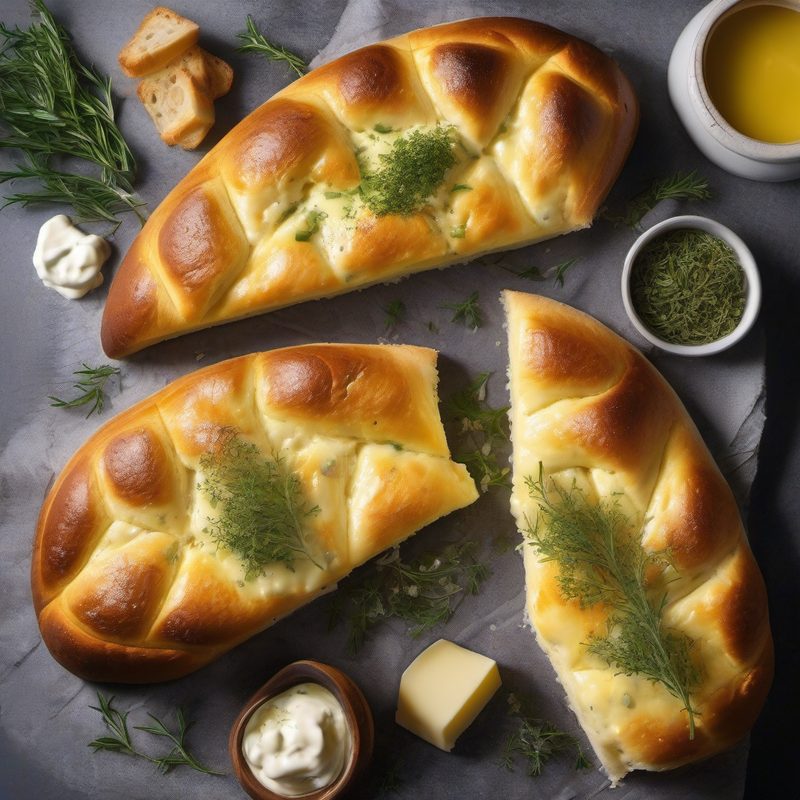
Khachapuri Herb
Category: Pane, Antipasti
| Amount | Ingredient |
|---|---|
| Calories | ~520 kcal |
| Protein | 22 g |
| Fat | 24 g |
| Carbohydrates | 52 g |
| Fiber | 2 g |
| Sodium | 610 mg |
Servings: 4–6
Total Time: 3 hours (30 minutes active, 1 hour 45 minutes rising, 25 minutes baking, 20 minutes cooling)
Source: Adapted from Georgian home-baking tradition
Why This Recipe Works
Khachapuri is Georgia's most beloved bread — a supple, enriched dough cradling a molten cheese filling. This herb-flecked version (khachapuri mtsvane or bazhe style) layers the richness of fresh mozzarella or suluguni with the creamy tang of ricotta, while a trio of dill, parsley, and cilantro brings brightness that cuts through the decadence. We use warm milk and melted butter in the dough for a tender, pliable crumb that stands up to a generous filling without turning gummy. Shaping the dough into open boats with raised sides ensures the cheese stays contained as it melts into a luscious pool, with the exposed edges of the dough baking to a golden, crusty finish. The final flourish — a raw egg yolk brushed onto the hot cheese and a pat of butter — mirrors the classic adjaruli finish, adding silkiness and a burnished sheen.
Equipment
- Digital scale or dry measuring cups and spoons
- Large mixing bowl (stainless steel or ceramic)
- Wooden spoon or dough scraper
- Stand mixer with dough hook (optional, for kneading)
- Clean kitchen towel or plastic wrap
- Baking sheet (half-sheet, 18 × 13 inches) or large cast-iron skillet
- Parchment paper
- Small bowl (for egg wash)
- Pastry brush
- Chef's knife and cutting board
- Bench scraper
- Instant-read thermometer (optional)
Dough
Herb Cheese Filling
To Finish
Before You Begin
- Check yeast freshness. If using active dry yeast, proof it in a portion of the warm milk with a pinch of sugar for 5–10 minutes until foamy. Instant yeast can be mixed directly with the flour.
- Grate the mozzarella/suluguni while cold — it shreds more cleanly and won't clump when mixed with the ricotta.
- Warm the milk to 110°F / 43°C — hotter will kill the yeast; cooler will slow rising.
- Rest the dough ball after kneading — a 10-minute bench rest before the bulk rise relaxes the gluten and makes shaping easier.
- Position an oven rack in the middle and preheat only when the shaped loaves are almost done rising.
Instructions
1. Bloom the Yeast (if using active dry)
In the bowl of a stand mixer or a large mixing bowl, combine the warm milk and sugar. Sprinkle the yeast over the surface and let stand until foamy, about 5–10 minutes. (If using instant yeast, skip this step; whisk the yeast into the flour in step 2.)
2. Mix the Dough
Add the melted butter to the milk-yeast mixture and stir briefly. Add the bread flour and salt. Stir with a wooden spoon or dough scraper until a shaggy, cohesive mass forms and no dry flour remains, about 1 minute.
3. Knead
Stand mixer: Attach the dough hook and knead on medium-low speed (speed 2 on a KitchenAid) for 8–10 minutes. The dough should clear the sides of the bowl and feel smooth and supple when pinched.
By hand: Turn the dough onto a lightly floured surface and knead, pushing and folding, for 10–12 minutes, until smooth and elastic.
Windowpane test: Pinch off a small piece of dough and stretch it gently between your fingers. If it forms a thin, translucent membrane without tearing, it's ready. If it tears, knead 1–2 minutes more.
4. First Rise
Lightly grease a clean bowl with a few drops of oil or melted butter. Shape the dough into a smooth ball and place it in the bowl, turning once to coat. Cover tightly with plastic wrap or a damp kitchen towel. Let rise in a warm, draft-free spot (75–80°F / 24–27°C) until doubled in volume, 1 to 1½ hours.
5. Prepare the Herb Cheese Filling
While the dough rises, combine the grated mozzarella (or suluguni), ricotta, chopped dill, parsley, cilantro, egg, and salt in a medium bowl. Mix thoroughly with a fork or spatula until evenly blended. Cover and refrigerate until needed.
6. Divide and Shape
Turn the risen dough onto a lightly floured work surface. Divide it into 4 equal pieces (for individual boats) or 2 pieces (for larger loaves). Working with one piece at a time and keeping the rest covered with plastic wrap:
- Gently press the dough into a rough oval, about ¼ inch (6 mm) thick.
- Place ¼ of the filling (or ½ for larger loaves) in the center of each oval, leaving a 1-inch (2.5 cm) border all around.
- Fold the long sides of the dough up and over the filling, pinching the ends together to form a pointed boat shape, leaving the top of the cheese filling exposed. Pinch and twist the ends firmly so they hold during baking.
- Gently press down on the filling to level it. The exposed cheese should be nearly flush with the dough walls.
7. Second Rise
Transfer the shaped boats to a parchment-lined baking sheet, spacing them at least 2 inches (5 cm) apart. Cover loosely with plastic wrap and let rise until puffy, about 20–30 minutes.
8. Preheat the Oven
About 15 minutes before baking, adjust an oven rack to the middle position and preheat to 200°C (400°F). If using a baking stone or steel, place it on the rack now.
9. Egg Wash and Bake
Uncover the risen boats. Using a pastry brush, lightly brush the exposed dough edges (not the cheese) with the beaten egg yolk. This promotes deep browning.
Bake for 20–25 minutes, rotating the baking sheet halfway through, until the dough is deep golden brown and the cheese is bubbly and lightly browned in spots. The internal temperature of the dough should be at least 190°F / 88°C.
10. Finish and Serve
Remove from the oven. Immediately top each boat with a small pat of softened butter and sprinkle with flaky sea salt, if using. Optionally, make a small well in the center of the cheese and add a raw egg yolk for a richer finish. Let rest on the baking sheet for 5 minutes, then slide onto a wire rack and cool for another 10 minutes. Serve warm — the cheese should be molten but not so hot that it burns the palate.
Make Ahead and Storage
- Dough: Can be refrigerated after the first rise (step 4) for up to 24 hours. Punch down, cover tightly, and refrigerate. Bring to room temperature for 45 minutes before shaping and proceeding.
- Filling: Can be prepared up to 1 day ahead and refrigerated in an airtight container.
- Baked khachapuri: Best served the same day. Reheat in a 350°F / 175°C oven for 8–10 minutes (not a microwave, which turns the dough rubbery).
- Freezing: Shape and fill the boats but do not do the second rise. Freeze on a parchment-lined sheet until solid, then wrap each in plastic wrap and transfer to a freezer bag. Bake directly from frozen, adding 5–8 minutes to the baking time.
Chef's Notes
- Suluguni vs. mozzarella: Suluguni (Georgian pickled cheese) is the authentic choice — it's saltier, more elastic, and squeaks pleasantly when chewed. If you can find it, substitute at a 1:1 ratio. If using fresh mozzarella, pat it dry before grating to avoid excess moisture.
- Herb substitutions: Mint and fresh basil can be added or swapped for cilantro; Georgian cooks often include fresh coriander (the cilantro cousin) or tarragon. Keep the total herb volume at about ½ cup.
- Yeast note: If using active dry yeast in place of instant, increase the amount to 8 g (2½ tsp); the recipe as written works with either — just bloom the active dry as described in step 1.
- No stand mixer? The dough is forgiving enough for hand kneading. Use a rhythmic folding-and-pressing motion; the dough comes together faster if you resist adding too much extra flour.
- Filling variations: Add 50 g of crumbled feta for tang; sautéed mushrooms (finely chopped, squeezed dry); or a pinch of red pepper flakes for heat.
Nutritional Information (per serving, based on 6 servings)
(Values are estimates. Actual values depend on specific cheeses and ingredients used.)
Recipe from The Italian Kitchen by Vita Milanese — Volume 1 · Pasta Perfetto. Discover all volumes on the ebook page.