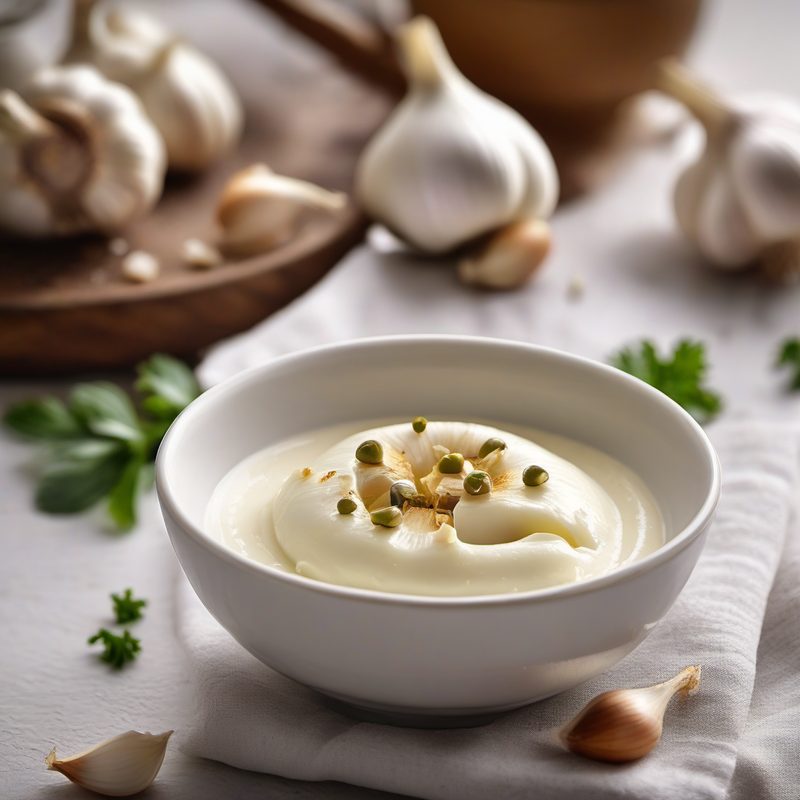
Delicate Garlic Cream (Crema d'aglio delicata)
A luxurious, silken garlic purée transformed by the Italian technique of multiple blanching — repeated cycles of boiling and shocking in fresh water (then milk) tame garlic's aggressive bite into something impossibly sweet, mellow, and creamy, yielding a spread so gentle it can be eaten by the spoonful.
| Amount | Ingredient |
|---|---|
| 2 heads | garlic (about 20–24 cloves, 90–100 g peeled weight) |
| 300 ml (1¼ cups) | whole milk (plus extra for blanching) |
| 1 tbsp (14 g) | unsalted butter (optional, for finishing) |
| to taste | kosher salt |
| to taste | white pepper (optional) |
This recipe is a master class in taming one of the kitchen's most assertive ingredients. Where raw garlic burns and roasted garlic can be heavy, this preparation — a Northern Italian technique for rendering garlic as mild as it is luxurious — produces a purée so delicate it borders on elegant. The key lies in the multiple blanching: each boil-and-drain cycle leaches out progressively more of the harsh sulfur compounds responsible for garlic's bite and lingering aftertaste, while removing the inner germ (the green sprout) eliminates the compound that causes bitterness and digestive discomfort. The final simmer in fresh milk adds a velvety richness that water alone cannot provide, and a finishing touch of butter (optional, but transformative) yields a texture that is almost pudding-like. The result is a condiment of astonishing versatility — spread it on crostini, dollop it alongside roasted lamb or chicken, stir it into pasta or risotto, or use it as a base for a white pizza or a creamy sauce.
Ingredient notes: Use fresh garlic — older, sprouting garlic will have larger, tougher green germs that are more bitter and harder to fully remove. The green germ (also called the inner sprout) is the pale green shoot that runs through the center of each clove; removing it is essential for eliminating bitterness and improving digestibility. For the blanching steps, you will need about 1½–2 cups (360–480 ml) of additional milk total across the last 1–2 blanching cycles — this is above the 300 ml listed for the final simmer. The final 300 ml of fresh milk is what the garlic simmers in and becomes part of the purée; the blanching milk is discarded after each boil.
- Small saucepan (1–2 quart)
- Chefs knife and cutting board
- Fine-mesh strainer
- Blender or immersion blender with tall cup
- Rubber spatula
- Small offset spatula or butter knife
- Airtight storage container
- Prepare the garlic (10 min). Separate the garlic heads into individual cloves. Cut off the root end of each clove and remove the papery skins completely — every last bit of skin must go. Slice each clove in half lengthwise (through the root-to-tip axis). Locate the pale green inner germ (sprout) running through the center of each half and remove it with the tip of a paring knife. Discard the germs. This step is not optional — it is the foundation of the recipe's delicacy.
- First blanching cycle (3 min). Place all the peeled, halved, and de-germed garlic cloves in a small saucepan. Cover with cold water (by about 1 inch / 2.5 cm). Bring to a rolling boil over high heat. As soon as the water reaches a full boil, drain immediately through a fine-mesh strainer. Do not let it boil longer than a few seconds — the goal is to shock the garlic, not cook it.
- Second and third blanching cycles (6 min). Return the drained garlic cloves to the saucepan. Cover again with fresh cold water, bring to a boil, and drain immediately. Repeat this process once more for a total of three water blanches. After the third drain, the garlic should smell noticeably milder and the water should be less pungent.
- Milk blanching cycles (6 min). For the fourth and fifth blanches (or at least the fourth if you are short on milk), use fresh milk instead of water. Return the garlic to the saucepan, cover with fresh milk (about ½–¾ cup / 120–180 ml per cycle), and bring to a gentle boil over low heat — milk scorches easily, so keep the heat moderate and stir occasionally. As soon as it reaches a boil, drain immediately. Repeat once more. The garlic should now be very mild and slightly translucent at the edges.
- Final simmer (15 min). Return the blanched garlic cloves to the saucepan. Pour in 300 ml (1¼ cups) of fresh whole milk and add a pinch of kosher salt. Bring to a gentle simmer over low heat — the surface should barely quiver. Cook, stirring occasionally, until the garlic cloves are completely tender and offer no resistance when pierced with a knife, about 12–15 minutes. The milk will have reduced slightly and thickened from the garlic starches.
- Blend to a purée (3 min). Drain the garlic cloves through a fine-mesh strainer, reserving the cooking milk. Transfer the warm cloves to a blender. Add 1–2 tablespoons of the reserved cooking milk (just enough to get the blender moving) and the optional butter. Blend on high, scraping down the sides as needed, until the purée is completely smooth and glossy, about 60 seconds. With the blender running, add more reserved milk through the lid opening, 1 tablespoon at a time, until you reach the desired consistency — a thick, spreadable paste that holds its shape on a spoon but can be smoothed easily with a knife.
- Season (1 min). Season with salt to taste and a very small pinch of white pepper if using. White pepper adds a subtle warmth without the black specks that would mar the pure white purée. Blend briefly to incorporate.
- Remove every last bit of the green germ. The green inner sprout of each garlic clove contains the compounds responsible for garlic's bitterness and its reputation for causing digestive upset. Skipping or half-doing this step will result in a purée that is noticeably harsher and less digestible. It is tedious work, but it is the single most important step in the recipe.
- Do not let the milk scorch during blanching. Milk burns easily, and scorched milk solids will impart an unpleasant, stale flavor to the garlic. Keep the heat low to medium, stir frequently, and remove from heat the moment the milk reaches a boil.
- Reserve the cooking milk. The milk the garlic simmers in absorbs a tremendous amount of garlic flavor and has a creamy, faintly sweet character. It can be used to thin soups, enrich mashed potatoes, or add a whisper of garlic to béchamel sauce.
- Do not use a food processor for the purée. Food processors do not achieve the same silky-smooth texture as a blender — they leave a slightly grainy, uneven purée. A high-speed blender is ideal; a standard countertop blender will also work with a bit more scraping and blending time.
- The cream thickens as it cools. Blend to a slightly looser consistency than you want the final product to be — the purée will firm up considerably as it cools to room temperature.
- White pepper is optional but recommended. Black pepper's visible specks and sharper flavor detract from the cream's pure white elegance. White pepper provides warmth without visual or flavor distraction.
Storage: Refrigerated in an airtight container, the cream keeps for up to 10 days. Press a sheet of plastic wrap directly onto the surface to prevent a skin from forming. If the cream thickens too much after refrigeration, stir in warm milk 1 teaspoon at a time to loosen.
Serving suggestions: Spread generously on warm crostini or crusty bread; serve alongside roasted lamb, chicken, beef, or pork as a mellow, creamy counterpoint; stir into risotto or polenta in the final minute of cooking; use as a base for a white pizza (spread thin, top with mozzarella and herbs); dollop onto grilled vegetables or roasted mushrooms; swirl into soups for a garlicky cream finish; or thin with a little olive oil and lemon juice for a salad dressing.
Recipe from The Italian Kitchen by Vita Milanese — Volume 2 · Sunday Sauce. Discover all volumes on the ebook page.