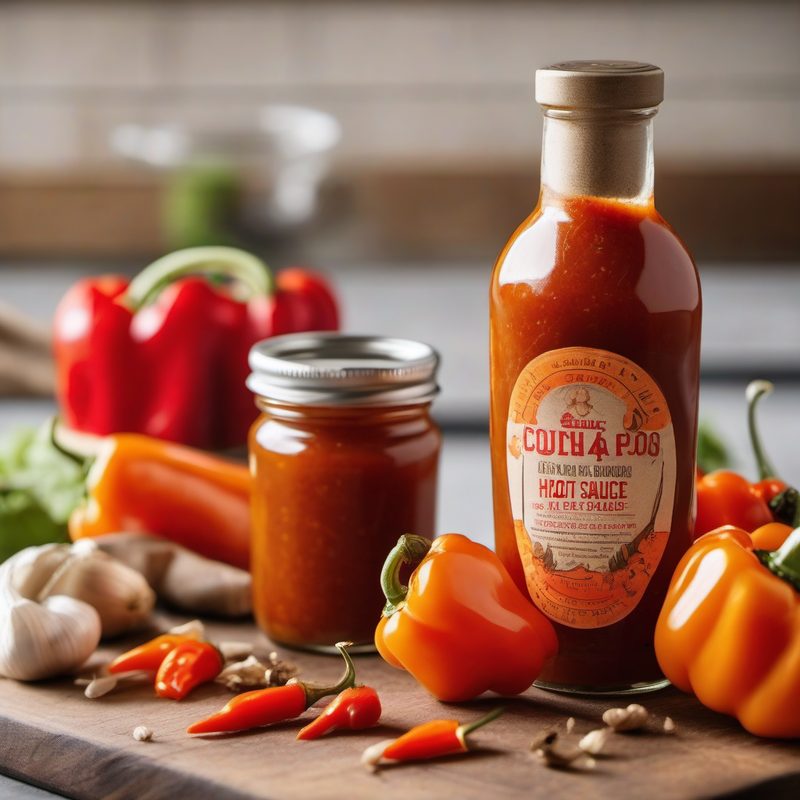
Scotch Bonnet Pepper Hot Sauce
A blazingly bright, fruit-forward Caribbean-style hot sauce that balances the unmistakable floral heat of Scotch bonnet peppers with sweet carrot, tangy lime, and just enough vinegar to cut through — this silky, fire-engine-orange sauce is as addictive as it is punishing, and a week in the fridge transforms it from raw heat into something truly complex.
| Amount | Ingredient |
|---|---|
| 7 medium cloves | garlic (skins on) |
| 1 cup (130 g) | chopped carrots (about 2 medium) |
| 11 | Scotch bonnet or habanero peppers, stems removed, sliced |
| 1 large (200 g) | yellow onion, chopped |
| 1½ tbsp (20 g) | cane sugar |
| 1½ tbsp (25 g) | sea salt |
| 1 cup (240 ml) | white vinegar |
| 1 cup (240 ml) | water |
| 1 large | lime, juiced (about 2 tbsp / 30 ml) |
This is not a vinegar-forward Louisiana-style hot sauce, nor a fermented sriracha-like paste — it sits in a glorious middle ground, where fresh pepper heat meets the gentle sweetness of slowly simmered carrots and onion, all bound together with just enough acidity to keep every drop bright. Scotch bonnet peppers (or their slightly milder habanero cousins) are the unmistakable star here, bringing a fruity, almost apricot-like aroma that lingers behind the initial blast of heat. Roasting the garlic in its skin adds a mellow, nutty depth that tames the garlic's raw edge, while a full tablespoon each of sugar and salt provides the backbone that makes this sauce work on everything from fried chicken and rice and peas to eggs, tacos, and grilled fish. Patience is rewarded — after a week in the refrigerator, the flavors meld and mature into something far more harmonious than the sum of its parts.
Ingredient notes: Scotch bonnet peppers are the traditional choice for this style of sauce — they are fruity, intensely hot (200,000–350,000 Scoville units), and have a distinctive floral aroma that habaneros approximate but do not perfectly replicate. Habaneros are slightly less fruity and marginally hotter; use them if Scotch bonnets are unavailable. Wear disposable gloves when handling fresh hot peppers, and avoid touching your face, eyes, or any sensitive skin. For a milder sauce, remove the seeds and membranes from half the peppers before slicing. For a deeper, more rounded flavor, use apple cider vinegar in place of half the white vinegar.
- Small dry skillet or cast-iron pan
- Medium saucepan (2–3 quart)
- Blender (preferably high-speed, or standard countertop blender)
- Fine-mesh strainer (optional, for smoother sauce)
- Rubber spatula
- Sterilized glass bottles or jars with tight-fitting lids
- Funnel (helpful for bottling)
- Roast the garlic (10 min). Place the garlic cloves (skins on) in a small dry skillet over medium heat. Cook, shaking the pan occasionally, until the skins are lightly charred in spots and the cloves feel soft when pressed, about 8–10 minutes. Let cool slightly, then peel off and discard the skins. Set the roasted cloves aside.
- Simmer the aromatics (15 min). In a medium saucepan, combine the chopped carrots, chopped onion, peeled roasted garlic, and 1 cup of water. Bring to a boil over medium-high heat, then reduce to a simmer. Cook, stirring occasionally, until the carrots are very tender and easily pierced with a fork, about 15 minutes.
- Add the peppers (5 min). Add the sliced Scotch bonnet (or habanero) peppers to the saucepan. Stir to combine and continue simmering for 5 minutes more. The peppers will soften slightly and release their color and aroma into the cooking liquid.
- Blend the sauce (3 min). Carefully transfer the entire contents of the saucepan (including the cooking liquid) to a blender. Add the white vinegar, lime juice, cane sugar, and sea salt. Secure the lid (with the center cap removed and covered with a folded kitchen towel to allow steam to escape) and blend on high until completely smooth, about 60–90 seconds. The sauce should be a vibrant, uniform orange with a silky, pourable consistency.
- Adjust consistency and strain (optional). If the sauce is thicker than you like, add water 1 tablespoon at a time and blend again until you reach the desired consistency. For an ultra-smooth, restaurant-style sauce, pour through a fine-mesh strainer set over a bowl, pressing on the solids with a rubber spatula to extract as much liquid as possible. Discard the fibrous solids.
- Bottle and age (5 min + 1 week). Transfer the hot sauce to sterilized glass bottles or jars using a funnel. Seal tightly and refrigerate. The sauce is usable immediately but will be noticeably brighter and more one-dimensional. For the best flavor, let it rest in the refrigerator for at least 1 week before using — during this time the heat mellows, the sweetness deepens, and the vinegar and lime acidity integrate into a harmonious whole.
- Refrigerate for at least 1 week before serving. Fresh-blended hot sauce has a raw, aggressive heat that needs time to mellow. After a week in the refrigerator, the flavors meld and mature — the sauce becomes more complex, fruitier, and far more balanced. Patience transforms good hot sauce into great hot sauce.
- Wear disposable gloves when handling hot peppers. Scotch bonnets and habaneros contain capsaicin levels that can cause significant skin irritation. Gloves are non-negotiable. If you do get pepper oil on your skin, wash immediately with dish soap (not just water) and follow with rubbing alcohol or full-fat milk to dissolve the capsaicin.
- Do not overfill the blender with hot liquid. Blending hot ingredients creates steam pressure that can blow the lid off. Work in batches if needed, and always remove the center cap of the blender lid and cover the opening with a folded kitchen towel.
- Let the sauce cool to room temperature before sealing. Trapping hot sauce in a sealed glass bottle can create a vacuum that makes the lid difficult to open later. Cool completely, then refrigerate.
- Sterilize bottles and jars. Wash bottles and lids in hot, soapy water, then boil them for 5 minutes or run them through a dishwasher sanitize cycle. This prevents unwanted microbial growth during storage.
- The sauce will separate slightly over time. This is normal — the solids settle to the bottom. Shake the bottle vigorously before each use to re-emulsify.
Storage: Refrigerated in sterilized, airtight bottles, this sauce keeps for up to 6 months. The flavor continues to evolve over time, peaking around the 2–4 week mark. Do not leave at room temperature for extended periods.
Recipe from The Italian Kitchen by Vita Milanese — Volume 2 · Sunday Sauce. Discover all volumes on the ebook page.