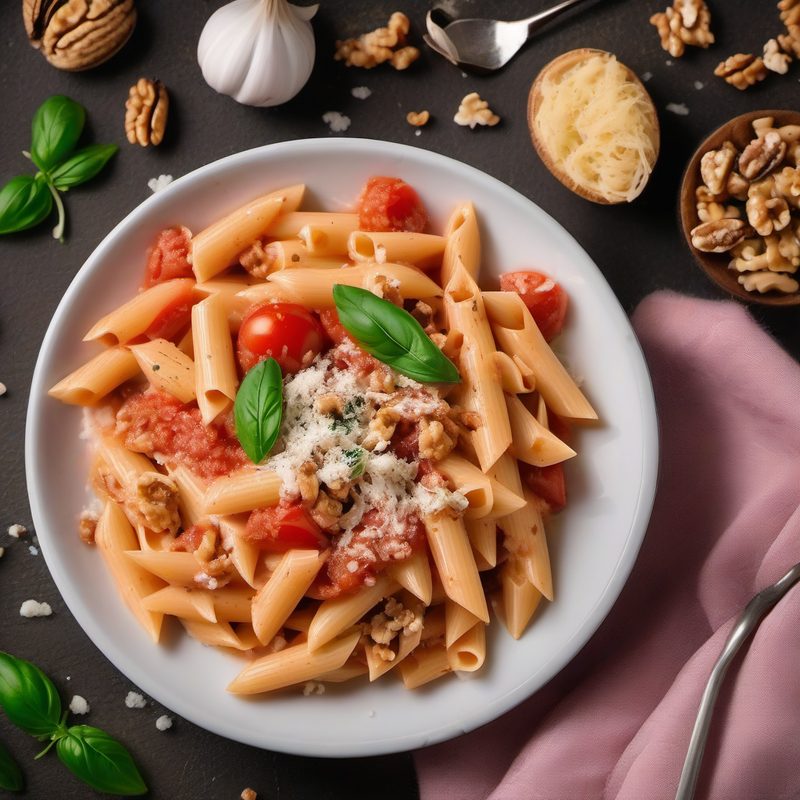
Creamy Penne Tomato Gorgonzola
A rich, velvety Northern Italian classic where sweet, creamy Gorgonzola dolce melts into a bright tomato sauce to create a luxurious, salmon-hued cream that clings to every ridge of penne. Ready in 30 minutes with just a handful of pantry ingredients.
This is the pasta equivalent of a cashmere sweater — soft, warm, and effortlessly elegant. The combination of tomato and Gorgonzola might sound unexpected, but in Italy's Lombardy and Piedmont regions, where Gorgonzola has been produced since the Middle Ages, pairing the creamy blue cheese with tomato-based sauces is a beloved tradition. The acidity of the tomatoes cuts through the richness of the cheese, while the Gorgonzola's tangy, salty depth transforms a simple tomato sauce into something deeply savory and complex. Sweet Gorgonzola dolce — the soft, mild, buttery variety — is the key. Unlike its aged, crumbly cousin (Gorgonzola piccante), dolce melts into a silky, emulsified cream that marries perfectly with crushed tomatoes and heavy cream. The result is a pasta that tastes indulgent and complex but comes together in the time it takes to boil water — perfect for a special weeknight dinner or an impressive last-minute supper.
Use level tablespoons and standard US measuring cups. All produce is medium unless specified. Gorgonzola dolce is soft, creamy, and mild — do not substitute aged Gorgonzola piccante, which is crumbly, salty, and will not melt smoothly into the sauce.
🥘 Equipment
- Large pot (6 qt / 6 L) for pasta
- Large skillet or sauté pan (12 inch / 30 cm)
- Colander
- Chef's knife and cutting board
- Wooden spoon or silicone spatula
- Grater or Microplane (for optional Parmigiano)
- Measuring cups and spoons
- Tongs or pasta fork
📋 Preparation
Step 1 — Prep the Aromatics (5 minutes)
Finely dice the onion: Peel the medium yellow onion, cut it in half through the root, then slice each half into thin half-rings, then crosswise into ¼-inch (6 mm) dice. You should have about 1 cup of diced onion.
Mince the garlic: Peel the 2 garlic cloves and mince them finely — aim for a paste-like consistency. Set aside with the onion.
Uniformly diced onion ensures even cooking — small pieces will soften and practically disappear into the sauce, leaving behind sweetness without textural interference. The garlic should be fine enough that it disperses evenly into the cream without leaving harsh raw pockets.
Step 2 — Sauté the Aromatics (5 minutes)
Place the large skillet or sauté pan over medium heat. Add 3 tablespoons of extra-virgin olive oil. Once the oil shimmers (about 30 seconds), add the diced onion and cook, stirring occasionally, until softened and translucent — about 3 to 4 minutes. Do not let the onion brown; you want it tender and sweet, not caramelized.
Add the minced garlic and cook, stirring constantly, until fragrant — about 30 to 45 seconds. The garlic should sizzle gently; if it starts to color aggressively, reduce the heat immediately.
Cooking the onion until translucent but not browned builds a sweet, mellow foundation. Garlic goes in at the very end of this step because it burns quickly and turns bitter. If the garlic browns, the bitterness will carry through the entire sauce — start over if this happens.
Step 3 — Build the Tomato Sauce (15 minutes)
Add the crushed tomatoes to the pan with the sautéed aromatics. Stir to combine. Season with ½ teaspoon of kosher salt and ¼ teaspoon of freshly ground black pepper.
Bring the sauce to a gentle simmer — small bubbles should break the surface but the sauce should not boil vigorously. Reduce the heat to medium-low and cook, stirring occasionally, for 10 minutes. The sauce will thicken slightly and deepen in color as the flavors meld.
Simmering the tomatoes for a full 10 minutes concentrates their sweetness, softens their acidity, and allows the onion and garlic to fully infuse the sauce. Crushed San Marzano tomatoes are ideal here — they are naturally sweet, low in acidity, and have a velvety texture that forms the perfect base for the cream and cheese. If you can't find San Marzano, use good-quality crushed tomatoes and consider adding ¼ teaspoon of sugar to balance the acidity.
Step 4 — Add Cream and Gorgonzola (5 minutes)
Reduce the heat to low. Pour in the heavy cream and stir until fully incorporated — the sauce will take on a warm, salmon-pink hue.
Crumble the Gorgonzola dolce into the sauce in 1-inch (2.5 cm) chunks using your fingers or a fork. Stir gently and continuously until the cheese has melted completely into the sauce — about 2 to 3 minutes. The sauce should become thick, smooth, and uniformly creamy, with a pale pink-orange color shot through with tiny darker flecks from the blue mold in the Gorgonzola.
Taste and adjust seasoning with salt and pepper. Keep warm over the lowest heat while you cook the pasta.
Adding the cream before the Gorgonzola prevents the cheese from seizing or becoming grainy — the fat in the cream creates a stable emulsion. Stir gently but continuously as the cheese melts; aggressive stirring can break the emulsion and leave you with a greasy, separated sauce. Gorgonzola dolce melts at a low temperature, so low heat is sufficient — if the sauce simmers, the cheese may separate.
Step 5 — Cook the Pasta (10 minutes, concurrent)
Bring a large pot of generously salted water (about 1½ tablespoons of kosher salt per 4 quarts of water) to a rolling boil over high heat. Add the penne rigate and cook according to package directions until al dente — typically 10 to 12 minutes for dried penne. Set a timer for 1 minute before the recommended time and start tasting; perfect al dente pasta is essential.
Before draining, reserve at least 1 cup (240 ml) of the pasta cooking water. Drain the penne well (do not rinse).
Penne rigate — short, diagonally cut tubes with ridged exterior surfaces — is the ideal shape for this sauce. The ridges catch and hold the creamy tomato-Gorgonzola sauce, while the hollow center traps small pools of it. Every bite is maximally coated. The generous salt in the pasta water seasons the pasta from within — this is your only chance to season the pasta itself, so don't be shy.
Step 6 — Combine and Mantecare (2 minutes)
Add the drained penne directly to the skillet with the sauce. Increase the heat to medium and toss the pasta with the sauce using tongs for about 1 minute, until every piece is evenly coated and the pasta is piping hot.
If the sauce seems too thick, add the reserved pasta water 2 tablespoons at a time, tossing between additions, until the sauce loosens to a silky, clingy consistency that coats the pasta without pooling at the bottom of the pan. You will likely need about ¼ to ⅓ cup (60 to 80 ml) of pasta water.
Remove the pan from the heat. Tear the fresh basil leaves into pieces with your fingers and add them to the pasta. Toss once more to distribute.
The starches in the reserved pasta water are the secret to a sauce that clings to the penne rather than sliding off. The brief additional cooking in the sauce (mantecatura) allows the pasta to absorb some of the liquid and marry with the flavors, while the starch from the pasta water helps bind the sauce into a cohesive, glossy emulsion.
Step 7 — Serve (2 minutes)
Warm 4 shallow bowls by filling them with hot tap water for 30 seconds, then drying them.
Divide the pasta among the warm bowls, using tongs to create neat, coiled portions. Garnish each serving with 2 to 3 fresh basil leaves (whole or torn) and a generous crack of freshly ground black pepper. Optionally, finish with a light drizzle of fruity extra-virgin olive oil and a shower of grated Parmigiano-Reggiano.
Serve immediately — this pasta waits for no one. The sauce will continue to thicken as it cools, and the Gorgonzola cream is at its silky, luscious best the moment it hits the bowl.
The basil garnish is not merely decorative — its bright, peppery, slightly sweet aroma cuts through the richness of the Gorgonzola cream and provides an essential fresh counterpoint. Choose the smallest, most perfect leaves for garnish: they should be bright green, unblemished, and aromatic.
🧑🍳 Chef's Tips
- Use Gorgonzola dolce, not piccante. This is the single most important rule. Gorgonzola dolce is soft, buttery, and mild — it melts into a silky cream that blends seamlessly with the tomatoes and cream. Aged Gorgonzola (piccante) is firm, crumbly, and aggressively salty — it will not melt smoothly and its sharp flavor will dominate the sauce. If you cannot find Gorgonzola dolce, look for Cambozola, Dolcelatte, or a young, creamy Danish blue cheese.
- Bring the Gorgonzola to room temperature. Cold cheese straight from the refrigerator will seize up when it hits the warm sauce, leading to a grainy texture rather than a silky melt. Let it sit at room temperature for 20–30 minutes before starting.
- Reserve extra pasta water. Even if you think you have enough, save an extra half-cup. The starchiness of the pasta water is what gives the sauce its restaurant-quality sheen and helps it cling to the pasta. You can always discard it, but you cannot make more once the pasta is drained.
- Use good-quality crushed tomatoes. San Marzano tomatoes — grown in the volcanic soil of Mount Vesuvius — are naturally sweet, low in acid, and have a velvety texture that makes them ideal for creamy sauces. If using regular crushed tomatoes, taste for acidity and add ¼ teaspoon of sugar if needed to balance.
- Do not overcook the sauce after adding the cream and cheese. Once the Gorgonzola has melted, the sauce is ready — further cooking can cause the cream to reduce too much and the cheese to break, leaving you with a thick, greasy sauce instead of a silky emulsion.
- Taste before salting. Gorgonzola dolce is naturally salty, and the pasta water adds salt as well. Always taste the finished sauce before adding additional salt — you may not need any.
- Warm the serving bowls. Cold bowls will cause the creamy sauce to seize up and thicken unpleasantly. A quick rinse with hot tap water is all it takes.
- Serve immediately. This is a pasta that demands to be eaten the moment it's ready — the sauce is at its silkiest, the pasta at its firmest, and the basil at its most aromatic. Leftovers, while delicious, will have a noticeably thicker, heavier sauce.
❌ Common Mistakes
| Mistake | Why It Hurts | The Fix |
|---|---|---|
| Using aged Gorgonzola (piccante) | Crumbly, salty, and sharp — it won't melt smoothly and its flavor overwhelms the tomatoes | Use only Gorgonzola dolce (sweet, creamy, mild). If you must substitute, use Cambozola or another creamy blue cheese |
| Adding the cheese before the cream | The Gorgonzola can seize, become grainy, or stick to the pan without the fat from the cream to facilitate melting | Always add the heavy cream first, stir to incorporate, then add the crumbled Gorgonzola |
| Simmering the sauce after adding cream and cheese | The cream can break (separate into fat and liquid) and the cheese can become grainy from excess heat | Keep the heat on low after adding cream and cheese; remove from heat as soon as the cheese has melted |
| Not reserving enough pasta water | You run out of starchy liquid to loosen the sauce, resulting in dry, clumpy pasta that does not coat evenly | Reserve at least 1 cup (240 ml) of pasta water before draining. Add it a tablespoon at a time until the sauce reaches the perfect consistency |
| Overcooking the pasta | Mushy pasta has a waterlogged surface that sauce cannot cling to — the result is a sticky, gummy mess | Cook the penne 1 minute less than the package directions recommend; it will finish cooking in the sauce |
| Crumbling the cheese too coarsely | Large Gorgonzola chunks take too long to melt and may not fully incorporate, leaving unpleasantly dense pockets of cheese in the sauce | Crumble the Gorgonzola into small, 1-inch (2.5 cm) pieces. At room temperature, it should crumble easily between your fingers |
| Letting the pasta sit after draining | The pasta continues to cook in its own steam and becomes gummy. The sauce will not cling as well to a sticky, overcooked surface | Drain the pasta and transfer it directly to the sauce — do not let it sit in the colander for more than 10 seconds |
| Browning the garlic | Burnt garlic becomes bitter and acrid, ruining the entire sauce | Cook garlic for only 30–45 seconds after the onion, stirring constantly. If it starts to darken fast, remove from heat immediately |
| Skipping the fresh basil | Dried basil cannot provide the bright, peppery, aromatic freshness that cuts through the rich Gorgonzola cream | Use only fresh basil — preferably small, tender leaves. Add them off heat at the very end so they retain their color and fragrance |
💡 Variations
| Variation | How To |
|---|---|
| Add Pancetta or Guanciale | Dice 5 oz (140 g) of pancetta or guanciale and render in the skillet before adding the onion (about 5 minutes). Remove the crispy bits and set aside. Use 1 tablespoon of the rendered fat in place of some of the olive oil for sautéing the aromatics. Sprinkle the crispy pork over the finished pasta with the basil |
| Spicy Arrabbiata-Gorgonzola | Add ½ to 1 teaspoon of red pepper flakes (peperoncino) with the garlic in Step 2. The heat cuts through the richness of the cream and Gorgonzola beautifully |
| Add Mushrooms | Sauté 8 oz (225 g) of cremini mushrooms, thinly sliced, in 1 tablespoon of butter until golden (about 5–6 minutes), then add them to the tomato sauce in Step 3 before simmering. The earthy, umami flavor of the mushrooms is a natural match for the Gorgonzola |
| Swap the Pasta Shape | Use rigatoni, mezze maniche, fusilli, or paccheri — any short, sturdy pasta with ridges or texture will work. Avoid long, thin shapes like spaghetti or linguine; the creamy sauce needs nooks and crannies to cling to |
| Make It Vegetarian (already is) | This recipe is naturally vegetarian as written. To make it vegan, substitute the heavy cream with full-fat coconut cream (the savory kind, not sweetened) and replace the Gorgonzola with 3 tablespoons of nutritional yeast plus 2 tablespoons of white miso paste blended into the sauce. The result is different but equally delicious |
| Add Spinach or Swiss Chard | Stir 3 generous handfuls (about 4 oz / 120 g) of fresh spinach or Swiss chard leaves into the sauce after adding the cream, and cook until wilted — about 2 minutes — before adding the Gorgonzola. The greens add color, nutrients, and a pleasant textural contrast |
| Swap Basil for Sage | Replace the basil garnish with 8–10 fresh sage leaves, lightly fried in 1 tablespoon of butter until crisp (about 30 seconds per side). The earthy, slightly peppery flavor of sage is a classic pairing with Gorgonzola |
| Lighter Version | Replace the heavy cream with half-and-half or whole milk (reduce to ¾ cup / 180 ml to compensate for the thinner consistency). The sauce will be less rich but still creamy and delicious. Omit the final drizzle of olive oil to save additional calories |
| Smoked Gorgonzola | If you can find smoked Gorgonzola, use it in place of the regular Gorgonzola dolce. The subtle smokiness adds another dimension and pairs beautifully with the tomatoes. Adjust salt accordingly — smoked Gorgonzola can be saltier |
| Add Toasted Walnuts or Pine Nuts | Toast ⅓ cup (45 g) of walnut halves or pine nuts in a dry skillet over medium heat until fragrant (2–3 minutes for pine nuts, 4–5 minutes for walnuts). Sprinkle over the finished pasta for a nutty crunch that contrasts with the creamy sauce |
❄️ Storage & Leftovers
| Method | Details |
|---|---|
| Refrigerator | Store leftovers in an airtight container for up to 2 days. The sauce will thicken considerably as the pasta absorbs liquid and the cream sets — it will be more like a baked pasta casserole than a saucy pasta dish upon reheating |
| Reheating | Reheat in a skillet over medium-low heat with a splash of milk, cream, or pasta water (about 3–4 tablespoons), tossing gently until warmed through (3–4 minutes). Do not microwave — the high heat can cause the cream sauce to separate and the pasta to become gummy. The sauce will not be as silky as freshly made, but it will still taste delicious |
| Freezing | Freezing is not recommended. The cream and Gorgonzola emulsion will break upon thawing, resulting in a grainy, separated sauce. If you must freeze, freeze the tomato-cream sauce (without pasta) for up to 1 month, then thaw, reheat gently, and toss with freshly cooked pasta and fresh basil |
| Make-Ahead Strategy | The tomato-cream sauce (Steps 1–4) can be made up to 2 days in advance. Cool to room temperature, transfer to an airtight container, and refrigerate. On serving day, reheat the sauce gently in a skillet over medium-low heat, adding a splash of water or milk to loosen it, then proceed with Steps 5 through 7. Note: you will need to adjust seasoning after reheating |
| Leftover Sauce Ideas | Any extra sauce (if you doubled the recipe) is delicious as a lasagna layer, spooned over grilled chicken or fish, tossed with roasted vegetables (cauliflower, zucchini, bell peppers), or used as a hearty dip for crusty bread |
🍷 Wine Pairing
| Wine | Why |
|---|---|
| Pinot Grigio (Friuli-Venezia Giulia) | A crisp, unoaked white with green apple, pear, and white flower notes — its bright acidity cuts through the creamy Gorgonzola sauce while its clean, dry finish prevents the dish from feeling heavy. A classic, versatile pairing |
| Soave Classico (Veneto) | Made from the Garganega grape, Soave offers notes of lemon zest, almond, and wild herbs — the nutty almond finish echoes the savory depth of the Gorgonzola, while the citrusy acidity slices through the cream |
| Lambrusco (Emilia-Romagna, slightly chilled) | A lightly sparkling, fruity red with low tannins and high acidity — the classic Italian companion for anything with Gorgonzola. The bubbles scrub the palate clean, while the bright red berry fruit provides a sweet-tart contrast to the creamy tomato sauce. Serve slightly chilled (55°F / 13°C) |
| Gavi di Gavi (Piedmont) | A mineral-driven white from the Cortese grape with subtle almond and citrus notes. The bright acidity and clean finish complement both the tomatoes and the blue cheese without competing. Elegant and precise |
| Barbera d'Alba (Piedmont) | A medium-bodied red with high acidity, dark cherry and blackberry flavors, and no oak. The bright acidity mirrors the tomatoes, while the red fruit notes provide a fruity counterpoint to the tangy Gorgonzola. Serve slightly cool (60°F / 15°C) |
| Prosecco (Veneto, Brut) | The clean, crisp bubbles and green apple/citrus notes of a dry Prosecco cut through the richness like a palate-cleansing scrub. Serve well-chilled — the effervescence makes each bite taste as fresh as the first |
| Verdicchio dei Castelli di Jesi (Marche) | Crisp and mineral-driven with herbal notes and a subtle almond bitterness — the bright acidity and savory character stand up to both the tomatoes and the blue cheese. An underrated pairing that works beautifully |
🍺 Beer Pairing
| Beer | Why |
|---|---|
| Italian Dry Lager (Moretti, Peroni) | Crisp, clean, and highly carbonated — the dryness and effervescence cut through the creamy sauce and reset the palate. The neutral, slightly bitter finish pairs well with the tangy Gorgonzola |
| Belgian Witbier | The subtle coriander and orange peel notes complement the fresh basil and provide a citrusy lift that brightens the rich sauce. The hazy, slightly creamy body mirrors the sauce's texture |
| Czech-style Pilsner | Assertive hop bitterness (Saaz) with floral and spicy notes stands up to the richness of the cream and Gorgonzola without overpowering the dish. The clean, dry finish is refreshing |
| Saison | A farmhouse ale with peppery, fruity, and spicy notes — its complexity and high carbonation make it a surprisingly good partner for creamy blue cheese sauces. The dry finish prevents the pairing from feeling heavy |
🥗 Suggested Side Dishes
- Simple arugula salad with lemon — A handful of peppery wild arugula tossed with fresh lemon juice, good extra-virgin olive oil, flaky sea salt, and shaved Parmigiano-Reggiano. The sharp, peppery greens and bright citrus cut through the rich, creamy pasta beautifully
- Crusty sourdough or ciabatta with olive oil — Essential for sopping up every last smear of the silky Gorgonzola-tomato cream from the bottom of the bowl. Choose a bread with a crackling crust and an airy, chewy crumb
- Roasted asparagus with lemon zest — Asparagus spears trimmed and roasted at 425°F (220°C) for 8–10 minutes until tender and lightly charred, finished with lemon zest and flaky salt. The bright, grassy flavor provides a fresh counterpoint
- Blistered cherry tomatoes — Cherry tomatoes halved and charred in a hot skillet with olive oil until blistered and caramelized (about 3–4 minutes). Their concentrated sweetness reinforces the tomato notes in the pasta while adding a different texture
- Fennel and orange salad — Thinly sliced raw fennel bulb tossed with orange supremes, extra-virgin olive oil, and flaky salt. Bright, crunchy, and refreshing — it offers a clean, crisp contrast to the creamy pasta
- Sautéed spinach with garlic — A handful of fresh spinach wilted in a hot pan with olive oil and a whisper of garlic (about 2 minutes). Light, nutritious, and in keeping with the Italian theme
- Grilled radicchio with balsamic — Halved heads of radicchio grilled cut-side down until lightly charred (about 3–4 minutes), then drizzled with aged balsamic vinegar. The bitterness of the radicchio is a perfect foil for the creamy, tangy sauce
📊 Nutrition (per serving, estimated)
| Calories | Protein | Fat | Carbs | Fiber |
|---|---|---|---|---|
| ~610 | 19 g | 28 g | 66 g | 5 g |
Nutritional values are estimates based on 4 servings with 350 g dried penne, 400 g crushed tomatoes, 150 g Gorgonzola dolce, 200 ml heavy cream, 3 tbsp olive oil, and 1 medium onion. Actual values will vary based on specific brands, the fat content of your cream, and portion sizes. This is a rich, satisfying main course; if serving as a primo (first course), it will serve 6 with smaller portions. To lighten the dish, substitute half-and-half for the heavy cream (approximately 530 calories and 20 g fat per serving).
❓ Frequently Asked Questions
Can I use Gorgonzola piccante (aged Gorgonzola) instead of dolce?
No — not successfully. Gorgonzola piccante is aged longer, making it firm, crumbly, sharp, and salty. It will not melt into the silky, cohesive cream that this dish requires. If you only have piccante, use half the amount (75 g / 2.5 oz) and grate it finely into the sauce, but accept that the texture will be grainier and the flavor much more assertive. For the proper result, seek out Gorgonzola dolce — it is widely available in the specialty cheese section of most supermarkets.
What is Gorgonzola dolce and how is it different from regular Gorgonzola?
Gorgonzola dolce ("sweet Gorgonzola") is a young, soft, creamy blue cheese from Lombardy, Italy. It is aged for only 2–3 months (versus 6+ months for piccante), giving it a buttery, spreadable texture and a mild, tangy flavor with none of the aggressive bite of aged blue cheese. Its fat content is higher, which is why it melts so beautifully into sauces. Think of it as the brie of blue cheeses — creamy, approachable, and luxurious.
Can I make this dish without heavy cream?
Yes. Substitute the heavy cream with a combination of whole milk and a tablespoon of butter (to add back some fat). Use ¾ cup (180 ml) of whole milk and 1 tablespoon of butter. The sauce will be less rich and slightly thinner, but still delicious. Alternatively, use half-and-half for a middle ground. Avoid skim milk — the sauce will be watery and the Gorgonzola may not emulsify properly.
The sauce looks thin — did I do something wrong?
The sauce will look thinner before you add the pasta and pasta water — that is normal. The starch from the pasta water will thicken and bind the sauce when you toss everything together. If the sauce is still thin after combining, let it cook over medium heat for another 30–60 seconds while tossing constantly — the excess moisture will evaporate and the sauce will tighten.
The sauce tastes too salty. What went wrong?
Gorgonzola dolce is naturally salty, and if you also salted the tomato sauce before adding the cheese, you may have oversalted. Always taste the sauce after the Gorgonzola has melted before adding any salt. If it is too salty, add a splash of milk or cream (no salt added) and stir — the extra dairy will help dilute the saltiness. You can also toss in a peeled, raw potato slice and simmer for 5 minutes; the potato will absorb some salt.
The sauce is too thick after reheating leftovers. How do I fix it?
The pasta absorbs liquid and the cream thickens as it sits. When reheating, add a generous splash of milk, cream, or water (2–3 tablespoons per serving) and toss over low heat. The extra liquid will loosen the sauce back to a creamy consistency. Do not add more than necessary — you can always add more, but you cannot remove it.
Can I use dried basil instead of fresh?
Fresh basil is strongly preferred. Dried basil has a muted, slightly hay-like flavor that cannot provide the bright, peppery, aromatic lift that the dish needs. If you have no fresh basil, substitute fresh parsley or a combination of fresh parsley and a pinch of dried oregano. But for the best result, use fresh basil.
What penne shape is best?
Penne rigate — penne with ridged exterior surfaces — is ideal. The ridges catch and hold the creamy sauce, ensuring every bite is well coated. Penne lisce (smooth penne) will work, but the sauce will cling less effectively. Mezze maniche rigate or rigatoni are excellent alternatives if you want even more surface area for the sauce.
Can I double this recipe?
Yes — but use a larger pan (14-inch / 35 cm or wider) to ensure the pasta has room to toss without spilling. The sauce volume doubles well. Cooking times for the sauce remain the same, but the pasta will need to be cooked in batches or in a very large pot. If serving a crowd, consider cooking two separate batches for the best texture.
Can I add protein to this dish?
Yes. Diced pancetta or guanciale (rendered before the onion and reserved for garnish) is the most traditional addition. Grilled chicken, seared shrimp, or even crispy sage-fried prosciutto crudo would all work beautifully. If adding chicken or shrimp, season and cook them separately, then add to the finished pasta just before serving.
What if I don't eat dairy?
This dish is inherently dairy-heavy (cream, Gorgonzola). For a dairy-free approximation, substitute full-fat coconut cream (unsweetened, savory) for the heavy cream, and replace the Gorgonzola with 3 tablespoons of nutritional yeast plus 1 tablespoon of white miso paste blended into the sauce. The result will be quite different — more savory and umami-forward than tangy and creamy — but delicious in its own right. Finish with fresh basil and a drizzle of good olive oil.
🔗 Related Recipes
- Penne alla Vodka (page 4)
- Pasta with Beet and Gorgonzola (page 177)
- Penne with Creamy Garlic Sauce (page 123)
- Pumpkin Gnocchi with Gorgonzola Cream (page 77)
- Tagliatelle with Prosciutto and Cream (page 178)
- Pasta alla Carbonara (page 12)
- Fettuccine Alfredo with Parmigiano-Reggiano (page 126)
- Pasta with Roquefort and Spinach (page 362)
- Pasta with Smoked Salmon and Cream (page 74)
🏷️ Search Tags
📸 Photo Reference
Photo reference: `vol1_404.png` — An overhead or slightly elevated three-quarter shot of four shallow white ceramic bowls arranged in a row on a warm, rustic wooden table. Each bowl contains penne rigate generously coated in a creamy, salmon-pink sauce — the result of crushed tomatoes, heavy cream, and melted Gorgonzola dolce. Tiny darker flecks from the blue mold are visible throughout the sauce. On top of each portion: 2–3 whole, perfect fresh basil leaves (bright green and glossy) arranged decoratively, with a generous crack of coarse black pepper visible against the pale pink sauce. A light drizzle of golden-green extra-virgin olive oil catches the light on the surface of the pasta. The lighting is warm and natural, diffused through a nearby window, creating soft highlights on the glossy sauce and oil droplets. Beside the bowls: a white linen napkin, a fork, a small dish of grated Parmigiano-Reggiano, and a few extra fresh basil leaves scattered casually on the table. A glass of pale straw-colored Pinot Grigio sits at the edge of the frame, condensation beading on the glass. Steam rises gently from the pasta. The overall mood is rustic, elegant, and inviting — the pale pink of the creamy sauce, the bright green of the basil, and the warm wood tones creating a beautiful, appetizing palette.
Recipe from "The Italian Kitchen" by Vita Milanese — Volume 1: Pasta Perfetto
Recipe from The Italian Kitchen by Vita Milanese — Volume 1 · Pasta Perfetto. Discover all volumes on the ebook page.