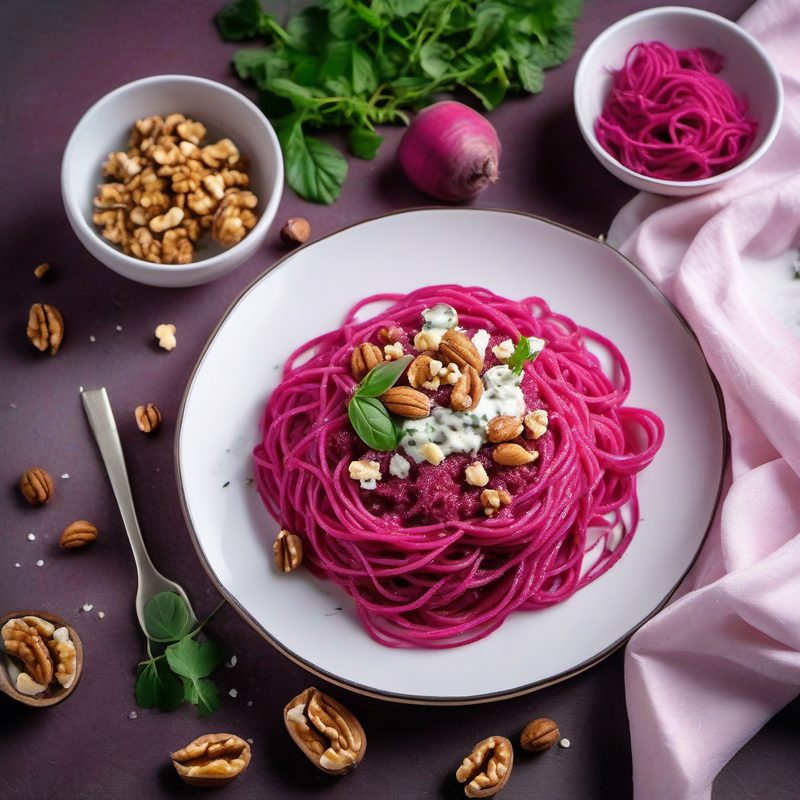
Beetroot Spaghetti Gorgonzola
| Amount | Ingredient |
|---|---|
| Calories | ~610 kcal |
| Fat | 38 g |
| Saturated Fat | 22 g |
| Cholesterol | 115 mg |
| Sodium | 820 mg |
| Carbohydrates | 50 g |
| Fiber | 4 g |
| Sugar | 5 g |
| Protein | 18 g |
Beetroot Spaghetti with Cream and Gorgonzola Sauce
| Category | Primi piatti |
| Servings | 4 |
| Active Time | 20 minutes |
| Total Time | 30 minutes |
Why This Recipe Works
Beetroot spaghetti is a showstopper — its brilliant magenta hue transforms an ordinary pasta dish into an extraordinary visual experience. But this recipe is about more than looks. The earthy, subtly sweet flavor of beetroot pairs unexpectedly well with the pungent, creamy intensity of Gorgonzola dolce, a mild and buttery blue cheese from Lombardy and Piedmont. The key is building the sauce gently: warming the cream before adding the Gorgonzola ensures it melts into a silky emulsion without breaking or turning grainy. A handful of toasted walnuts adds a crucial textural counterpoint — crunchy, nutty, and slightly bitter — while finely grated Parmesan deepens the savory backbone. A generous crack of black pepper cuts through the richness and ties the flavors together. The result is a first course that is simultaneously luxurious, rustic, and surprising: creamy yet bright, funky yet balanced, and undeniably beautiful on the plate.
- Beetroot Spaghetti — The namesake ingredient. Look for dried pasta colored and flavored with real beetroot powder (e.g., Rustichella d'Abruzzo, La Campofilone, or artisan brands). The beet flavor is subtle — more about color and a gentle earthiness than overt sweetness. If unavailable, substitute high-quality regular spaghetti and add 2–3 tablespoons of beetroot purée (from roasted or steamed beets) to the cream sauce at the end for color. Bronze-die extruded pasta is preferred for its rough texture, which helps the sauce cling.
- Gorgonzola Dolce — Use Gorgonzola dolce (sweet, soft, creamy) rather than Gorgonzola piccante (aged, crumbly, sharp). Dolce is milder, spreadable, and melts into a luscious sauce without overwhelming the dish. Look for a block with a soft, buttery texture and subtle blue veining. Avoid pre-crumbled Gorgonzola, which contains anti-caking agents that prevent smooth melting.
- Heavy Cream — Use heavy cream (35% milk fat) or double cream. The fat content stabilizes the emulsion and carries the Gorgonzola flavor. Do not substitute half-and-half or milk — the sauce will be thin and prone to breaking. For a lighter version, see Variations.
- Walnuts — Walnuts add essential crunch and a slightly bitter, toasty counterpoint to the rich, creamy sauce. Toast them just before serving to maximize their flavor and aroma. Chopping them into irregular pieces (not too fine) gives the dish varied texture.
- Parmesan — A small amount of finely grated Parmigiano-Reggiano bolsters the savory, umami depth without competing with the Gorgonzola. Authentic Parmigiano aged 24+ months is ideal; pre-grated substitutes lack the crystalline texture and complex flavor.
- Black Pepper — Freshly cracked black pepper is non-negotiable here. Its pungent heat and floral notes cut through the cream and cheese, preventing the dish from feeling heavy. Grind from whole peppercorns at the moment of serving.
Notes on Equipment
- Large pot (6–8 quart) — For boiling pasta with ample water.
- Large skillet or sauté pan (12-inch / 30 cm) — Wide enough to toss pasta with the sauce comfortably.
- Small saucepan or skillet — For gently warming the cream and melting the Gorgonzola.
- Small dry skillet — For toasting walnuts.
- Chef's knife and cutting board — For chopping walnuts.
- Microplane or fine grater — For finely grating Parmesan.
- Tongs — For tossing and coating the pasta.
- Heatproof liquid measuring cup — For reserving pasta water.
Instructions
1. Toast the walnuts
- Place the walnuts in a small dry skillet over medium heat. Toast, shaking the pan frequently, until fragrant and lightly browned in spots — about 3–4 minutes. Watch carefully; walnuts burn quickly.
- Transfer to a cutting board, let cool slightly, then chop into irregular pieces (roughly ¼-inch / 6 mm). Set aside.
2. Cook the pasta
- Bring 4 quarts (3.8 L) of water to a rolling boil in a large pot. Add 1½ tablespoons kosher salt (22 g).
- Add the beetroot spaghetti and cook until al dente according to package directions (typically 8–10 minutes for dried).
- Reserve 1½ cups (355 ml) of the starchy pasta water just before draining. Use a heatproof liquid measuring cup.
3. Make the Gorgonzola cream sauce
- While the pasta cooks, pour the heavy cream into a small saucepan or skillet over medium-low heat.
- Warm the cream gently until it is steaming but not boiling — small bubbles should appear around the edges, about 2–3 minutes.
- Add the crumbled Gorgonzola dolce and stir continuously with a wooden spoon or whisk until the cheese is fully melted and the sauce is smooth and homogeneous, about 2 minutes.
- Reduce heat to low and keep the sauce warm. If it thickens too much, whisk in a splash of reserved pasta water to loosen.
4. Combine pasta and sauce
- Drain the cooked spaghetti well (do not rinse) and transfer it to a large skillet or sauté pan set over low heat.
- Pour the warm Gorgonzola cream sauce over the pasta.
- Using tongs, toss the pasta gently but thoroughly, lifting and turning to coat every strand evenly. The sauce should cling to the pasta in a creamy, fluid coating.
- If the sauce seems too thick, add reserved pasta water 1 tablespoon at a time, tossing after each addition, until the desired consistency is reached.
5. Finish and serve
- Remove the pan from the heat. Sprinkle the grated Parmigiano-Reggiano over the pasta and toss once more to incorporate.
- Season generously with freshly cracked black pepper. Taste and add a pinch of salt only if needed — the Gorgonzola and Parmesan are already quite salty.
- Divide immediately among warmed serving bowls or plates. Top each portion with a generous scattering of toasted walnuts and an extra crack of black pepper.
- Serve at once. The sauce will continue to thicken as it cools.
Troubleshooting
Sauce breaks or looks greasy:
The cream was likely heated too aggressively, causing the fat to separate. Always warm cream over medium-low heat and never let it boil. If the sauce does break, remove it from heat immediately and whisk in 1–2 tablespoons of cold cream or reserved pasta water — the starch and cooler temperature can help re-emulsify.
Gorgonzola clumps instead of melting smoothly:
This can happen if the cheese is added to cream that is too hot, or if the cheese was too cold from the refrigerator. Let the Gorgonzola come to room temperature (about 20 minutes) before adding it, and ensure the cream is steaming but not bubbling.
Sauce is too thin:
Continue cooking over low heat, stirring gently, until it thickens slightly. Alternatively, toss in a bit more grated Parmesan, which acts as both a thickener and flavor enhancer.
Sauce is too thick:
Add reserved starchy pasta water 1 tablespoon at a time, tossing vigorously after each addition. The starch in the water helps maintain the emulsion while thinning the sauce.
Variations
Vegan Beetroot Pasta
Substitute the cream with 200 ml of full-fat coconut cream (the thick layer from a can of chilled coconut milk). Replace Gorgonzola with 100 g of cashew-based blue cheese alternative (e.g., Treeline or local artisan brand) and use a plant-based Parmesan. Toast the walnuts as directed. The coconut cream provides a similarly lush texture with a subtle tropical sweetness that complements the beetroot.
Lighter Version
Replace half the heavy cream with whole milk. Use only 100 g of Gorgonzola dolce and increase the Parmesan to 40 g for a sharper flavor hit. The sauce will be less decadent but still satisfying.
With Pear and Gorgonzola
Add 1 ripe but firm pear (such as Bosc or Bartlett), halved, cored, thinly sliced, and sautéed in 1 tablespoon of butter until golden, then folded into the pasta just before serving. The sweet, tender pear echoes the beetroot's natural sweetness and pairs beautifully with the Gorgonzola.
Spicy Kick
Add a pinch of red pepper flakes to the cream along with the Gorgonzola. The heat contrasts with the creamy, sweet, and funky flavors.
Serving Suggestions
- Serve as a primo piatto before a simple main course of roasted pork loin, grilled chicken, or sautéed white fish. The richness of the dish pairs well with lighter, simply prepared proteins.
- Pair with a glass of crisp, aromatic white wine such as a Pinot Grigio (Alto Adige), Gavi di Gavi, or a Verdicchio. The acidity cuts through the cream while the subtle fruit notes complement the beetroot and Gorgonzola. A light, fruity Lambrusco (slightly chilled) is also a surprising but excellent match.
- A simple side salad of peppery arugula with a lemon vinaigrette provides a bright, acidic contrast that balances the creamy pasta.
- Serve with crusty bread or grissini to soak up any remaining sauce on the plate.
- Garnish with a few extra Gorgonzola crumbles on top for visual contrast and an extra hit of flavor.
Behind the Recipe
Beetroot and Gorgonzola is a pairing deeply rooted in Northern Italian cooking, particularly in Lombardy and Piedmont, where both ingredients have long histories. Gorgonzola cheese has been produced in the town of the same name near Milan since the Middle Ages (earliest records date to 879 AD). Beets, meanwhile, were cultivated across the Po Valley and often appeared in risotti and contorni. The combination of earthy root vegetable and pungent blue cheese is a classic Northern Italian flavor pairing — the same logic that drives beet and Gorgonzola risotto, or roasted beets with Gorgonzola dressing.
Beetroot spaghetti as a commercial product is a more recent innovation, part of the broader movement toward naturally colored, vegetable-infused pastas that emerged in Italy from the 1990s onward. Artisan pasta makers in the Marche, Abruzzo, and Emilia-Romagna began incorporating vegetable powders (beet, spinach, tomato, squid ink) into their doughs, creating pastas that were both visually striking and subtly flavored. This recipe brings together that modern pasta craft with an ancient cheese tradition, creating a dish that feels both contemporary and timeless — a celebration of color, texture, and the art of unexpected pairings.
Nutritional Information (per serving)
Note: Values are approximate and based on the recipe as written with beetroot spaghetti, Gorgonzola dolce, heavy cream, walnuts, and Parmigiano-Reggiano.
Source: Adapted from traditional Northern Italian flavor pairings. ATK-style format.
Recipe from The Italian Kitchen by Vita Milanese — Volume 1 · Pasta Perfetto. Discover all volumes on the ebook page.