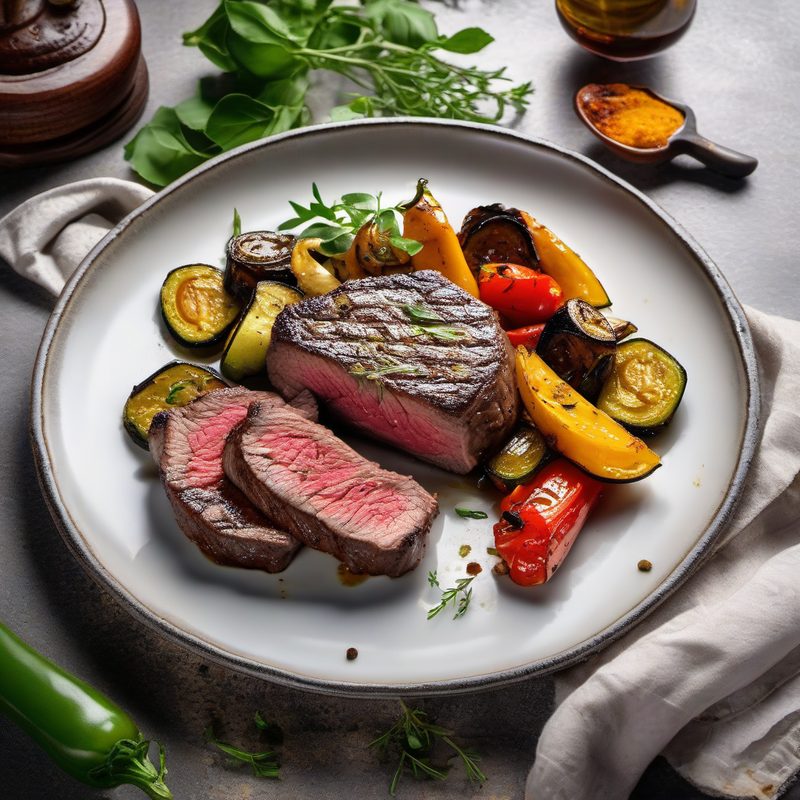
Ribeye Mediterranean Vegetables
Category: Secondi piatti (Main Courses — Meat)
| Amount | Ingredient |
|---|---|
| Ribeye (entrecôte) steaks | 2 (about 300 g / 10½ oz each) 2–3 cm (1 in) thick, preferably bone-in for more flavor |
| Zucchini (courgette) | 1 medium (about 200 g / 7 oz) Cut into 2 cm (¾ in) chunks |
| Red bell pepper | 1 medium (about 180 g / 6 oz) Stemmed, seeded, cut into 2 cm (¾ in) pieces |
| Eggplant (aubergine) | 1 small (about 200 g / 7 oz) Cut into 2 cm (¾ in) cubes |
| Red onion | 1 medium (about 150 g / 5 oz) Peeled, cut into 2 cm (¾ in) wedges |
| Garlic | 2 cloves Thinly sliced |
| Extra-virgin olive oil | 3 tablespoons (45 ml) Divided |
| Fresh rosemary | 2 sprigs Leaves stripped and roughly chopped (about 1 tablespoon) |
| Kosher salt | 1½ teaspoons (7 g) Divided |
| Black pepper | 1 teaspoon (5 g) Freshly ground, divided |
Original Title: Entrecôtes con verdura mediterranea
English Title: Ribeye Steak with Mediterranean Vegetables
Position: 376
Servings: 2–4
Prep Time: 20 minutes
Cook Time: 25 minutes
Total Time: 45 minutes
1. WHY THIS RECIPE WORKS
A great ribeye needs nothing more than salt, pepper, and heat — but pair it with charred, smoky Mediterranean vegetables and the combination becomes far greater than the sum of its parts. This recipe delivers a showstopping dinner that tastes like it came off a wood-fired grill in southern Italy, yet it can be made entirely indoors with a cast-iron skillet (or outdoors on a gas grill). The key is dual-zone cooking: we sear the steaks hard and fast over high heat to develop a deep brown crust while leaving the interior a perfectly pink medium-rare, then we char the vegetables in the rendered beef fat (plus olive oil) until they are tender, sweet, and edged with black. A brief rest for the steak and a final toss of the vegetables with fresh rosemary and garlic ensure every bite is juicy, aromatic, and vibrant.
3. EQUIPMENT
- 12-inch (30 cm) cast-iron skillet (or heavy-bottomed stainless-steel skillet)
- Tongs
- Chef's knife
- Cutting board
- Plate (for resting steak)
- Instant-read thermometer (optional but recommended)
- Large bowl (for tossing vegetables)
- Paper towels
4. BEFORE YOU BEGIN
- Take the chill off the steak: Remove the ribeyes from the refrigerator 30–40 minutes before cooking. Pat them dry with paper towels — dry surfaces are essential for browning. Season both sides evenly with 1 teaspoon (5 g) salt and ½ teaspoon (2.5 g) pepper. Set aside at room temperature.
- Prepare the vegetables: Cut the zucchini, bell pepper, eggplant, and red onion into uniform 2 cm (¾ in) pieces. In a large bowl, toss the vegetables with 2 tablespoons (30 ml) olive oil, the sliced garlic, half the chopped rosemary, ½ teaspoon (2.5 g) salt, and ¼ teaspoon (1 g) pepper.
- Organize your workstation: Have tongs, a plate for resting, and paper towels ready. If using an instant-read thermometer, set it nearby.
5. STEP-BY-STEP INSTRUCTIONS
Step 1: Sear the Steaks
- Place the cast-iron skillet over high heat and let it heat for 3–4 minutes until it is smoking-hot. Add 1 tablespoon (15 ml) olive oil and swirl to coat.
- Gently lay the seasoned ribeyes in the skillet, pressing down lightly with tongs to ensure full contact. Do not move the steaks for at least 2 minutes — you need uninterrupted contact to build a deep crust.
- Cook for 4–5 minutes on the first side. The surface should be deep mahogany brown. (If your steak releases easily from the pan, it is ready to flip; if it sticks, wait another 30 seconds.)
- Flip the steaks and cook for another 4–5 minutes for medium-rare (internal temperature 52–54°C / 125–130°F). Adjust cooking time ±1 minute per side for rare or medium.
- Transfer the steaks to a plate, tent loosely with foil, and rest for 5 minutes. Do not skip this step — resting allows the juices to redistribute throughout the meat.
Step 2: Cook the Vegetables
- Reduce the heat to medium-high. The skillet will still be hot with rendered beef fat and browned bits (fond) — this is flavor gold.
- Add the seasoned vegetables to the skillet in a single layer. (If your skillet is crowded, work in two batches or transfer half the vegetables to a separate pan.)
- Cook without stirring for 3 minutes to allow the underside to char. Then stir and continue cooking for 12–15 minutes total, stirring every 2–3 minutes, until the vegetables are tender, deeply browned, and have visible char marks. Add the remaining ½ teaspoon (2.5 g) salt and ¼ teaspoon (1 g) pepper halfway through.
Step 3: Finish and Serve
- Sprinkle the remaining chopped rosemary over the vegetables and toss to combine. Taste and adjust salt and pepper as needed.
- Slice the rested ribeyes against the grain into 1 cm (½ in) thick strips, or serve whole.
- Divide the vegetables among plates. Arrange the steak slices (or whole steak) alongside. Spoon any accumulated juices from the resting plate over the steak.
- Serve immediately.
- Ribeye/Entrecôte: This well-marbled cut from the rib primal is the best choice for this recipe. The abundant intramuscular fat keeps the meat juicy and adds rich flavor to the vegetables. If substituting, use New York strip (sirloin) or sirloin cap (picanha).
- Eggplant: Choose a small, firm eggplant with glossy skin. Do not peel — the skin holds the vegetable together during cooking. Salting beforehand is unnecessary with this char-roasting method.
- Zucchini: Medium zucchini are ideal; large ones can be watery and seedy. Look for ones that feel heavy for their size.
- Red Bell Pepper: Provides sweetness that balances the savory beef and smoky char. Yellow or orange peppers work equally well; green peppers are more bitter and not recommended here.
- Red Onion: Holds its shape better than yellow or white onion when charred. Cut into wedges (not rings) so each piece has a flat side for browning.
- Rosemary: Fresh is non-negotiable. Dried rosemary is woody and burns easily in a hot skillet. Add it at the end of cooking (not at the beginning) to preserve its flavor.
- Garlic: Sliced (not minced) so it caramelizes rather than burns to a bitter paste.
7. EQUIPMENT NOTES
- Cast-iron skillet: The ideal vessel for this recipe. Its high heat retention gives the steak a superior crust and the browned bits (fond) enrich the vegetables. If you do not have cast iron, a heavy stainless-steel or carbon-steel pan works; avoid nonstick, which cannot reach the necessary temperature safely.
- Instant-read thermometer: Takes the guesswork out of doneness. For medium-rare, pull the steak at 52–54°C (125–130°F); the internal temperature will rise 2–3°C (4–5°F) during resting.
- Tongs: Spring-loaded tongs give you the best control for flipping steaks and tossing vegetables. Avoid piercing the steak with a fork, which releases precious juices.
8. TIMING & MAKE-AHEAD
- Vegetable prep: The vegetables can be cut up to 1 day ahead and stored in an airtight container in the refrigerator. Toss with oil, garlic, and herbs just before cooking.
- Steak seasoning: Season the steaks up to 1 hour before cooking and refrigerate uncovered. Pat dry and bring to room temperature (30 minutes) before searing.
- Make-ahead meal: The vegetables can be cooked up to 2 hours ahead and gently reheated in a 180°C (350°F) oven while the steak rests. Do not cook the steak ahead of time — it must be served fresh from the pan.
9. STORING & REHEATING
- Refrigerator: Store steak and vegetables separately in airtight containers for up to 3 days.
- Reheating: Reheat vegetables in a skillet over medium-high heat with a splash of water, covered, for 2–3 minutes. Reheat sliced steak gently in the same pan for 1 minute per side over medium heat — do not microwave, which toughens the meat.
- Freezing: Not recommended for the vegetables (they become mushy). Cooked steak can be frozen in a vacuum-sealed bag for up to 1 month; thaw overnight in the refrigerator before gentle reheating.
10. WINE PAIRING
- Red: A bold, structured Italian red stands up to the beef and smoky vegetables. Try a Barbera d'Alba, Chianti Classico Riserva, or a Montepulciano d'Abruzzo. The high acidity of Barbera cuts through the ribeye's fat beautifully.
- White (unconventional but excellent): A rich, oak-aged Vermentino di Sardegna or Fiano di Avellino with its nutty, honeyed notes complements the charred vegetables.
- Rosé: A dry, savory rosé from Salento (Negroamaro-based) or Provence bridges the gap between red meat and grilled vegetables effortlessly.
- Sparkling: A Franciacorta Brut Rosé provides palate-cleansing bubbles that refresh between bites of rich steak.
11. REGIONAL VARIATIONS
- Sicilian-inspired: Add 1 tablespoon capers and 10 halved cherry tomatoes to the vegetables during the last 5 minutes of cooking. Finish with a sprinkle of chopped fresh oregano.
- Pugliese: Swap the rosemary for fresh oregano, add 2 diced anchovy fillets to the skillet when the vegetables go in, and serve with a wedge of lemon.
- Tuscan-finish: Add 200 g (7 oz) halved cherry tomatoes and ¼ cup pitted black olives to the skillet 3 minutes before the vegetables are done. Drizzle with aged balsamic vinegar before serving.
- Grill method (summer): Cook the steaks directly over a hot grill (4–5 minutes per side for medium-rare). Place vegetables in a grill basket and cook over the hot side of the grill, tossing frequently, for 12–15 minutes.
- Italian-American: Serve the steak and vegetables over a bed of dressed arugula with shaved Parmigiano-Reggiano and a lemon vinaigrette.
- Greek twist: Replace rosemary with dried oregano, add ½ teaspoon ground cumin to the vegetables, and serve with crumbled feta cheese and pitted Kalamata olives.
12. TROUBLESHOOTING
| Problem | Cause | Solution |
|---|---|---|
| Steak crust is pale, not deep brown | Pan not hot enough; steak was wet | Let pan heat 4–5 minutes on high; pat steak very dry before seasoning |
| Steak is overcooked (grey throughout) | Cooked too long on too-low heat | Use high heat; reduce time; use an instant-read thermometer |
| Vegetables are steaming instead of charring | Pan overcrowded; heat too low | Cook in batches; use medium-high heat; do not stir too often |
| Garlic burns and turns bitter | Garlic added too early | Add garlic only with the oil toss, not when the pan is at full heat; sliced garlic is more forgiving than minced |
| Rosemary scorches and tastes acrid | Rosemary added at start of cooking | Add fresh rosemary only in the last minute of cooking |
| Steak sticks to the pan when flipping | Not enough oil; pan not hot enough; flipped too early | Use 1 tablespoon oil; let pan get smoking hot; wait until steak releases easily |
13. NUTRITIONAL INFORMATION
Per serving (based on 4 servings)
| Component | Value |
|---|---|
| Calories | 485 kcal |
| Protein | 38 g |
| Fat | 31 g |
| Saturated Fat | 10 g |
| Carbohydrates | 12 g |
| Fiber | 4 g |
| Sugar | 7 g |
| Sodium | 680 mg |
| Cholesterol | 95 mg |
14. SCALING & ADAPTATIONS
- For 6–8 servings: Use 4 steaks (300 g each), double all vegetable quantities, and cook in two batches (or use two skillets simultaneously). Keep the first batch of vegetables warm in a 95°C (200°F) oven.
- Vegetarian version: Omit the steak. Cook 400 g (14 oz) of firm tofu, halloumi, or large portobello mushroom caps in the skillet first (4 minutes per side), then proceed with the vegetables. Serve as a main dish with crusty bread.
- Pescatarian version: Replace ribeye with 4 swordfish steaks (150 g / 5 oz each) or thick salmon fillets. Cook 3 minutes per side over high heat.
- Lower-fat option: Use lean sirloin steak instead of ribeye, reduce olive oil to 2 tablespoons, and spray the vegetables with oil instead of tossing.
- Spicy adaptation: Add 1 teaspoon red pepper flakes with the garlic, or toss the cooked vegetables with ½ teaspoon Calabrian chili paste before serving.
15. RECIPE TIPS & TECHNIQUES
- Screaming-hot pan, dry steak: The two secrets to a restaurant-quality crust. If your steak is at all damp, it will steam rather than sear. Pat it dry with paper towels even if you trimmed and rinsed it.
- Don't crowd the vegetables: Overcrowding drops the pan temperature and traps steam. You want the vegetables to sizzle, not sweat. Work in two batches if necessary — the extra 5 minutes is worth it.
- Use the fond: The browned bits left in the pan after searing the steak are pure flavor. Don't deglaze with wine or stock (that changes the dish) — just add the vegetables directly and let them lift the fond as you stir.
- Let it rest: A 5-minute rest for the steak is non-negotiable. During this time, the muscle fibers relax and the juices redistribute evenly throughout the meat. Cut too soon and they pool on the plate.
- Slice against the grain: Look at the direction of the muscle fibers on your rested steak and slice perpendicular to them. This shortens the fibers and makes every bite tender.
- Salt timing: Seasoning the steak 30–40 minutes before cooking allows the salt to penetrate the meat (dry-brining effect) rather than just sitting on the surface.
16. GLOSSARY
| Term | Definition |
|---|---|
| Entrecôte | The French term for a boneless ribeye steak, cut from the rib primal between the 6th and 11th ribs. In Italian, costata di manzo. |
| Fond | The browned bits of meat and caramelized juices that stick to the bottom of a pan after searing. Packed with flavor (the foundation of pan sauces). |
17. PLATING & PRESENTATION
- Rustic family-style: Pile the vegetables in the center of a large platter. Slice the rested ribeyes against the grain into 1 cm (½ in) strips and arrange them overlapping on top of the vegetables. Drizzle with any accumulated juices. Garnish with a fresh rosemary sprig.
- Individual plates: Mound the vegetables in the center of each warmed plate. lean the whole steak against the vegetables (or fan the sliced steak across them). Finish with a drizzle of finishing-quality olive oil and a few flakes of crunchy sea salt (such as Maldon).
- Modern approach: Smear a spoonful of roasted red pepper purée on the plate. Nestle the sliced steak and charred vegetables on top. Add micro greens (arugula or basil) for a pop of green.
- Serving with sides: This dish is a complete meal on its own, but it pairs beautifully with a simple green salad dressed with lemon and olive oil, or with grilled crusty bread rubbed with a cut garlic clove.
18. SCIENCE & TECHNIQUE
- The Maillard reaction: The deep brown crust on a properly seared steak is the result of the Maillard reaction — a complex chemical cascade between amino acids and reducing sugars that begins at approximately 140°C (285°F). This reaction creates hundreds of flavor compounds that are responsible for the savory, meaty, "roasted" taste we associate with great steak. The high heat of the skillet (200°C / 400°F+) drives this reaction rapidly; low heat produces a pale, steamed surface.
- Carryover cooking: A steak's internal temperature continues to rise after it is removed from the heat, typically by 2–3°C (4–5°F). This is why you pull the steak at 52°C (125°F) for medium-rare — the carryover will bring it to the ideal 54°C (130°F) during the rest. Ignoring carryover would result in an overcooked interior.
- Why resting works: When meat is heated, muscle fibers contract and squeeze liquid (juices) toward the center. If you cut into the steak immediately, those pressurized juices gush out. Resting allows the fibers to relax and the juices to redistribute evenly, so they remain in the meat when you slice.
- Charring vegetables: The high heat of the skillet does two things to the vegetables: (1) it drives off surface moisture, concentrating natural sugars; (2) it triggers the Maillard reaction and, beyond that, caramelization (the browning of sugars at 160°C / 320°F). The resulting blackened edges are not burnt — they are a complex, slightly sweet, smoky layer of flavor.
- Rosemary's essential oils: Fresh rosemary contains volatile aromatic compounds (1,8-cineole, α-pinene, camphor) that are intensely fragrant. These oils are heat-sensitive and begin to evaporate or degrade at prolonged high temperatures. Adding rosemary at the end of cooking preserves its bright, piney character rather than turning it into a bitter, burnt herb.
19. FINAL NOTES
- This recipe is designed to be a complete meal in one pan: protein and vegetables, cooked in sequence without dirtying extra dishes. The skillet does double duty — searing the steak first, then charring the vegetables in the beef's flavorful fat.
- For the best results, use a dry-aged or grass-fed ribeye if available. The concentrated flavor of dry-aged beef pairs exceptionally well with the smoky-sweet vegetables.
- Leftover vegetables (if any) are excellent the next day — tossed into a frittata, folded into an omelette, or spooned onto a slice of toasted sourdough with soft goat cheese.
- The recipe is naturally gluten-free and, with the appropriate steak, can be part of a paleo or whole30 diet.
- Cook's note: This is one of those rare recipes where simplicity is the ultimate luxury. Do not be tempted to overcomplicate it with marinades, sauces, or extra steps. A great steak, good olive oil, fresh vegetables, and a hot pan are all you need. Trust the process.
Source: Adapted from Italian regional cookbook tradition. Originally titled "Entrecôtes con verdura mediterranea" (Position 367 of 500 Mediterranean Classics).
Recipe from The Italian Kitchen by Vita Milanese — Volume 1 · Pasta Perfetto. Discover all volumes on the ebook page.