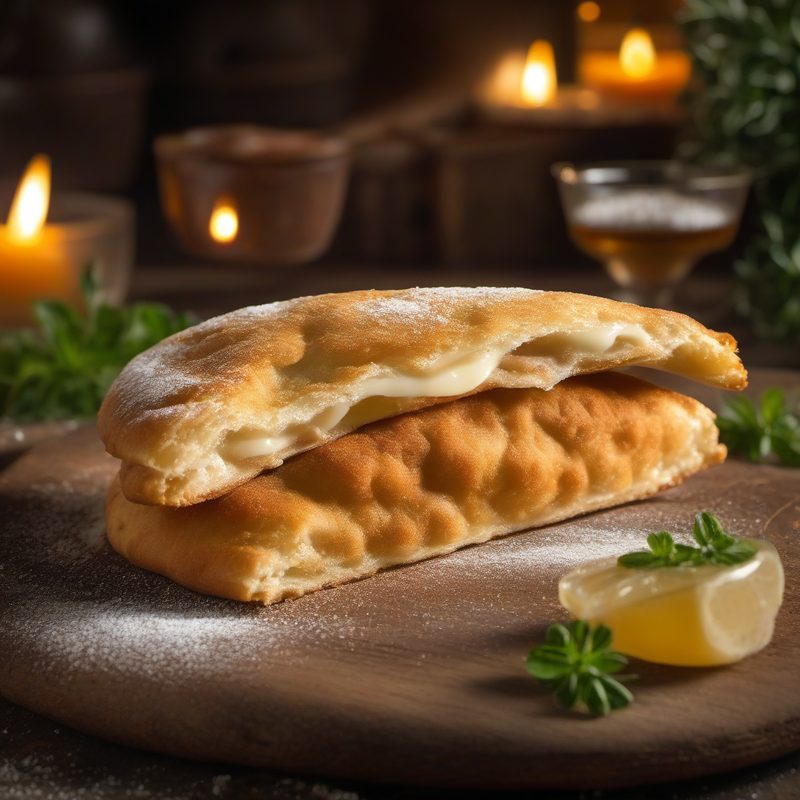
Calzoni Mille Bolle
Category: Pizze, Antipasti
| Amount | Ingredient |
|---|---|
| Low-moisture mozzarella, shredded | 200 g (about 2 cups) |
| Whole-milk ricotta | 200 g (about ¾ cup + 2 tbsp) |
| Salami or ham, sliced and cut into thin strips | 100 g (about 3½ oz) |
| Tomato sauce (plain, not chunky) | 100 g (about ⅓ cup + 1 tbsp) |
| Fresh basil leaves | 8–12 medium leaves |
Servings: 4 calzoni (serves 4)
Total Time: 2 hours 30 minutes (20 minutes active, 2 hours resting, 15 minutes baking)
Source: Italian home-baking tradition — "mille bolle" (thousand bubbles) refers to the dramatic blistering of the crust from high-heat oven spring.
Why This Recipe Works
The "thousand bubble" calzone achieves its signature crackling, blistering crust through two key techniques: a no-knead, high-hydration dough and extreme oven heat. By eliminating kneading entirely and relying on a long, wet autolyse, the dough develops a strong gluten network without the oxidation that makes standard pizza dough tough. The 2-hour rest at room temperature allows enzymatic breakdown of starches into sugars, which caramelize aggressively at 250°C/480°F, creating hundreds of irregular dark bubbles across the surface. The secret to a leak-proof seal is the twist-and-press method: after filling, you gather the dough edges like a beggar's purse, twist to cinch, then fold the twisted nub flat against the body of the calzone — this creates a double-thick seal that holds up under the violent steam expansion inside the oven. Use whole-milk, low-moisture mozzarella (not fresh mozzarella in water) to prevent sogginess; its lower water content means it melts into creamy pools rather than steaming into the dough. The salami or ham is cut into thin strips to distribute evenly in every bite, and a basil leaf laid directly on the cheese before sealing ensures aromatic hits throughout.
Equipment
- Large mixing bowl (at least 4-quart capacity)
- Wooden spoon or stiff silicone spatula
- Plastic wrap or a damp kitchen towel
- Bench scraper or sharp chef's knife
- Sheet pan or pizza stone (preferred: stone preheated 1 hour)
- Parchment paper
- Pastry brush (for oil)
- Wire rack (for cooling)
Dough
Filling
Instructions
1. Activate the Yeast
- In a small bowl or liquid measuring cup, combine the warm water (38°C/100°F) and the dry yeast.
- Whisk gently and let stand for 5 minutes until the mixture is foamy and fragrant. If no foam develops, discard and start with fresh yeast.
2. Mix the Dough
- In a large mixing bowl, whisk together the bread flour and salt.
- Pour in the yeast-water mixture and the olive oil.
- Stir with a wooden spoon or stiff spatula in one direction until a shaggy, sticky mass forms and no dry flour remains — about 1 minute. Do not knead.
- The dough will be very wet and tacky; this is correct.
3. Bulk Fermentation (No-Knead Rest)
- Cover the bowl tightly with plastic wrap or a damp kitchen towel.
- Let rest at room temperature (about 21°C/70°F) for 2 hours. After 30 minutes, the dough should show signs of bubbles around the edges; by 2 hours it will have doubled in size and the surface will be dimpled with large bubbles.
- Do not punch down or deflate aggressively — handle gently when portioning.
4. Prepare the Filling
While the dough rests:
- Shred the mozzarella (if not pre-shredded) and place in a medium bowl.
- Add the ricotta, salami or ham strips, tomato sauce, and tear the basil leaves by hand (reserve 4 whole leaves for optional topping).
- Stir gently until combined. Do not overmix or the ricotta will break and become watery. Set aside at room temperature.
5. Shape and Fill the Calzoni
- Adjust an oven rack to the lowest position and place a pizza stone or inverted sheet pan on it. Preheat the oven to 250°C (480°F). If using a stone, preheat for at least 1 hour.
- Lightly flour a clean work surface.
- Using a bench scraper, divide the dough into 4 equal portions (each about 175 g). Work with one piece at a time; keep the others covered.
- On a floured surface, gently coax each piece into a 20 cm (8-inch) round — do not use a rolling pin, as that deflates the bubbles. Instead, press and stretch with your fingertips, working from the center outward. The round should be slightly thicker at the edges (about 1 cm) than the center (about ½ cm).
- Lay a piece of parchment paper (about 30 cm / 12 inches square) next to your work surface. Transfer the round onto the parchment.
- Spoon about ¼ of the filling (generous ⅓ cup) onto one half of the dough round, leaving a 2 cm (¾-inch) border. Place 1 whole basil leaf on top of the filling, then gently press down on the filling to flatten slightly.
- Seal the calzone: Lift the empty half of the dough over the filling to form a half-moon. To create a leak-proof seal, use the twist-and-press method:
- Gather the lip of the dough at the top curve and twist it together like a beggar's purse.
- Fold the twisted nub down flat against the body of the calzone.
- Starting from one corner, press the edge firmly with your fingertips to seal, then crimp with the tines of a fork.
- Transfer the parchment with the calzone onto a baking sheet or pizza peel (if using a stone). Repeat with the remaining dough and filling.
- Using a pastry brush, brush the top of each calzone lightly with olive oil. For maximum bubble effect, avoid brushing the edges, where the seal is.
6. Bake
- Slide the calzoni (still on the parchment) directly onto the preheated stone or sheet pan.
- Bake until the crust is deep golden brown with irregular dark blisters and the filling is bubbling at the edges, about 15 minutes.
- If using a conventional (non-convection) oven, rotate the pan halfway through for even browning.
7. Rest and Serve
- Transfer the calzoni to a wire rack and let rest for 5 minutes before cutting. This allows the interior steam to settle, preventing a gush of hot liquid when sliced.
- Slice each calzone in half crosswise or serve whole on individual plates.
- Garnish with additional torn basil or a drizzle of olive oil if desired.
Troubleshooting
The calzone burst open during baking.
Most common cause: the seal was wet or under-pressed. Before sealing, wipe any moisture from the dough edge with a paper towel. Use the twist-and-press method and ensure the fork tines fully pierce the dough layers together.
The crust is pale and not bubbly.
Your oven may not be hot enough, or you opened the door too often. Preheat the stone/pan for a full hour. Resist opening the door during the first 10 minutes of baking. If your oven maxes out below 230°C (450°F), switch to a higher-gluten flour (bread flour) and add ½ tsp of diastatic malt powder to the dough to boost browning.
The bottom of the calzone is soggy.
Parchment paper can trap steam. After 10 minutes, carefully slide the calzone off the parchment directly onto the stone for the final 5 minutes. Also, use low-moisture mozzarella — fresh mozzarella's excess water will always make the bottom wet.
Substitutions & Variations
- Ham or salami substitutes: Prosciutto cotto, soppressata, pepperoni, or shredded leftover roasted chicken (omit salt in dough if using salty cured meats).
- Vegetarian: Replace salami with 100 g thinly sliced mushrooms sautéed until dry, or 100 g roasted red pepper strips. Add ½ tsp red pepper flakes for heat.
- Cheese variations: Substitute up to half the mozzarella with provolone or fontina for a sharper flavor. In a pinch, use full-fat feta in place of ricotta, but reduce the salt in the dough by half.
- Gluten-free: Replace bread flour with 400 g of a high-quality gluten-free bread flour blend (such as Caputo Fioreglut). Reduce water to 280 ml. The no-knead method still works, but expect fewer surface bubbles.
Make Ahead
- Dough: Can be mixed and refrigerated (covered) for up to 24 hours instead of room-temperature rest. Bring to room temperature for 30 minutes before shaping.
- Filling: Can be combined and refrigerated up to 1 day ahead. Bring to room temperature 20 minutes before assembling.
- Assembled but unbaked calzoni: Can be frozen on a parchment-lined sheet pan until solid, then transferred to a zip-top bag and frozen for up to 1 month. Bake from frozen at 230°C (450°F) for 20–22 minutes. Do not thaw before baking.
Storage & Reheating
- Storage: Refrigerate leftover calzoni in an airtight container for up to 3 days.
- Reheating: The best method is a hot oven or toaster oven at 200°C (400°F) for 8–10 minutes directly on the rack. Avoid the microwave, which turns the crust tough and rubbery. For a quick fix, reheat in a dry skillet over medium heat, covered, for 4 minutes per side.
Notes from the Test Kitchen
- The dough is intentionally wet — resist the urge to add more flour. A wetter dough means more steam, more bubbles, and a crisper crust.
- If your kitchen is very cold (below 18°C/65°F), extend the bulk rest by 30–60 minutes. If very warm (above 27°C/80°F), check at 75 minutes to avoid over-proofing.
- Lay parchment under each calzone before filling, not after — trying to transfer a filled, unbaked calzone tears the dough.
- For the most dramatic "thousand bubble" effect, brush only the dough surface with oil, not the edges. The edges are thicker and need their own browning timeline; oiling them makes the seal slip.
Recipe from The Italian Kitchen by Vita Milanese — Volume 1 · Pasta Perfetto. Discover all volumes on the ebook page.