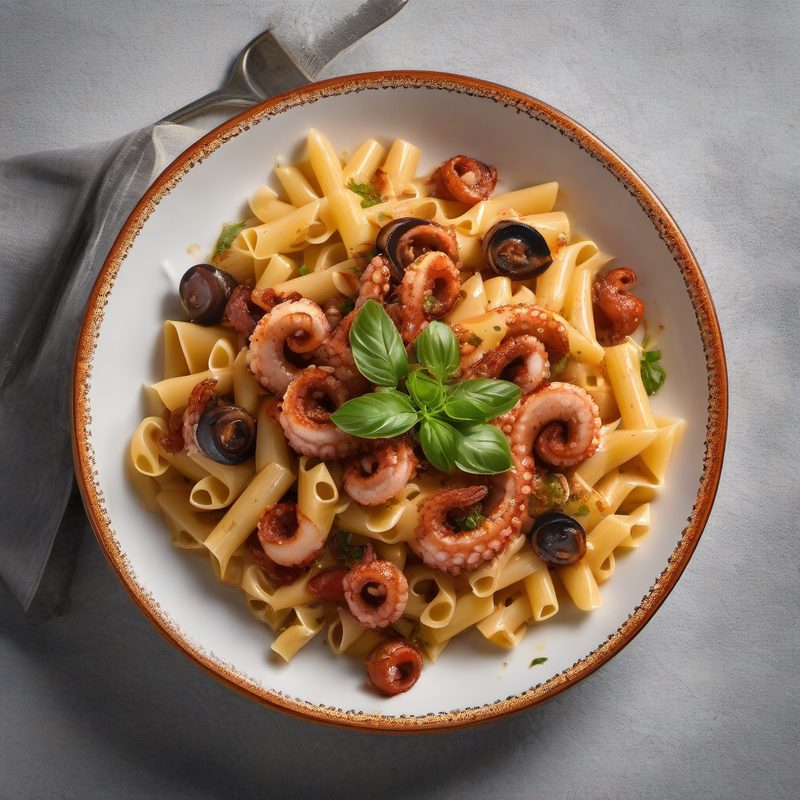
Pasta Galician Octopus
Category: Primi piatti, Fusion (Italo-Spanish)
| Amount | Ingredient |
|---|---|
| Calories | ≈ 590 kcal |
| Protein | 32 g |
| Fat | 22 g |
| Saturated Fat | 3.5 g |
| Carbohydrates | 66 g |
| Fiber | 4 g |
| Sugar | 3 g |
| Sodium | 520 mg |
Servings: 4
Total Time: 1 hour 30 minutes
Active Time: 40 minutes
Skill Level: Intermediate
Source: Galicia (Spain) meets Italy — a cross-cultural homage to pulpo a la gallega, reinterpreted as a sumptuous pasta dish
> The active work is front-loaded: preparing the octopus (which mostly simmers unattended), then a furious 15-minute burst of boiling potatoes, sautéing aromatics, and tossing everything together with the pasta. The octopus can be cooked a day ahead (see Make-Ahead Tips), reducing the total day-of effort to 30 minutes. This is a weekend-impressive dish that tastes far more complex than its modest ingredient count suggests.
1. Why This Recipe Works
Pasta con polpo alla galiziana is an inspired Italo-Spanish fusion that takes the iconic pulpo a la gallega — tender octopus, boiled potatoes, smoky paprika, and fruity olive oil — and transforms it into a hearty, cohesive pasta dish. The approach borrows from both traditions: the octopus is simmered until fork-tender using the classic Galician method (no acid, no pressure, just patient simmering in salted water), while the pasta marriage follows the Italian pasta con pesce playbook — reserving starchy pasta water to emulsify the sauce into a silky, clinging whole.
The key technical insight is timing and texture layering. Octopus benefits from gentle, lengthy cooking (40–60 minutes) that breaks down its collagen into gelatin, turning the muscle from rubbery to meltingly tender. Meanwhile, waxy potatoes are boiled separately and sliced into coins that mirror the octopus pieces in shape and size — a visual and textural harmony that makes every forkful a unified experience. The flavor foundation is built from three ingredients: garlic, smoked paprika, and olive oil — the holy trinity of Galician cooking. Garlic is slowly sizzled in olive oil until fragrant and pale gold, then the pan is taken off the heat while the smoked paprika blooms in the residual warmth (paprika scorches in seconds over direct heat, turning bitter). The octopus and potatoes are tossed through this paprika-scented oil, then combined with hot al dente pasta and a splash of its starchy cooking water. The starch emulsifies the olive oil into a creamy, clingy sauce that coats every strand and each nugget of octopus and potato. A final shower of fresh parsley — not traditional in pulpo a la gallega, which uses coarse salt alone — adds a bright, herbaceous finish that bridges the Spanish soul of the dish with Italian pasta sensibility.
The result is a dish that is simultaneously rustic and refined: the octopus is impossibly tender, the potatoes are creamy-edged, the pasta is slicked with a paprika-tinted, garlic-infused oil-emulsion, and every bite carries the warm, smoky depth of pimentón — a flavor that is unmistakably Galician, now married to Italian pasta in a way that feels destined rather than forced.
Pasta choice matters more here than in a standard tomato-based sauce. The octopus and potato pieces are substantial, and long spaghetti would tangle awkwardly around chunky ingredients. Short, tubular pasta (mezze maniche, penne, rigatoni) captures pieces of octopus and potato in its hollows, while orecchiette's dish-like shape cradles the paprika oil. If you must use long pasta — and some cooks do — choose a thick strand like linguine or bavette that can stand up to the weight of the sauce. The potatoes are deliberately modest in quantity — they provide textural contrast and bulking, not carb overload. The starch they release during boiling (and the pasta starch) are the dual emulsifiers that create the sauce's silky finish.
3. Before You Begin
- Octopus preparation is everything: The single greatest variable in this dish is octopus tenderness. Octopus is naturally tough because its muscle fibers are densely packed with collagen. The solution is two-fold: (1) freeze the octopus for 24–48 hours before cooking — the ice crystals rupture the cell walls, breaking down collagen before cooking even begins. Most octopus sold at market is already frozen, so this step is usually done for you; if you have fresh octopus, freeze it yourself. (2) Simmer gently, never boil aggressively — aggressive boiling makes octopus tough. The water should be at a quiet, steady simmer (just below 200°F / 93°C), with bubbles lazily breaking the surface, not a rolling boil.
- The pimentón bloom is critical: Smoked paprika is the soul of this dish. Do not add it to a hot, dry pan — it will burn in seconds, turning acrid and bitter. Always add it off the heat, stirring into the warm oil after the garlic has been cooked. The residual heat of the pan and oil is enough to bloom the paprika's volatile aromatics (releasing their sweet-smoky character) without scorching the delicate pigments. If you see the paprika darkening significantly after addition, the pan was too hot.
- Reserve ample pasta water: The starchy pasta water is the emulsifying agent that transforms the paprika oil from a separate, oily phase into a cohesive, creamy sauce that clings to pasta, octopus, and potatoes alike. Reserve a full 1½ cups (360 ml) — more than you think you'll need — and use it judiciously, adding 2–3 tablespoons at a time while tossing.
- The octopus and potatoes are cooked separately: They are not combined until the final toss with the pasta. This gives you control over each component's doneness — the octopus needs long, gentle simmering, while the potatoes need to be boiled until just tender (not falling apart) and the pasta needs to be al dente. Timing the three components to finish simultaneously is the only real logistical challenge of this recipe, and the Prep Timeline (Section 14) is designed to walk you through it.
- Slice octopus and potatoes to similar size: Once the octopus is cooked, cut it into bite-sized pieces roughly the same thickness and diameter as the potato coins. A forkful should contain a piece of octopus, a slice of potato, and a strand of pasta — all roughly the same size — for the ideal textural experience.
- Warm the serving bowls: This dish sits in olive oil, which can congeal slightly if it hits a cold bowl. Run bowls under hot water for 30 seconds, dry, and fill immediately. It makes a meaningful difference in the last few bites.
4. Equipment
- Large pot (8–10 qt / 8–10 L) — for simmering the octopus
- Large pot (6–8 qt / 6–8 L) — for boiling pasta and potatoes
- Large skillet or sauté pan (12-inch / 30 cm) — wide enough for the final toss
- Chef's knife and cutting board
- Colander
- Tongs or pasta fork
- Slotted spoon or spider skimmer (for removing octopus and potatoes)
- Measuring spoons
- Kitchen scissors (for cleaning octopus, if needed)
- Ladle or heatproof measuring cup (for reserving pasta water)
- Large serving bowl (warmed)
- Instant-read thermometer (optional, for monitoring octopus cooking water temperature)
- Paper towels (for drying octopus after simmering)
5. Key Steps at a Glance
- Simmer octopus → 40–60 minutes in gently simmering salted water until fork-tender → drain, rest 5 minutes, cut into bite-sized pieces.
- Boil potatoes → Peel, slice into ½-inch (1 cm) coins → boil in salted water 8–10 minutes until just tender → drain.
- Cook pasta → In same pot as potatoes (or fresh water) → cook until al dente → reserve 1½ cups pasta water → drain.
- Sauté garlic → Thinly sliced garlic in olive oil over medium heat until pale gold → remove pan from heat.
- Bloom paprika → Add smoked paprika to warm oil off-heat → stir 15 seconds until fragrant.
- Combine filling → Add octopus and potatoes to pan → toss gently over medium heat 1–2 minutes → add ½ cup pasta water → simmer 1 minute.
- Dress pasta → Add hot drained pasta → toss vigorously with parsley → adjust consistency with pasta water.
- Finish → Taste and adjust salt and paprika → plate → drizzle finishing olive oil → serve immediately.
6. Step-by-Step Instructions
Step 1: Prepare and Cook the Octopus (total: 45–65 minutes)
- If using frozen octopus, thaw it overnight in the refrigerator (or in a bowl of cold water for 2–3 hours, changing the water every 30 minutes). Rinse the thawed octopus under cold running water. If the octopus is whole and uncleaned, use kitchen scissors to remove the beak (the hard, cartilaginous point where the tentacles meet — find it by pressing on the central underside of the head), and discard the eye sac and innards if present. Most cleaned octopus sold at market will have these removed. Leave the skin on — the purple-mottled skin turns a rich mahogany when cooked and contains much of the flavor.
- Fill a large pot (8–10 qt) with 4 quarts (4 L) of water and add 2 tablespoons coarse sea salt. Do not add wine, vinegar, or lemon — the Galician method uses only water, salt, and gentle heat. The acid in wine or citrus would tighten the octopus's muscle fibers, making it tough. Some Galician cooks add a single bay leaf or a peeled onion half; these are optional and add negligible flavor to a 40-minute simmer. Bring the water to a gentle boil over high heat, then reduce the heat to maintain a steady, quiet simmer — bubbles lazily breaking the surface, water temperature around 195–200°F (90–93°C).
- The "scare" method (optional but traditional): Many Galician cooks practice asustar el pulpo ("scaring the octopus") — dipping the octopus into the simmering water three times before lowering it in fully. Using tongs, grasp the octopus by the head and dip the tentacles into the water for 3–5 seconds, then lift it out. Wait 5 seconds, repeat. After the third dip, lower the octopus completely into the pot. This technique is said to shock the skin and set the color — the tentacles curl and the skin takes on a deeper, more appetizing red-purple hue. While the effect is more cosmetic than structural, it is a beloved Galician ritual and takes only 30 seconds. Whether you scare the octopus or submerge it directly, the tenderness result is identical.
- Simmer the octopus uncovered, maintaining a gentle simmer, for 40 to 60 minutes. The exact time depends on the size and thickness of the octopus: a 500 g octopus is typically tender around the 45-minute mark; larger or thicker specimens may need 55–60 minutes. Do not rush this step — an undercooked octopus is unpleasantly rubbery, and even 5 minutes of simmering beyond "done" will not hurt the octopus (it gets more tender, not tougher, within reason). Start checking for doneness at 40 minutes.
- Test for doneness: The classic test is to pierce the thickest part of the largest tentacle (about 1 inch / 2.5 cm from the cut end) with a paring knife or skewer. It should slide in with no resistance — like a ripe avocado or a piece of well-cooked carrot. If there is any resistance, continue simmering and test again every 5 minutes. Another test: pinch a tentacle between thumb and forefinger — it should feel yielding and soft, not springy or firm. A third indicator: the skin will have loosened from the flesh and may be peeling slightly.
- Drain and rest: Using tongs or a slotted spoon, transfer the octopus to a large platter or cutting board. Do not rinse. Let it rest for 5 minutes — this allows the fibers to relax and the juices to redistribute. Blot excess moisture with paper towels (excess water dilutes the paprika oil). If preferred, the octopus can be loosely covered with foil and held in a warm spot (e.g., the turned-off oven at its lowest residual temperature, door propped open — not warmer than 150°F / 65°C). Do not let it sit longer than 15 minutes before cutting, or the exterior may begin to dry.
Step 2: Cook the Potatoes (15 minutes, can overlap with octopus simmering)
- While the octopus simmers (or immediately after it rests), peel the potatoes. Slice them into ½-inch (1 cm) coins — uniform thickness ensures even cooking.
- Bring a medium pot of generously salted water to a boil. Add the sliced potatoes and cook for 8–10 minutes, until just tender but not falling apart — a paring knife should slide through with slight resistance. The potatoes should hold their coin shape; overly soft potatoes will disintegrate in the final toss. Drain in a colander and set aside. Reserve the water for cooking the pasta (or bring a fresh pot to a boil).
Step 3: Cook the Pasta (10 minutes, overlapped with Steps 4–5)
- Bring the same pot (with the potato-cooking water refreshed, or a separate pot) of generously salted water to a rolling boil. Add 350 g pasta and cook according to package directions until al dente — typically 1 minute less than the package suggests for dried pasta.
- Reserve 1½ cups (360 ml) of the pasta cooking water before draining. Set it aside at the ready — you will use it in the final toss.
- Drain the pasta in a colander. Do not rinse — the surface starch is essential for emulsion. Do not let it sit in the colander for more than 2 minutes; time your final steps so the pasta goes directly from colander to pan.
Step 4: Sauté the Garlic (3 minutes)
- While the pasta cooks, heat 4 tablespoons (60 ml) extra-virgin olive oil in a large 12-inch skillet over medium heat.
- Add 2 garlic cloves, thinly sliced (reserve the remaining 2 cloves for later). Cook, stirring frequently, until the garlic is fragrant, pale gold, and translucent — about 1½ to 2 minutes. Do not let it brown; even a hint of brown means the garlic has passed the sweet spot into bitterness. If the garlic begins to brown before you've finished stirring, the heat is too high — lift the pan off the burner for 15 seconds to cool it.
- Remove the pan from the heat entirely. This is critical for the next step.
Step 5: Bloom the Paprika (30 seconds)
- Off the heat, add 2 heaping teaspoons smoked paprika to the warm garlic oil. Stir vigorously with a wooden spoon for about 15–20 seconds. The oil will turn a deep, brick-red and release an intensely smoky, sweet aroma — this is the fragrance that defines the dish. The paprika should sizzle gently in the oil but not darken significantly. If it turns dark brown or smells acrid, the oil was too hot — next time remove the pan from the heat a few seconds earlier.
- If using the picante (hot) variety of pimentón, note that the heat level is mild — about half the intensity of cayenne. It adds a warm, tingling finish without overwhelming the octopus. If using dulce (sweet), the flavor is purely smoky-sweet with no heat. Both are authentic; choose based on preference.
Step 6: Combine Octopus and Potatoes (3 minutes)
- Return the skillet to medium heat. Add the tender octopus pieces and drained potato coins to the pan. Toss gently to coat in the paprika oil. Cook for 1–2 minutes, stirring occasionally, until the octopus is warmed through and the potatoes begin to take on the brick-red paprika color on their cut surfaces.
- Mince the remaining 2 garlic cloves and add them to the pan. Stir for 30 seconds — the raw minced garlic adds a pungent, aromatic note that contrasts with the already-cooked sliced garlic, creating layers of garlic flavor.
- Pour in ½ cup (120 ml) of the reserved pasta water. Stir to incorporate, scraping up any browned bits (fond) from the pan bottom — there will be precious few from the gentle octopus and potato warming, but whatever clings is pure flavor. Let the liquid bubble gently for 1 minute, until it thickens slightly and forms a loose, emulsified sauce. The starch from the pasta water will bind with the olive oil, creating a creamy-looking, homogeneous sauce rather than a separated oil-and-water mixture.
Step 7: Toss with Pasta and Finish (2 minutes)
- Add the hot drained pasta directly to the skillet. Remove from heat. Toss vigorously with tongs for 45–60 seconds, lifting and turning to coat every piece of pasta, octopus, and potato in the paprika oil. The pasta should look glossy and brick-red. Add more reserved pasta water 1–2 tablespoons at a time if the sauce seems too tight — you want each strand or tube to be slick with a clingy, emulsified coating, not swimming in liquid.
- Add ½ cup (packed) chopped fresh parsley and toss once or twice to distribute. The parsley should remain bright green — it is a finishing herb, not a cooking herb. Toss just enough to incorporate; the residual heat from the pasta will wilt it gently.
- Taste and adjust: Add a final pinch of salt if needed (the octopus and potatoes absorb salt differently, and the paprika oil needs a gentle hand with salt to balance its smoky sweetness). Grind fresh black pepper over the top — about ¼ teaspoon.
- If the dish tastes flat or the paprika flavor seems muted, stir another ½ teaspoon smoked paprika into the final toss. Occasionally the paprika loses potency during the bloom — an extra half-teaspoon, stirred in off-heat, restores the desired intensity.
- Divide among warmed serving bowls (4 portions). Drizzle each serving with a teaspoon of finishing-quality extra-virgin olive oil — a fruity, grassy glisten over the brick-red pasta. Sprinkle a pinch of coarse sea salt and a small parsley sprig on top for garnish. Serve immediately.
7. Visual Cues — What to Look For
| Step | Visual Cue |
|---|---|
| Octopus simmering | Water at quiet, steady simmer (bubbles every 1–2 seconds); skin turns from mottled purple to deep mahogany red |
| Octopus doneness | Knife slides through thickest tentacle with zero resistance; skin may be slightly peeling |
| Octopus rested and cut | Tentacle pieces are uniform, glistening, with no visible pale white core — deep reddish-brown throughout |
| Sautéed garlic | Pale gold, translucent, fragrant — no brown edges |
| Bloomed paprika oil | Deep brick-red, intensely aromatic-smoky, not darkened to brown |
| Potatoes after toss | Coin surfaces stained brick-red from paprika oil; edges slightly blistered |
| Sauce consistency after pasta water added | Loose, creamy, emulsified — no separation of oil into puddles |
| Pasta after tossing | Glossy, brick-red sheen on every piece; no dry, pale spots |
| Octopus and potatoes in sauce | Evenly coated, glistening, no pooling oil |
| Final dish | Deep red-orange pasta studded with mahogany octopus, golden-red potatoes, and bright green parsley |
| Plated portions | Neatly twirled or mounded pasta, garnish of parsley and a glistening ribbon of raw olive oil on top |
8. Recipe Notes & Troubleshooting
| Issue | Cause | Fix |
|---|---|---|
| Octopus is rubbery / tough | Undercooked; simmer was too brief or water was boiling too hard | Continue simmering — octopus gets more tender with more time, not less. Simmer at 195–200°F (90–93°C); next time cook 50–60 minutes. |
| Octopus is mushy / falling apart | Overcooked (rare with only 500 g) or octopus was very small/thin | Reduce simmering time to 35–40 minutes next time. For this batch, use the mushy pieces — they still taste excellent. |
| Paprika tastes bitter / burnt | Paprika was added to too-hot oil or cooked over direct heat | Discard the oil and start over from Step 4 with fresh garlic and oil; add paprika strictly off-heat next time. |
| Sauce is greasy / separated | Not enough pasta water or insufficient tossing to emulsify | Add 2–3 more tablespoons of reserved pasta water and toss vigorously — the starch will bind the oil. |
| Sauce is watery / thin | Too much pasta water added, or octopus and potatoes weren't dried | Simmer the sauce uncovered for 1–2 more minutes to reduce; next time, pat octopus and potatoes dry with paper towels before adding to pan. |
| Sauce is dull / lacks cling | Pasta was rinsed after draining | Never rinse pasta. The surface starch is essential. If already rinsed, add ¼ cup more pasta water and toss — the excess starch in pasta water can partially compensate. |
| Potato coins fell apart in the pan | Potatoes were overcooked during boiling | Next time, cook potatoes to just tender — they should resist slightly when pierced. For this batch, incorporate the potato pieces gently. |
| Garlic is burnt / black | Heat too high or garlic left unattended | Start over — burnt garlic cannot be saved. Next time use medium or medium-low heat and stir constantly. |
| Dish tastes flat / one-dimensional | Not enough salt; paprika quality is low | Add a finishing pinch of salt. Next time use authentic pimentón de la Vera from Spain — the flavor difference is dramatic. |
| Octopus skin is tough / leathery | The skin did not break down enough | Next time, after simmering, let the octopus rest covered in the pot (off heat) for 10 minutes before removing — steam helps loosen the skin. You can also peel the skin after cooking if desired. |
| Pasta and octopus are not evenly distributed | Not enough tossing or pan too crowded | Toss more vigorously; use a larger pan next time. For this batch, use two pans or a large mixing bowl. |
| Dish is too smoky or overpowering | Too much paprika or the picante (hot) variety was used | Add a splash more olive oil and extra parsley to balance. Next time use dulce (sweet) paprika. |
9. Make-Ahead Tips
- Octopus (up to 2 days ahead): Cook the octopus through Step 1 (simmer, drain, rest), then let it cool completely at room temperature (no more than 1 hour). Transfer to an airtight container along with ¼ cup of its cooking liquid (to prevent drying). Refrigerate for up to 48 hours. To use, remove from the refrigerator 30 minutes before the final dish, pat dry, cut into pieces, and proceed from Step 4. The octopus will be even more tender after a day in the fridge — the gelatin continues to relax.
- Octopus (up to 3 months, frozen): Cooked octopus freezes beautifully. Cool completely, wrap tightly in plastic wrap, then place in a freezer bag, pressing out air. Thaw overnight in the refrigerator. The texture will remain excellent because the collagen has already been converted to gelatin.
- Potatoes (day of, up to 4 hours ahead): Boil and drain the potatoes as directed, then toss with 1 tablespoon olive oil to prevent drying. Cover and hold at room temperature for up to 4 hours. Do not refrigerate — cold potatoes develop a gritty, unpleasant texture when reheated in the skillet.
- Paprika garlic oil (up to 1 week): Complete Steps 4 and 5 (sauté garlic, bloom paprika off-heat), then transfer the oil with the garlic to a small jar. Refrigerate for up to 1 week. To use, warm gently in the skillet over low heat before adding octopus, potatoes, and pasta water. This is an excellent shortcut — you have the flavor foundation ready before you start boiling anything.
- Pasta (not recommended ahead): This dish is best served immediately. The octopus and potatoes will not reheat well together with the pasta — the potatoes turn mealy and the pasta becomes mushy. If you must, undercook the pasta by 2 minutes, shock in cold water, toss with 1 teaspoon olive oil, and refrigerate separately from the octopus-potato mixture. Combine and reheat in a skillet with 2–3 tablespoons pasta water — the result is acceptable but not great.
10. Variations
- Pasta con polpo alla galiziana con peperoncino (spicy): Add 1–2 dried red chili peppers (cayenne or peperoncino calabrese) to the olive oil with the garlic. Crumble the chili into the oil and let it infuse for 30 seconds before removing the pan from heat. Alternatively, use the picante (hot) variety of pimentón de la Vera — it adds a gentle, smoky heat that builds slowly.
- Pasta con polpo alla galiziana al limone (with lemon): Finish the dish with the zest of 1 lemon (grated over the finished pasta before tossing) and a squeeze of lemon juice (about 1 tablespoon) added with the pasta water. The bright acidity cuts through the rich olive oil and smoked paprika beautifully — a coastal Italian twist that works surprisingly well.
- Pasta con polpo alla galiziana con pangrattato (with toasted breadcrumbs): While the pasta cooks, toast ½ cup coarse breadcrumbs in a dry skillet over medium heat with 1 tablespoon olive oil and a pinch of smoked paprika until golden and crisp, about 3–4 minutes. Sprinkle over the finished pasta for a crunchy, textural counterpoint. This is a common finishing trick in both Galician and Southern Italian cooking.
- Pasta con polpo e chorizo (with Spanish chorizo): Add 100 g diced Spanish chorizo (cured, not fresh) to the pan with the garlic. Cook until the chorizo renders its red, paprika-tinted oil and begins to crisp at the edges — about 3–4 minutes. Remove the chorizo, proceed with the recipe, and return the chorizo to the pan with the octopus and potatoes. The double dose of paprika (from the chorizo and the added pimentón) creates an intensely smoky, rich dish. Omit the extra salt — chorizo is already salty.
- Pasta con polpo alla galiziana con pimientos (with roasted peppers): Add 1 roasted red bell pepper (peeled, seeded, cut into strips) to the pan with the octopus and potatoes. The sweet, smoky pepper adds another layer of Spanish character and provides a soft, silky texture that contrasts with the firm octopus. This is a Galician-style pulpo con pimientos fusion.
- Gluten-free version: Substitute 350 g of a high-quality gluten-free short pasta (brown rice and corn blend or chickpea-based). Cook according to package directions but test 1 minute early — gluten-free pasta goes from perfect to pasty quickly. Reserve extra pasta water (about 2 cups), as GF starches release differently and may need more liquid to create a cohesive sauce. The rest of the recipe is naturally gluten-free.
- Dairy — a note: This dish traditionally contains no dairy. If you wish to add a creamy element, a dusting of Parmigiano-Reggiano or pecorino is not traditional in either Italy (seafood and cheese are rarely paired) or Spain. A better choice: a dollop of fresh burrata or a spoonful of ricotta placed on each serving — the cool, creamy cheese contrasts beautifully with the warm, smoky pasta. Alternatively, a drizzle of aioli (garlic mayonnaise) on top is a surprisingly excellent Galician-inspired addition.
- Vegan version: Replace the octopus with 400 g firm tofu (pressed, sliced, and seared until golden), 300 g thickly sliced king oyster mushrooms (scored on one side and seared), or 200 g canned chickpeas (drained, dried, and pan-fried). The mushrooms, in particular, develop a chewy, meaty texture that mimics octopus tentacles surprisingly well. Use a generous amount of smoked paprika to build the Galician character. The potatoes, olive oil, garlic, and parsley remain the same.
11. Wine & Drink Pairing
- White (Spain): An Albariño (Rías Baixas DO) is the classic Galician pairing — bright acidity, saline minerality, and notes of green apple and stone fruit cut through the olive oil while mirroring the octopus's briny character. Serve well-chilled. A Godello (Valdeorras) — richer, more textural, with slight herbal notes — is a worthy alternative for those who prefer a rounder white.
- White (Italy): A Verdicchio dei Castelli di Jesi (Marche) — with its almond undertone, green apple acidity, and saline finish — is an inspired match for the smoked paprika and seafood. Alternatively, a Greco di Tufo (Campania) — floral, mineral, and full-bodied — stands up to the robust flavors without fading.
- Red (light, chilled): A Mencía (Bierzo or Ribeira Sacra, Spain) — light-bodied, with bright red fruit, herbal notes, and a gentle earthy finish — served slightly chilled (55–60°F / 13–15°C) is a delightful red pairing. The wine's moderate tannins and fresh acidity complement the octopus without overwhelming it. A Bartolo Mascarello Barbera d'Alba (lightly chilled) or a Schiava (Alto Adige) also work in this style.
- Rosé: A dry rosado from Navarra or a Cerasuolo d'Abruzzo — both have enough structure to stand up to the smoky paprika while their fruit brightness balances the olive oil's richness. Serve chilled.
- Sparkling: A Cava (brut, preferably from a small producer — the best Cavas from Conca del Riu Anoia have a savory, autolytic character that mirrors the dish's complexity). Alternatively, a Franciacorta or Trentodoc brut — the effervescence scrubs the palate clean between bites of oil-rich pasta.
- Sherry: A Fino or Manzanilla — bone-dry, saline, with a distinctive yeasty character — is the most Spanish pairing imaginable. The salinity and crisp, almond-like finish of Manzanilla is a breathtaking match for the octopus and smoked paprika. Serve ice-cold. A dry Amontillado (with its subtle nuttiness) is also excellent but must be bone-dry — avoid cream sherries.
- Beer (Spain): A Cerveza Estrella Galicia (the classic Galician lager) or a crisp Spanish pilsner — clean, light, and refreshing, the bitterness cutting through the olive oil. For a more distinctive choice, a Spanish wheat beer or a dry-hopped session IPA.
- Beer (Italy): A Moretti Baffo d'Oro or Ichnusa (Sardinia) — both are crisp, light lagers with enough character to stand up to the paprika without competing.
- Cider: A Sidra Natural from Asturias — dry, funky, and lightly sparkling with a distinctive apple tartness. The cider's acidity cuts through the oil, and its earthy, fermented character echoes the sea-and-forest soul of Galicia. Pour it traditionally from a height to aerate it.
- Non-alcoholic: Sparkling water with a twist of lemon and a pinch of smoked salt; a chilled, very dry apple-ginger soda; or an iced, unsweetened chamomile-tea with a splash of apple cider vinegar and a sprig of mint.
12. Serving Suggestions
- Serve with crusty bread — a Spanish pan de pueblo, a Galician hogaza, or a rustic Italian filone — for mopping up the remaining paprika oil pooled at the bottom of the bowl.
- A simple green salad dressed with lemon juice and olive oil (no vinegar, which fights the smoky paprika) is the ideal accompaniment — the crisp, cold greens refresh the palate between bites of rich, warm pasta.
- A bowl of pimientos de Padrón (blistered Padrón peppers — simply fried in olive oil with coarse salt) is the perfect Spanish starter alongside this pasta. Their bitterness and occasional heat provide a brilliant contrast to the sweet-smoky dish.
- For a more substantial meal, start with a chilled seafood platter (mariscada) or a simple gambas al ajillo (garlic shrimp), then follow with this pasta as a generous primo or plato principal. The shared Galician-Italian seafood sensibility makes this a natural progression.
- If serving as part of an Italo-Spanish themed dinner, precede with pan con tomate (Catalan tomato bread) or tapenade on crostini, and finish with crema catalana or tiramisú for dessert.
- Sprinkle a pinch of pimentón de la Vera (dulce) and a few flakes of fleur de sel over each plate just before serving — these final touches of color and flavor signal the Galician soul of the dish.
- Finish with a final drizzle of finishing-quality extra-virgin olive oil applied at the table — the grassy, peppery aroma adds a fresh, vibrant top note to the smoky depth below.
13. Nutritional Information (per serving)
Approximate values based on ingredients listed; actual values vary. The calorie count is driven primarily by the olive oil (4 tbsp across 4 servings = 1 tbsp per serving) and the pasta. The octopus is a lean protein source (about 85% protein by dry weight) with negligible fat. The potatoes contribute simple carbohydrates and a small amount of potassium. The high sodium comes primarily from the salted pasta water and the octopus cooking water — both seasoned generously. To reduce sodium, use less salt in the octopus cooking water and the pasta water, though the dish will be less flavorful. Smoked paprika is naturally sodium-free and adds intense flavor without salt — use it generously. The fiber content is minimal (primarily from the pasta); a side salad with the meal would add fiber.
14. Prep Timeline & Workflow
| Time Elapsed | Action |
|---|---|
| 0 min | Fill large pot with 4 qt water + 2 tbsp salt → bring to gentle simmer |
| 5 min | Prepare octopus (rinse, remove beak if needed) → "scare" and submerge → start simmering |
| 35 min | Check octopus at 40-min mark → continue simmering if needed |
| 45 min | Peel potatoes; slice into ½-inch coins |
| 50 min | Bring second pot of salted water to a boil for potatoes and pasta |
| 55 min | Boil potato coins (8–10 min); reserve the water for pasta |
| 60 min | Test octopus doneness → drain → rest 5 min → blot dry → cut into pieces |
| 63 min | Start cooking pasta in potato-boiling water (or fresh water) — set timer for al dente |
| 65 min | Heat olive oil in skillet → sauté sliced garlic (1½–2 min) → remove pan from heat → bloom paprika |
| 68 min | Reserve 1½ cups pasta water → drain pasta → return skillet to medium heat |
| 69 min | Add octopus and potatoes to skillet → toss 1–2 min → add minced garlic → add ½ cup pasta water → simmer 1 min |
| 71 min | Add hot drained pasta → toss vigorously with parsley (45–60 sec) → adjust seasoning |
| 73 min | Plate → drizzle finishing oil → garnish → serve |
Note: The timeline assumes a 45-minute octopus simmer. If your octopus needs 55–60 minutes, adjust the potato cooking and pasta cooking accordingly — the potatoes can hold (see Make-Ahead Tips) and the pasta should be cooked just before the octopus is ready. The flexibility is built into the recipe: the octopus can rest for up to 15 minutes without harm, and the potatoes can sit for up to 4 hours. The only critical timing link is the pasta-to-toss cascade — pasta must go from colander to pan within 2 minutes.
15. Allergen Information
- Contains: Wheat/gluten (pasta), molluscan shellfish (octopus — cephalopod)
- Free from: Eggs, dairy, peanuts, tree nuts, soy, fish, sesame, lupin, mustard, celery (as written)
- May contain: Traces of crustacean (octopus may be processed on shared equipment with shrimp, crab, or lobster in some markets)
- Cross-contact note: Smoked paprika (pimentón de la Vera) is produced in facilities that may process other spices. If you have severe allergies, check the paprika label. Octopus, as a cephalopod, is a mollusk and is classified as shellfish under EU allergen regulations — it is not a fish (finfish) allergen, but some individuals with shellfish allergies may also react to cephalopods.
- Dietary profiles (as written): Pescatarian, dairy-free, low-lactose, egg-free, nut-free, soy-free
- Not suitable for: Vegan, vegetarian, gluten-free (but see Variations for GF and vegan alternatives)
- Note on octopus preparation: The octopus is simmered in salted water with no added acids or aromatics. If you use a bay leaf or onion in the cooking water (optional), those ingredients are removed before serving and do not constitute a declared allergen, but individuals with sensitivities should be aware.
16. Regional Background
Pasta con polpo alla galiziana is not a traditional dish — it is a deliberate, respectful fusion of two great coastal culinary traditions: the Galician pulpo a la gallega and the Italian pasta con pesce (pasta with seafood).
Pulpo a la gallega (Galician-style octopus) is one of the most iconic dishes of Spanish cuisine. Originating in the inland provinces of Galicia (Lugo, Ourense) — surprising for a seafood dish — it was traditionally preserved by salting and carried from the coast by polbeiros (octopus traders) who traveled the region selling cooked octopus from copper pots. The preparation is stark in its simplicity: octopus is simmered in a copper pot (traditionally to maintain even temperature), then sliced into rounds, arranged on a wooden plate over sliced boiled potatoes, and dressed with olive oil, coarse salt, and smoked paprika (pimentón de la Vera). The wooden plate (usually a cazuela de madera or simply a thick wooden disk) is not decorative — it absorbs excess moisture and keeps the octopus from sitting in its own juices. The dish is a staple of Galician pulperías and is traditionally served at festivals (festas do polbo) throughout the region, most famously in Melide, O Carballiño, and Santiago de Compostela (where it is the signature dish of the pulperías along the Camino de Santiago).
The Italian side of this fusion draws from the pasta con pesce tradition — particularly the coastal pastas of Liguria (trofie with pesto and potatoes — a shape-pairing inspiration), Campania (spaghetti with clams and mussels), and Puglia (orecchiette with seafood and broccoli rabe). The idea of marrying seafood with olive oil, garlic, and a starchy pasta-emulsified sauce is deeply Italian. The addition of potatoes — not typical in Italian seafood pasta but essential in Galician preparation — creates a textural bridge: the creamy starchiness of boiled potatoes contrasts with the firm, meaty octopus, while the potato starch contributes to the sauce's body.
This recipe honors the Galician technique wholeheartedly: the gentle simmering in salted water (no wine, no tomato), the "scare" ritual, the blooming of pimentón off-heat, and the reverence for the octopus itself. But it adapts the format into something new — a pasta dish where the pulpo a la gallega is not a separate plate but an integrated condimento (seasoning/sauce). The wooden plate is replaced by a pasta bowl; the coarse salt and paprika become an emulsion slicked over al dente pasta; and the octopus and potatoes become partners in a forkful of mezze maniche rather than companions on a shared platter.
The dish speaks to a broader culinary truth: the best fusions are not random mash-ups. They arise from recognizing deep affinities between two traditions — here, the Galician love of simple, honest seafood preparation and the Italian genius for making a few ingredients sing through technique. Galicia and Italy share a coastline on the same sea (the Mediterranean-Atlantic continuum), a reverence for olive oil and garlic, and a belief that the best cooking is the cooking that lets the ingredient speak. Pasta con polpo alla galiziana is the culinary equivalent of a conversation between two old friends from different villages who discover they were speaking the same language all along.
17. Scaling
- For 2 servings: Halve all ingredients. Use 175 g pasta (small shapes like orecchiette work beautifully at this scale), 250 g octopus, 1 medium potato (about 100 g), 2 garlic cloves (1 sliced, 1 minced), 2 tbsp olive oil, 1 tsp smoked paprika, and ¼ cup (60 ml) pasta water. Cooking times: the smaller octopus may cook slightly faster — check for doneness at 35 minutes. Use a 10-inch skillet for comfortable tossing. The smaller volume of oil and pasta water means the emulsion forms faster — add the water in 1-tablespoon increments.
- For 6 servings: Increase proportions by 1.5x: 525 g pasta (three 175 g portions), 750 g octopus, 300 g potatoes (3 medium), 6 garlic cloves (3 sliced, 3 minced), 6 tbsp olive oil, 3 tsp (1 tbsp) smoked paprika, ¾ cup (180 ml) pasta water. Use your largest pot for the octopus (at least 10 qt / 10 L). The octopus may be a single larger specimen (750 g) — simmer for 50–70 minutes. For the final toss, use a 14-inch skillet or wok — surface area is critical for even coating; you may need to mix in a large warmed bowl and return to the skillet for serving. Reserve 2 cups of pasta water.
- For 8 servings (double): Double all ingredients: 700 g pasta, 1 kg octopus (either one large specimen or two 500 g specimens), 400 g potatoes (4 medium), 8 garlic cloves, 8 tbsp (½ cup) olive oil, 4 tsp (4 heaping tsp) smoked paprika, 1 cup (240 ml) pasta water. Cook the octopus in two batches or use the largest pot you have (12+ qt). The pasta should be cooked in two batches as well, or use two pots. For the final toss, work in batches — divide the octopus, potatoes, and sauce into two skillets, each tossed with half the pasta. Alternatively, combine everything in a very large warmed mixing bowl and toss with salad servers. The dish can also be served family-style on a large platter, drizzled with the finishing oil and garnished with parsley sprigs.
18. Conversion Table (Volume)
| Metric | US Standard |
|---|---|
| 5 ml | 1 tsp |
| 15 ml | 1 tbsp |
| 60 ml | ¼ cup |
| 80 ml | ⅓ cup |
| 120 ml | ½ cup |
| 240 ml | 1 cup |
| 350 g pasta | ≈ 12 oz |
| 500 g octopus | ≈ 1.1 lb |
| 200 g potatoes | ≈ 7 oz |
19. Chef's Final Notes
- Paprika is the star — buy the best. The difference between supermarket "smoked paprika" and authentic pimentón de la Vera DOP (Denominación de Origen Protegida) from the La Vera valley in Extremadura is the difference between a flat photograph and a high-definition film. The genuine article is made from peppers slowly smoke-dried over holm oak embers for 10–15 days, then stone-ground. It has a depth, sweetness, and aroma that mass-produced paprika cannot approximate. A single 50 g tin costs about €3–5 in Spain and is available online internationally — one tin will last you through dozens of batches of this recipe and will transform every dish it touches. Do not compromise.
- If you boiled the octopus in wine, you'd be making a different dish. The temptation to add white wine or lemon to the octopus cooking water is understandable — these are common in Italian seafood cooking. But the Galician method forbids it, and for good reason: acid tightens the octopus's muscle fibers, making it tougher. The water must be plain salted water. The octopus will not taste bland — the paprika, garlic, and olive oil bring all the flavor after cooking.
- Octopus tenderness is the only hard part of this recipe. Master it once, and you own it forever. The three keys are: (1) start with frozen-then-thawed octopus (or freeze fresh octopus 24–48 hours before cooking); (2) simmer gently at 195–200°F (90–93°C), never a rolling boil; (3) test for doneness with a knife — the thickest part of the largest tentacle should offer zero resistance. Once you've successfully cooked a tender octopus, the fear evaporates. You can then apply the same method to any octopus preparation — grilled, roasted, or braised.
- The pasta water quantity is not negotiable — you need 1½ cups reserved. I know it seems like a lot for a dish where you'll use only ½ cup. But the extra water gives you freedom to adjust the sauce consistency dynamically, and the excess can always be discarded. Running out of pasta water mid-toss is a surprisingly stressful experience — the sauce will seize and turn greasy, and you'll be scrambling to reheat a pot of water. Reserve a full 1½ cups. The extra 30 seconds it takes to dip a measuring cup into the pasta water is the best insurance policy in this recipe.
- Dried instead of fresh parsley? Use fresh. Dried parsley is a sad, grassy ghost of its former self — it adds no color, no brightness, and a faint dustiness that is particularly unwelcome against the vibrant smoked paprika. If you cannot get fresh parsley, substitute fresh chives or fresh cilantro (though the latter is a significant flavor departure). Or simply omit the herb garnish — the dish is still excellent with only salt, pepper, and a final olive oil drizzle.
- The fourth and fifth tablespoons of olive oil. The recipe calls for 4 tablespoons of olive oil in the cooking, plus a drizzle for finishing. Do not skimp. The oil is not merely a cooking medium — it is a sauce component on par with the pasta water. The emulsion of oil and starch water is what creates the silky, clingy coating. Use a good, fruity extra-virgin olive oil — one that you would happily dip bread into. The finishing drizzle at the table adds a final, uncooked grassy note that contrasts beautifully with the deep smoky character of the paprika. Use a different oil for finishing if you have one — a more peppery, green oil for the final touch.
- The potatoes are not a filler; they are a partner. In pulpo a la gallega, the potatoes are not an afterthought — they are the cachelos, the soft, creamy base on which the octopus rests. In this pasta dish, they serve a similar role: their creamy texture and mild sweetness balance the firm, briny octopus, and their starchiness contributes to the emulsion. Do not substitute starchy russet potatoes — they will fall apart. Do not skip them — the dish would be unbalanced.
- Taste the octopus before adding salt. Octopus absorbs a surprising amount of salt from its cooking water. Taste a small piece after cutting it; if it is already pleasantly seasoned, reduce or eliminate the finishing salt. The smoked paprika also contributes a subtle saltiness (depending on the brand), and the olive oil is unsalted. Trust your palate; the goal is a dish where the octopus, potatoes, pasta, and paprika all harmonize around a central saline-sweet-smoky axis, with no single element dominating.
- Serve with confidence. This is a showstopping dish — the deep brick-red of the paprika-stained pasta, the mahogany octopus pieces, the golden potato coins, and the brilliant green parsley create a plate that is as beautiful as it is delicious. Despite its complex flavor profile, the technique is straightforward: simmer, slice, sauté, bloom, toss. The result is far greater than the sum of its parts, and your guests will know they are eating something special. When they ask where the recipe comes from, tell them: from the meeting point of two great seas — the Mediterranean and the Atlantic — in a kitchen where tradition meets imagination.
🔗 Related Recipes
- 299 — Spaghetti con le Vongole (Spaghetti with Clams) — Another classic coastal pasta that demonstrates the same technique of emulsifying olive oil with pasta water to create a silky sauce. Compare the methods: clam juice provides the liquid in Spaghetti alle Vongole; here, the pasta water alone carries the flavor.
- 338 — Fusilli con Tonno e Pesto di Mandorle (Fusilli with Tuna and Almond Pesto) — A different seafood-pasta fusion (Italian-Sicilian with a North African influence) that shows how tuna can be paired with a nut-based pesto — a useful contrast to the paprika-oil emulsion technique here.
- 309 — Linguine all'Astice (Linguine with Lobster) — The premium shellfish pasta recipe, demonstrating how to handle crustaceans in a pasta context. Compare the cooking method (lobster is boiled, octopus is simmered) and the sauce construction (tomato-based vs. oil-based).
- 329 — Pasta Fresca con Barbabietola (Fresh Beetroot Pasta Dough) — If you want to make fresh pasta for this dish, the beetroot dough creates a striking visual: deep red pasta against the brick-red paprika oil and mahogany octopus — a monochrome crimson dish that is stunning on the plate.
- 345 — Zuppa di Pesce alla Catalana (Catalan Fish Stew) — A Spanish-Italian fusion from the other side of the Iberian Peninsula: the Catalan fish stew, which shares the garlic-olive oil-paprika foundation but in a brothy, soupy format rather than a pasta dish.
- 327 — Pasta con le Sarde (Pasta with Sardines) — Another seafood-pasta dish that uses olive oil, garlic, and an aromatic ingredient (wild fennel) to elevate simple seafood. Compare the use of fennel here to the use of smoked paprika in the Galician octopus — two powerful, distinctive aromatics that define their respective dishes.
- 350 — Risotto alla Marinara (Seafood Risotto) — The risotto version of the seafood-pasta concept, using the same family of Mediterranean shellfish and fish. Observe how the risotto technique (constant stirring, gradual liquid addition, creamy finish) differs from the pasta technique (toss, emulsify, serve).
- 313 — Spaghetti Aglio, Olio e Peperoncino (Spaghetti with Garlic, Oil, and Chili) — The foundational "empty pantry" pasta that teaches the principles of garlic-infused olive oil and pasta-water emulsion. Master this dish, and the paprika-oil technique in this recipe will feel intuitive.
🏷️ Search Tags
📸 Photo Reference
Photo reference: `vol1_357.png` — A warm, inviting overhead shot of a deep, rustic ceramic pasta bowl (off-white with a rough, hand-thrown texture) filled with Pasta con polpo alla galiziana. The pasta — short mezze maniche tubes cut on a bias — is stained a deep brick-red from the smoked paprika oil, glistening with a silky, emulsified sheen. Scattered throughout: generous chunks of mahogany-colored octopus tentacle, each piece showing the characteristic suction-cup pattern along the outer edge, and golden-yellow potato coins with paprika-stained edges. Bright green flecks of fresh parsley are distributed evenly throughout, adding a fresh, vibrant contrast to the deep red-orange palette. A final drizzle of golden-green extra-virgin olive oil catches the light in a few glossy drops on top. A sprinkle of coarse sea salt flakes glistens on the surface. The pasta is mounded slightly in the center of the bowl, not flat, suggesting abundance. In the background, slightly out of focus: a rustic wooden table, a crusty bread roll (Galician hogaza or Italian filone) on a small wooden board, a glass of chilled Albariño with condensation beading on the glass, and a small ceramic bowl of extra pimentón de la Vera with a tiny spoon. A linen napkin is folded to the side. A single Padrón pepper (blistered, with coarse salt) rests on the edge of the bowl. The lighting is warm, golden, natural daylight from a window at a 45-degree angle — late afternoon light that makes the paprika-stained oil glow. The mood is rustic, convivial, and deeply appetizing — the kind of bowl that makes you reach for a fork before the photo session is done.
Recipe from "The Italian Kitchen" by Vita Milanese — Volume 1: Pasta Perfetto 🍝
Recipe from The Italian Kitchen by Vita Milanese — Volume 1 · Pasta Perfetto. Discover all volumes on the ebook page.