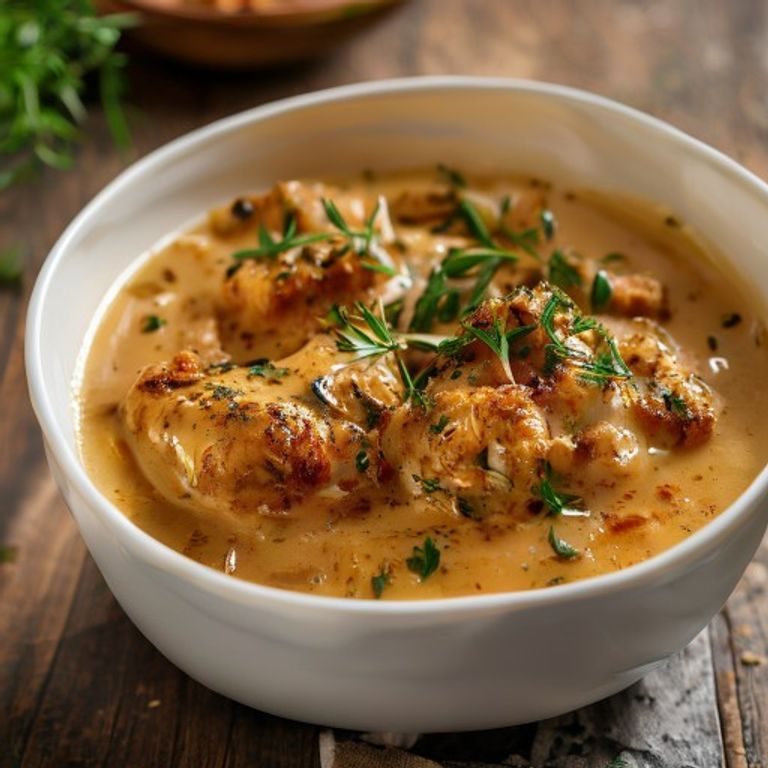
Basket Chicken Sauce
A creamy, savory Swiss restaurant classic from Restaurant Burg in Attiswil — this mushroom-wine sauce, silky with cream and bright with white wine, turns simple fried chicken into a legendary meal worth crossing cantons for.
| Amount | Ingredient |
|---|---|
| 2 tbsp (28 g) | unsalted butter |
| 2 | shallots, finely diced (about ¼ cup) |
| 8 oz (225 g) | cremini or white mushrooms, thinly sliced |
| ½ cup (120 ml) | dry white wine (e.g., Sauvignon Blanc or Pinot Grigio) |
| ½ cup (120 ml) | chicken broth, low-sodium |
| 1 cup (240 ml) | heavy cream |
| 1 tbsp (8 g) | cornstarch mixed with 2 tbsp (30 ml) cold water (slurry) |
| ½ tsp (3 g) | kosher salt |
| ¼ tsp (0.5 g) | freshly ground white pepper |
| ⅛ tsp (0.25 g) | freshly grated nutmeg |
| 1 tbsp (15 ml) | fresh lemon juice |
This iconic sauce from Restaurant Burg in Attiswil, Switzerland, is the defining accompaniment to "basket chicken" (Poulet au panier / Poulet im Körbli) — a beloved dish where crispy fried or roasted chicken is served in a wire basket lined with a cloth napkin. The sauce itself is a rich, velvety mushroom cream sauce accented with dry white wine and a whisper of nutmeg. While the exact recipe is a closely guarded restaurant secret, this version captures the luxurious, savory depth and silky texture that makes it famous. The keys are deeply browned mushrooms, a proper wine reduction, and a touch of lemon juice to cut through the cream. It is the kind of sauce that elevates simple fried chicken to an unforgettable dining experience.
Ingredient notes: Use cremini or white button mushrooms — they have the best flavor-to-moisture ratio for this sauce. Do not substitute the heavy cream with half-and-half or milk; the sauce needs the fat content to achieve its signature silky texture. Use a dry, crisp white wine — if you wouldn't drink it, don't cook with it.
- Chef's knife
- Cutting board
- Large skillet (10- to 12-inch), preferably stainless steel or nonstick
- Wooden spoon or heat-resistant spatula
- Small bowl (for cornstarch slurry)
- Whisk
- Microplane or fine grater (for nutmeg)
- Citrus juicer or reamer
- Sauté the shallots (3 minutes). Melt the butter in a large skillet over medium heat. Add the finely diced shallots and cook, stirring frequently, until translucent and fragrant, about 2 to 3 minutes. Do not let them brown.
- Cook the mushrooms (8 to 10 minutes). Add the sliced mushrooms to the skillet in a single layer. Cook without stirring for 2 minutes to allow the mushrooms to brown, then stir and continue cooking until the mushrooms are deep golden brown and all released liquid has evaporated, 6 to 8 minutes total. The mushrooms should be shrunken, browned, and fragrant.
- Deglaze with wine (3 to 4 minutes). Pour the white wine into the skillet, scraping up any browned bits from the bottom with a wooden spoon. Let the wine bubble and reduce until it is nearly evaporated and the pan is almost dry again, 3 to 4 minutes. The concentrated wine flavor is essential.
- Add liquids and simmer (10 minutes). Add the chicken broth and heavy cream to the skillet. Stir to combine, then bring the mixture to a gentle simmer (not a rolling boil). Cook, stirring occasionally, until the sauce has thickened enough to coat the back of a spoon, about 8 to 10 minutes. Reduce the heat if the sauce threatens to boil over.
- Season and finish (2 minutes). Remove the skillet from the heat. Stir in the salt, white pepper, nutmeg, and fresh lemon juice. Taste and adjust seasoning, adding more salt or lemon juice as needed.
- Thicken if needed (1 minute). If the sauce is thinner than desired, return the skillet to medium-low heat and slowly drizzle in the cornstarch slurry while whisking constantly. Simmer for 30 to 60 seconds until the sauce reaches the desired consistency. It should be velvety and thick enough to cling to the back of a spoon.
- Serve immediately. Spoon the sauce generously over fried or roasted chicken. Garnish with a sprinkle of fresh parsley or an extra grating of nutmeg if desired.
- Brown the mushrooms deeply. The deeper the color on the mushrooms, the richer and more savory the sauce. Do not crowd the pan — if necessary, cook the mushrooms in two batches so they brown rather than steam.
- Reduce the wine nearly completely. The wine should be almost gone before you add the cream and broth. This concentrates the acidity and prevents the sauce from tasting boozy or watery.
- Simmer, do not boil. Once the cream is added, keep the sauce at a gentle simmer. A rolling boil can cause the cream to break or curdle.
- Fresh nutmeg makes a difference. Pre-ground nutmeg is dusty and weak; grate it fresh with a Microplane for that warm, aromatic note that defines this sauce.
- Lemon juice at the end. Adding the lemon juice off the heat preserves its bright, fresh acidity, which balances the richness of the cream.
- Adjust thickness to taste. The sauce should coat the back of a spoon (nappé consistency). If it thickens too much on standing, thin it with a splash of warm chicken broth.
- Let the sauce rest briefly. If possible, let the sauce sit off the heat for 2 to 3 minutes before serving — the flavors meld and the texture relaxes into perfect silkiness.
| Mistake | Why It Hurts | The Fix |
|---|---|---|
| Using pre-sliced mushrooms | They are often sliced too thick and release excess water, making the sauce watery | Slice mushrooms yourself, about ⅛-inch thick, for even cooking and proper browning |
| Adding cream too early | The cream reduces too much and becomes greasy or breaks | Add cream only after the wine has fully reduced and the pan is almost dry |
| Not reducing the wine enough | The sauce tastes harshly alcoholic and thin | Let the wine bubble until the pan is nearly dry — the alcohol must cook off completely |
| Over-thickening with cornstarch | The sauce turns gluey and loses its velvety mouthfeel | Add the slurry gradually and stop as soon as the sauce reaches nappé consistency |
| Using white pepper substitute | Black pepper adds visible specks that mar the silky, pale appearance | Use freshly ground white pepper for the classic look; if unavailable, grind black pepper very finely |
| Skipping the lemon juice | The sauce tastes one-dimensionally rich and fatty | The lemon juice is the essential brightening agent — do not omit it |
| Cooking on too high heat | The cream can scorch or curdle, creating a grainy, separated sauce | Keep the heat at medium-low once cream is added; gentle simmer only |
- Herb Infusion: Add 1 sprig of fresh thyme or rosemary to the cream while simmering; remove before serving.
- Garlic & Mushroom: Add 2 minced garlic cloves along with the shallots for an extra layer of savory depth.
- Smoky Touch: Substitute 2 ounces of the cremini mushrooms with finely chopped shiitake or oyster mushrooms for a more complex, earthy flavor.
- Brandy Cream: Replace 2 tablespoons of the white wine with Cognac or brandy for a richer, more luxurious version.
- Dijon Finish: Whisk in 1 teaspoon of Dijon mustard along with the lemon juice for a tangy, emulsified finish.
- Lighter Version: Substitute half of the heavy cream with whole milk and thicken slightly more with cornstarch — the sauce will be less rich but still flavorful.
- Herb & Chive: Stir in 2 tablespoons of finely chopped fresh chives or flat-leaf parsley just before serving.
- Creamy Peppercorn: Add 1 teaspoon of crushed green peppercorns along with the wine for a gentle, aromatic heat.
| Storage Method | Details |
|---|---|
| Refrigerator | Store in an airtight container for up to 3 days. The sauce will thicken as it cools; thin with a splash of chicken broth or milk when reheating. |
| Freezer | Not recommended — the cream-based sauce will separate and turn grainy upon thawing. |
| Reheating | Reheat gently in a saucepan over low heat, stirring frequently. Add a splash of broth or milk to restore the silky consistency. Do not boil or microwave, as this can cause the sauce to break. |
This sauce is a natural companion to the fried or roasted chicken it was designed for. For wine pairings, consider:
- Müller-Thurgau (Swiss) — The classic Swiss pairing; its floral, lightly fruity notes complement the creamy mushroom sauce without overpowering the chicken.
- Chasselas (Dorin, Fendant) — Switzerland's signature white grape offers a clean, mineral finish that cuts through the richness of the cream.
- Pinot Grigio (Friuli) — Crisp, light, and dry, with enough acidity to balance the wine and cream in the sauce.
- Sauvignon Blanc (Loire) — The grassy, citrusy notes mirror the lemon juice and white wine in the sauce.
- For red wine lovers: A light, chilled Pinot Noir from the Jura or a Swiss Blauburgunder — serve slightly cool to complement the creamy sauce.
| Per Serving (about ½ cup) | |
|---|---|
| Calories | 286 |
| Protein | 4 g |
| Fat | 25 g |
| Carbohydrates | 8 g |
| Fiber | 1 g |
| Sugar | 3 g |
Nutrition values are approximate and based on ½-cup servings. Actual values may vary based on specific ingredients and exact measurements.
Can I use other types of mushrooms?
Absolutely. Cremini or white buttons are traditional, but shiitake, oyster, or a mix of wild mushrooms (chanterelles, morels) will add deeper, more complex flavor. Just be mindful that wild mushrooms may require slightly longer cooking to release their liquid.
Can I make this sauce ahead of time?
The sauce is best served fresh, but it can be made up to 1 day in advance. Reheat gently over low heat, adding a splash of broth or cream to restore the silky consistency. The texture will be slightly thicker after refrigeration.
What is "basket chicken" and where can I find it?
Basket chicken (Poulet au panier / Poulet im Körbli) is a Swiss specialty from Restaurant Burg in Attiswil, near Bern. Fried or roasted chicken pieces are served in a wire basket lined with a cloth napkin, accompanied by this signature sauce, and often with french fries or rosti. It is a cherished regional dish — if you're ever in Switzerland, it is well worth the trip.
Can I serve this sauce with something other than chicken?
Yes — this sauce is excellent over pan-seared pork chops, veal cutlets, roasted fish fillets (especially halibut or cod), or even over steamed vegetables and egg noodles. For a vegetarian version, use vegetable broth and serve over roasted cauliflower or potato Rösti.
My sauce tastes flat — what went wrong?
The most common culprit is insufficient browning of the mushrooms or not adding enough lemon juice and salt. The lemon juice is critical for brightening the sauce — try adding another ½ teaspoon. Also, make sure your salt and white pepper are fresh; old spices lose their punch.
- Swiss Rösti (Volume 1)
- Classic Chicken Gravy (Volume 2)
- Browned Butter & Sage Sauce (Volume 2)
- Delicate Garlic Cream (Volume 2)
- Mushroom Ragù (Volume 1)
- Lemon-Herb Yogurt Sauce (Volume 2)
Recipe adapted from the classic dish served at Restaurant Burg, Attiswil, Switzerland — Volume 2: Sunday Sauce
Recipe from The Italian Kitchen by Vita Milanese — Volume 2 · Sunday Sauce. Discover all volumes on the ebook page.