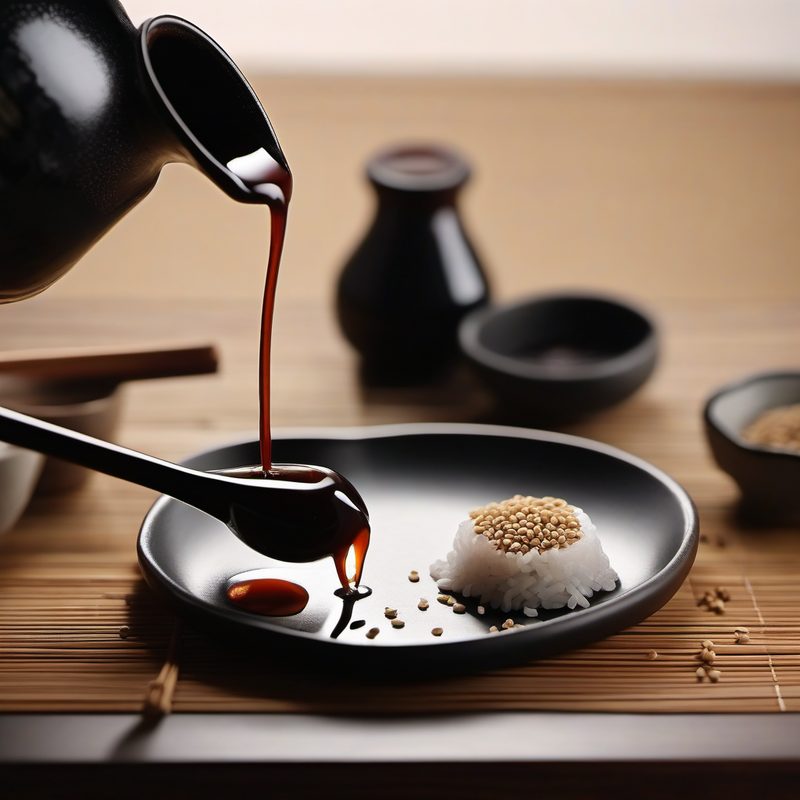
Teriyaki Sauce
A glossy, deeply savory Japanese all-purpose glaze that transforms just four pantry staples — soy sauce, sake, mirin, and sugar — into a luscious, lacquer-like sauce in under 20 minutes, perfect for brushing over grilled chicken, salmon, beef, or yakitori.
| Amount | Ingredient |
|---|---|
| Boiling the sauce too vigorously | High heat causes the sugar to caramelize unevenly and risk burning, producing a bitter, scorched flavor Maintain a gentle simmer over medium-low heat — the surface should be active but not violently bubbling |
| Not reducing enough | A thin, watery sauce will not cling to food and will make grilled items soggy rather than glazed Reduce until the sauce coats the back of a spoon, about half the original volume |
| Reducing too much | An over-reduced sauce becomes stiff, glue-like, and overwhelmingly sweet/salty when cooled Stop at the "coats the back of a spoon" stage — the sauce will thicken further as it cools |
| Storing without cooling completely | Condensation waters down the sauce and creates a hospitable environment for mold Let the sauce cool to room temperature before sealing and refrigerating |
Teriyaki sauce is one of the great culinary shortcuts that tastes anything but short — four simple ingredients, one saucepan, and a quick simmer produce a sauce so versatile and deeply flavored that it belongs in every home cook's repertoire. This is a classic Japanese tare (dipping/glazing sauce), where the savory depth of soy sauce is balanced by the gentle sweetness of mirin and sugar, while sake adds a subtle fruitiness and rounds out the alcohol-cooked edge. As the mixture reduces, it transforms from a thin, salty liquid into a syrupy, lacquer-like glaze that clings to whatever it touches, caramelizing beautifully under the broiler or on the grill. Unlike many bottled teriyaki sauces that rely on corn syrup, thickeners, and preservatives, this homemade version delivers pure, clean flavor — and the only preservative you need is a well-sealed jar in the refrigerator.
Ingredient notes: Use a high-quality soy sauce such as Kikkoman, Yamasa, or San-J for the best flavor — avoid "lite" or reduced-sodium versions, which will throw off the sugar-to-salt balance. Sake should be drinking-quality (not "cooking sake," which contains salt and additives) — a bottle of Gekkeikan or Sho Chiku Bai is more than adequate. Mirin is a sweet Japanese rice wine with about 40–50% sugar content; if you cannot find it, substitute with 200 g dry sherry or white wine plus 2 tablespoons of sugar. Do not use "aji-mirin" (mirin-like seasoning), which often contains corn syrup and salt — real hon-mirin (true mirin) is essential for the authentic flavor and luster.
- Medium saucepan (1½–2 quart)
- Measuring cups and spoons
- Wooden spoon or heat-resistant spatula
- Airtight glass jar or container (for storage)
- Fine-mesh strainer (optional, for extra-smooth sauce)
- Combine the ingredients (1 min). In a medium saucepan, pour the sake, mirin, and soy sauce. Add the granulated sugar. Do not stir yet — simply let the ingredients sit together while you bring them to heat.
- Bring to a boil (3–4 min). Place the saucepan over medium heat. Stir occasionally with a wooden spoon to help dissolve the sugar. Bring the mixture to a gentle boil — you will see bubbles across the entire surface, not just around the edges. Watch carefully, as the sugar content makes the sauce prone to boiling over.
- Simmer and reduce (15–20 min). Once boiling, reduce the heat to medium-low to maintain a steady, gentle simmer — the surface should be active but not violently bubbling. Cook, stirring occasionally, until the mixture has reduced by about half in volume, 15 to 20 minutes. The sauce is ready when it is thick enough to coat the back of a spoon — drag your finger across the coated spoon; if the trail holds its shape without filling in immediately, the sauce is at the right consistency. The bubbles will also become larger and more viscous as the sauce thickens.
- Cool and thicken (30 min). Remove the saucepan from heat. Let the sauce cool completely at room temperature. It will thicken significantly as it cools — this is normal and expected. Do not be tempted to cook it further; a sauce that is perfectly viscous when hot will be syrupy-thick and almost gelatinous when cold.
- Strain (optional, 1 min). For an extra-smooth, glossy sauce, pour through a fine-mesh strainer to remove any sugar crystals or sediment. This step is optional — most home cooks skip it without noticeable difference.
- Bottle and store (2 min). Transfer the cooled sauce to an airtight glass jar or bottle. Seal tightly and refrigerate.
- Do not walk away from the simmering sauce. The high sugar content means teriyaki sauce can go from perfectly reduced to scorched in as little as 30 seconds. Keep an eye on it and stir every 2 to 3 minutes once it reaches a boil, especially toward the end of the cooking time.
- Test for doneness on a chilled plate. For the most reliable thickness test, place a small plate in the freezer for 5 minutes, then drizzle a few drops of hot sauce onto the cold plate. Tilt the plate — the sauce should flow slowly like warm maple syrup, not run like water or sit in a stiff glob.
- Cool completely before storing. Trapping hot sauce in a sealed jar creates condensation that can water down the sauce and promote mold growth over time. Let the sauce come to room temperature, then refrigerate.
- The sauce will solidify in the refrigerator. Cold teriyaki sauce becomes thick and jelly-like due to the sugar content. This is not a defect — it will liquefy again when heated. Simply microwave for 10–15 seconds or let it sit at room temperature for 10 minutes.
- Reserve the foam. If foam develops on the surface during simmering, skim it off with a spoon. While harmless, the foam can cloud the sauce's glossy appearance.
- Double the recipe for meal prep. Teriyaki sauce keeps for months in the refrigerator, and it disappears fast. Doubling the recipe is effortless and ensures you always have some on hand.
| Mistake | Why It Hurts | The Fix |
|---|---|---|
| Using cooking sake instead of drinking sake | Cooking sake contains salt and additives that will make the sauce overly salty and throw off the flavor balance | Always use drinking-quality sake — the alcohol burns off during cooking, leaving only the fruity, savory character |
- Ginger Teriyaki: Add 2 thin slices of fresh ginger (no need to peel) to the saucepan with the liquids. Remove the ginger before bottling. The ginger adds a warm, aromatic note that is lovely with chicken and salmon.
- Garlic Teriyaki: Add 2 peeled garlic cloves, lightly smashed, to the saucepan. Remove before bottling. Garlic gives the sauce a savory depth that pairs well with beef and pork.
- Spicy Teriyaki: Add 1 small dried red chile (chile de árbol or bird's eye) or ½ teaspoon red pepper flakes to the saucepan. Remove chile before bottling. The heat builds gently and does not overwhelm the sweet-savory balance.
- Citrus Teriyaki: Replace 50 g (3½ tbsp) of the soy sauce with an equal amount of fresh orange juice and add a strip of orange zest. The citrus brightens the sauce beautifully with grilled fish or chicken.
- Sesame Teriyaki: Stir in 1 teaspoon of toasted sesame oil after the sauce has been removed from the heat. Drizzle with toasted sesame seeds when serving. A classic pairing.
- Honey Teriyaki: Replace half the sugar with honey for a slightly thicker, more floral sweetness. Reduce the cooking time slightly, as honey caramelizes faster than sugar.
| Storage Method | Details |
|---|---|
| Refrigerator | Store in an airtight glass jar for up to 3 months. The sauce will thicken and become jelly-like when cold — this is normal. Microwave for 10–15 seconds or let sit at room temperature for 10 minutes to restore pourable consistency. |
| Shelf life | The high salt and sugar content naturally preserve the sauce. It will keep for up to 3 months in the refrigerator. If mold develops or the sauce develops off-odors, discard it. |
This lacquer-like sauce pairs naturally with grilled proteins and vegetables:
- With grilled chicken or yakitori: A crisp, dry sake (honjozo or junmai) is the most natural choice — the clean, slightly fruity character echoes the sauce's components. Alternatively, a Japanese rice lager (Sapporo, Asahi, Kirin) cuts through the glaze beautifully.
- With grilled salmon: A lightly chilled Pinot Noir (Willamette Valley or Central Otago) or a dry rosé. The wine's bright acidity and red fruit notes complement the sweet-salty glaze without overwhelming the fish.
- With grilled beef (steak or short ribs): A medium-bodied red with good acidity — Cru Beaujolais (Morgon), Pinot Noir, or a lighter Zinfandel. Avoid heavy, tannic wines that clash with the sweet glaze.
- With stir-fried vegetables: A crisp, unoaked Sauvignon Blanc or a dry German Riesling (Kabinett). The high acidity refreshes the palate against the glaze's sweetness.
- Beer alternative: Japanese rice lagers are the classic accompaniment — Sapporo, Asahi, Kirin, or Hitachino Nest. A crisp pilsner also works well.
| Per Serving (1 tbsp / 15 ml) | |
|---|---|
| Calories | 45 |
| Protein | 1 g |
| Fat | 0 g |
| Carbohydrates | 9 g |
| Sugar | 8 g |
| Sodium | 570 mg |
Nutrition values are approximate and based on standard soy sauce, sake, mirin, and sugar. Actual values will vary based on specific brands. The majority of calories come from sugar and alcohol that is partially evaporated during cooking.
Can I use this teriyaki sauce as a marinade?
Yes — it makes an excellent marinade for chicken, salmon, beef, or pork. Marinate for 30 minutes to 2 hours at room temperature (not longer, as the sugar can begin to "cure" the exterior of the protein, making it tough). Reserve some fresh sauce for glazing during and after cooking, and do not reuse used marinade.
Can I make this gluten-free?
Yes — substitute the soy sauce with tamari (gluten-free Japanese soy sauce) or coconut aminos. Sake and mirin are naturally gluten-free (made from rice), but check the labels of commercial brands to be certain.
What is the difference between teriyaki sauce and teriyaki glaze?
In common usage, the terms are interchangeable. Strictly speaking, teriyaki sauce is thinner and used as a marinade or finishing sauce, while teriyaki glaze is reduced further to a syrupy, lacquer-like consistency for brushing on food during grilling or broiling. This recipe sits in the middle — thick enough to glaze, thin enough to spoon.
Can I skip the sake?
Sake adds a subtle fruitiness and depth that is hard to replicate, but you can substitute it with dry sherry, white wine, or a splash of rice vinegar diluted with water. The flavor will be slightly different but still delicious.
Why does my teriyaki sauce have a cloudy appearance?
Cloudiness is usually caused by (1) using aji-mirin instead of hon-mirin, which contains additives, or (2) not simmering long enough to fully dissolve the sugar. If the sauce is clear when hot but cloudy when cool, this is normal — some sugars crystallize slightly upon cooling, creating a faint haze.
- Miso Butter (Volume 2)
- Ginger-Soy Glazed Salmon (Volume 3)
- Chicken Yakitori Skewers (Volume 3)
- Teriyaki Beef Stir-Fry with Vegetables (Volume 2)
- Sesame-Soy Dipping Sauce (Volume 3)
Recipe from "The Italian Kitchen" by Vita Milanese — Volume 2: Sunday Sauce
Recipe from The Italian Kitchen by Vita Milanese — Volume 2 · Sunday Sauce. Discover all volumes on the ebook page.