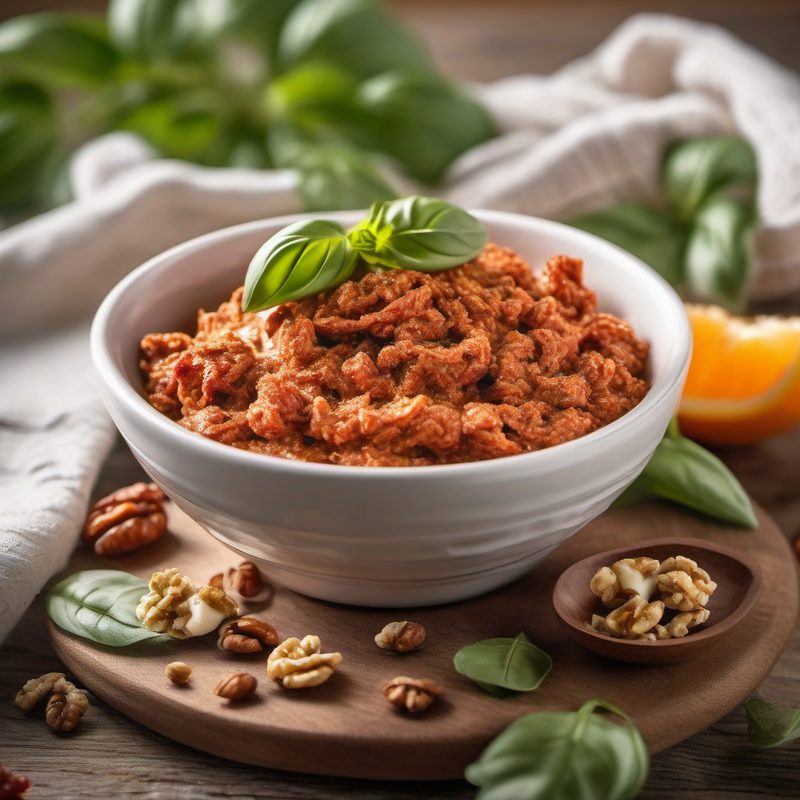
Sun-Dried Tomato Pesto with Stracchino
A velvety, intensely savory Italian pesto that trades the usual ricotta for creamy, tangy stracchino cheese — pairing the sweet intensity of oil-packed sun-dried tomatoes with nutty Parmigiano-Reggiano, toasted walnuts, and fresh basil for a rich, textured sauce that coats pasta like nothing else.
| Amount | Ingredient |
|---|---|
| 100 g (3.5 oz / ½ cup packed) | oil-packed sun-dried tomatoes, drained |
| 100 g (3.5 oz) | stracchino cheese (or soft cream cheese) |
| 50 g (½ cup) | Parmigiano-Reggiano, grated |
| 50 g (½ cup) | walnut halves |
| 15 | fresh basil leaves |
| 1 clove | garlic |
| 60 ml (¼ cup) | extra-virgin olive oil, plus more for finishing |
| to taste | kosher salt |
| to taste | black pepper, freshly ground |
| 100 ml (⅓ cup) | pasta cooking water (optional, to adjust consistency) |
Sun-dried tomato pesto is a pantry hero — it delivers deep, concentrated tomato flavor without the lengthy simmering of a classic Sunday sauce. This version builds on the traditional template by swapping ricotta for stracchino, a soft, spreadable cows' milk cheese from Lombardy with a thin, edible rind and a tangy, almost lactic creaminess that is simultaneously richer and brighter than ricotta. Walnuts replace the usual pine nuts for an earthier, more rustic crunch, while fresh basil provides the essential herbal lift that keeps the sauce from veering into heaviness. The technique is deceptively simple: pulse the dry ingredients until coarsely chopped (texture is everything here), then fold in the cheeses and olive oil with a light hand — over-processing produces a dense, uniform paste rather than the creamy-but-chunky sauce that makes this pesto so compelling. Whether tossed with hot pasta and a splash of starchy cooking water or spread onto warm crostini for an immediate appetizer, this is the kind of recipe that proves the best sauces are often the simplest.
Ingredient notes: Oil-packed sun-dried tomatoes (not dry-packed) are non-negotiable — they are softer, sweeter, and exponentially more flavorful than their leathery dry-packed cousins. Drain them well but do not rinse; a small amount of their packing oil contributes to the sauce. Stracchino (also sold as crescenza) is a young, soft, rindless Lombard cheese with a tangy, milky richness that melts at room temperature. If you cannot find stracchino, substitute with an equal weight of cream cheese (preferably full-fat, softened) or a good-quality mascarpone — the flavor will be milder but the texture will be equally luxurious. Walnuts should be raw or lightly toasted; if toasting, do so in a dry skillet over medium heat for 3–4 minutes until fragrant. The garlic clove should be small; remove the pale green germ (inner sprout) for a milder, sweeter garlic presence. Use a good-quality, fruity extra-virgin olive oil — in a raw preparation like this, the oil's flavor is front and center.
- Food processor
- Small dry skillet (for toasting walnuts, optional)
- Chef's knife and cutting board
- Rubber spatula
- Large pot (if using with pasta)
- Colander (if using with pasta)
- Serving bowl or airtight container
- Prepare the ingredients (3 min). If using, toast the walnut halves in a dry skillet over medium heat, shaking frequently, until fragrant and just slightly darkened, about 3–4 minutes. Let cool completely. Cut the garlic clove in half and remove the pale green germ (inner sprout) with the tip of a paring knife — this step eliminates the harsh, bitter edge of raw garlic. Drain the sun-dried tomatoes well and roughly chop them into ½-inch pieces.
- Pulse the dry ingredients (1 min). In a food processor, combine the chopped sun-dried tomatoes, cooled walnuts, garlic, and fresh basil leaves. Pulse 6 to 8 times (1-second pulses) until the mixture is coarsely chopped. You want visible pieces of tomato and walnut — a rustic, textured base, not a smooth paste. Stop halfway and scrape down the sides of the bowl with a rubber spatula.
- Add the cheeses and oil (1 min). Add the stracchino (break it into pieces with your fingers), grated Parmigiano-Reggiano, and extra-virgin olive oil. Add a generous pinch of salt and a few grinds of black pepper. Pulse 4 to 6 more times — just until the stracchino is incorporated and the pesto comes together into a creamy, spreadable consistency. The final texture should be lush and creamy but still visibly chunky, with flecks of walnut, tomato, and basil distributed throughout. Do not over-process into a smooth purée.
- Taste and adjust (1 min). Taste the pesto on a piece of bread or a spoonful of pasta. Adjust salt and pepper as needed. The Parmigiano adds significant salt, so taste before adding more. If the pesto tastes flat, a tiny squeeze of lemon juice can brighten it. If it seems too thick, add a teaspoon of the sun-dried tomato packing oil or a tablespoon of warm water.
- Toss with pasta or serve as a spread (1 min). For pasta: Cook 12 oz (340 g) of your chosen pasta in salted boiling water until al dente. Reserve 100 ml (⅓ cup) of pasta cooking water just before draining. Return the drained pasta to the pot, add the pesto, and toss vigorously, adding pasta water a tablespoon at a time as needed until the sauce is creamy and clings to every strand or shape. For a spread: Transfer the pesto to a serving bowl, create a small well in the center, and drizzle with extra-virgin olive oil. Serve with warm crostini or crusty bread.
- Stracchino is the star. This soft, tangy cheese has a lower moisture content than ricotta and a much more pronounced lactic tang, which means it binds the pesto into a silky, cohesive sauce without making it watery or bland. If you substitute cream cheese, choose full-fat and let it soften completely to room temperature before using — cold cream cheese will not incorporate evenly.
- Walnuts over pine nuts. Walnuts are earthier, more rustic, and significantly more affordable than pine nuts. They also hold their texture better when pulsed, giving the pesto a satisfying crunch that pine nuts (which tend to break down into a buttery paste) do not provide. Toast them lightly to deepen their flavor, but do not overdo it — burnt walnuts taste bitter and acrid.
- Texture is everything. This pesto should be creamy but chunky — the contrast between the velvety stracchino base and the visible pieces of tomato, walnut, and basil is what makes it so satisfying. Pulse sparingly, check the texture after every pulse, and stop the moment the ingredients are just combined.
- Resist the urge to add more olive oil. The stracchino provides enough richness that you do not need a heavy hand with the oil. Start with 60 ml (¼ cup) and add more only if the pesto seems stiff — over-oiling produces a greasy, separated sauce that slides off pasta instead of clinging to it.
- Save the pasta water. The starchy, salted water is the magic ingredient that turns a chunky pesto into a silky, emulsified pasta sauce. Do not substitute tap water — the starch is essential for binding the sauce to the pasta.
- Room temperature is best. Stracchino-based pesto is noticeably thicker and less flavorful when cold. If refrigerated, let it sit at room temperature for 20 minutes before serving and stir well to restore its creamy texture.
| Mistake | Why It Hurts | The Fix |
|---|---|---|
| Using dry-packed sun-dried tomatoes | The tomatoes are tough, leathery, and lack the concentrated sweetness and soft texture essential for a creamy pesto | Always use oil-packed sun-dried tomatoes. If only dry-packed are available, rehydrate in boiling water for 20 minutes, drain, and toss with olive oil before using |
| Over-processing the pesto | The sauce becomes a dense, uniform paste — all texture is lost, and the individual flavors blur into one murky note | Pulse only 4–6 times after adding the cheeses, and check the texture after every pulse |
| Using cold stracchino or cream cheese | Cold cheese does not incorporate evenly, leaving white streaks and a lumpy, uneven texture | Let the stracchino (or cream cheese substitute) sit at room temperature for 20 minutes before starting |
| Not reserving pasta water | A dry, clumpy pasta that the pesto cannot cling to — the starch in the pasta water is what creates a silky emulsion | Always reserve at least 100 ml (⅓ cup) of pasta cooking water before draining |
| Over-toasting the walnuts | Burnt walnuts taste bitter and acrid, ruining the delicate balance of sweet tomato, tangy cheese, and fresh basil | Toast over medium heat, shaking constantly, and remove the moment they turn fragrant and golden — this takes 3–4 minutes |
| Adding too much olive oil | The pesto becomes greasy and separated, with oil pooling on top instead of emulsifying into the sauce | Start with 60 ml (¼ cup) and add more only if the pesto seems stiff after pulsing |
- Spicy Sun-Dried Tomato Pesto: Add ½ teaspoon red pepper flakes or 1 small dried red chili (crumbled) to the food processor with the sun-dried tomatoes for a gentle, warming heat that cuts through the richness.
- Herb Garden Pesto: Replace half the basil with an equal amount of fresh parsley or mint for a greener, more complex herbal profile that works beautifully with grilled fish or chicken.
- Roasted Red Pepper Pesto: Replace half the sun-dried tomatoes with 75 g (about ½ cup) of drained, chopped roasted red peppers (from a jar). The result is sweeter, silkier, and has a stunning orange-red color.
- Lemon-Walnut Pesto: Add 1 teaspoon of finely grated lemon zest and 1 tablespoon of fresh lemon juice when adding the cheeses for a bright, citrusy version that is spectacular with seafood.
- Anchovy-Sun-Dried Tomato Pesto: Add 2 oil-packed anchovy fillets to the food processor with the sun-dried tomatoes. The anchovies melt into the background, adding a savory depth that makes everyone ask "what's in this?"
- Smoky Pesto: Substitute 1 teaspoon of smoked paprika for the black pepper, and use smoked almonds instead of walnuts for a deeply smoky, barbecue-adjacent pesto that is incredible on grilled vegetables.
- Mint-Pistachio Pesto: Replace the walnuts with shelled pistachios, the basil with fresh mint, and use feta instead of Parmigiano for a Middle Eastern-inspired variation that pairs beautifully with lamb.
| Storage Method | Details |
|---|---|
| Refrigerator | Store in an airtight container for up to 5 days. Press a sheet of plastic wrap directly onto the surface of the pesto to prevent oxidation (darkening). Bring to room temperature and stir well before serving. |
| Freezer | Freeze in an airtight container for up to 1 month. The stracchino texture may change slightly upon thawing — it can become slightly grainy. Thaw in the refrigerator overnight, stir well, and use within 2 days of thawing. Best used for pasta rather than as a spread after freezing. |
This creamy, versatile pesto pairs with a wide range of wines:
- With pasta: A medium-bodied red with good acidity — a Barbera (Piedmont), Chianti Classico (Tuscany), or a Montepulciano d'Abruzzo. The wine's tart red fruit and savory notes complement the sweet-tomato-and-cream character of the pesto without overwhelming it.
- With crostini: A dry, citrusy Vermentino (Sardinia) or a Gavi (Piedmont). The white wine's bright acidity and minerality cut through the richness of the stracchino.
- With grilled chicken or fish: A crisp, unoaked Sauvignon Blanc (Loire or Friuli) or a dry rosé. The wine's herbal notes mirror the basil, while its acidity refreshes the palate.
- As a dip or spread: A sparkling Prosecco or Franciacorta — the bubbles and acidity are a perfect foil for the creamy, rich pesto.
- Beer alternative: A crisp Italian pilsner (Peroni, Moretti) or a Belgian saison. The beer's bubbles and slightly spicy character work beautifully with the pesto's creamy texture and tomato sweetness.
| Per Serving (about ¼ cup / 60 g) | |
|---|---|
| Calories | 195 |
| Protein | 7 g |
| Fat | 16 g |
| Carbohydrates | 7 g |
| Fiber | 2 g |
| Sugar | 3 g |
Nutrition values are approximate and based on stracchino cheese, oil-packed sun-dried tomatoes, Parmigiano-Reggiano, toasted walnuts, and extra-virgin olive oil. Actual values will vary based on specific brands and cheese type.
Can I make this pesto without a food processor?
Yes — finely chop the sun-dried tomatoes, walnuts, garlic, and basil by hand with a sharp chef's knife (a mezzaluna works beautifully), then mash the stracchino and Parmigiano into the mixture with a fork, drizzling in olive oil as you go. The texture will be chunkier and more rustic, which many people prefer. It takes about 10 minutes of knife work but produces a genuinely different and rewarding result.
What pasta shapes work best with this pesto?
Short, sturdy shapes that trap the chunky pesto are ideal: fusilli, gemelli, orecchiette, farfalle, penne, or rigatoni. The nooks and crannies catch the walnut pieces and tomato chunks beautifully. Long strands like linguine or spaghetti also work well — the creamy pesto clings tenaciously to long pasta. Avoid delicate shapes like angel hair or capellini, which cannot support the weight of the chunky sauce.
What is stracchino and where can I find it?
Stracchino (also called crescenza) is a soft, fresh cows' milk cheese from Lombardy, Italy. It has a thin, edible rind, a soft, spreadable interior, and a tangy, milky flavor that is more complex than cream cheese but milder than goat cheese. Look for it at Italian markets, specialty cheese shops, or well-stocked supermarket cheese counters. BelGioioso makes a widely available crescenza. If you cannot find it, substitute with full-fat cream cheese (softened) or mascarpone.
Can I use this pesto as a pizza sauce?
Absolutely. Spread it on pizza dough in place of tomato sauce, then top with mozzarella, a few halved cherry tomatoes, and fresh basil. The creamy, tangy pesto becomes a luxurious base that pairs beautifully with a crisp, thin crust. Bake at 500°F (260°C) for 8–10 minutes.
How do I serve this pesto if not with pasta?
Spread on crostini and top with a fresh basil leaf; dollop onto grilled chicken, fish, or roasted vegetables; use as a dressing for a hearty grain bowl (farro, barley, or quinoa); spread on a sandwich or wrap; thin with extra olive oil and use as a dip for raw vegetables; or spoon over grilled halved tomatoes for a quick summer appetizer.
Should I serve this pesto hot or cold?
Serve at room temperature for the best flavor and texture. Cold pesto is thick and muted; hot pesto can cause the stracchino to separate or become grainy. When using with pasta, toss the room-temperature pesto with hot, freshly drained pasta — the heat from the pasta warms the pesto gently without cooking it.
- Ricotta and Sun-Dried Tomato Pesto (Volume 2)
- Almond Pesto (Volume 2)
- Classic Basil Pesto (Volume 1)
- Sun-Dried Tomato and Goat Cheese Crostini (Volume 1)
- Pasta alla Norma with Ricotta (Volume 2)
Recipe from "The Italian Kitchen" by Vita Milanese — Volume 2: Sunday Sauce
Recipe from The Italian Kitchen by Vita Milanese — Volume 2 · Sunday Sauce. Discover all volumes on the ebook page.