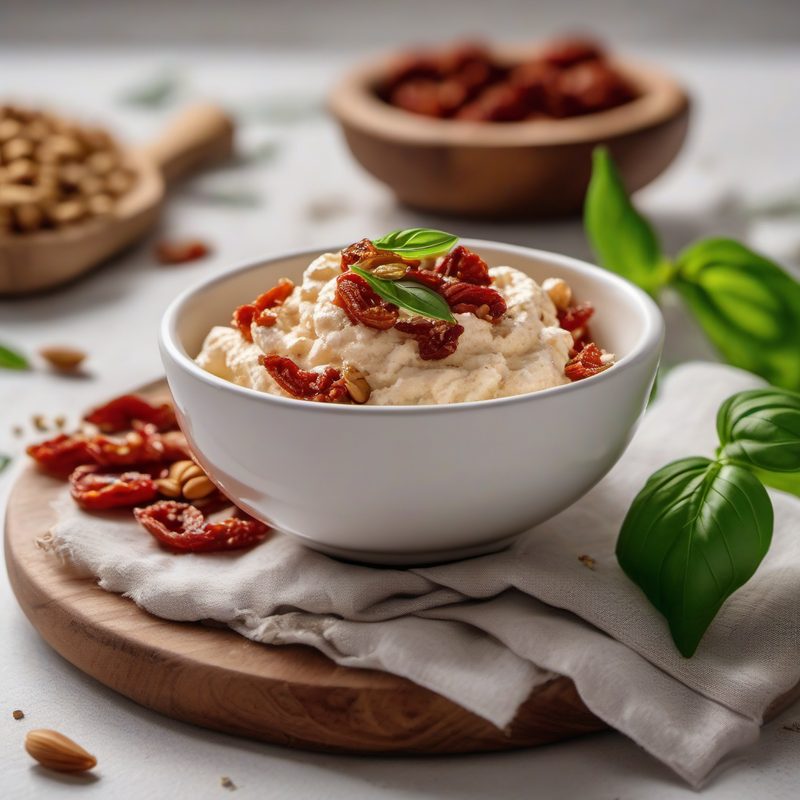
Ricotta and Sun-Dried Tomato Pesto
A creamy, intensely savory Italian pesto that marries the tangy sweetness of oil-packed sun-dried tomatoes with the luscious creaminess of fresh ricotta and the nutty depth of Parmigiano-Reggiano and toasted pine nuts — equally at home tossed with hot pasta or spread on crostini, and ready in minutes with no cooking required.
| Amount | Ingredient |
|---|---|
| Skipping the garlic germ removal | The raw garlic can be harsh and bitter, especially as the pesto sits and the garlic flavor intensifies Always remove the pale green germ from the center of the garlic clove — it is the source of garlic's bitterness |
This pesto is a lesson in how to build big flavor without heat. Oil-packed sun-dried tomatoes provide a sweet, concentrated tomato intensity that is worlds away from the acidic brightness of fresh tomatoes, while fresh ricotta adds a velvety, cloud-like richness that coats every strand of pasta or every crack of bread. Toasted pine nuts bring a buttery crunch, Parmigiano-Reggiano offers salty umami depth, and a handful of fresh basil provides the necessary herbal lift that keeps the whole thing from feeling heavy. The technique is a master class in texture control: pulse the dry ingredients first (tomatoes, pine nuts, garlic, basil), then fold in the dairy components (ricotta, Parmigiano, olive oil) with a light hand, stopping well short of a smooth purée. The result is a pesto of remarkable depth — sweet, salty, creamy, nutty, and herbal, all at once — that proves why some of the best Italian sauces are the simplest.
Ingredient notes: Oil-packed sun-dried tomatoes (not dry-packed) are essential — they are softer, more flavorful, and require no rehydration. Drain them well but do not rinse; a bit of their packing oil adds flavor. Use fresh, high-quality ricotta (preferably whole-milk) — the watery, grainy supermarket ricotta in plastic tubs will produce a thin, lackluster pesto. Look for fresh ricotta from a deli counter or an Italian market; Galbani, Calabro, or BelGioioso whole-milk ricotta are solid supermarket alternatives. Drain the ricotta in a fine-mesh strainer lined with cheesecloth for 30 minutes if it looks watery — excess moisture is the enemy of a creamy, clingy pesto. Pine nuts should be lightly toasted in a dry skillet until golden and fragrant, about 2–3 minutes — watch them closely, as they burn in seconds. The garlic germ (the pale green sprout inside the clove) should be removed for a milder, sweeter garlic flavor.
- Food processor
- Small dry skillet (for toasting pine nuts)
- Chef's knife and cutting board
- Fine-mesh strainer or cheesecloth (for draining ricotta, if needed)
- Rubber spatula
- Large pot (if using with pasta)
- Colander (if using with pasta)
- Serving bowl or airtight container
- Prepare the ingredients (5 min). If the ricotta appears watery, drain it in a fine-mesh strainer lined with cheesecloth set over a bowl for 30 minutes before starting. Toast the pine nuts in a dry skillet over medium heat, shaking the pan frequently, until golden and fragrant, about 2–3 minutes — watch closely, as they burn quickly. Cut the garlic clove in half and remove the pale green germ (inner sprout) with the tip of a paring knife. Roughly chop the drained sun-dried tomatoes so they are in bite-size pieces (about ½-inch chunks).
- Pulse the dry ingredients (1 min). In a food processor, combine the chopped sun-dried tomatoes, toasted pine nuts, garlic, and basil leaves. Pulse 6 to 8 times (1-second pulses) until the mixture is coarsely chopped. You want a rustic, textured mixture with visible pieces of tomato and pine nut — not a smooth paste. Stop and scrape down the sides of the bowl once with a rubber spatula.
- Add the dairy and oil (1 min). Add the drained ricotta, grated Parmigiano-Reggiano, and extra-virgin olive oil to the food processor. Add a generous pinch of salt and a few grinds of black pepper. Pulse 4 to 6 more times — just until the ricotta is incorporated and the pesto comes together. The finished texture should be creamy but chunky, with visible flecks of tomato, pine nut, and basil. Do not over-process into a smooth purée.
- Taste and adjust (1 min). Taste the pesto on a piece of bread or a spoonful of pasta. Adjust salt and pepper as needed. The Parmigiano adds significant salt, so taste before adding more salt. If the pesto tastes flat, a tiny squeeze of lemon juice can brighten it. If it tastes too rich, a teaspoon of the sun-dried tomato packing oil can sharpen the tomato flavor.
- Serve with pasta (if using) or as a spread (1 min). For pasta: Cook 12 oz (340 g) of your chosen pasta (see Suggestions below) in salted boiling water until al dente. Reserve 100 ml (⅓ cup) of pasta cooking water just before draining. Return the drained pasta to the pot, add the pesto, and toss vigorously, adding pasta water a tablespoon at a time as needed to create a creamy, clingy sauce that coats each strand or shape. For a spread: Transfer the pesto to a serving bowl, create a small well, and drizzle with extra-virgin olive oil. Serve with warm crostini or crusty bread.
- Drain the ricotta. Watery ricotta produces a thin, loose pesto that slides off pasta instead of clinging to it. If your ricotta has any visible liquid on top or feels loose rather than firm, drain it for 30 minutes before starting. This single step is the difference between a pesto that coats and a pesto that puddles.
- Toast the pine nuts — carefully. Untoasted pine nuts are soft, bland, and almost waxy. Toasting transforms them into crunchy, buttery nuggets of flavor. But pine nuts contain more oil than most nuts and go from toasted to burnt in seconds. Shake the pan constantly and remove them the moment they turn golden.
- Do not over-process. This is a textured pesto, not a smooth sauce. The beauty is in the contrast between creamy ricotta and chunky tomato-pine nut pieces. Over-processing turns everything into a uniform, muddy paste that looks and tastes one-dimensional.
- Use a light hand with the basil. Basil darkens quickly when chopped and can turn the pesto an unappealing brownish-green if over-processed. Pulse the basil gently with the other ingredients and avoid prolonged blending once it is added.
- Save the pasta water. The starchy, salted pasta water is the secret to a silky, emulsified sauce that clings to pasta perfectly. Do not substitute tap water — the starch in the pasta water is what binds the pesto to the pasta.
- Bring the pesto to room temperature before serving. Cold ricotta pesto is thick, stiff, and flavor-muted. If refrigerated, let it sit at room temperature for 20 minutes before tossing with pasta or spreading on bread.
| Mistake | Why It Hurts | The Fix |
|---|---|---|
| Using dry-packed sun-dried tomatoes (not oil-packed) | The tomatoes are tough, leathery, and lack the concentrated sweetness and soft texture of oil-packed | Always use oil-packed sun-dried tomatoes. If only dry-packed are available, rehydrate them in boiling water for 20 minutes, drain, and toss with olive oil |
| Not draining the ricotta | Excess moisture makes the pesto thin, watery, and unable to cling to pasta | Always check the ricotta's consistency before starting. If there is any free liquid, drain for 30 minutes |
| Over-toasting the pine nuts | Burnt pine nuts taste bitter and acrid, ruining the pesto's delicate flavor balance | Toast pine nuts over medium heat, shaking constantly, and remove them the moment they turn golden — this takes 2-3 minutes total |
| Over-processing to a smooth purée | The pesto loses all texture and becomes a dense, uniform paste that looks heavy and tastes one-note | Pulse only 4-6 times after adding the ricotta — you want visible chunks of tomato and pine nut |
- Spicy Ricotta Pesto: Add ½ teaspoon red pepper flakes or 1 small dried chile (crumbled) to the food processor with the sun-dried tomatoes. The heat cuts through the creaminess beautifully.
- Walnut Ricotta Pesto: Substitute the pine nuts with toasted walnuts for a deeper, earthier nut flavor. Walnuts and ricotta are a classic Italian pairing.
- Roasted Red Pepper Ricotta Pesto: Replace half the sun-dried tomatoes with 100 g of drained, chopped roasted red peppers (from a jar). The result is sweeter, silkier, and has a beautiful orange-red color.
- Herb Ricotta Pesto: Add a small handful of fresh parsley or mint leaves along with the basil for a greener, more complex herbal character.
- Lemony Ricotta Pesto: Add 1 teaspoon of finely grated lemon zest and 1 tablespoon of lemon juice when adding the ricotta. The acidity brightens the rich, creamy pesto and makes it even more addictive.
- Anchovy Ricotta Pesto: Add 2 oil-packed anchovy fillets to the food processor with the sun-dried tomatoes. The anchovies melt into the background, adding a savory depth that makes everyone ask "what's in this?"
- Arugula Ricotta Pesto: Replace the basil with an equal amount of fresh arugula (rocket). The peppery, slightly bitter arugula is a brilliant match for the sweet tomatoes and creamy ricotta.
| Storage Method | Details |
|---|---|
| Refrigerator | Store in an airtight container for up to 5 days. Press a sheet of plastic wrap directly onto the surface of the pesto to prevent oxidation (darkening). Bring to room temperature and stir well before serving. |
| Freezer | Freeze in an airtight container for up to 1 month. The ricotta texture will change slightly upon thawing — it may become slightly grainy. Thaw in the refrigerator overnight, stir well, and use within 2 days of thawing. Best used for pasta rather than as a spread after freezing. |
This creamy, versatile pesto pairs with a wide range of wines:
- With pasta: A medium-bodied red with good acidity — a Barbera (Piedmont), Chianti Classico (Tuscany), or a Montepulciano d'Abruzzo. The wine's tart red fruit and savory notes complement the sweet-tomato-and-cream character of the pesto without overwhelming it.
- With crostini: A dry, citrusy Vermentino (Sardinia) or a Gavi (Piedmont). The white wine's bright acidity and minerality cut through the richness of the ricotta.
- With grilled chicken or fish: A crisp, unoaked Sauvignon Blanc (Loire or Friuli) or a dry rosé. The wine's herbal notes mirror the basil, while its acidity refreshes the palate.
- As a dip or spread: A sparkling Prosecco or Franciacorta — the bubbles and acidity are a perfect foil for the creamy, rich pesto.
- Beer alternative: A crisp Italian pilsner (Peroni, Moretti) or a Belgian saison. The beer's bubbles and slightly spicy character work beautifully with the pesto's creamy texture and tomato sweetness.
| Per Serving (about ¼ cup / 60 g) | |
|---|---|
| Calories | 190 |
| Protein | 8 g |
| Fat | 15 g |
| Carbohydrates | 8 g |
| Fiber | 2 g |
| Sugar | 4 g |
Nutrition values are approximate and based on whole-milk ricotta, oil-packed sun-dried tomatoes, Parmigiano-Reggiano, toasted pine nuts, and extra-virgin olive oil. Actual values will vary based on specific brands and draining of ricotta.
Can I make this pesto without a food processor?
Yes — finely chop the sun-dried tomatoes, pine nuts, garlic, and basil by hand with a sharp chef's knife, then stir in the ricotta, Parmigiano, olive oil, salt, and pepper with a fork until combined. The texture will be chunkier and more rustic, which many people prefer.
What pasta shapes work best with this pesto?
Short, sturdy shapes that trap the chunky pesto are ideal: fusilli, gemelli, orecchiette, farfalle, penne, or rigatoni. Long strands like linguine or spaghetti also work well — the creamy pesto clings beautifully to long pasta. Avoid delicate shapes like angel hair or capellini, which can't support the weight of the chunky sauce.
Can I use Greek yogurt instead of ricotta?
Greek yogurt can substitute in a pinch, but the result will be tangier, thinner, and less luxuriously creamy. If using Greek yogurt, choose a full-fat variety and drain it slightly. The flavor will be different — bright and tangy rather than mellow and creamy — but still delicious.
How do I serve this pesto if not with pasta?
Spread on crostini and top with a fresh basil leaf; dollop onto grilled chicken, fish, or roasted vegetables; use as a dressing for a hearty grain bowl (farro, barley, or quinoa); spread on a sandwich or wrap; thin with extra olive oil and use as a dip for raw vegetables; or spoon over grilled halved tomatoes for a quick summer appetizer.
Should I serve this pesto hot or cold?
Serve at room temperature for the best flavor and texture. Cold ricotta pesto is thick and muted; hot ricotta pesto can break (the ricotta can curdle or separate if overheated). When using with pasta, toss the room-temperature pesto with hot, freshly drained pasta — the heat from the pasta warms the pesto gently without cooking it.
- Almond Pesto (Volume 2)
- Classic Basil Pesto (Volume 1)
- Sun-Dried Tomato and Goat Cheese Crostini (Volume 1)
- Pasta alla Norma with Ricotta (Volume 2)
- Grilled Chicken with Sun-Dried Tomato Pesto (Volume 3)
Recipe from "The Italian Kitchen" by Vita Milanese — Volume 2: Sunday Sauce
Recipe from The Italian Kitchen by Vita Milanese — Volume 2 · Sunday Sauce. Discover all volumes on the ebook page.