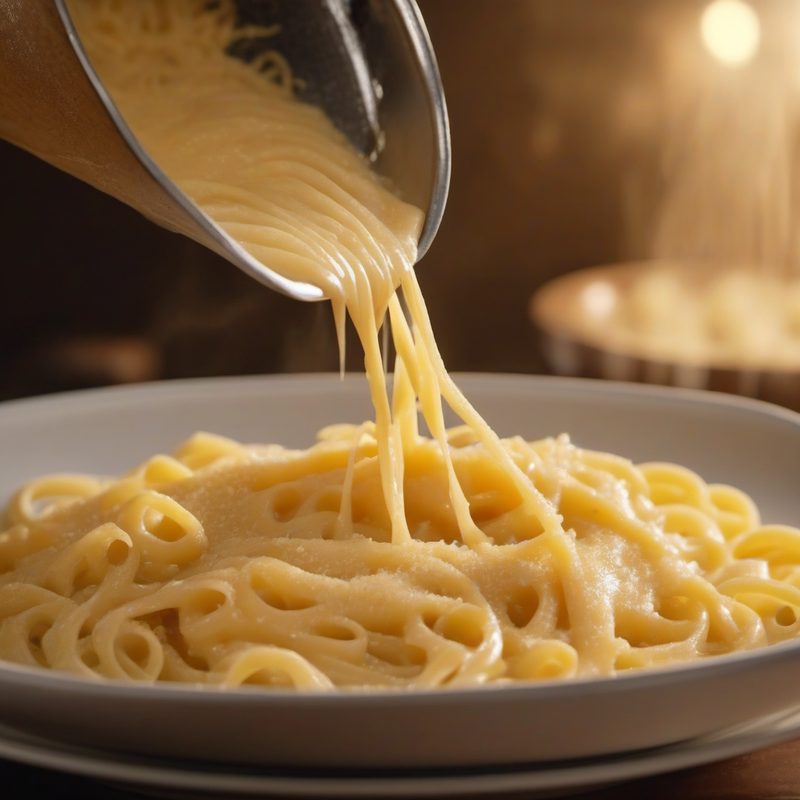
Parmigiano Cream Sauce
A velvety, luscious, deeply savory cream sauce built on a classic French béchamel enriched with nutty, salty Parmigiano-Reggiano — a simple three-step technique that transforms everyday pasta, vegetables, or meats into an elegant, restaurant-quality dish.
| Amount | Ingredient |
|---|---|
| 200 g (2 cups) | Parmigiano-Reggiano, finely grated |
| 500 ml (2 cups) | whole milk |
| 50 g (⅓ cup) | all-purpose flour (00 flour preferred) |
| 50 g (3½ tbsp) | unsalted butter |
| To taste | kosher salt |
| 1 pinch | freshly grated nutmeg (optional) |
This sauce is the perfect marriage of French technique and Italian soul. It begins with a classic béchamel — butter and flour cooked together into a pale roux, then slowly whisked with warm milk until smooth and silky. The magic happens when you take this neutral, creamy base and stir in a generous amount of finely grated Parmigiano-Reggiano: the cheese melts into the sauce, thickening it further while adding its characteristic nutty, salty, umami depth. A pinch of freshly grated nutmeg — an optional but traditional addition — provides a subtle warmth that rounds out the flavors. The result is a sauce that clings luxuriously to every strand of pasta, blankets vegetables in a golden, bubbly cloak, or turns a simple piece of roasted chicken or fish into something memorable. It is elegant enough for a dinner party and simple enough for a Tuesday night.
Ingredient notes: The quality of the Parmigiano-Reggiano is the single most important factor in this sauce. Use only authentic Parmigiano-Reggiano with the rind stamp — pre-grated, shelf-stable cheese from a tub will not melt properly and will produce a grainy, clumpy sauce. Grate the cheese fresh from a block just before using. Whole milk is essential for a rich, creamy texture; lower-fat milk produces a thinner, less luxurious sauce. 00 flour (Italian-style finely milled flour) creates a smoother roux with fewer lumps, but all-purpose flour works perfectly well. Freshly grated nutmeg is noticeably more aromatic than pre-ground — grate it directly over the sauce with a fine microplane for the best result.
- Medium saucepan (for warming milk)
- Medium or large heavy-bottomed saucepan (for the roux and sauce)
- Whisk (preferably a flat or sauce whisk)
- Wooden spoon or silicone spatula
- Fine microplane or rasp grater (for nutmeg)
- Cheese grater (for Parmigiano-Reggiano)
- Measuring cups and spoons
- Airtight container for storage
- Warm the milk (3 min). Pour the milk into a medium saucepan and warm it over medium heat until it is hot but not boiling — you should see small wisps of steam rising from the surface, and the milk should be too hot to touch comfortably. Do not let it come to a boil, which can scorch the milk proteins. Remove from heat and set aside.
- Make the roux (5 min). In a separate, larger heavy-bottomed saucepan, melt the butter over low heat. Once fully melted and bubbling gently, add the flour all at once. Whisk continuously in a figure-eight motion until the flour is fully incorporated into the butter and the mixture is smooth, pale, and foamy — this should take 1 to 2 minutes. Cook the roux for another 1 to 2 minutes, whisking constantly, until it is pale blond and smells faintly nutty. Do not let it brown — a dark roux will change the flavor and color of the sauce.
- Add the milk (5 min). Remove the roux from the heat and slowly pour in the warm milk, a little at a time, whisking constantly and vigorously to prevent lumps from forming. Start with about ⅓ cup (80 ml) — you will see the roux absorb the milk and form a thick paste; continue adding the milk in small increments, whisking until smooth after each addition. Once about half the milk has been incorporated, you can add the remainder in a steady stream while whisking continuously. Return the pan to medium heat.
- Thicken the sauce (5-7 min). Cook over medium heat, stirring constantly with a whisk or wooden spoon, until the sauce thickens enough to coat the back of a spoon — about 5 to 7 minutes. You should be able to run your finger across the coated spoon and leave a clean trail that holds its shape. The sauce should be smooth, silky, and slightly thicker than heavy cream.
- Add the cheese (2 min). Remove the pan from the heat. Add the grated Parmigiano-Reggiano in handfuls, whisking gently but continuously until each addition is fully melted and incorporated before adding the next. The residual heat of the sauce will melt the cheese without risk of it separating or turning stringy.
- Season and finish (1 min). Taste the sauce and season with salt as needed — remember that Parmigiano-Reggiano is already quite salty, so you may need very little or none. If using nutmeg, grate a fine pinch directly over the sauce and whisk to incorporate. For a thinner sauce, whisk in an additional tablespoon of warm milk. For a thicker, richer sauce, add an extra 25 g (¼ cup) of grated Parmigiano. Serve immediately.
> For pasta: Cook 350-400 g (12-14 oz) of your favorite pasta (fettuccine, pappardelle, rigatoni, or penne work beautifully) in well-salted boiling water until al dente. Reserve ½ cup of pasta cooking water before draining. Toss the hot pasta with the Parmigiano Cream Sauce, adding splashes of the reserved pasta water as needed to loosen the sauce to a silky, clingy consistency. Serve immediately with extra grated Parmigiano on top.
>
> For baked dishes: Use this sauce as the base for pasta al forno (baked pasta), lasagna, or vegetable gratins. Layer with cooked pasta, vegetables, or meats and bake at 375°F (190°C) for 20-25 minutes until bubbly and golden on top.
>
> For vegetables and meats: Spoon over roasted cauliflower, blanched broccoli, steamed asparagus, or sautéed spinach. Serve alongside or over grilled chicken, pan-seared fish, or roasted pork tenderloin.
- Use room-temperature milk. Cold milk added to a hot roux can shock the mixture and create lumps. Warming the milk beforehand ensures a smooth, lump-free sauce.
- Grate the cheese fresh and fine. Pre-grated Parmigiano-Reggiano contains anti-caking agents that prevent it from melting smoothly. Grating it on a microplane or the finest side of a box grater produces the silkiest texture.
- Cook the roux long enough. An undercooked roux will taste like raw flour and will not thicken properly. Cook it for a full 2 minutes, whisking constantly, until it is foamy, pale, and gives off a faint nutty aroma.
- Add milk slowly at first. Pouring all the milk at once will create lumps that are very difficult to remove. Start with a small amount and whisk until smooth before adding more. The first addition will form a thick paste — this is normal and correct.
- Remove from heat before adding cheese. Adding cheese to a sauce over direct heat can cause the proteins to seize and turn the sauce grainy, stringy, or oily. Let the residual heat of the sauce do the melting.
- Add cheese in small handfuls. Dumping all the cheese in at once lowers the temperature too much and makes it difficult to incorporate evenly. Add it gradually, whisking until each addition is fully melted.
- Season at the end. The saltiness of Parmigiano-Reggiano varies by age and producer. Always taste the finished sauce before adding any additional salt — you may not need any.
- Serve immediately or keep warm. This sauce thickens as it cools. If not using immediately, keep it warm over very low heat, stirring occasionally, and add a splash of warm milk to thin it if needed. Do not let it sit uncovered, which will form a skin on top.
| Mistake | Why It Hurts | The Fix |
|---|---|---|
| Using pre-grated Parmesan | Anti-caking agents in pre-grated cheese prevent smooth melting, resulting in a grainy, lumpy sauce | Always grate Parmigiano-Reggiano fresh from a block |
| Browning the roux | A brown roux gives the sauce a nutty, toasty flavor and beige color that competes with the Parmigiano | Cook the roux only until pale blond — about 2 minutes over low heat |
| Adding cold milk to hot roux | Thermal shock causes the roux to seize into lumps that are nearly impossible to whisk out | Warm the milk before adding, or at least let it come to room temperature |
| Boiling the sauce after adding cheese | High heat causes the cheese proteins to separate and turn stringy, greasy, or grainy | Remove the pan from heat before adding cheese — residual heat is sufficient |
| Adding too much salt at the beginning | Parmigiano-Reggiano is naturally salty; the sauce can become inedibly salty if you season early | Taste after all the cheese has melted, then decide if additional salt is needed |
| Undercooking the sauce | The sauce will be thin and watery instead of thick and clingy | Cook until it coats the back of a spoon — 5 to 7 minutes of gentle simmering |
| Letting the sauce sit uncovered | A thick, rubbery skin forms on top as the surface dries out | Cover with a lid or plastic wrap directly on the surface if holding for more than a few minutes |
- Gorgonzola Cream Sauce. Replace half of the Parmigiano-Reggiano with crumbled Gorgonzola dolce (sweet Gorgonzola) for a pungent, creamy blue cheese sauce that pairs beautifully with gnocchi, polenta, or steak.
- Pecorino Cream Sauce. Substitute Pecorino Romano for the Parmigiano-Reggiano. The sauce will be sharper, saltier, and more sheep-forward — perfect with hearty pasta shapes like bucatini or rigatoni. Reduce or omit the added salt entirely.
- Mushroom Parmigiano Sauce. Sauté 200 g (7 oz) of sliced cremini mushrooms in butter until deeply golden and their moisture has evaporated. Fold them into the finished sauce along with a teaspoon of fresh thyme leaves for an earthy, savory variation.
- Garlic Parmigiano Sauce. Gently simmer 2 peeled, smashed garlic cloves in the milk before adding it to the roux. Remove the garlic cloves before whisking the milk into the roux. The result is a subtle, aromatic garlic infusion without any sharpness.
- Lemon Parmigiano Sauce. Add 1 teaspoon of finely grated lemon zest and 1 tablespoon of fresh lemon juice along with the cheese for a bright, citrusy finish that cuts through the richness beautifully.
- Creamy Tomato Parmigiano Sauce. After the sauce has thickened, stir in 3 tablespoons of tomato paste (or ¼ cup of passata) for a pale orange, subtly tangy sauce that works wonderfully with stuffed pasta like ravioli or tortellini.
- Gluten-Free Version. Substitute the all-purpose flour with an equal amount of rice flour or a gluten-free all-purpose blend. Cook the roux for an additional minute to ensure the raw flour taste is fully cooked out.
| Storage Method | Details |
|---|---|
| Refrigerator | Store in an airtight container for up to 3 days. The sauce will thicken and solidify as it chills — this is normal. |
| Reheating | Gently reheat in a small saucepan over low heat, whisking constantly and adding splashes of warm milk (or pasta water) to restore a silky consistency. Do not microwave — the uneven heat will cause the sauce to separate. |
| Freezer | Freeze in an airtight container for up to 1 month. Thaw in the refrigerator overnight, then reheat gently as described. The texture may be slightly less smooth after freezing; whisk vigorously and add extra milk if needed. |
| Make Ahead | The sauce can be made up to 2 days in advance, refrigerated, and gently reheated. It is best, however, served fresh. |
This rich, creamy, nutty sauce is a natural partner for medium-bodied white wines with enough acidity to cut through the richness and enough body to stand up to the cheese:
- Chardonnay (White Burgundy, unoaked or lightly oaked) — The classic pairing for Parmigiano cream sauce. Bright acidity and apple/pear fruit complement the nutty, salty cheese without competing.
- Gavi di Gavi (Cortese grape) — A crisp, mineral-driven Italian white with good body and acidity that mirrors the sauce's creaminess while keeping the palate fresh.
- Verdicchio dei Castelli di Jesi — A medium-bodied white with bright lemon-citrus acidity, almond notes, and a slight bitterness on the finish that pairs beautifully with the nutty, salty Parmigiano.
- Pinot Bianco (Alto Adige) — Elegant, medium-bodied, with subtle apple and almond notes and a clean, mineral finish — a lovely, balanced match for this sauce over pasta.
- Soave Classico (Garganega grape) — Floral, almondy, with bright acidity and a subtle bitterness that cuts through the richness of the cream and cheese.
- Franciacorta Brut (Italian sparkling wine) — The high acidity and fine bubbles of Franciacorta provide a stunning contrast to the richness of the sauce, cleansing the palate with each sip.
| Per Serving (about ½ cup of sauce) | |
|---|---|
| Calories | 375 |
| Protein | 18 g |
| Fat | 26 g |
| Carbohydrates | 16 g |
| Fiber | 0 g |
Nutrition values are approximate and based on whole milk, unsalted butter, all-purpose flour, and authentic Parmigiano-Reggiano. Actual values will vary based on exact quantities and specific ingredients used.
Can I use a different cheese?
Parmigiano-Reggiano is the heart of this sauce — its unique crystalline, nutty, salty character cannot be fully replicated. However, aged Grana Padano is an acceptable substitute (use slightly more, as it is milder). A combination of half Parmigiano-Reggiano and half Pecorino Romano creates a sharper, tangier sauce. Avoid soft cheeses like mozzarella, which will turn stringy.
Can I use 2% or skim milk?
You can, but the sauce will be noticeably thinner and less luxurious. The fat in whole milk contributes to the sauce's silky texture and helps stabilize the emulsion. If using lower-fat milk, you may need to cook the sauce a bit longer to achieve the right thickness, and it will never be as rich.
Why did my sauce become grainy?
Graininess is almost always caused by one of three things: (1) using pre-grated cheese that contains anti-caking agents, (2) adding the cheese while the sauce is still over direct heat (too hot), or (3) overheating the sauce after the cheese has been added. Always grate fresh cheese, remove the pan from heat before adding it, and never let the sauce boil after the cheese is in.
Can I use this sauce for lasagna?
Absolutely. This is an excellent substitute for the standard béchamel in lasagna — it adds a rich, cheesy depth that pairs beautifully with meat ragu, vegetables, or mushrooms. Use it in place of béchamel in any lasagna recipe, layering it with pasta sheets, fillings, and additional Parmigiano between layers.
How do I prevent a skin from forming on top?
If the sauce will sit for more than a few minutes before serving, either cover it with a lid, place a piece of plastic wrap directly on the surface, or give it a quick whisk every few minutes. A skin is simply the surface drying out — preventing air contact solves the problem.
What is the best pasta shape for this sauce?
Sturdy, textured pasta shapes are ideal — fettuccine, pappardelle, rigatoni, penne, conchiglie (shells), or orecchiette all work beautifully. The sauce clings to the ridges and surfaces of these shapes. Avoid very thin delicate pastas like angel hair or capellini, which can become overwhelmed by the thick, rich sauce.
Can I make a larger batch?
Yes — this recipe scales perfectly. Simply double or triple all ingredients. Use a larger saucepan and allow slightly more time for the milk to warm and the sauce to thicken. The whisking technique remains the same.
- Classic Béchamel Sauce (Volume 1)
- Classic Mayonnaise (Volume 2)
- Homemade Ricotta and Spinach Cannelloni (Volume 2)
- Fettuccine Alfredo (Volume 1)
- Baked Ziti with Parmigiano and Mozzarella (Volume 3)
- Mushroom Lasagna with Béchamel (Volume 1)
Recipe from "The Italian Kitchen" by Vita Milanese — Volume 2: Sunday Sauce
Recipe from The Italian Kitchen by Vita Milanese — Volume 2 · Sunday Sauce. Discover all volumes on the ebook page.