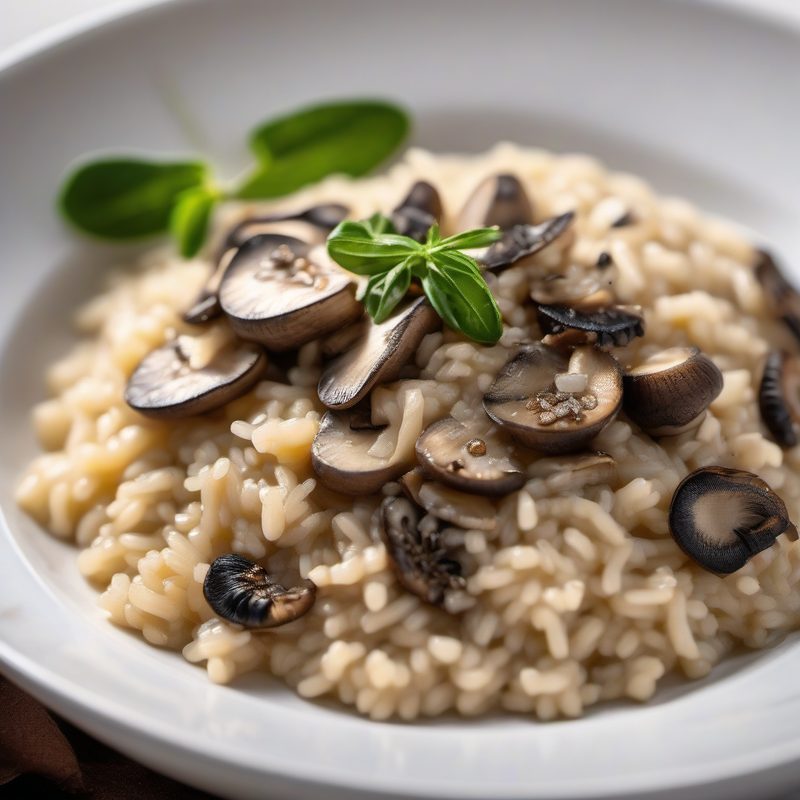
Red Wine Spaghetti Mushrooms
A boldly rustic pasta where spaghetti is cooked directly in Italian red wine until it absorbs every drop of the velvety, tannic broth — then topped with honey-glazed cardarelli mushrooms, creamy ricotta, and fresh thyme. This is pasta all'ubriaca (drunken pasta) elevated to a refined primo.
| Amount | Ingredient |
|---|---|
| 300 g (10 oz) | spaghetti |
| 300 g (10 oz) | cardarelli mushrooms (or substitute porcini / cremini) |
| 2 | red onions |
| 1 clove | garlic |
| 6 sprigs | fresh thyme |
| 7.5 dl (3 cups) | Italian red wine |
| 3 dl (1¼ cups) | porcini mushroom broth |
| 1 dl (scant ½ cup) | balsamic vinegar |
| 2 tbsp | olive oil |
| 1 tbsp | butter |
| 1 tsp | liquid honey |
| 125 g (½ cup) | ricotta |
| — | fine sea salt, to taste |
| — | black pepper, freshly ground, to taste |
Cooking pasta in wine is an ancient Italian technique rooted in thrift and resourcefulness. Known as spaghetti all'ubriaca (drunken pasta), the method calls for simmering raw spaghetti in red wine instead of plain water, allowing the pasta to absorb the wine's fruit, acidity, and tannins from the inside out. The result is surprisingly delicate — the alcohol cooks off completely, leaving behind a concentrated, wine-saturated pasta with a deep garnet hue and a subtle, earthy sweetness. In this version from the Cardarelli family of central Italy, the wine broth is fortified with porcini mushroom broth and reduced balsamic vinegar, creating a dark, savoury foundation that mirrors the forest-floor character of cardarelli mushrooms. The mushrooms themselves are cooked slowly until tender, then glazed with honey and reduced — a quiet nod to the ancient Roman fondness for sweet-savoury contrasts. Dollops of fresh ricotta add cooling creaminess, while fresh thyme ties it all together with its piney, floral fragrance. It is a dramatic, unforgettable dish that defies expectations at every turn.
Cardarelli mushrooms (also known as royal trumpet or king oyster mushrooms) are prized for their meaty, umami-rich flesh and firm texture that holds up beautifully to slow cooking. If unavailable, porcini mushrooms are the closest substitute in flavour, while large cremini mushrooms work well for texture. Do not use standard white button mushrooms — they lack the depth to stand up to the red wine and balsamic. The ricotta should be fresh and full-fat; skim or part-skim ricotta will turn watery and lack the creaminess needed to balance the dish.
🥘 Equipment
- Large skillet or sauté pan (30 cm / 12 inch, with lid)
- Medium sauté pan for mushrooms
- Large pot (for heating broth)
- Chef's knife and cutting board
- Wooden spoon or silicone spatula
- Tongs
- Measuring spoons and liquid measuring cup
- Small bowl (for honey-water mixture)
📋 Preparation
Step 1 — Prepare the Aromatics and Wine Broth (5 minutes)
Slice the red onions thinly into half-moons. Finely chop the garlic clove. Strip the leaves from the thyme sprigs — reserve half for the wine broth and half for garnish.
In a large skillet, melt the butter over medium heat. Add the sliced red onions, chopped garlic, and half the thyme leaves. Sauté, stirring occasionally, until the onions are softened and translucent — about 5 minutes. They should be tender but not browned; gentle cooking draws out their natural sweetness without introducing bitterness.
Deglaze with the balsamic vinegar, scraping up any caramelised bits from the bottom of the pan with a wooden spoon. Let the vinegar bubble and reduce by half — about 2 to 3 minutes. The vinegar will thicken to a syrupy consistency and the sharp acidity will mellow into a deep, wine-friendly sweetness.
Add the porcini mushroom broth and red wine to the skillet. Stir to combine, bring to a gentle boil, then reduce the heat to low and season with a pinch of salt. The broth should be simmering gently, not boiling vigorously — a rolling boil would evaporate the liquid too quickly, leaving the pasta dry before it finishes cooking.
The porcini broth reinforces the mushrooms' umami character and adds a woody, earthy undertone that marries beautifully with the red wine. If you do not have prepared porcini broth, dissolve 10 g (about ½ oz) of dried porcini mushrooms in 3 dl (1¼ cups) of hot water for 10 minutes, then strain through a fine-mesh sieve lined with cheesecloth to remove any grit.
Step 2 — Cook the Spaghetti in the Wine Broth (variable, 10–14 minutes)
Add the raw spaghetti directly to the simmering wine broth. Push the strands gently into the liquid — they may not be fully submerged at first, but they will soften and settle as they cook.
Cook over low heat, stirring occasionally with tongs to prevent sticking, until the pasta is al dente and the liquid has been nearly completely absorbed by the spaghetti. The timing will depend on the specific brand of pasta; begin checking at 10 minutes. The spaghetti should be tender with a slight resistance at the core, and the broth should be reduced to a few tablespoons of dark, glossy sauce that coats the pasta like a glaze.
This is the defining technique of the dish: the spaghetti drinks up the wine broth as it cooks, absorbing the flavours of the wine, porcini, and balsamic from within. The result is a deeply flavoured pasta with a subtle wine-red tint and a complexity that no amount of post-cooking sauce work can replicate. If the liquid reduces too quickly before the pasta is fully cooked, add hot water 2 tablespoons at a time. If the pasta finishes before the liquid is absorbed, remove the pan from the heat and let it rest for 1 minute — the residual heat and absorption will finish the job.
Keep the spaghetti warm over the lowest possible heat while you finish the mushrooms.
Step 3 — Cook the Cardarelli Mushrooms (10 minutes)
While the spaghetti cooks, prepare the mushrooms. Clean the cardarelli mushrooms by wiping them with a damp paper towel — do not rinse them under water, as they absorb moisture and become waterlogged. Slice them lengthwise into planks about 1 cm (½ inch) thick. If using cardarelli, slice the stems on a slight bias to expose more surface area; their meaty texture is the star of this component.
In a medium sauté pan, heat the olive oil over medium-low heat. Add the mushroom slices in a single layer (work in batches if necessary — crowding the pan causes the mushrooms to steam rather than brown). Cook on low heat for about 5 minutes per side, until the mushrooms are deeply golden, tender, and have released and reabsorbed their natural juices. They should be caramelised at the edges but still plump and juicy in the centre.
In a small bowl, dissolve the liquid honey in 1 tablespoon of hot water until fully combined. Pour the honey-water mixture over the cooked mushrooms. Let it bubble and evaporate — about 1 to 2 minutes — stirring gently to coat each piece in a thin, glossy glaze. The honey should cling to the mushrooms as a sheen, not pool in the pan.
Season generously with salt and freshly ground black pepper. Set aside and keep warm.
The low, slow cooking coaxes out the mushrooms' natural glutamates, building a savoury depth that matches the wine-soaked pasta. The honey glaze at the end adds a whisper of sweetness that echoes the caramelised balsamic onions and provides a subtle counterpoint to the wine's tannins. Do not rush the mushrooms — pale, undercooked mushrooms will taste bland and watery against the bold wine broth.
Step 4 — Plate and Serve (2 minutes)
Warm 4 shallow bowls by filling them with hot tap water for 30 seconds, then drying them thoroughly.
Divide the spaghetti among the warm bowls using tongs, creating neat, coiled nests. The pasta should be glossy and deeply tinted from the wine, with a faint sheen of reduced broth clinging to each strand.
Dollop the ricotta in generous spoonfuls over each portion — about 2 tablespoons (30 g) per serving, placed in small mounds rather than spread out. The ricotta should be cool and creamy, providing a temperature and texture contrast to the hot pasta.
Arrange the honey-glazed cardarelli mushrooms on top of and around the ricotta, dividing them evenly among the four bowls.
Garnish with the reserved fresh thyme leaves and a final crack of black pepper. Serve immediately.
The plate is a study in contrasts: the dark, wine-stained spaghetti, the snowy white ricotta, the amber-gold mushrooms with their glossy honey sheen, and the tiny green flecks of thyme. Each forkful brings together the earthy wine-pasta, the cool creaminess of ricotta, the meaty, sweet-savoury mushrooms, and the floral pop of fresh thyme. It is a dish of extraordinary balance.
🧑🍳 Chef's Tips
- Choose a red wine you would drink. The wine is the primary cooking liquid, so its quality directly determines the depth of flavour. A medium-bodied Italian red like Montepulciano d'Abruzzo, Chianti, or Sangiovese works perfectly — fruity, with moderate tannins and good acidity. Avoid very tannic wines (young Barolo, Cabernet Sauvignon) as they can become bitter when reduced. Avoid cooking wine — it contains salt and preservatives that throw off the balance.
- Cardarelli mushrooms: how to handle them. These mushrooms have thick, meaty stems and small caps. Slice the stems on a bias into 1 cm (½ inch) planks. The caps can be halved or left whole if small. Their dense texture means they can take more heat than delicate mushrooms without turning mushy — use this to your advantage to get a deep golden crust.
- The honey glaze is subtle, not sweet. One teaspoon of honey dispersed in a tablespoon of water is enough to glaze 300 g of mushrooms without making them taste candied. The water helps the honey spread evenly and evaporate quickly, leaving only a whisper of sweetness behind.
- Reserve extra wine for the table. This dish pairs beautifully with the same wine used in the cooking — serve it alongside at a cool room temperature (60–65°F / 15–18°C).
- Adjust the wine broth consistency. Different brands of spaghetti absorb liquid at different rates. If the broth reduces too quickly, add hot water 2 tablespoons at a time. If it reduces too slowly, increase the heat slightly for the last few minutes to drive off excess liquid. The ideal end state is a pasta that is moist and glossy with a few tablespoons of concentrated sauce coating it — not swimming in liquid, not dry.
- Ricotta at room temperature. Remove the ricotta from the refrigerator 15 minutes before serving so it loses its chill. Cold ricotta will mute the flavours of the dish and curdle slightly on contact with the hot pasta. Serve dolloped, not stirred in — the ricotta should remain as distinct, creamy pockets.
- Use fresh thyme, not dried. Dried thyme is more concentrated and less fragrant, and it will not provide the same fresh, floral counterpoint. If fresh thyme is unavailable, substitute fresh oregano or marjoram — but thyme is essential to this dish's character.
- Double the mushroom broth for a saucier result. Some prefer a more brothy pasta. If that is your style, increase the porcini broth to 4 dl (1⅔ cups) and use 8 dl (3⅓ cups) of red wine. The cooking time will increase slightly, and the final sauce will be looser and more abundant.
❌ Common Mistakes
| Mistake | Why It Hurts | The Fix |
|---|---|---|
| Using a poor-quality or harsh wine | The wine reduces and concentrates — any off-flavours, bitterness, or astringency become amplified and dominate the dish | Use a medium-bodied, fruit-forward wine you would enjoy drinking. Montepulciano d'Abruzzo or a simple Chianti are ideal choices |
| Boiling the wine broth instead of simmering | High heat evaporates the liquid too quickly, leaving the pasta undercooked with a burnt, jammy reduction | Keep the broth at a gentle simmer — small bubbles, not a rolling boil |
| Overcooking the spaghetti in the wine | The pasta absorbs tannins and acidity the longer it sits in the reduced liquid, turning harsh and puckering | Cook until just al dente and serve immediately. Do not let the finished pasta sit in the pan |
| Under-seasoning the broth | The wine and balsamic provide acidity but not enough salt — the final dish can taste flat and sour | Season the broth with salt at the start, then taste and adjust before adding the pasta |
| Crowding the mushrooms in the pan | Overcrowded mushrooms steam instead of browning, resulting in pale, rubbery pieces with no caramelised flavour | Cook the mushrooms in a single layer, working in batches if necessary |
| Using honey directly without dissolving it | Thick honey clumps on the mushrooms and burns before it can glaze evenly | Always dissolve honey in hot water first for an even, quick-evaporating glaze |
| Stirring the ricotta into the hot pasta | The ricotta melts into a thin, watery mess and loses its role as a cooling, creamy counterpoint | Dollop the ricotta on top and leave it undisturbed — each bite should encounter pockets of creamy cheese |
| Serving the pasta cold | The wine-pasta loses its aromatic character and the ricotta firms up unpleasantly when cool | Serve immediately in warmed bowls — this dish waits for no one |
💡 Variations
| Variation | How To |
|---|---|
| Vegetarian Version | This recipe is already vegetarian as written. To make it vegan, substitute the butter with 1 tablespoon of olive oil and replace the ricotta dollop with a cashew cream (soak ½ cup raw cashews in hot water for 15 minutes, blend with 3 tablespoons water, 1 tablespoon lemon juice, and salt until smooth) |
| Add Pancetta or Guanciale | Render 100 g (3½ oz) of diced pancetta or guanciale in the skillet before sautéing the onions. Remove the crispy bits and set aside, then proceed with the onions in the rendered fat. Sprinkle the crispy pork over the finished dish along with the mushrooms |
| Use Dried Porcini Only | If fresh cardarelli are unavailable, soak 30 g (1 oz) of dried porcini in hot water for 20 minutes, drain (reserve the soaking liquid as part of your broth), and sauté them in the same honey glaze. Dried porcini have an even more concentrated earthy flavour |
| Spicy Red Wine Spaghetti | Add 1 teaspoon of red pepper flakes to the wine broth along with the salt. The gentle heat weaves through the wine and porcini flavours, adding warmth without overwhelming the dish |
| Stracchiatella Instead of Ricotta | Substitute stracciatella (the creamy, stringy centre of burrata) for the ricotta. Its richness and texture elevate the dish to restaurant quality. Use 150 g (⅔ cup) — about two small stracciatella balls, torn into pieces |
| Rosemary and Garlic Mushrooms | Replace the honey glaze with a toss in 2 tablespoons of melted butter, 1 minced garlic clove, and 1 teaspoon finely chopped fresh rosemary. The more savoury, herbaceous profile pairs beautifully with the wine pasta |
| Pasta Shape Variation | While spaghetti is traditional for this technique, pappardelle, bucatini, or tonnarelli are excellent alternatives. Adjust cooking times accordingly — thicker shapes may need slightly more liquid and a longer simmer |
❄️ Storage & Leftovers
| Method | Details |
|---|---|
| Refrigerator | Store leftover pasta and mushrooms in separate airtight containers for up to 2 days. The ricotta should be stored separately and added fresh when reheating — it will break down and become grainy if stored mixed with the hot pasta |
| Reheating (Pasta) | Reheat the spaghetti in a skillet over medium-low heat with a splash of red wine or water, tossing gently until warmed through (3–4 minutes). The pasta will be softer than freshly cooked but will still retain its wine flavour. Do not microwave — the uneven heat will make the pasta dry in spots and mushy in others |
| Reheating (Mushrooms) | Reheat the mushrooms in a separate skillet over medium heat for 1–2 minutes per side. They may lose some of their honey sheen but will still be flavourful |
| Freezing | Freezing is not recommended. The wine-soaked pasta becomes mushy upon thawing, the mushrooms lose their texture, and the ricotta will separate and become grainy |
🍷 Wine Pairing
| Wine | Why |
|---|---|
| Montepulciano d'Abruzzo (Abruzzo, Italy) | The definitive pairing. This medium-bodied red offers ripe dark cherry, plum, and subtle earthy notes with moderate tannins. Its fruit-forward character matches the wine-cooked pasta's depth, while its acidity cuts through the creamy ricotta. Using the same wine in the dish creates a harmonious echo |
| Chianti Classico (Tuscany, Italy) | Sangiovese's bright cherry, violet, and tobacco notes, with firm acidity and medium tannins, complement the balsamic-vinegar reduction and the earthy porcini-mushroom undertones. A classic Tuscan partner that mirrors the dish's rustic elegance |
| Rosso di Montalcino (Tuscany, Italy) | Lighter and more approachable than its big brother Brunello, Rosso di Montalcino offers Sangiovese with bright red fruit, floral notes, and a savoury, mineral finish that echoes the porcini broth. Serve slightly cool (60°F / 15°C) |
| Barbera d'Alba (Piedmont, Italy) | Barbera's high acidity and low tannins make it a surprising but excellent partner. The bright sour-cherry and red-berry fruit cleanses the palate between rich, wine-soaked forkfuls, while the lack of aggressive tannins prevents flavour fatigue |
| Nero d'Avola (Sicily, Italy) | A fuller-bodied Sicilian red with dark fruit, black pepper, and a touch of Mediterranean herbs. Its generous fruit and moderate tannins stand up to the honey-glazed mushrooms and ricotta without overwhelming the pasta |
| Chilled Lambrusco (Emilia-Romagna, Italy, served lightly chilled at 55°F / 13°C) | A sparkling red with bright, fizzy acidity, red berry fruit, and a touch of bitterness. The bubbles act as a palate cleanser between bites, and the slight chill refreshes the palate. A playful but logical pairing given the wine-as-cooking-liquid concept |
🥗 Suggested Side Dishes
- Bitter Greens Salad with Lemon Vinaigrette — A mix of radicchio, endive, and arugula dressed with a sharp lemon vinaigrette (3 parts olive oil, 1 part lemon juice, salt, pepper). The bitterness and acidity cut through the richness of the wine-soaked pasta and creamy ricotta, refreshing the palate between bites
- Roasted Fennel with Parmesan — Fennel bulbs quartered, tossed with olive oil, salt, and pepper, roasted at 200°C (400°F) for 25 minutes until caramelised and tender, then finished with shaved Parmesan. The sweet, anise-like fennel and salty cheese provide a lovely counterpoint to the earthy, winey pasta
- Sautéed Spinach with Garlic and Lemon — Fresh spinach wilted in olive oil with sliced garlic and a squeeze of lemon juice. Simple, bright, and earthy — the lemon cuts through the richness of the dish while the garlic echoes the aromatics in the wine broth
- Crostini with Whipped Ricotta and Honey — Toasted slices of crusty Italian bread spread with whipped ricotta (ricotta blended with a spoonful of olive oil and a pinch of salt) and drizzled with honey. A playful echo of the ricotta and honey components in the main dish
- Grilled Radicchio with Balsamic Glaze — Halved radicchio heads grilled or charred in a cast-iron pan until wilted and smoky, then drizzled with balsamic glaze. The bitterness of the radicchio and the sweet-sour glaze mirror the balsamic notes in the pasta, creating a cohesive, elegant meal
- Warm Focaccia or Ciabatta — Simple, olive-oil-rich bread for sopping up any remaining wine sauce from the bottom of the bowl. A warm, crusty bread is nearly mandatory with this dish
📊 Nutrition (per serving, estimated)
| Calories | Protein | Fat | Carbs | Fiber |
|---|---|---|---|---|
| ~580 | 18 g | 16 g | 68 g | 4 g |
Nutritional values are estimates based on 4 servings with 300 g spaghetti, 300 g cardarelli mushrooms, 7.5 dl red wine (alcohol evaporates during cooking), 125 g whole-milk ricotta, olive oil, butter, and honey. Actual values will vary based on the specific red wine (residual sugar content varies), the fat content of the ricotta, and the type of mushrooms used. The wine contributes negligible calories after cooking as the alcohol evaporates, but the natural sugars and compounds remain. Cardarelli mushrooms are an excellent source of B vitamins, copper, and potassium, while ricotta provides calcium and protein. To lighten the dish, reduce the olive oil to 1 tablespoon, omit the butter, use part-skim ricotta, and increase the mushrooms to 400 g (14 oz) — approximately 490 calories and 10 g fat per serving.
❓ Frequently Asked Questions
Does the alcohol fully cook off?
Yes. The spaghetti simmers in the wine for 10–14 minutes, which is sufficient to evaporate virtually all of the alcohol. The alcohol content of the finished dish is negligible — comparable to a pasta dish finished with a splash of wine in the sauce. The wine's flavour compounds, acidity, and natural sugars remain, creating the characteristic depth without any alcoholic bite.
Can I use white wine instead of red?
You can, but the dish will be fundamentally different. White wine lacks the tannins, colour, and dark fruit character that define this recipe. If you want a white-wine version, use a full-bodied white like oaked Chardonnay or a rich Vermentino, and pair with lighter mushrooms (oyster, shimeji, or chanterelles) and a dollop of mascarpone instead of ricotta. The result is a more delicate, spring-like dish.
What if I can't find cardarelli mushrooms?
Cardarelli mushrooms (king oyster / royal trumpet mushrooms) have a uniquely meaty, dense texture that is ideal for this dish. If unavailable, the best substitutes are: (1) porcini mushrooms — closest in earthy, umami depth, though more expensive; (2) large cremini mushrooms (brown mushrooms) — plentiful and affordable, with good texture when cooked slowly; (3) shiitake mushrooms — excellent umami but a different texture; remove the stems and slice the caps thickly. Avoid standard white button mushrooms — they are too delicate and watery to stand up to the bold wine and balsamic flavours.
Why did my wine broth turn bitter?
Two common causes: (1) the wine itself is too tannic — young, aggressive reds (some Cabernet Sauvignons, young Nebbiolo) become harsh when reduced; choose a fruit-forward, medium-bodied wine instead. (2) the balsamic vinegar was reduced too far — if it bubbles dry in the pan before you add the broth, it will burn and turn acrid. Watch the vinegar carefully during the deglazing step, and add the broth as soon as it has reduced by half.
Can I use dried spaghetti or fresh?
This recipe is designed for dried spaghetti, which absorbs liquid steadily as it cooks and releases starch that helps thicken the wine broth into a sauce. Fresh pasta cooks too quickly and releases less starch, resulting in a thinner, less cohesive final dish. If you must use fresh pasta, cook it in the wine broth for only 2–3 minutes and use 2–3 tablespoons less broth to compensate.
My pasta absorbed all the liquid but isn't fully cooked yet. What do I do?
This happens occasionally with different pasta brands. Simply add hot water 2 tablespoons at a time — the pasta will continue to absorb liquid as it finishes cooking. Add just enough to keep the pan from drying out, testing the pasta for doneness after each addition.
The ricotta curdled when I dolloped it on the hot pasta — why?
The ricotta was too cold. Remove the ricotta from the refrigerator 15–20 minutes before serving so it comes to room temperature. Very cold ricotta in contact with very hot pasta can cause the dairy proteins to seize, creating a grainy, curdled texture. If you forget, warm the ricotta gently by stirring it briefly in a small bowl set over a pot of warm water.
Can I make this dish in advance for a dinner party?
You can prepare components in advance, but the final assembly must happen at the last moment. Cook the mushrooms up to 1 day ahead and reheat them gently. Prepare the wine broth (without the pasta) up to 1 day ahead. On serving day, bring the broth to a simmer, add the spaghetti, and cook. Warm the mushrooms, dollop the room-temperature ricotta, and serve immediately. The total active time on serving day is about 15 minutes.
Is this dish traditionally served as a primo or a main?
In Italy, it is served as a primo piatto (first course) — a 150–180 g (5–6 oz) portion per person before a meat or fish main. In a Western dinner context, it works beautifully as a main course with a side salad and crusty bread. The 300 g (10 oz) of spaghetti in this recipe yields 4 generous main-course servings or 6–8 primo servings.
🔗 Related Recipes
- Spaghetti Intrasatta (#185)
- Spaghetti Abruzzese (#186)
- Assassins Spaghetti (#168)
- Pasta Zucchini Tomato (#100)
- Pasta Cream Ham (#96)
- Tagliatelle Cream Ham (#178)
- Mediterranean Spaghetti (#193)
- Cambusa Spaghetti (#195)
🏷️ Search Tags
Photo reference: `vol1_202.png` — A wide, shallow ceramic bowl filled with deep garnet-red spaghetti, coiled neatly. Dollops of creamy white ricotta sit on top like fallen snow, surrounded by golden-brown cardarelli mushroom planks glistening with a honey sheen. Tiny fresh thyme leaves are scattered across the dish. The pasta is glossy with reduced wine sauce. Warm natural daylight from the upper left. Set on a rustic wooden table with a linen napkin, a glass of Montepulciano d'Abruzzo, and a small bowl of fresh ricotta on the side. Dramatic, earthy, and inviting — the kind of image that captures the transformative power of cooking pasta in wine.
Recipe from "The Italian Kitchen" by Vita Milanese — Volume 1: Pasta Perfetto
Recipe from The Italian Kitchen by Vita Milanese — Volume 1 · Pasta Perfetto. Discover all volumes on the ebook page.