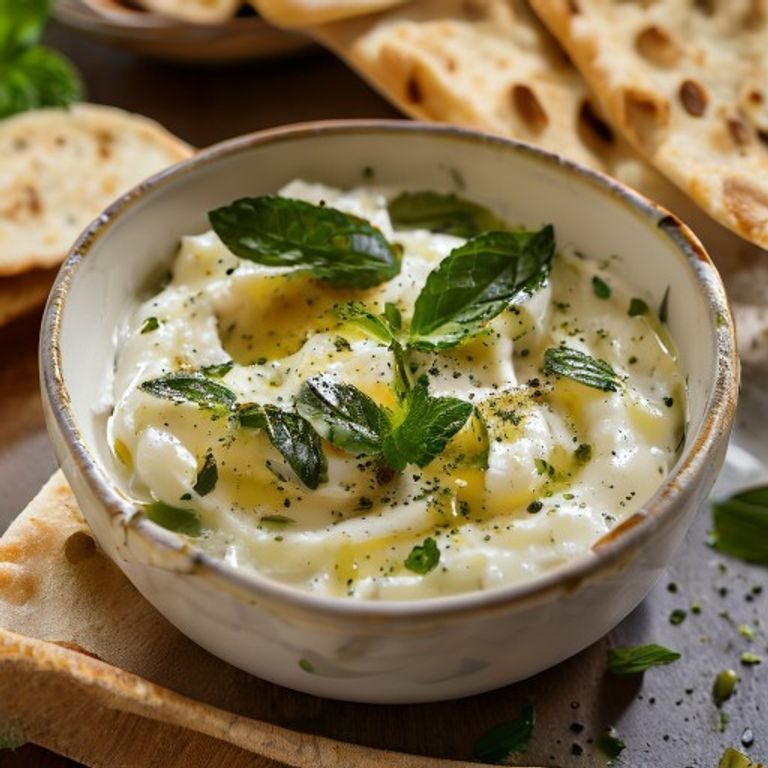
Potato Skordalia
A creamy, garlicky Greek dip that transforms humble potatoes into something transcendent — mashed with tangy Greek yogurt, fruity olive oil, and fresh lemon, then finished with a whisper of peppermint for a bright, refreshing finish that is perfect with grilled vegetables, crusty bread, or as a sauce for fried fish.
| Amount | Ingredient |
|---|---|
| 1 small | garlic clove |
| 9 oz (250 g) | floury potatoes (Russet, Idaho, or King Edward) |
| 1 tbsp (4 g) | fresh peppermint leaves, finely chopped |
| ¼ tsp | fine sea salt |
| 1 tsp | fresh lemon juice |
| 1 tbsp (15 ml) | extra-virgin olive oil |
| ⅔ cup (150 g) | plain full-fat Greek yogurt |
Skordalia is one of the great dips of the Mediterranean — a creamy, garlic-spiked puree that appears in countless variations across Greece, Turkey, and the Levant. This version uses floury potatoes as the base, giving the dip a light, fluffy texture that contrasts beautifully with the tangy Greek yogurt and fruity olive oil. The key is to use starchy, floury potatoes (Russet, Idaho, or King Edward) that mash to a silky smoothness — waxy potatoes will produce a gluey, dense skordalia. A single garlic clove provides a gentle warmth (not a raw punch), and the lemon juice and yogurt add brightness that keeps the dip light. Peppermint might seem unusual, but its cool, fresh finish is the perfect counterpoint to the richness of the olive oil and yogurt. Serve it as part of a meze spread, alongside grilled lamb or fish, or simply with warm pita bread.
Ingredient notes: Floury, starchy potatoes are essential — they mash to a light, fluffy consistency that absorbs the yogurt and oil beautifully. Russet or Idaho potatoes are ideal; Yukon Golds are acceptable (if less fluffy); waxy red or new potatoes will produce a dense, gluey skordalia. Full-fat Greek yogurt (at least 5% milk fat) provides the tang and creaminess that lightens the potato base — low-fat or nonfat yogurt will make the dip thin and watery. The garlic should be fresh and firm; a single clove provides a gentle background warmth. If you prefer a more pronounced garlic flavor, add half a clove more. Fresh peppermint is used sparingly here — it should be a subtle finish, not a dominant flavor. Do not substitute with dried mint, which has a different, more herbal character. The lemon juice should be freshly squeezed — bottled lemon juice lacks the brightness needed.
- Medium pot (for boiling potatoes)
- Colander
- Potato masher or ricer (a food mill also works well)
- Large mixing bowl
- Chef's knife and cutting board
- Fine grater or Microplane
- Citrus juicer
- Wooden spoon or rubber spatula
- Serving bowl
- Boil the potatoes (20 minutes). Scrub the potatoes but do not peel them. Place them in a medium pot and cover with cold salted water by 1 inch (2.5 cm). Bring to a boil over high heat, then reduce the heat to medium and simmer for 18 to 22 minutes, until a knife tip inserted into the center meets no resistance. Drain immediately. Pro tip: Starting the potatoes in cold water (not boiling) ensures they cook evenly all the way through. Boiling water would cook the outside before the center is done. Leave the skin on during boiling — it prevents the potatoes from absorbing too much water, which would make the skordalia watery.
- Mash the potatoes (3 minutes). While the potatoes are still hot enough that you need to hold them with a kitchen towel, peel off the skins with your fingers — they should slip off easily. Pass the peeled potatoes through a ricer or food mill, or mash them thoroughly with a potato masher until completely smooth. Do not use a food processor — it will make the potatoes gluey and elastic. Transfer the mashed potatoes to a large bowl and let them cool for 5 minutes. Pro tip: The single most important step is to mash the potatoes while they are still steaming hot — cold potatoes form clumps and will never achieve the silky smooth texture that defines great skordalia. A ricer produces the fluffiest, smoothest texture; a food mill is second best. A potato masher works but requires more effort to eliminate lumps.
- Prepare the garlic and yogurt base (2 minutes). Finely grate or mince the garlic clove into a paste. In a small bowl, combine the Greek yogurt, olive oil, lemon juice, salt, and grated garlic. Whisk until smooth and well combined. The mixture should be creamy and pale white. Pro tip: Mincing the garlic to a paste (rather than just chopping it) ensures the garlic flavor is evenly distributed throughout the skordalia without any harsh raw pieces. A Microplane grater works perfectly for this.
- Combine (2 minutes). Pour the yogurt-garlic mixture over the warm mashed potatoes. Using a wooden spoon or rubber spatula, fold the mixture into the potatoes gently but thoroughly, until the skordalia is smooth, creamy, and uniform in color — a pale, off-white with a slight sheen from the olive oil. Do not overmix, which can make the potatoes gluey. Fold in the finely chopped peppermint. Taste and adjust: add more salt if needed (start with a pinch), more lemon juice for brightness, or more yogurt for creaminess. Pro tip: Fold rather than stir vigorously — you want to incorporate the yogurt mixture without developing the potato starch, which would make the skordalia sticky and dense. The texture should be light, fluffy, and mousse-like, not heavy and pasty.
- Serve (1 minute). Transfer the skordalia to a serving bowl. Drizzle with a little extra olive oil and sprinkle with a few extra chopped peppermint leaves and a pinch of flaky sea salt. Serve at room temperature with warm pita bread, crusty bread, grilled vegetables, fried fish, or as part of a meze platter. Pro tip: Skordalia is best served at room temperature — not cold from the refrigerator. The flavors are much more pronounced and the texture is lighter at room temperature. If you have made it ahead, let it sit at room temperature for 30 minutes before serving.
- Use the right potato — floury, starchy varieties only. Waxy potatoes make gluey skordalia.
- Mash the potatoes while they are hot — cold potatoes produce a lumpy, dense dip.
- Do not use a food processor or blender — they develop the starch and turn the skordalia into a sticky paste.
- The skordalia thickens as it cools. If serving later, stir in 1 to 2 tablespoons of warm water or extra yogurt to loosen it.
- For a smoother texture, pass the finished skordalia through a fine-mesh sieve (a food mill works for this too).
| Mistake | Why It Hurts | The Fix |
|---|---|---|
| Skordalia is gluey and sticky | Potatoes were over-mashed or a food processor was used | Cannot be fixed; next time use a ricer and hand-mix |
| Skordalia is thin and watery | Potatoes absorbed too much water during boiling, or low-fat yogurt was used | Stir in 2 tbsp more mashed potato or let it sit for 10 minutes to thicken |
| Skordalia tastes flat | Too little salt or lemon juice | Add another pinch of salt and a squeeze of lemon juice |
| Garlic is overpowering | Garlic was too old or too much was used | Stir in 1 tbsp more yogurt and let sit for 15 minutes — the harshness mellows |
| Texture is lumpy | Potatoes were not mashed thoroughly while hot | Pass the finished dip through a fine-mesh sieve or food mill |
| Variation | How To |
|---|---|
| Almond Skordalia | Replace half the potato with ½ cup (60 g) ground almonds for a nuttier, richer dip |
| Skordalia with Capers | Fold in 1 tbsp rinsed and chopped capers for a briny twist |
| Skordalia with Roasted Garlic | Replace raw garlic with 1 whole roasted garlic clove (squeezed from its skin) for a sweeter, milder flavor |
| Lemon-Herb Skordalia | Replace peppermint with 1 tbsp each chopped fresh dill and parsley |
| Spicy Skordalia | Add ½ tsp Aleppo pepper or smoked paprika to the yogurt mixture |
| Vegan Skordalia | Replace Greek yogurt with ⅔ cup (150 g) unsweetened plant-based yogurt (soy or coconut) |
| Storage | Method |
|---|---|
| Refrigerator | Store in an airtight container for up to 3 days. The texture will firm up; stir before serving. |
| Reheating | Do not microwave — it will make the skordalia watery. Bring to room temperature and stir well. |
| Freezer | Skordalia does not freeze well — the yogurt and potato textures separate upon thawing. |
| Wine | Why |
|---|---|
| Assyrtiko (Santorini) | High acidity and minerality cut through the creamy potato and yogurt base |
| Moschofilero | Floral, citrusy, and light — a perfect match for the lemon and mint notes |
| Sauvignon Blanc | Herbaceousness echoes the mint and brightens the garlic |
| Dry Rosé | Fruity and crisp — ideal for a meze-style meal |
| Per Serving (about ⅓ cup / 80 ml) | |
|---|---|
| Calories | 125 |
| Protein | 5 g |
| Fat | 7 g |
| Carbohydrates | 12 g |
| Fiber | 1 g |
Nutrition values are approximate and will vary based on the specific yogurt and potato variety used.
What is the difference between skordalia and tzatziki?
Skordalia uses mashed potatoes (or sometimes bread, almonds, or walnuts) as its base, along with garlic, olive oil, and lemon. It is thick, fluffy, and spreadable. Tzatziki is yogurt-based with grated cucumber, garlic, and herbs (usually dill or mint) — it is thinner, chunkier, and more refreshing. They are cousins, not twins.
Can I make skordalia with bread instead of potatoes?
Yes — traditional Greek skordalia has two main forms: patato-skordalia (with potatoes) and psomi-skordalia (with stale bread soaked in water or vinegar). Both are delicious but have different textures. The bread version is denser and more rustic; the potato version is lighter and fluffier.
What do I serve with skordalia?
Skordalia is incredibly versatile: serve it with grilled octopus, fried cod (bakaliaros), grilled lamb chops, roasted vegetables, or simply as a dip for warm pita bread. It is an essential component of a Greek meze spread, alongside tzatziki, taramosalata, and melitzanosalata.
Can I make this ahead of time?
Yes — skordalia actually improves after a few hours in the refrigerator as the flavors meld. Make it up to 1 day ahead. Bring it to room temperature for 30 minutes before serving and stir in a tablespoon of warm water if it has thickened too much.
Is the peppermint traditional?
Traditional Greek skordalia is typically made with garlic, olive oil, and vinegar or lemon, sometimes with almonds or bread. The mint is a modern addition — it adds freshness and brightness that complement the garlic beautifully. Feel free to omit it or substitute with fresh dill or parsley.
- Tzatziki (Volume 2)
- Hummus (Volume 2)
- Muhammara (Volume 2)
- Roasted Garlic Emulsion (Volume 2)
- Guacamole (Volume 2)
Recipe from "The Italian Kitchen" by Vita Milanese — Volume 2: Sunday Sauce
Recipe from The Italian Kitchen by Vita Milanese — Volume 2 · Sunday Sauce. Discover all volumes on the ebook page.