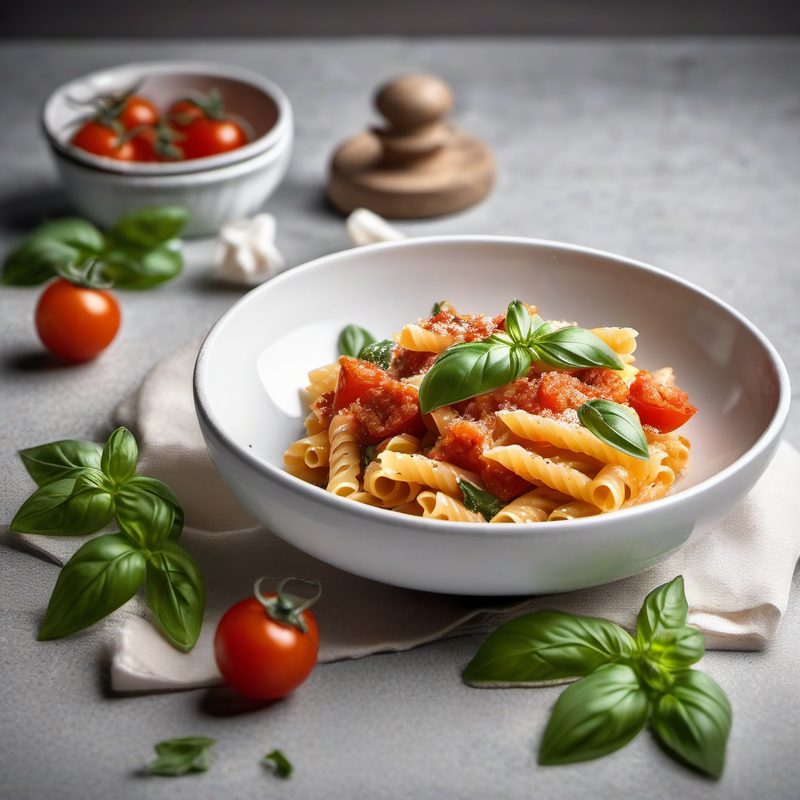
Pasta Scarpariello Cannavacciuolo
| Amount | Ingredient |
|---|---|
| Calories | ~520 kcal |
| Protein | 22 g |
| Total Fat | 22 g |
| Saturated Fat | 6 g |
| Carbohydrates | 58 g |
| Fiber | 4 g |
| Sugar | 6 g |
| Sodium | 620 mg |
Chef Cannavacciuolo's Scarpariello Pasta
1. CATEGORY
Primi piatti (First Courses)
2. YIELD
Serves 4 as a main course | Serves 6 as a primo
3. TOTAL TIME
- Prep Time: 15 minutes
- Cook Time: 18 minutes
- Total Time: 33 minutes
4. WHY THIS RECIPE WORKS
Pasta allo Scarpariello is a rustic Neapolitan classic whose name derives from scarparo (shoemaker) — traditionally a humble, quick meal cobbled together from pantry staples. Chef Antonino Cannavacciuolo's version elevates this peasant dish through technique while honoring its soul. By halting the cherry tomatoes and cooking them just until they collapse, we capture their sweetness without turning the sauce watery. The key is a two-stage garlic treatment: whole cloves are lightly browned in olive oil to infuse the base, then removed; a second hit of raw garlic is stirred in at the very end for aromatic brightness. Finishing with both grated Parmesan and a splash of the starchy pasta water creates a creamy, emulsified sauce that clings to every strand — no cream needed. The result is a dish that tastes far greater than the sum of its seven ingredients.
5. INGREDIENTS
6. INGREDIENT NOTES
- Tomatoes: Datterini tomatoes (oblong, intensely sweet cherry tomatoes) are ideal. If unavailable, use the best quality cherry or grape tomatoes you can find. Do not substitute canned tomatoes — the fresh, bright character is essential.
- Parmesan: Always grate your own from a wedge of Parmigiano-Reggiano. Pre-grated cheese contains anti-caking agents that prevent smooth emulsification.
- Pasta shape: While spaghetti or linguine are traditional, short tubular shapes like mezze maniche or paccheri also work beautifully, catching bits of tomato in their ridges.
- Olive oil: Use a good-quality extra-virgin olive oil — it carries the entire flavor profile.
7. EQUIPMENT
- Large pot (6–8 qt / 6–8 L) for boiling pasta
- Large skillet or sauté pan (12-inch / 30 cm)
- Chef's knife and cutting board
- Box grater or Microplane
- Wooden spoon or heatproof spatula
- Fine-mesh strainer (optional, for pasta water)
- Tongs for tossing
- Measuring spoons
- Kitchen scale
8. PREP NOTES
- Bring a large pot of generously salted water to a rolling boil before beginning to cook the sauce — the pasta and sauce must finish at the same time.
- Fill the pasta pot with about 5–6 quarts (5–6 L) of water and add 1½ tablespoons of kosher salt (or 2½ teaspoons fine sea salt). The water should taste like the sea.
- Have a ladle or liquid measuring cup ready to reserve pasta water before draining.
- Set your serving bowl in a low oven (200°F / 95°C) to warm.
9. MISE EN PLACE
- Halve each cherry tomato lengthwise (or quarter if large).
- Peel 2 garlic cloves; leave them whole. Peel and finely mince the third clove; set aside separately.
- Finely grate the Parmesan cheese.
- Tear the basil leaves into 2–3 pieces each (reserve a few small whole leaves for garnish).
- Measure the olive oil.
10. STEP-BY-STEP INSTRUCTIONS
#### Phase 1: Cook the Pasta
- Add the pasta to the vigorously boiling salted water.
- Cook until 2 minutes short of al dente (check package timing and subtract 2 minutes). Reserve 1½ cups (355 ml) of the starchy pasta water before draining.
- Drain the pasta (do not rinse) and set aside.
#### Phase 2: Build the Sauce
- While the pasta cooks, place a large skillet over medium heat and add the olive oil.
- Once the oil shimmers, add the 2 whole garlic cloves. Cook, swirling occasionally, until they are golden and fragrant but not browned, about 1–2 minutes. Do not let them burn.
- Add the halved cherry tomatoes cut-side down. Arrange them in a single layer if possible. Cook undisturbed for 2 minutes to encourage caramelization.
- Season with a pinch of salt and a few grinds of black pepper. Stir and continue cooking, stirring occasionally, until the tomatoes begin to soften and release their juices, about 4–5 minutes.
- Using tongs, crush the tomatoes gently against the side of the pan to break them down. You want a chunky, rustic sauce — not a purée. Remove and discard the whole garlic cloves.
- Reduce heat to low. Add ½ cup (120 ml) of the reserved pasta water and stir to incorporate. Simmer for 1 minute.
#### Phase 3: Marry Pasta and Sauce
- Add the drained pasta to the skillet. Increase heat to medium-high.
- Using tongs, toss the pasta vigorously in the sauce for 1–2 minutes, adding more pasta water a splash at a time as needed to keep the mixture moist and emulsified.
- Remove the skillet from the heat. Add the grated Parmesan in three additions, tossing vigorously after each addition to emulsify. The sauce should become creamy and cling to the pasta.
- Add the minced raw garlic and torn basil. Toss once more to distribute.
- Taste and adjust seasoning with salt and pepper.
#### Phase 4: Plate
- Divide the pasta among warmed bowls.
- Garnish each portion with a small basil leaf and a drizzle of extra-virgin olive oil.
- Serve immediately.
11. CHEF'S NOTES & TIPS
- Pasta water is liquid gold: The starch in the reserved pasta water is what creates the silky, emulsified sauce. Do not skip this step or substitute plain water.
- Two-stage garlic: The whole cloves infuse the oil with mellow garlic flavor; the final minced garlic adds the sharp, fresh note. This layering is a hallmark of Cannavacciuolo's technique.
- Don't oversauce: The sauce should cling to the pasta, not pool in the bottom of the bowl. If it looks saucy at first, keep tossing — the pasta will absorb and the cheese will tighten it.
- Work quickly off heat: The residual heat from the pasta and pan is enough to melt the Parmesan and emulsify the sauce. Adding cheese over direct high heat can cause clumping.
- Season in layers: Salt the tomatoes during cooking, add more with the pasta water, and finish with salt at the table if needed. Layered seasoning builds depth.
12. TROUBLESHOOTING
| Problem | Cause | Solution |
|---|---|---|
| Sauce is watery | Tomatoes not cooked down enough; insufficient pasta water evaporation | Cook tomatoes longer until they collapse; toss pasta over higher heat to reduce excess liquid |
| Sauce is clumpy/oily | Cheese added over high heat; emulsion broken | Remove pan from heat before adding cheese; add pasta water gradually to re-emulsify |
| Garlic is bitter | Garlic burned in the oil | Start with oil over medium heat, not high; remove cloves as soon as golden |
| Pasta is mushy | Overcooked in pot; tossed too long in sauce | Cook 2 minutes short of al dente; total toss time should not exceed 2 minutes |
13. VARIATIONS
- Spicy Scarpariello: Add ½ teaspoon red pepper flakes along with the tomatoes for heat.
- Pancetta Scarpariello: Render 100 g (3½ oz) diced pancetta in the skillet before adding the olive oil and garlic. The rendered fat adds richness.
- Herb Scarpariello: Add 1 tablespoon chopped fresh oregano or marjoram along with the basil.
- Gluten-Free: Substitute gluten-free pasta (cook according to package directions and subtract 1 minute instead of 2; gluten-free pasta overcooks more easily).
- Vegan: Use 100 g (3½ oz) good-quality vegan Parmesan-style cheese (cashew-based works best) or omit cheese and finish with a splash of nut milk and 2 tablespoons nutritional yeast.
14. MAKE AHEAD
- Sauce only: The tomato-garlic sauce can be made up to 1 day in advance. Cool completely, cover, and refrigerate. Reheat gently in a skillet, adding a splash of water to loosen, before tossing with freshly cooked pasta.
- Not recommended for full assembly: Pasta absorbs liquid as it sits; the dish is best served immediately after tossing. Leftovers will be dry but can be revived (see Storage).
15. STORAGE & REHEATING
- Refrigerate: Store leftovers in an airtight container for up to 2 days.
- Reheat: Place in a skillet over medium-low heat with a splash of water or olive oil. Toss gently until warmed through. Add a sprinkle of fresh Parmesan to refresh the flavor.
- Not suitable for freezing: The texture of fresh tomatoes and the emulsion degrade upon thawing.
16. WINE PAIRING
- White: Greco di Tufo (Campania) — its herbal, citrusy profile and mineral grip cut through the olive oil and complement the basil.
- Red: A light, unoaked Lacryma Christi del Vesuvio Rosso or a young Chianti — bright acidity and modest tannins match the tomato's acidity without overwhelming.
- Rosé: A dry rosé from Salento or Provence — versatility for warm-weather service.
- Non-alcoholic: San Pellegrino sparkling mineral water with a twist of lemon, or a non-alcoholic dry vermouth.
17. NUTRITIONAL INFORMATION (per serving)
Estimates based on standard ingredient data; actual values may vary.
18. SOURCE & ATTRIBUTION
- Chef: Antonino Cannavacciuolo
- Dish origin: Naples, Campania, Italy
- History: Pasta allo Scarpariello (shoemaker's pasta) dates to the late 19th century in Naples. It was a poor man's meal — simple, fast, and made with ingredients always on hand: pasta, tomatoes, garlic, olive oil, and cheese. The shoemaker (scarparo) could prepare it quickly between mending shoes. Chef Cannavacciuolo, a three-Michelin-starred chef from Vico Equense, refined the technique in his restaurants while preserving its rustic heart. His version is celebrated for the precise two-stage garlic method and the artful emulsion achieved without butter or cream.
- Adapted for the ATK format by: Hermes Cookbook Project
"La semplicità è l'ultima sofisticazione." — Simplicity is the ultimate sophistication.
Recipe from The Italian Kitchen by Vita Milanese — Volume 1 · Pasta Perfetto. Discover all volumes on the ebook page.