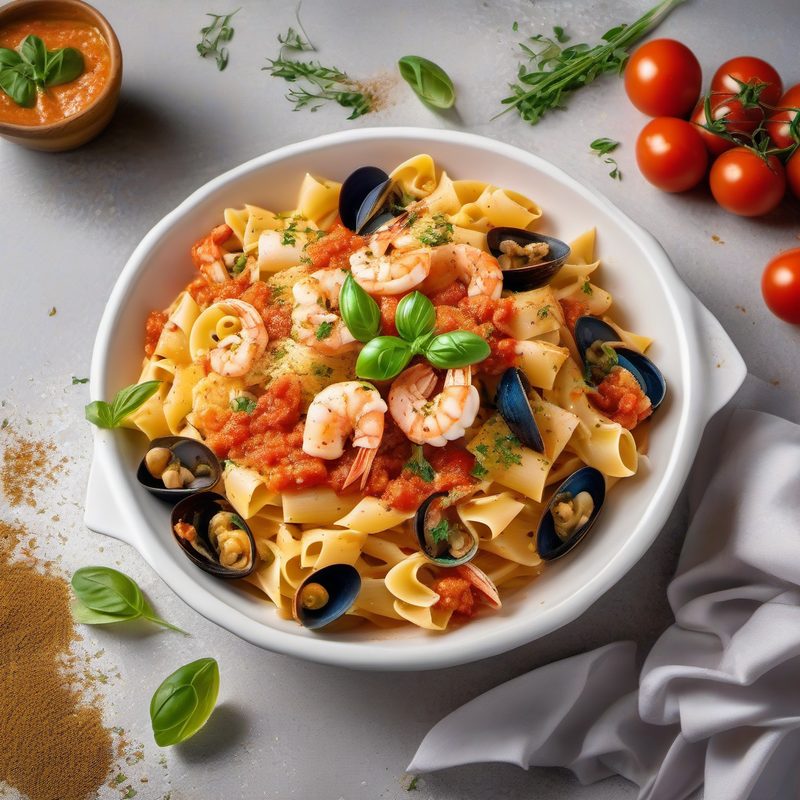
Pasta Pirata Seafood
Category: Primi piatti — Cucina di mare (Seafood)
| Amount | Ingredient |
|---|---|
| Emulsify | To combine two liquids (here olive oil and starchy pasta water) that do not naturally mix into a smooth, cohesive sauce. |
Original Title: Pasta alla pirata
English Title: Pirate's Spicy Seafood Pasta
Position: 384
Servings: 4
Prep Time: 20 minutes
Cook Time: 20 minutes
Total Time: 40 minutes
Difficulty: Medium
1. WHY THIS RECIPE WORKS
Pasta alla pirata — "Pirate's Pasta" — is a bold, soulful creation from the southern Italian coast, named for the motley crew of seafood that sails into the sauce: plump shrimp, briny mussels, and tender squid rings all mingling in a fiery tomato broth over spaghetti. The name evokes a treasure chest of the sea, and when made correctly, it delivers a depth of flavor that belies its relatively short list of ingredients. The challenge with mixed-seafood pastas is that each component has a different cooking time — squid turns to rubber if boiled too long, while shrimp go from succulent to sawdust in seconds. This recipe solves that by staggering the seafood additions: squid first (it needs the longest simmer to become tender), then mussels (which steam open in their own juices), and finally shrimp (which need only a brief poach at the very end). The sauce, built from crushed tomatoes, garlic, chili, and a splash of white wine, is reduced until it clings to the pasta rather than pooling at the bottom of the bowl — a concentrated, briny, gently spicy cloak for every strand of spaghetti. The result is a dish that tastes like the Mediterranean in a bowl: bright, briny, slightly spicy, and deeply satisfying, worthy of any buccaneer's table.
Suggested Seafood Breakdown (300 g total)
You may adjust the proportions based on availability. Substitutions: clams for mussels; scallops (quartered) for shrimp; cuttlefish for squid.
3. EQUIPMENT
- Large pot (6–8 quart) for pasta
- 12-inch skillet or Dutch oven (wide enough to hold seafood and sauce)
- Chef's knife
- Cutting board
- Spider skimmer or colander
- Wooden spoon or silicone spatula
- Kitchen shears (for cleaning mussels)
- Small bowl (for cleaned seafood)
- Ladle
- Tongs (for tossing pasta)
- Liquid measuring cup
4. BEFORE YOU BEGIN
Step 1: Clean and Prepare the Seafood
| Task | Detail |
|---|---|
| Shrimp | Peel and devein. Cut into bite-sized chunks (about 2.5 cm / 1 in). Refrigerate until needed. |
| Mussels | Scrub under cold running water with a stiff brush to remove sand and barnacles. Pull off the fibrous "beard" protruding from the shell. Discard any mussels that are cracked or that remain open when tapped firmly — they are dead and unsafe to eat. Place clean mussels in a bowl of cold water and refrigerate until needed. |
| Squid | If whole, pull the head and tentacles away from the body — the innards will come with them. Cut the tentacles just below the eyes and discard the head and innards. Remove the translucent quill (pen) from inside the body tube. Rinse the tube inside and out. Peel off the purplish skin if desired (this is cosmetic; the skin is edible). Slice the body into 1 cm (½ in) rings. Leave tentacles whole or halve if large. |
Step 2: Set Up Your Mise en Place
- Slice the garlic thinly — this allows it to infuse the oil without burning. Do not mince; thin slices are more forgiving.
- Seed and chop the chili — remove the ribs and seeds for milder heat, or leave them in for a more assertive pirate's kick.
- Measure the wine and tomatoes — have them within arm's reach of the stove, as the cooking moves fast once the seafood hits the pan.
- Chop the parsley and set aside for finishing.
Step 3: Start the Pasta Water
Fill the large pot with 4 quarts (3.8 L) of water. Add 2 tablespoons of kosher salt (the water should taste like the sea). Bring to a rolling boil over high heat.
5. STEP-BY-STEP INSTRUCTIONS
Step 1: Cook the Pasta
- Add the spaghetti to the boiling water and cook until 2 minutes shy of al dente (the pasta will finish cooking in the sauce).
- Reserve 1½ cups (355 ml) of the starchy pasta cooking water before draining.
- Drain the spaghetti (do not rinse) and set aside.
Step 2: Build the Spicy Garlic Oil Base
- While the pasta cooks, heat 3 tablespoons (45 ml) of the olive oil in a 12-inch skillet or Dutch oven over medium heat until shimmering.
- Add the sliced garlic and chopped chili. Cook, stirring constantly, until the garlic is fragrant and just beginning to turn golden at the edges — about 1 to 1½ minutes. Do not let the garlic brown deeply, or it will turn bitter.
Step 3: Cook the Squid (First Seafood Addition)
- Add the squid rings and tentacles to the pan. Cook, stirring occasionally, for 2 minutes. The squid will release some liquid and begin to firm up.
- Season with a pinch of salt and a few grinds of black pepper.
Step 4: Add the Mussels and White Wine
- Add the mussels to the pan, nestling them into the oil and squid.
- Pour in the white wine. Increase the heat to medium-high and cover the pan with a tight-fitting lid.
- Cook for 2 to 3 minutes, until the mussels have opened. Shake the pan once or twice to redistribute.
- Check for unopened mussels: After 3 minutes, discard any mussels that remain firmly closed — they are not safe to eat.
Step 5: Add the Crushed Tomatoes
- Reduce the heat to medium. Remove the lid and add the crushed tomatoes.
- Stir to combine, scraping up any browned bits from the bottom of the pan (this is where deep flavor lives).
- Simmer the sauce, uncovered, stirring occasionally, for 10 minutes. The sauce should reduce slightly and thicken to a rustic, clingy consistency — not watery, but not paste-thick either.
Step 6: Add the Shrimp (Final Seafood Addition)
- After the sauce has simmered for 10 minutes, add the shrimp pieces to the sauce.
- Stir to submerge them in the hot liquid. Cook for 2 minutes — the shrimp will turn pink and opaque. Do not overcook; they finish cooking off the heat.
Step 7: Toss the Pasta with the Sauce
- Add the drained spaghetti directly to the skillet with the seafood and sauce.
- Add ½ cup (120 ml) of the reserved pasta cooking water.
- Toss vigorously with tongs for 1 to 2 minutes, lifting and turning the pasta to coat every strand in the sauce. The starches in the pasta water will help emulsify the sauce into a glossy, clingy coating.
- Assess the consistency: The sauce should coat the pasta without pooling. If it looks dry, add more pasta water 1 tablespoon at a time. If it looks too loose, let it simmer for 30 seconds longer.
- Taste and adjust seasoning with salt and pepper.
Step 8: Finish and Serve
- Drizzle with the remaining 1 tablespoon (15 ml) extra-virgin olive oil and toss once more.
- Sprinkle with the chopped parsley and toss gently to distribute.
- Divide among warmed bowls. Serve immediately — this pasta waits for no one.
- Spaghetti: Use a good-quality bronze-die spaghetti (the rough texture helps sauce cling). The standard 350 g (12 oz) serves 4 generously. For a lighter meal, use 300 g (10.5 oz).
- Crushed tomatoes: Passata di pomodoro (smooth, uncooked tomato purée) or San Marzano tomatoes crushed by hand both work. Do not use whole peeled tomatoes without crushing them, and avoid tomato paste — the sauce needs a loose, brothy base.
- White wine: Use a wine you would drink — the flavor concentrates as the alcohol cooks off. A dry Italian white (Pinot Grigio, Vermentino, Frascati, or Soave) is ideal. Avoid oaked Chardonnay or sweet wines. If you do not cook with wine, substitute an equal amount of seafood or vegetable broth with 1 tablespoon of fresh lemon juice.
- Chili: A fresh red peperoncino (Fresno, cayenne, or red jalapeño) gives a bright, fruity heat. Dried peperoncino or red pepper flakes (½ to 1 tsp) can be substituted — add them with the garlic so they bloom in the oil. For a milder dish, use half the chili or remove the seeds and ribs entirely.
- Garlic: Two cloves is moderate; use three for a more assertive garlic presence. Do not use pre-minced jarred garlic — it contains preservatives that scorch easily and lack the fresh pungency the dish needs.
- Parsley: Flat-leaf (Italian) parsley is preferred for its clean, peppery flavor. Curly parsley is acceptable but more decorative than flavorful.
- Extra-virgin olive oil: Use a good-quality oil for cooking (the majority is heated) and reserve a small amount of your best finishing oil for the final drizzle.
7. EQUIPMENT NOTES
- Pan choice: A 12-inch (30 cm) skillet or a 5-quart (4.7 L) Dutch oven is ideal — wide enough to hold all the seafood and spaghetti in a single layer. A narrower pan will crowd the ingredients and cause the seafood to steam rather than sauté.
- Lid: A tight-fitting lid is essential for steaming the mussels open in Step 4. If your skillet lacks a lid, use a baking sheet or large piece of heavy-duty aluminum foil crimped around the edges.
- Tongs: Spring-loaded tongs give the best control for lifting and turning long strands of spaghetti. Two spatulas also work but require more finesse.
- Pasta pot: A 6–8 quart pot with plenty of water ensures the spaghetti does not clump together as it cooks.
8. TIMING & MAKE-AHEAD
| Task | Timing |
|---|---|
| Clean and prep seafood | Up to 6 hours ahead; refrigerate in separate airtight containers on a bed of ice |
| Chop garlic and chili | Up to 2 hours ahead; cover and refrigerate |
| Chop parsley | Up to 1 hour ahead; keep covered at room temperature |
| Cook pasta and complete dish | Just before serving — the pasta does not hold well once sauced |
- Do not cook the seafood in advance — it will toughen upon reheating. This is a dish best cooked start-to-finish just before serving.
- The sauce (without seafood) can be made ahead: Sauté the garlic and chili in olive oil, add the tomatoes, and simmer for 10 minutes. Cool, cover, and refrigerate for up to 3 days. When ready to serve, reheat the sauce to a simmer, proceed with the staggered seafood additions (Steps 3–6), cook the pasta fresh, and toss.
9. STORING & REHEATING
- Refrigerator: Leftovers keep in an airtight container for up to 2 days. The seafood will lose some of its tender texture upon reheating.
- Reheating: Transfer to a skillet with a splash of water or white wine. Reheat over medium-low heat, covered, for 3–4 minutes, stirring gently once or twice. Do not microwave — the high heat will make the shrimp and squid rubbery.
- Freezing: Not recommended. The seafood texture degrades significantly upon thawing. The tomato sauce alone (without pasta or seafood) freezes well for up to 3 months.
10. WINE PAIRING
- White (Classic): Vermentino di Sardegna — saline, citrusy, and mineral-driven, with enough acidity to cut through the tomato and echo the brininess of the seafood. Other excellent choices: Greco di Tufo, Fiano di Avellino, or a Gavi di Gavi.
- Rosé: A dry rosato from Puglia (Negroamaro-based) or Cerasuolo d'Abruzzo — the berry notes complement the chili while the structure stands up to the sauce.
- Light Red (Chilled): A chillable red like Frappato from Sicily or Lambrusco di Sorbara — served at 12–14°C (54–57°F) — offers a daring but rewarding pairing with the spicy seafood.
- Sparkling: Franciacorta Brut or Prosecco Superiore — the bubbles refresh the palate between bites and cut through the olive oil richness.
- Beer: A crisp Italian pilsner (Birrificio Italiano Tipopils) or a Belgian witbier with citrus and coriander notes pairs beautifully.
11. REGIONAL VARIATIONS
- Pasta alla pirata — Versione Calabrese (Spicier): Double the chili and add 1 teaspoon of Calabrian chili paste (or 'nduja, the spicy spreadable salumi from Calabria) along with the tomatoes. Finish with a dusting of pecorino or ricotta salata.
- Pasta alla pirata — Versione Pugliese: Add ½ cup of halved cherry tomatoes along with the crushed tomatoes for a fresher, sweeter sauce. Use orecchiette instead of spaghetti and include 8–10 clams alongside the mussels.
- Pasta alla pirata — Versione Siciliana: Add 2 tablespoons of capers (rinsed) and ½ cup of pitted green olives (crushed) with the tomatoes. The brininess of the olives and capers deepens the seafood flavor.
- Pasta alla pirata — Versione Bianco (White Wine Sauce): Omit the crushed tomatoes. After cooking the seafood, add ½ cup extra white wine and ¼ cup pasta water, then toss with the spaghetti. Finish with a squeeze of lemon and a generous grating of lemon zest. The sauce remains pale, elegant, and intensely seafood-flavored.
- Pasta alla pirata — With Langoustine or Lobster: Substitute 2 small langoustines (or 1 small lobster tail, cut into chunks) for the shrimp. Add the langoustine/lobster at the same time as the squid, as it needs longer to cook.
- Pasta alla pirata — Gluten-Free: Substitute gluten-free spaghetti (brown rice or corn blend). Cook according to package directions and use an extra ¼ cup of pasta water to help the sauce cling, as gluten-free pasta releases less starch.
12. TROUBLESHOOTING
| Problem | Cause | Solution |
|---|
13. NUTRITIONAL INFORMATION
Per serving (based on 4 servings)
| Component | Value |
|---|---|
| Calories | 595 kcal |
| Protein | 28 g |
| Fat | 18 g |
| Saturated Fat | 3 g |
| Carbohydrates | 78 g |
| Fiber | 5 g |
| Sugar | 7 g |
| Sodium | 780 mg |
| Cholesterol | 95 mg |
Nutritional values are estimates and may vary based on ingredient choices and portion sizes.
14. SCALING & ADAPTATIONS
- For 2 servings: Halve all ingredient quantities. Use a 10-inch skillet. Cooking times remain the same.
- For 8 servings: Double all ingredients. Cook the pasta in two batches (or use an 8-quart pot and cook 700 g spaghetti at once). Use a 14-inch paella pan or a very large Dutch oven — crowding prevents proper browning and mussel opening. You may need to cook the seafood in two batches and combine at the end.
- Lower-calorie option: Reduce olive oil to 2 tablespoons (1 for cooking, 1 for finishing). Use 300 g spaghetti and increase the seafood to 400 g. Replace half the crushed tomatoes with an equal volume of diced fresh tomatoes.
- Higher-protein option: Increase mixed seafood to 400 g total (add more squid and mussels). Serve alongside a fresh arugula salad.
- Low-sodium option: Reduce salt in the pasta water to 1 tablespoon. Omit additional salt in the sauce until the very end — the mussels release briny liquid that provides natural seasoning.
- Dairy-free / Pescatarian / Mediterranean Diet: This recipe is naturally dairy-free and fits all three dietary patterns as written.
15. RECIPE TIPS & TECHNIQUES
- Why stagger the seafood? Each seafood type has a different ideal cooking time. Squid becomes tender after a brief sear (2 minutes) but turns rubbery if cooked longer — adding it first and building the sauce around it means it gets exactly the right amount of heat. Mussels open in 2–3 minutes of steaming and release their flavorful liquor into the sauce. Shrimp need only 2 minutes of gentle heat at the very end — any longer and they go from juicy to dense. This staggered approach, known in Italian kitchens as cottura scalare, is the secret to perfectly cooked mixed seafood.
- The pasta water is not optional: The starchy water is the key to a cohesive sauce. It contains gelatinized starches that emulsify the olive oil and tomato juices into a sauce that clings to the pasta rather than sliding off. Always reserve at least 1 cup before draining — even if you think you will not need it.
- Do not rinse the pasta: Rinsing washes away the surface starches that help the sauce adhere. Drain well, but do not rinse.
- Shake, don't stir, the mussels: Shaking the covered pan once or twice during the mussel-cooking stage helps redistribute heat and encourages even opening. Stirring can knock mussels off their shells.
- Taste before salting: Mussels contribute significant natural salt to the sauce. Season the dish with salt only at the very end, after tasting the finished sauce.
- The final drizzle of raw olive oil: Adding the last tablespoon of oil off the heat — a technique called olio a crudo in Italian cooking — adds a bright, peppery freshness that contrasts with the rich, cooked sauce. This is the finishing touch that elevates the dish.
- Chili as a flavor enhancer, not a weapon: A single seeded fresh chili provides gentle warmth that amplifies the sweetness of the seafood and tomatoes without overwhelming them. The heat should be a supporting note, not the main event.
- Warm the bowls: A hot pasta deserves a warm bowl. Briefly run bowls under hot water and dry them, or warm them in a low oven (95°C / 200°F) for 5 minutes before plating.
16. GLOSSARY
| Term | Definition |
|---|
17. PLATING & PRESENTATION
- Rustic family-style: Serve the pasta directly from the skillet or transfer it to a large, warmed shallow bowl. Arrange a few opened mussels on top with their shells facing up, like treasure scattered across the plate. Sprinkle the remaining parsley over the top and drizzle with the final tablespoon of raw olive oil. Serve with a crusty loaf of bread for sopping up every drop of sauce.
- Individual bowls: Using tongs, coil a portion of spaghetti into a tight nest in the center of each warm bowl. Use a slotted spoon to distribute the seafood evenly over the top. Place 2–3 mussels decoratively around the edge of each bowl. Spoon a little extra sauce over the top, then finish with parsley and a drizzle of oil.
- Garnish ideas: A pinch of flaky sea salt (Maldon or fleur de sel), a fine grating of lemon zest over each portion for brightness, or a few drops of chili oil for extra color and heat.
- Suggested accompaniments: A lemon wedge on each plate, grilled bread rubbed with garlic, a simple green salad with lemon vinaigrette, or grilled radicchio.
- For a dinner party: Plate each portion individually and garnish with micro-herbs (basil or chervil) and a thin shard of Parmesan or ricotta salata (if desired — strictly optional, as this is traditionally a cheeseless seafood pasta).
18. SCIENCE & TECHNIQUE
- Why squid goes rubbery (and how to avoid it): Squid muscle contains high levels of collagen cross-linked in a double-helix structure. When heated, this collagen contracts rapidly at around 50°C (122°F), squeezing out moisture and causing the classic "rubber band" texture if the temperature rises too slowly or the cooking time is too long. However, a very fast, high-heat sear (1–2 minutes at 180°C / 356°F) cooks the squid through before the collagen has time to contract excessively, preserving tenderness. (The alternative method — braising for 45–60 minutes — breaks down the collagen into gelatin, which also yields tenderness, but that path conflicts with the brief simmer required for the tomato sauce.) The 2-minute sauté in this recipe is calibrated to the first approach.
- Mussel steaming: the role of the "beard": Mussels attach themselves to rocks and pilings using byssal threads (the "beard"). These threads are protein-based and become tough when cooked. Removing them before cooking prevents a fibrous texture in the finished dish. When mussels steam, their shells open as the adductor muscle (the small, rubbery nub that holds the shell closed) relaxes at around 60°C (140°F). Any mussel that stays closed after 3 minutes of sustained steam likely died before cooking — its adductor muscle has lost the ability to contract, and the contents may have spoiled. This is why the test is reliable: live mussels open; dead ones stay shut.
- The starch-water emulsion: Pasta cooking water contains gelatinized starches that leach from the spaghetti during boiling. When this starchy water is added to the oil-and-tomato-based sauce and tossed vigorously, the starches act as a natural emulsifier, allowing the oil and water to form a stable suspension. The result is a creamy, clingy sauce that coats each strand — a phenomenon analogous to how egg yolks stabilize a vinaigrette, but using starch instead of lecithin. This is the same principle behind mantecatura, the Italian technique of finishing pasta in the pan with pasta water and fat.
- Tomato acidity and seafood: The acidity of crushed tomatoes (pH ~4.3–4.5) is mild enough to complement the sweet, briny flavor of seafood without denaturing its proteins in the way that pure lemon juice or vinegar would. The simmering step further mellows the acidity, as volatile acids evaporate and the sugar content of the tomatoes concentrates, creating a balanced, rounded sauce.
- Why shrimp turn pink: Raw shrimp contain a carotenoid pigment called astaxanthin, which is bound to a protein (crustacyanin) that keeps it a blue-grey color. When heated, the protein denatures and releases the astaxanthin, which then reflects light in the orange-red spectrum — turning the shrimp pink. This visible color change is a reliable doneness cue: the shrimp are cooked when they are fully opaque and uniformly pink throughout.
- The "C" rule for shrimp: Perfectly cooked shrimp curl into a loose "C" shape as the muscle fibers contract. If they curl into a tight "O," they are overcooked. This visual cue applies equally whether the shrimp are whole or cut into pieces.
19. FINAL NOTES
- Pasta alla pirata is a recipe that rewards confidence and timing. The staggered seafood additions — squid first, then mussels, then shrimp — are the heart of the technique; once you internalize that sequence, the dish comes together in a single, flowing motion from pan to plate. It is a wonderful recipe to memorize and cook on instinct.
- This dish is naturally pescatarian, dairy-free, and gluten-free adaptable (see Variation above). It fits comfortably into the Mediterranean diet and Whole30 pattern (check wine/broth substitutions).
- The name "alla pirata" is thought to have originated in fishing communities along the Amalfi and Cilento coasts, where fishermen would combine whatever seafood remained unsold at the end of the day into a single, improvised pasta sauce — a motley crew of ingredients, like a pirate's crew. There is no single "authentic" version; the dish is by nature adaptable and democratic. Make it your own with whatever fresh seafood looks best at the market.
- Cook's note: The most common mistake with this dish is overcooking the shrimp. They need only 2 minutes of gentle heat to turn from grey to pink. Have your serving bowls ready, the parsley chopped, and your family or guests seated before you drop them in. The moment the shrimp are opaque, the pasta is done.
- A final thought on the chili: The spice level should be a warm embrace, not a wrestling match. Adjust the chili to your heat tolerance, but keep at least a little — it is the "pirate" in the name, the slight daring that makes this pasta memorable.
Source: Adapted from Italian regional cookbook tradition. Originally titled "Pasta alla pirata" (Position 384 of 500 Mediterranean Classics).
Recipe from The Italian Kitchen by Vita Milanese — Volume 1 · Pasta Perfetto. Discover all volumes on the ebook page.