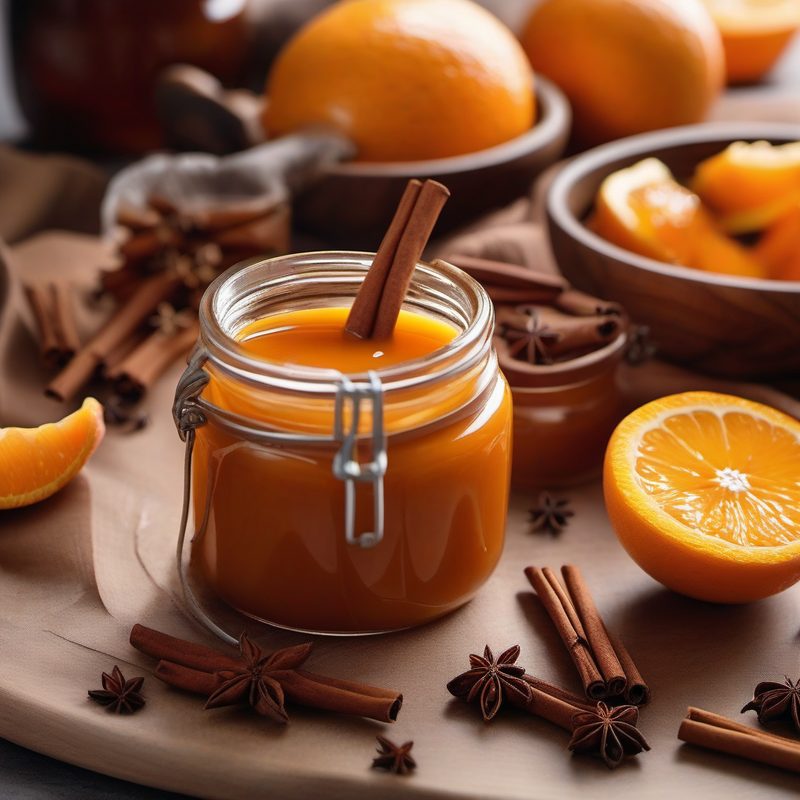
Orange Sauce for Meat and Fish
A rich, velvety butter-citrus sauce that elevates roasted chicken, pork chops, and grilled fish to restaurant quality — the perfect balance of sweet, tart, and savory in one glossy pan sauce.
| Amount | Ingredient |
|---|---|
| 4 | oranges (navel or Valencia) |
| 70 g (5 tbsp) | unsalted butter, cold, cut into ½-inch cubes |
| ½ cup (120 ml) | dry white wine |
| 4 tbsp | granulated sugar |
| 1 pinch | ground cinnamon (optional) |
| to taste | salt and freshly ground black pepper |
| 1 tsp | rice starch (optional, for thickening) |
This orange sauce is a study in luxury made simple. Four oranges provide the foundation — their juice reduced to concentrate flavor, their zest adding aromatic intensity. A generous amount of butter, swirled in at the end, creates a velvety emulsion that coats each bite with richness. White wine and sugar balance the citrus acidity with sweetness and depth, while a touch of cinnamon (optional) adds a warm, almost Moroccan accent. The key technique is monter au beurre — whisking cold butter into the finished sauce off the heat — which gives the sauce its signature glossy sheen and silky texture without the need for heavy cream or starch. The result is a sauce that's simultaneously bright and rich, sweet and savory, elegant and approachable. It's the kind of sauce that makes simple proteins taste like a special occasion.
Ingredient notes: Use fresh, juicy oranges. Navel oranges produce consistently sweet, balanced juice; Valencia oranges are excellent when in season. Blood oranges make a stunning deep-red sauce with a more floral, tart flavor. Use a dry white wine — Sauvignon Blanc, Pinot Grigio, or a dry Chenin Blanc work well. Sweet wines will make the sauce cloying. The butter must be cold and cut into small cubes for the monter au beurre technique to work properly. The cinnamon is optional but recommended — just a pinch adds warmth and complexity without tasting like a dessert. Rice starch (also called rice flour or rice starch powder) provides a light thickening that preserves the sauce's clarity; cornstarch can be substituted if needed.
- Medium saucepan
- Citrus juicer or reamer
- Fine-mesh grater or Microplane (for zest)
- Fine-mesh sieve (for straining juice)
- Whisk
- Measuring cups and spoons
- Chef's knife and cutting board
- Small bowl (for rice starch slurry)
- Prepare the oranges (5 min). Wash the oranges thoroughly. Using a Microplane or the finest side of a box grater, finely grate the zest of 1 orange. Set aside. Juice all 4 oranges. You should have about 1 cup (240 ml) of juice. Strain through a fine-mesh sieve to remove pulp and seeds. Set aside.
- Dissolve the sugar in wine (3 min). In a medium saucepan, combine the white wine and sugar. Cook over low heat, stirring with a whisk or wooden spoon, until the sugar is completely dissolved, about 2–3 minutes. The mixture should be clear, not cloudy.
- Build the sauce base (5 min). Add the strained orange juice, reserved orange zest, cinnamon (if using), a pinch of salt, and a few grinds of black pepper to the saucepan. Increase the heat to medium and bring to a gentle simmer — not a rolling boil. Cook, stirring occasionally, until the sauce reduces slightly and the flavors meld, about 4–5 minutes. Taste and adjust sweetness if needed (add another teaspoon of sugar if the oranges are very tart).
- Thicken (optional, 2 min). If you prefer a thicker sauce, mix the rice starch with 1 tablespoon of cold water to form a smooth slurry. Whisk the slurry into the simmering sauce and cook, stirring constantly, until the sauce thickens slightly, about 2 minutes. If you prefer a thinner, more brothy sauce, skip this step.
- Mount with butter (1 min). Remove the saucepan from the heat. Add the cold butter cubes, one piece at a time, whisking constantly and vigorously. The sauce will become glossy, creamy, and emulsified. Do not return the pan to the heat after adding the butter — the residual heat is enough to melt it slowly. If the sauce cools too much and the butter stops melting, warm it over the lowest possible heat for 10 seconds while whisking.
- Serve immediately. Taste and adjust seasoning with salt and pepper. Pour over roasted chicken, pan-seared pork chops, or grilled fish. Serve right away — the sauce is at its peak when freshly made.
- Zest before juicing, always. A whole orange is much easier to grate than a juiced, floppy half-orange. Grating the zest before cutting into the fruit saves time and frustration.
- Strain the juice thoroughly. Orange pulp and seeds will create an unpleasantly textured sauce. A fine-mesh sieve is non-negotiable for a professional result.
- Use cold butter, off the heat. The monter au beurre technique requires cold butter and no direct heat. The cold butter emulsifies into the warm sauce, creating a creamy, glossy texture. If the pan is too hot, the sauce will break into greasy, separated puddles of butter and liquid.
- Do not boil after adding butter. High heat will break the emulsion, turning your beautiful sauce into a greasy mess. Once the butter goes in, the sauce is done — season, pour, and serve.
- Serve immediately. This sauce does not hold well. The emulsion begins to break as it cools, and reheating will likely cause separation. Plan to make and serve in the same window.
- Balance the sweetness. The amount of sugar needed depends entirely on the sweetness of your oranges. Very sweet oranges may need only 3 tablespoons; tart oranges may need 4 or even 5. Taste the sauce before mounting with butter and adjust accordingly.
| Mistake | Why It Hurts | The Fix |
|---|---|---|
| Using bottled orange juice | The sauce tastes flat, dull, and lacks the bright, complex aroma of fresh citrus | Always squeeze fresh oranges. Nothing substitutes for fresh juice. |
| Boiling the sauce vigorously | The juice reduces too quickly, becoming bitter and concentrated; the delicate flavor is destroyed | Keep the sauce at a gentle simmer — small bubbles, not a rolling boil. |
| Adding butter over direct heat | The emulsion breaks; the sauce becomes greasy and separated | Always remove the pan from the heat before adding butter. Whisk constantly and add cubes one at a time. |
| Using warm or softened butter | The butter melts too quickly and fails to emulsify properly; the sauce will be thin and greasy | Use butter straight from the refrigerator, cut into small cubes. Cold butter is essential for proper emulsification. |
| Skipping the zest | The sauce lacks the intense, aromatic orange flavor that zest provides | Zest is not optional. The oils in the zest are what make an orange sauce taste intensely of orange. |
| Adding too much cinnamon | The sauce tastes like a dessert or a holiday spice blend rather than a savory dinner sauce | Use only a pinch — literally ⅛ teaspoon or less. It should be a background note, not a dominant flavor. |
| Over-reducing the sauce | The sauce becomes too thick, dark, and intensely sweet-tart; there's not enough liquid to coat the protein | Reduce by no more than one-third. If you over-reduce, add a splash of fresh orange juice or warm water to thin it. |
- Orange and Tarragon Sauce: Add 1 tablespoon of finely chopped fresh tarragon along with the orange zest. The anise-like tarragon is a classic pairing with both chicken and fish.
- Orange and Rosemary Sauce: Add a 3-inch sprig of fresh rosemary to the sauce while it simmers; remove before mounting with butter. Excellent with roasted lamb or pork.
- Spicy Orange Sauce: Add ¼ teaspoon of red pepper flakes or ½ teaspoon of minced fresh chili (such as Thai bird's eye or serrano) along with the orange juice. The heat cuts through the richness beautifully.
- Orange-Ginger Sauce: Add 1 tablespoon of finely grated fresh ginger (or 1 teaspoon of ginger paste) with the orange juice. The spicy warmth of ginger complements both the citrus and the butter.
- Orange-Miso Sauce: Whisk 1 tablespoon of white miso paste into the sauce after it has reduced (before adding the butter). The umami from the miso adds an intriguing savory depth. Reduce the salt slightly to compensate.
- Orange and Pink Peppercorn Sauce: Crush 1 tablespoon of pink peppercorns and add them with the orange juice. They provide a mild, fruity heat and a beautiful visual contrast.
- Orange and Star Anise Sauce: Add 1 whole star anise to the sauce while it simmers; remove before mounting with butter. The subtle licorice notes pair beautifully with duck or pork.
| Storage Method | Details |
|---|---|
| Refrigerator | This sauce is best made fresh and served immediately. Leftovers can be refrigerated in an airtight container for up to 2 days, but the emulsion will break upon cooling. To reheat, warm gently in a small saucepan over the lowest possible heat, whisking constantly. Add a splash of fresh orange juice and a small pat of cold butter to help re-emulsify. The texture will not be as perfect as fresh, but the flavor will still be good. |
| Freezer | Not recommended. The butter emulsion will break completely upon freezing and thawing, resulting in a separated, watery sauce. Make fresh. |
| Per Serving (¼ cup / 60 ml) | |
|---|---|
| Calories | 185 |
| Protein | 1 g |
| Fat | 14 g |
| Carbohydrates | 16 g |
| Fiber | 0 g |
| Sugar | 14 g |
Nutrition values are approximate and based on fresh orange juice, unsalted butter, dry white wine, and granulated sugar. Actual values will vary based on orange sweetness and specific brands. Cinnamon adds negligible nutritional value.
Can I use salted butter?
Salted butter can be used, but reduce or omit the added salt in the recipe. Salted butter typically contains about ¼ teaspoon of salt per stick (113 g / 4 oz). Taste the sauce before mounting with butter and adjust salt accordingly.
What is monter au beurre and why does it matter?
Monter au beurre (French for "to mount with butter") is the technique of whisking cold butter cubes into a warm, finished sauce off the heat. The cold butter emulsifies into the sauce, creating a glossy, velvety texture and a rich mouthfeel. It is the defining technique of classic French butter sauces like beurre blanc and is what gives this orange sauce its luxurious, restaurant-quality finish. The key is cold butter and no direct heat — warm the pan's residual heat is enough.
Can I make this without wine?
Yes. Replace the white wine with an equal amount of unsalted chicken or vegetable broth, or use ¼ cup of fresh orange juice plus ¼ cup of water with 1 teaspoon of white wine vinegar for acidity. The flavor will be slightly different (less complex, more straightforwardly citrusy) but still delicious.
What proteins pair best with this sauce?
This sauce is incredibly versatile. It pairs beautifully with: roasted or pan-seared chicken (breast, thigh, or whole), pan-seared or roasted pork chops, pork tenderloin, grilled or pan-seared salmon, halibut, cod, sea bass, trout, roasted duck breast, and even braised lamb chops (especially with the rosemary variation). For a vegetarian option, serve over seared tofu or roasted cauliflower steaks.
Can I use this as a dessert sauce?
While this sauce is designed for savory dishes, it can work as a dessert sauce for simple preparations. Omit the salt, pepper, and cinnamon (or use only the cinnamon), and consider adding a splash of Grand Marnier or Cointreau. Serve over crêpes, vanilla ice cream, poached pears, or panna cotta for a quick and elegant dessert.
- Orange Sauce for Savory Dishes (Volume 2)
- Lemon Butter Sauce (Volume 2)
- Browned Butter Umami Sauce (Volume 2)
- Beurre Blanc (Volume 1)
- Classic Hollandaise (Volume 1)
Recipe from "The Italian Kitchen" by Vita Milanese — Volume 2: Sunday Sauce
Recipe from The Italian Kitchen by Vita Milanese — Volume 2 · Sunday Sauce. Discover all volumes on the ebook page.