Neapolitan Pasta Beans
A soul-warming, deeply savory Neapolitan soup-stew of creamy cannellini beans, tender short pasta, and silky pork rind simmered in a rich tomato base — the kind of rustic, poverty-conscious comfort food that tastes like generations of love in every spoonful. Takes time but asks almost nothing of the cook.
| Amount | Ingredient |
|---|---|
| Using too little black pepper | Black pepper is a primary flavor in this dish, not a minor seasoning. Without enough, the dish tastes flat and one-dimensional Be generous with the pepper at the end — at least 1 teaspoon of freshly ground black pepper, more to taste |
| Burning the garlic during the sauté | Burnt garlic becomes bitter and acrid, ruining the base flavor of the entire dish Cook the garlic on low heat only, and remove it from the oil as soon as it turns golden. If it browns, discard it and start over |
Pasta e fagioli is one of the crowning glories of Neapolitan cucina povera — a humble dish of dried beans and inexpensive pasta elevated by patient cooking and a few transformative ingredients. In this version, the beans are cooked slowly from dry until they are meltingly tender, their cooking liquid reserved to build the body of the stew. The secret weapons are cotenna (pork rind), which simmers into silky, almost transparent strips that add unctuous depth, and the starchy pasta cooking that finishes inside the bean broth itself, thickening it to a creamy, spoon-coating consistency. The result is neither soup nor pasta, but something in between — a satisfying, rib-sticking one-dish meal that exemplifies the Italian philosophy of turning simple ingredients into something far greater than the sum of their parts.
Use dried cannellini beans — canned beans will not have the required cooking liquid or the creamy texture that comes from slow simmering. The bean cooking water is the foundation of the broth, so it matters immensely. Pork rind (cotenna) is available at Italian grocers or butcher shops; it can be omitted for a vegetarian version, though the dish will lack its signature silky richness. Mixed short pasta (pastina mista) is traditional, but ditalini alone works beautifully. Use the best extra-virgin olive oil you have — it contributes significant flavor.
🥘 Equipment
- Large stockpot (8 qt / 8 L) for beans
- Large pot (6 qt / 6 L) or Dutch oven for the final dish
- Small skillet (for sautéing)
- Slotted spoon
- Chef's knife and cutting board
- Fork (for crushing tomatoes)
- Colander
- Ladle
- Measuring cups and spoons
- Wooden spoon
📋 Preparation
Step 1 — Soak the Beans (8–12 hours, overnight)
Rinse the dried cannellini beans under cold running water, picking out any pebbles or shriveled beans.
Place the beans in a large bowl and cover with cold water by at least 3 inches (8 cm) . The beans will expand significantly, so use a generous amount of water.
Soak for 8 to 12 hours at room temperature (overnight is ideal). If your kitchen is very warm, soak in the refrigerator to prevent fermentation.
Soaking rehydrates the beans and reduces cooking time significantly. It also helps break down the complex sugars that can cause digestive discomfort. Do not skip this step — unsoaked beans will take 4+ hours to cook and may cook unevenly.
Step 2 — Cook the Beans (2–3 hours)
Drain and rinse the soaked beans. Transfer to a large stockpot (8 qt / 8 L) and add enough fresh cold water to cover by 2 inches (5 cm) — about 8 cups (2 L). Do not salt the water.
Add 2 bay leaves. Bring to a gentle boil over medium-high heat, then immediately reduce the heat to low to maintain a bare simmer — the surface should show occasional lazy bubbles, not a rolling boil.
Cook for 2 to 3 hours, stirring occasionally, until the beans are completely tender — they should mash easily between your fingers or against the side of the pot with no resistance. Add more boiling water as needed to keep the beans submerged.
The cardinal rule of cooking dried beans: do not add salt until they are fully tender. Salt added early toughens the skins and prevents the beans from becoming creamy. The slow, gentle simmer is equally important — vigorous boiling will break the beans apart into a mushy heap before they are properly tender. Patience here is the entire difference between creamy, intact beans and a broken, starchy mess.
When the beans are tender, remove the pot from the heat. Remove and discard the bay leaves. Do not drain — the cooking liquid is the soul of this dish.
Step 3 — Prepare the Pork Rind (20 minutes)
While the beans cook, prepare the pork rind (cotenna) . Using a sharp knife, scrape the rind to remove any bristles or hair. Rinse under cold water.
Blanch the pork rind in a small pot of boiling water for 20 minutes until softened and pliable.
Drain and let cool until handleable. Cut into 1 cm (½-inch) wide strips and set aside.
Blanching softens the tough pork rind and renders some of the surface fat, ensuring it will become silky and tender rather than chewy in the final dish. The strips will continue to soften as they simmer in the bean broth.
Step 4 — Build the Tomato Base (15 minutes)
Finely chop the celery — aim for a small dice, about ¼ inch (6 mm).
Place a large pot or Dutch oven (6 qt / 6 L) over low heat. Add the extra-virgin olive oil, the chopped celery, and 2 whole garlic cloves (lightly smashed with the flat of your knife).
Sauté gently on low heat, stirring frequently, until the celery is golden and translucent — about 8 to 10 minutes. The garlic should become fragrant but not browned. The goal is to sweat the vegetables, not fry them; low heat and patience are essential.
Meanwhile, crush the peeled tomatoes in a bowl using a fork, breaking them into rough, chunky pieces.
When the celery is golden, remove and discard the garlic cloves (they have infused the oil and done their work). Add the crushed tomatoes to the pot.
Cook for 10 minutes over medium heat, stirring occasionally, until the tomatoes have thickened slightly and the oil begins to separate from the sauce.
The slow sauté on low heat extracts maximum flavor from the celery and garlic without any bitterness from browning. Removing the garlic after infusing the oil is a classic Neapolitan technique — it leaves a gentle background presence without overwhelming the dish.
Step 5 — Combine and Cook the Pasta (12–15 minutes)
When the beans are tender, use a slotted spoon to scoop the beans (but as little of the cooking water as possible) into the pot with the tomato sauce. Reserve the bean cooking water in the stockpot.
Add 2 to 3 ladles (about 1½ cups / 360 ml) of the bean cooking water to the tomato-bean mixture. Bring to a gentle boil.
Add the pork rind strips and a generous pinch of salt — remember that the beans were cooked without salt, so you need to season now.
Add the pasta and stir well. Cook the pasta directly in the bean mixture, stirring frequently, until just al dente — typically 10 to 12 minutes depending on the pasta shape. The pasta will absorb a significant amount of liquid as it cooks, so add more bean cooking water as needed — about ½ cup (120 ml) at a time — to maintain a loose, soupy consistency. The final texture should be somewhere between a thick soup and a stew: spoonable but not watery, with the pasta swimming in a creamy, bean-enriched broth.
Cooking the pasta directly in the bean broth (rather than in separate water) is the essential technique of pasta e fagioli. The starch released by the pasta thickens the liquid into a creamy, almost velvety emulsion that no amount of cream or butter can replicate. Stir frequently to prevent the pasta from sticking to the bottom of the pot. The dish will continue to thicken as it rests, so keep it slightly looser than your desired final consistency.
Step 6 — Rest and Serve (10 minutes)
Turn off the heat. Add a generous amount of freshly ground black pepper — this is not a garnish but a primary seasoning; be bold with it.
Let the pasta e fagioli rest for 10 minutes off the heat, uncovered. During this time, the starches continue to swell and the liquid thickens into a creamy, almost porridge-like consistency. The flavors marry and deepen.
Serve in warm, deep bowls with a final drizzle of extra-virgin olive oil and another crack of black pepper on top. The dish should be eaten with a spoon — it is too thick and creamy for a fork alone.
A 10-minute rest is not optional — it is a critical step in the recipe. The pasta finishes absorbing liquid, the beans continue to break down and thicken the broth, and the pork rind becomes even more tender. The difference between serving immediately and serving after 10 minutes is the difference between a good pasta e fagioli and a transcendent one.
🧑🍳 Chef's Tips
- Soak the beans the night before. The 8–12 hour soak is not negotiable — it halves the cooking time and ensures evenly tender, creamy beans. If you forget, do a quick soak: bring the beans and water to a boil, boil for 2 minutes, remove from heat, cover, and let sit for 1 hour. Then drain, rinse, and proceed. The texture will not be quite as good as an overnight soak, but it is acceptable in a pinch.
- Do not salt the beans during cooking. This is the most important rule of cooking dried beans. Salt toughens the skins and prevents them from becoming creamy. Add salt only after the beans are fully tender. If you salted the beans by accident, they will still be edible but will have a firmer, less luxurious texture.
- Reserve all the bean cooking water. Even if you think you have enough, keep the entire pot. You will likely need more than you expect, and nothing else can replicate the starchy, bean-flavored liquid that makes this dish so creamy. If you run out, use plain hot water as a last resort.
- Use a mix of pasta shapes for authenticity. Neapolitan pasta e fagioli traditionally uses avanzi — leftover odds and ends of different pasta shapes. A mix of ditalini, tubetti, small shells, and broken spaghetti creates a more interesting texture and appearance. If using a single shape, ditalini or tubetti are the classic choices.
- The dish thickens dramatically as it cools. Cook the pasta to a slightly soupy consistency — it will continue to thicken during the 10-minute rest and as it sits in the bowl. If it becomes too thick, thin with a splash of hot water or bean cooking water when reheating.
- Make it vegetarian. Omit the pork rind for a perfectly delicious vegetarian version. The dish will still be rich and creamy thanks to the bean starches and pasta. Add an extra 2 tablespoons of olive oil at the end for richness, and consider adding a Parmesan rind to the bean pot during cooking for umami depth.
❌ Common Mistakes
| Mistake | Why It Hurts | The Fix |
|---|---|---|
| Salting the beans during cooking | Salt toughens the skins before the interiors are tender, resulting in beans that never become truly creamy | Add salt only after the beans are completely tender — test by mashing a bean between your fingers |
| Cooking the beans at a rolling boil | Vigorous boiling ruptures the skins and turns the beans into mush before they are properly tender | Keep the beans at a bare simmer — occasional lazy bubbles, not a boil |
| Using canned beans | Canned beans are already fully cooked and have no starchy cooking liquid. The bean water is essential for the creamy texture | Use only dried beans cooked from scratch. If you must use canned, add 2 cups of the bean liquid from the can plus 1 cup of water and 1 tablespoon of all-purpose flour or mashed beans to thicken |
| Skipping the 10-minute rest | The pasta and starches need time to swell and thicken the broth. Without the rest, the dish is thin and soupy | Always let the finished dish rest off heat for 10 minutes before serving |
💡 Variations
| Variation | How To |
|---|---|
| Add Rosemary | Add a sprig of fresh rosemary to the pot when cooking the beans. The piney, aromatic flavor pairs beautifully with cannellini beans and tomatoes. Remove the sprig before combining with the pasta |
| Spicy Pasta e Fagioli | Add 1 dried red chili pepper (or ½ teaspoon red pepper flakes) to the olive oil when sautéing the celery and garlic. The gentle heat cuts through the richness of the beans and pork rind |
| Use a Different Bean | Substitute dried borlotti (cranberry) beans, Great Northern beans, or chickpeas for the cannellini. Cooking times may vary slightly — borlotti beans cook in about 1½–2 hours, chickpeas take 3–4 hours |
| Add Greens | Stir in 3 cups of roughly chopped escarole, kale, or Swiss chard during the last 5 minutes of pasta cooking. Wilt until tender. The bitter greens provide a welcome contrast to the creamy beans |
| Pasta e Fagioli al Forno (Baked) | After combining the pasta with the beans and sauce, transfer to a baking dish, top with grated Parmigiano-Reggiano and breadcrumbs, and bake at 375°F (190°C) for 20 minutes until golden and bubbly. This is a less traditional but deeply satisfying variation |
| Seafood Pasta e Fagioli | Add 200 g (7 oz) of cleaned clams or mussels during the last 5 minutes of pasta cooking. Cover the pot to steam them open. Discard any that do not open. The briny liquor from the shellfish adds an extraordinary depth to the bean broth |
| Pasta e Fagioli with Pesto | Swirl in 2 tablespoons of basil pesto (fresh or jarred) just before serving. The herbaceous, garlicky pesto brightens the rich, earthy bean base and adds a vibrant green color |
❄️ Storage & Leftovers
| Method | Details |
|---|---|
| Refrigerator | Store in an airtight container for up to 4 days. The dish will thicken significantly as it sits — it becomes almost like a bean porridge. This is normal and actually delicious |
| Reheating | Reheat in a pot over medium-low heat with a splash of water or bean cooking water, stirring gently until hot and loosened to your desired consistency (5–7 minutes). The pasta will have absorbed most of the liquid overnight, so you will need to add more water than you expect. Taste and adjust salt and pepper |
| Freezing | Freeze in portions (without the pasta) for up to 3 months. The pasta becomes mushy upon freezing and thawing. If freezing, cook the beans and make the sauce through Step 4, then cool, freeze, and add freshly cooked pasta when serving. Thaw overnight in the refrigerator, reheat, cook fresh pasta in the bean mixture, and proceed |
| Make-Ahead Strategy | Cook the beans (Step 2) up to 2 days ahead and refrigerate them in their cooking liquid. The flavor only improves with time. On serving day, proceed from Step 3 — you will shave about 2 hours off the total time |
| Leftover Bean Water | The reserved bean cooking water freezes beautifully. Freeze in ice cube trays and use as a flavor booster in soups, stews, or even as a pasta cooking liquid for extra-creamy results |
🍷 Wine Pairing
| Wine | Why |
|---|---|
| Aglianico del Vulture (Basilicata) | A full-bodied, tannic red with dark cherry, plum, and earthy notes — the firm structure stands up to the rich, savory bean broth and pork rind. The high acidity cuts through the creamy texture. Decant for 30 minutes before serving |
| Montepulciano d'Abruzzo | A medium-bodied, approachable red with soft tannins and bright cherry and blackberry fruit. Its moderate structure and juicy acidity make it a versatile partner for the earthy, tomatoey beans. Serve at cool room temperature (60°F / 16°C) |
| Chianti Classico (Tuscany) | A Sangiovese-based red with notes of sour cherry, dried herbs, and leather — the bright acidity and moderate tannins complement both the creamy beans and the olive oil. A classic, fail-safe pairing |
| Primitivo di Manduria (Puglia) | A rich, ripe, slightly jammy red with blackberry, plum, and spice notes. Its generous fruit and softer tannins match the comforting, rustic character of the dish. The slight sweetness of the fruit contrasts nicely with the savory bean broth |
| Barbera d'Alba (Piedmont) | A lively, high-acid red with bright red fruit and a subtle bitter-almond finish. The acidity is the key here — it cuts through the creamy, starchy broth and refreshes the palate between bites. Serve slightly cool (58°F / 14°C) |
| Falanghina (Campania, white) | A crisp, mineral-driven white with citrus and green apple notes and a subtle almond finish. An unconventional but excellent pairing — the bright acidity and lightness provide a refreshing counterpoint to the heavy, creamy dish. Serve well-chilled |
🥗 Suggested Side Dishes
- Arugula and shaved Parmigiano salad — Baby arugula dressed with 3 parts extra-virgin olive oil, 1 part lemon juice, salt, and pepper, topped with shavings of Parmigiano-Reggiano. The peppery bite of the arugula and the salty, nutty cheese cut through the creamy richness of the beans
- Grilled radicchio with balsamic glaze — Halved radicchio heads grilled until charred and wilted, then drizzled with aged balsamic vinegar. The bitterness and char provide a welcome contrast to the soft, creamy pasta e fagioli
- Marinated olives and roasted peppers — A simple antipasto of mixed olives, roasted red and yellow peppers, and a drizzle of olive oil and oregano. The briny, tangy flavors brighten the palate between spoonfuls
- Crusty sourdough or ciabatta — Warm, crusty bread with a dish of good extra-virgin olive oil for dipping. Essential for sopping up every last drop of the creamy bean broth from the bowl
- Simple fennel and orange salad — Thinly shaved raw fennel bulb and orange supremes, dressed with olive oil, salt, and a pinch of red pepper flakes. The crisp, refreshing, citrusy salad provides a bright, clean contrast to the hearty, earthy stew
📊 Nutrition (per serving, estimated)
| Calories | Protein | Fat | Carbs | Fiber |
|---|---|---|---|---|
| ~540 | 22 g | 16 g | 78 g | 12 g |
Nutritional values are estimates based on 5 servings with 320 g pasta, 300 g dried cannellini beans, 80 g pork rind, 400 g canned tomatoes, and 80 ml olive oil. Actual values will vary based on specific brands, the amount of bean water absorbed, and portion sizes. Cannellini beans are an excellent source of plant-based protein, dietary fiber, folate, iron, magnesium, and potassium. The fiber content promotes digestive health and helps stabilize blood sugar. To lighten the dish, reduce the olive oil to 3 tablespoons (approximately 470 calories and 11 g fat per serving). For a richer version, drizzle additional olive oil and top with grated Parmigiano-Reggiano at the table. This is a high-fiber, high-protein main course; as a primo (first course), it will serve 8 with smaller portions.
❓ Frequently Asked Questions
Do I have to soak the beans overnight?
Yes — or for at least 8 hours. Soaking rehydrates the beans, reduces cooking time by about half, and helps break down the complex sugars (oligosaccharides) that cause digestive discomfort. If you forgot to soak, use the quick-soak method: bring the beans and water to a boil, boil for 2 minutes, remove from heat, cover, and let sit for 1 hour. Drain, rinse, and proceed. The texture will be slightly less creamy but still good.
Can I use canned beans?
Not if you want the authentic texture. The creamy, almost velvety consistency of pasta e fagioli comes from the starches released by cooking dried beans and the pasta in the same liquid. Canned beans are already fully cooked and their liquid does not have the same starch content or flavor. If you must use canned beans, drain and rinse two 15-oz cans, mash about half of them, and substitute 2 cups of water mixed with 1 tablespoon of all-purpose flour for the bean cooking water. The result will be acceptable but not the same.
The pasta absorbed all the liquid and the dish is too thick — what do I do?
Add hot water or bean cooking water ¼ cup (60 ml) at a time and stir gently until the dish reaches your desired consistency. The pasta will continue to absorb liquid even as it sits, so thin it slightly more than you think you need. If you have no reserved bean water, plain hot water works — just adjust the salt afterward.
Can I make this in a pressure cooker or Instant Pot?
Yes. After soaking, cook the beans in a pressure cooker with water and bay leaves at high pressure for 25–30 minutes (natural release for 15 minutes). Then proceed with the recipe on the stovetop from Step 3. You will need about 1 cup (240 ml) less bean water than stovetop because less water evaporates during pressure cooking. Alternatively, cook the entire dish in the pressure cooker: sauté the celery and garlic in the pot, add the soaked beans, tomatoes, pork rind, and 4 cups of water, and cook at high pressure for 30 minutes. Quick release, add the pasta, and cook on sauté mode until the pasta is al dente, adding water as needed. The texture will be slightly different — less creamy, more soup-like — but the dish is still delicious and comes together in about an hour.
Can I make this without pork rind?
Absolutely. The pork rind (cotenna) adds richness and a silky, unctuous texture, but the dish is still deeply satisfying without it. Omit it entirely for a vegetarian version, or add a Parmesan rind to the beans during cooking for extra umami depth without meat. If you want a different source of richness, add 4 oz (120 g) of diced pancetta or guanciale: fry it until crispy in the olive oil before adding the celery and garlic, then proceed as directed. The rendered fat adds a wonderful porky depth.
What pasta shape should I use?
Traditional Neapolitan pasta e fagioli uses short, small pasta shapes: ditalini (small tubes), tubetti (larger tubes), or a mix of odds and ends (avanzi). If you have only one shape, ditalini is the classic choice. Avoid long pasta like spaghetti — it is difficult to eat with a spoon and does not integrate well into the stew-like texture. Gluten-free short pasta works well; use brown rice or chickpea-based ditalini and cook according to package directions.
Why did my beans turn out tough?
Two common causes: (1) You salted the cooking water before the beans were tender — salt toughens the skins and prevents creaminess. Always add salt only after the beans are fully cooked. (2) The beans are old — dried beans lose moisture and become harder over time. Beans that have been sitting on a shelf for more than a year may never become truly tender. Buy from a store with high turnover and check the packaging date. If you suspect old beans, add ¼ teaspoon of baking soda to the cooking water — it helps soften the skins.
Can I freeze pasta e fagioli?
Yes, but without the pasta. The pasta becomes mushy and unappetizing when frozen and thawed. Cook the beans and prepare the sauce, let cool, and freeze in portions for up to 3 months. When you want to serve, thaw overnight in the refrigerator, reheat the bean-tomato base, and cook fresh pasta directly in the reheated mixture. It takes only 15 minutes and the result tastes freshly made.
The dish tastes bland — how do I fix it?
The most likely culprits: (1) Not enough salt — remember that neither the beans nor the pasta were salted during cooking, so you need to be generous when seasoning the final dish. Add salt in increments, tasting as you go. (2) Not enough black pepper — this is a primary seasoning, not a garnish. Add at least 1 teaspoon of freshly ground pepper, taste, and add more. (3) The olive oil — the final drizzle of fresh, high-quality extra-virgin olive oil is not optional; it adds fruity, peppery notes that brighten the entire dish. If you used a bland or old olive oil, the dish will taste flat.
🔗 Related Recipes
- Pasta with Chickpeas (Pasta ceci) (page 83)
- Mushroom, Spinach, and Ricotta Pasta (Pasta con funghi, spinaci e ricotta) (page 14)
- Pasta with Black Kale Cream, Guanciale, and Pecorino (Pasta con crema di cavolo nero, guanciale e pecorino) (page 56)
- Lentil Ragu Lasagne (Lasagne al ragù di lenticchie) (page 70)
- Pasta with Romanesco Broccoli and Spinach (Pasta con broccolo romano e spinaci) (page 57)
🏷️ Search Tags
📸 Photo Reference
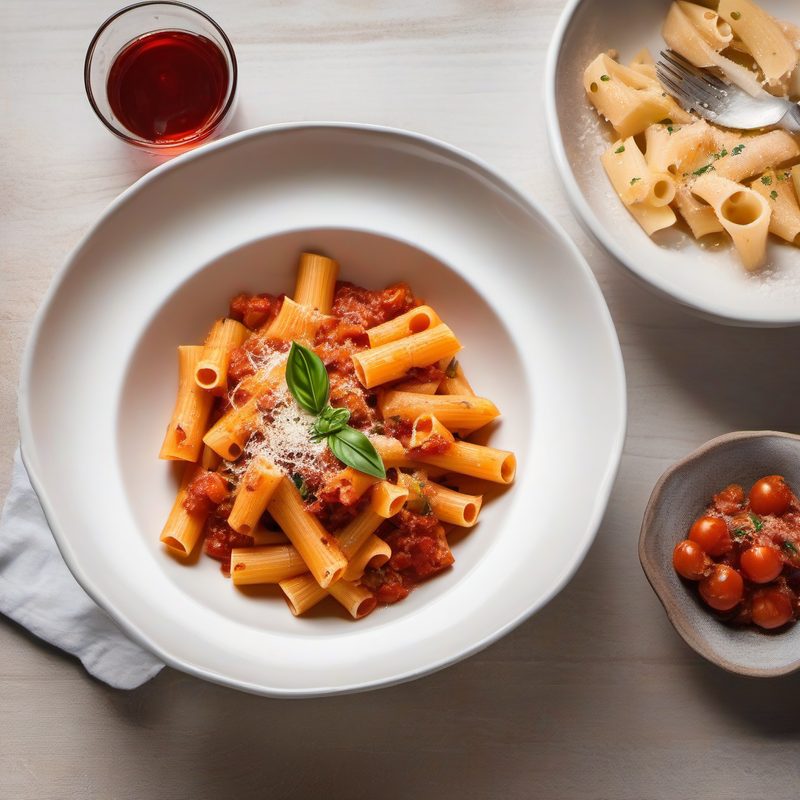
Photo reference: `vol1_182.png` — An overhead or slightly elevated three-quarter shot of a rustic ceramic bowl filled with Neapolitan pasta e fagioli. The bowl is deep and wide, sitting on a wooden table with a linen napkin and a spoon beside it. The pasta e fagioli is a thick, creamy, spoonable stew: small ditalini pasta and tender cannellini beans suspended in a rich, brick-red tomato broth that has been thickened by the pasta starches into a velvety, almost porridge-like consistency. Scattered throughout: silky, translucent strips of pork rind (cotenna) that catch the light. On top: a generous drizzle of golden-green extra-virgin olive oil pooled in the center, a final crack of coarse black pepper visible as dark specks, and a single fresh bay leaf or a small sprig of rosemary as a garnish. The steam rises from the bowl, visible in the warm, golden hour light coming from a nearby window. Beside the bowl: a crusty piece of sourdough or ciabatta, torn open to reveal its airy crumb, and a small ramekin of olive oil. The lighting is warm and natural (golden hour, late afternoon sun), creating soft highlights on the oil drizzle and the glossy surface of the stew. A shallow depth of field keeps the bowl and its contents in sharp focus while the background blurs softly into warm bokeh. The overall mood is rustic, homey, and deeply inviting — the kind of bowl that promises immediate comfort.
Recipe from "The Italian Kitchen" by Vita Milanese — Volume 1: Pasta Perfetto
Recipe from The Italian Kitchen by Vita Milanese — Volume 1 · Pasta Perfetto. Discover all volumes on the ebook page.