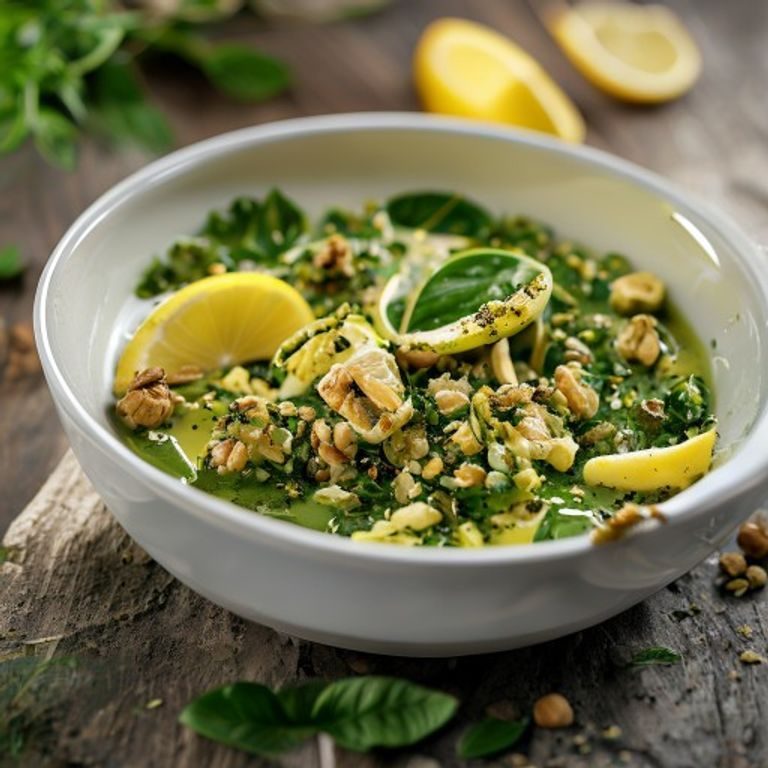
Lemon Walnut Pesto
A uniquely creamy, no-cook pesto from the sun-drenched hills of southern Italy — fresh lemon zest, toasted walnuts, and fragrant basil merge into a silky sauce with the help of a single ice cube, creating an emulsion so luxurious it clings to every strand of pasta.
| Amount | Ingredient |
|---|---|
| 1 | organic lemon (large, unwaxed) |
| 12 | walnut halves (about 30 g / 1 oz) |
| 4 tbsp (60 ml) | extra-virgin olive oil |
| 10 | fresh basil leaves (large) |
| 1 | pinch of kosher salt (about ⅛ tsp) |
| 1 | ice cube (standard size, about 2 tablespoons water) |
This is not your typical basil pesto. While the classic Genovese version relies on pine nuts, garlic, and Parmesan, this southern Italian pesto takes a different path — one defined by bright citrus, earthy walnuts, and a truly surprising technique. A single ice cube added to the food processor (or mortar) creates an impossibly creamy emulsion without the need for cheese or extra oil. The science is simple: the cold temperature prevents the emulsion from breaking while the melting water releases the pectin and starches in the lemon zest and walnuts, binding everything into a velvety, almost sauce-like consistency. The result is a pesto that is at once vibrant and mellow, tangy and nutty, fresh and deeply satisfying. It is a revelation on hot linguine and a testament to the magic of simple ingredients treated with care.
Ingredient notes: Use an organic, unwaxed lemon — the zest is the backbone of this pesto, and you do not want any wax or pesticide residue. Walnuts should be fresh and sweet; taste one before using — rancid walnuts will ruin the pesto. Use a good-quality extra-virgin olive oil — it should be fruity and not overly bitter. The ice cube is non-negotiable; it is the secret to the creamy texture.
- Vegetable peeler or Y-peeler
- Chef's knife
- Cutting board
- Food processor (small bowl preferred) or large mortar and pestle
- Rubber spatula
- Large pot (for pasta)
- Colander
- Box grater or Microplane (optional, for the closest zest shave)
- Measuring spoons
- Citrus juicer or reamer (optional, for the remaining lemon)
- Prepare the zest (2 minutes). Using a vegetable peeler, remove the yellow zest from the lemon in wide strips. Take care to avoid the white pith (albedo) — it is intensely bitter and will ruin the pesto. If you accidentally get some pith, scrape it off with a paring knife.
- Toast the walnuts (3 minutes). In a dry skillet over medium heat, toast the walnut halves, shaking the pan frequently, until fragrant and lightly golden, 2 to 3 minutes. Watch carefully — walnuts burn quickly and become bitter. Transfer to a plate to cool completely before proceeding.
- Combine all ingredients (1 minute). In a food processor, combine the lemon zest strips, toasted walnuts, basil leaves, olive oil, salt, and the ice cube.
- Blend until creamy (1 to 2 minutes). Process the mixture, scraping down the sides of the bowl with a rubber spatula as needed, until the pesto is super creamy, smooth, and uniformly pale green. The ice cube should be completely melted and incorporated. The texture should be thick but silky — not chunky, not watery.
- Taste and adjust (30 seconds). Taste the pesto and adjust the salt. If the pesto is too thick, add 1 teaspoon of cold water or lemon juice and pulse to combine. If it is too thin, add a few extra walnuts and pulse briefly.
- Toss with pasta (2 minutes). Cook 400 g (1 lb) of linguine, spaghetti, or your favorite long pasta in salted boiling water until al dente. Reserve 1 cup of pasta water before draining. Return the drained pasta to the pot, add the lemon walnut pesto, and toss vigorously with ¼ cup of pasta water. Add more pasta water as needed, 1 tablespoon at a time, until the sauce clings shimmeringly to each strand.
- Serve immediately (1 minute). Divide the pasta among warm bowls. If desired, finish with a drizzle of extra-virgin olive oil, a few extra torn basil leaves, and a generous grating of Parmigiano-Reggiano or a sprinkle of crushed red pepper flakes.
- No white pith. Period. The white pith of the lemon is pure bitterness. Use a vegetable peeler at a shallow angle to take only the yellow zest. If any white remains, trim it off with a sharp knife.
- Toast the walnuts. Raw walnuts have a dusty, slightly astringent flavor. A quick toasting in a dry pan transforms them into sweet, nutty, aromatic gems. Cool them completely before blending — warm walnuts will melt the ice cube too fast.
- The ice cube is not optional. This is the defining technique of the recipe. The ice cube creates a cold emulsion that prevents the oil and lemon zest from separating, while the melting water releases natural emulsifiers from the walnuts and zest. Do not skip it or substitute with plain water.
- Use a food processor, not a blender. A blender is too powerful and will overheat the mixture, breaking the emulsion. A food processor provides the right balance of chopping and emulsifying without heat buildup.
- Pasta water is essential. The starchy, salted pasta water is what loosens the pesto into a proper sauce that clings to the pasta. Do not use plain water.
- Serve immediately. This pesto is at its absolute peak when freshly made. The bright, fresh flavors begin to dull after 30 minutes.
- Do not heat the pesto. Add the pesto to hot (just-drained) pasta, not to the direct heat of the pan. The residual heat of the pasta is enough to warm it through gently. Heating the pesto directly will cause it to separate and lose its creamy texture.
| Mistake | Why It Hurts | The Fix |
|---|---|---|
| Including white lemon pith | The pesto turns intensely bitter, and there is no way to fix it | Always use a vegetable peeler at a shallow angle; trim any visible pith before blending |
| Skipping the ice cube | The pesto is grainy, greasy, and separates on the pasta — it never achieves the creamy emulsion | The ice cube is not optional; it is the core technique of the recipe |
| Using raw, untoasted walnuts | The pesto tastes dusty, astringent, and flat — missing the deep, sweet nuttiness | Always toast walnuts in a dry skillet until fragrant; cool completely before blending |
| Over-blending in a food processor | The friction heats the mixture, breaking the emulsion and turning the pesto into a greasy mess | Pulse and scrape; stop as soon as the pesto is smooth and creamy (no more than 2 minutes) |
| Using too much olive oil | The pesto becomes greasy and thin, and the lemon flavor gets lost | Measure the oil carefully; the ice cube provides moisture, so you do not need extra oil |
| Not reserving pasta water | The pesto stays thick and clumpy, refusing to coat the pasta evenly | Always reserve at least 1 cup of pasta cooking water before draining |
| Using a blender instead of food processor | The high speed heats and aerates the pesto, creating a thin, frothy, broken emulsion | Use a food processor with short pulses; a mortar and pestle also works well |
| Adding Parmigiano to the food processor | The cheese can seize and become clumpy when blended with the cold ice cube | Add cheese only as a garnish on the finished pasta — never blend it into the pesto |
- Creamy Ricotta Pesto: Add 2 tablespoons of fresh ricotta to the food processor along with the ice cube. The result is an even richer, creamier pesto with a milder lemon flavor.
- Spicy Lemon Pesto: Add ½ small red chili (seeds removed) or ¼ teaspoon of red pepper flakes to the food processor for a warm, peppery finish that balances the bright lemon.
- Minty Lemon Pesto: Replace 4 of the basil leaves with fresh mint leaves for a cooler, more refreshing herbal profile. This version is especially good with grilled fish or zucchini ribbons.
- Almond-Lemon Pesto: Substitute the walnuts with an equal amount of blanched almonds (toasted). The texture will be slightly firmer and the flavor more delicate.
- Arugula Lemon Pesto: Replace 5 of the basil leaves with baby arugula for a peppery, more complex green note. The arugula adds a lovely bite that stands up to the lemon.
- Cheesy Finish (optional): While we do not blend cheese into the pesto, a generous grating of Parmigiano-Reggiano or Pecorino Romano over the finished pasta adds a savory, salty dimension that balances the bright lemon.
- Vegan Version: The recipe is already vegan as written — simply omit any dairy garnish. For an extra umami boost, add 1 teaspoon of nutritional yeast to the food processor.
| Storage Method | Details |
|---|---|
| Refrigerator | Store in an airtight container with a thin layer of olive oil poured over the top to prevent oxidation. Keeps for up to 3 days — but the color will darken and the flavor will mellow slightly over time. |
| Freezer | Spoon the pesto into ice cube trays, freeze until solid, then transfer to a freezer bag. Freeze for up to 2 months. Thaw individual cubes at room temperature for 15 minutes before tossing with hot pasta. |
| Reheating | Never reheat directly. Toss frozen or refrigerated pesto with hot, just-drained pasta — the heat of the pasta is all that is needed to revive the sauce. |
This bright, citrus-forward pesto pairs best with wines that can match its vibrant acidity:
- Vermentino di Sardegna — The herbal, saline finish and bright acidity perfectly complement the lemon and basil in the pesto. A classic pairing.
- Friulano (Friuli-Venezia Giulia) — Amber-tinged with notes of almonds and citrus; the nutty undertones mirror the walnuts beautifully.
- Greco di Tufo (Campania) — A full-bodied white with mineral depth and stone-fruit character that stands up to the bright lemon without being overwhelmed.
- Pinot Grigio (Alto Adige) — Clean, crisp, and mineral-driven — a safe and lovely pairing that lets the pesto shine.
- For a red option: A light, chilled Lambrusco (dry, not sweet) — the bubbles and crisp acidity cut through the richness of the pesto and pasta.
| Per Serving (¼ of total pesto, about 3 tablespoons, without pasta) | |
|---|---|
| Calories | 185 |
| Protein | 3 g |
| Fat | 19 g |
| Carbohydrates | 3 g |
| Fiber | 1 g |
| Sugar | 1 g |
Nutrition values are approximate and based on ¼ of the total pesto yield. Actual values may vary based on specific ingredients and exact measurements.
Why does this recipe use an ice cube? Is that safe?
Yes, it is perfectly safe. The ice cube is blended completely into the pesto, becoming part of the sauce. The technique relies on the temperature shock to create a stable emulsion — the cold prevents the oil from separating while the melting water releases natural emulsifiers from the walnuts and lemon zest. It is a brilliant, time-honored trick from southern Italian home cooks.
Can I use a different type of nut?
Yes. Walnuts are traditional and provide the best texture and flavor, but toasted almonds, pine nuts, or even hazelnuts work well. Each nut will bring a different character — almonds are milder, pine nuts are buttery, hazelnuts are richer.
Do I need an organic lemon?
Strongly recommended. Since the entire recipe revolves around the lemon zest, any wax, pesticide residue, or food-grade polish on conventional lemons will end up in your pesto. Organic, unwaxed lemons are the safest choice. If only conventional lemons are available, scrub the lemon vigorously with hot water and a vegetable brush before zesting.
Can I make this pesto in a mortar and pestle?
Absolutely — this is the traditional method. Start by grinding the lemon zest and a pinch of salt to a paste, then add the walnuts and basil, grinding and pounding until broken down. Add the ice cube and continue grinding until it melts and emulsifies, then drizzle in the olive oil while stirring with the pestle. The texture will be slightly more rustic, but the flavor is superb.
Can I use bottled lemon juice instead of fresh zest?
No. Bottled lemon juice lacks the aromatic essential oils that make the zest so flavorful, and it is far too acidic. The zest is the soul of this pesto — there is no substitute.
What if my pesto is too bitter?
Bitterness usually comes from white pith or burnt walnuts. If you suspect pith contamination, there is no fix — start over. If the walnuts are the culprit, the bitterness will mellow slightly with the addition of a little more olive oil and a tiny pinch of sugar, but prevention is the only reliable solution.
- Classic Basil Pesto — Genovese (Volume 2, Recipe #52)
- Almond Pesto (Volume 2, Recipe #64)
- Lemon-Herb Yogurt Sauce (Volume 2)
- Delicate Garlic Cream (Volume 2)
- Pizza Pesto Ricotta Stuffed Crust (Volume 2)
- Classic Homemade Mayonnaise (Volume 2)
Recipe from "The Italian Kitchen" by Vita Milanese — Volume 2: Sunday Sauce
Recipe from The Italian Kitchen by Vita Milanese — Volume 2 · Sunday Sauce. Discover all volumes on the ebook page.