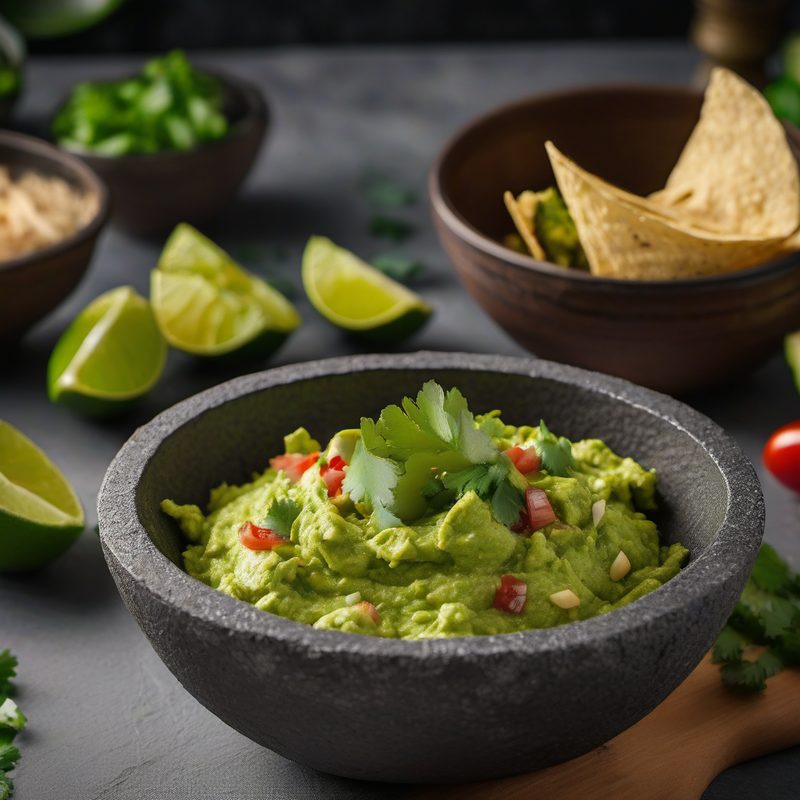
Guacamole (Guacamole)
A creamy, chunky avocado dip balanced by sharp lime, pungent white onion, fresh cilantro, and ripe tomato — this is guacamole as it should be: simple, honest, and built on perfectly ripe avocados, ready in five minutes.
| Amount | Ingredient |
|---|---|
| Not adding enough salt | The guacamole tastes flat and one-dimensional — salt is essential to bring out the avocado's richness Season generously with kosher salt and taste. A properly seasoned guacamole makes the avocado flavor sing. |
| Making it too far in advance | The guacamole oxidizes (turns brown) and the flavors blend into a nondistinct background Guacamole is best within 30 minutes of being made. If you must make it ahead, press plastic wrap directly onto the surface. |
Guacamole is one of the great uncooked sauces of the world, a testament to the power of a few fresh ingredients treated with respect. At its heart, guacamole is a simple emulsion of avocado fat and lime acid, stabilized by the natural creaminess of perfectly ripe fruit. The best guacamole is about texture as much as flavor: some of the avocado is mashed to a silky paste that coats every chip, while chunks remain for satisfying bites of buttery avocado. The supporting players — white onion, cilantro, tomato, lime, salt — each serve a distinct purpose: onion provides a sharp, clean bite; cilantro adds fresh herbal notes; tomato contributes sweetness and acidity; lime juice preserves the avocado's green color and brightens everything; and salt deepens and harmonizes every flavor. This version respects the Mexican tradition of simplicity: no garlic, no cumin, no sour cream, no fuss. Just perfect avocados and the right supporting ingredients.
Ingredient notes: The avocados must be perfectly ripe — they should yield to gentle pressure when cupped in your palm, but should not feel mushy or have sunken spots. Hass avocados are the gold standard for guacamole: their high fat content creates the creamiest texture and richest flavor. Avoid Florida avocados, which are much leaner and have a watery, less flavorful flesh. White onion is preferred for its clean, sharp bite without the overpowering sulfur intensity of yellow or red onion. For a milder onion flavor, rinse the diced onion in cold water and pat dry before adding. The lime juice must be fresh — bottled lime juice has a flat, one-dimensional sourness that cannot match the bright, floral acidity of fresh lime. Roma (plum) tomatoes are ideal because they have fewer seeds and less watery pulp than beefsteak or vine tomatoes. Kosher salt (Diamond Crystal or Morton) dissolves more evenly than table salt and is less likely to create pockets of saltiness. Use cilantro leaves and tender stems — the stems are flavorful and can be chopped along with the leaves.
- Chef's knife and cutting board
- Large mixing bowl
- Fork or potato masher (for mashing)
- Citrus juicer or reamer
- Measuring spoons
- Rubber spatula
- Serving bowl
- Prepare the avocados (3 min). Cut each avocado in half lengthwise around the pit. Twist the halves apart. To remove the pit carefully, strike it firmly with the blade of a chef's knife, twist, and lift it out. Scoop the avocado flesh into a large mixing bowl using a spoon, running the spoon along the inside of the skin to release all the green flesh.
- Mash to desired consistency (2 min). Using a fork or potato masher, mash the avocado to your preferred texture. For a chunky guacamole, mash only about half the avocado and leave the rest in visible chunks. For a smoother guacamole, mash more thoroughly. Some prefer to mash one avocado completely and leave the other in chunks — this gives the best of both textures. Season immediately with a pinch of salt and 2 tablespoons of lime juice to prevent browning.
- Add the aromatics (3 min). Add the finely diced white onion, the seeded and diced Roma tomato, and the chopped cilantro to the bowl. Fold gently with a rubber spatula or large spoon until all ingredients are evenly distributed. Take care not to overmix — you want distinct pieces of onion, tomato, and avocado chunk to remain visible.
- Season and adjust (2 min). Taste and adjust salt and lime juice as needed. The guacamole should be bright, creamy, and well-seasoned — the lime should provide a clean acidity without being sour, the salt should deepen the avocado flavor without tasting salty, and the onion and cilantro should be present but not overpowering. If the guacamole tastes flat, add another squeeze of lime juice and a small pinch of salt. If it tastes too acidic, add a tiny pinch of salt to balance.
- Serve immediately (1 min). Transfer to a serving bowl and serve immediately with tortilla chips. Press plastic wrap directly onto the surface of any leftover guacamole to minimize air exposure and prevent browning.
- Start with perfect avocados. There is no salvaging guacamole made with underripe or overripe avocados. Underripe avocados are hard, flavorless, and will not mash into a creamy texture. Overripe avocados have brown streaks and a fermented, off flavor. The ideal avocado yields to gentle palm pressure without feeling mushy.
- Season the avocado immediately with lime juice and salt. Once the avocado flesh is exposed to air, it begins to oxidize and turn brown. Adding lime juice (the acid slows oxidation) and salt (which helps stabilize the emulsion) immediately after mashing helps preserve the vibrant green color.
- Dice the onion finely. Large chunks of raw onion can overwhelm every bite. The onion should be cut into tiny dice, no larger than 3 mm (⅛ inch), so that it distributes evenly and provides a gentle sharpness in every spoonful.
- Seed the tomato for better texture. The watery, seed-filled interior of a tomato can make guacamole thin and weepy. Halve the tomato, scoop out the seeds and jelly with a spoon, and dice only the firm flesh. This ensures a vibrant red pop of tomato flavor without diluting the avocado.
- Use a gentle hand when mixing. Guacamole should look like a composed dish — distinct pieces of avocado, tomato, onion, and cilantro in a creamy base. Overmixing turns everything into a uniform paste and ruins the textural contrast.
- Serve immediately. Guacamole is best within 30 minutes of being made. The longer it sits, the more the avocado will oxidize and the flavors will meld into a less distinct background. If you must make it ahead, press plastic wrap directly onto the surface and refrigerate.
- Let it rest 5 minutes. If you can, let the finished guacamole rest at room temperature for 5 minutes before serving. This brief rest allows the lime juice and salt to penetrate the avocado and the flavors to marry, resulting in a more harmonious guacamole.
| Mistake | Why It Hurts | The Fix |
|---|
- Spicy Guacamole: Add 1 small jalapeño or serrano chili, seeded and finely minced, along with the onion. For more heat, include some of the seeds. Add the chili gradually and taste as you go.
- Smoky Guacamole: Add ½ teaspoon of smoked paprika and 1 small chipotle chili in adobo, finely minced, for a smoky, spicy version that is spectacular with tacos.
- Mango Guacamole: Add 100 g (½ cup) of diced ripe mango for a sweet, tropical counterpoint to the lime and cilantro. Excellent with grilled fish or shrimp tacos.
- Pomegranate Guacamole: Fold in 50 g (⅓ cup) of pomegranate arils at the end for bursts of sweet-tart juice and a beautiful jewel-like appearance.
- Roasted Corn Guacamole: Fold in 100 g (½ cup) of roasted or grilled corn kernels for a sweet, smoky crunch that pairs perfectly with the creamy avocado. Add ¼ teaspoon of chili powder for extra warmth.
- Guacamole with Sour Cream: Fold in 2 tablespoons of Mexican crema or sour cream for an extra-creamy, slightly tangy guacamole with a more mellow flavor.
- Guacamole Verde: Replace the Roma tomato with 100 g (½ cup) of finely diced tomatillo (husk removed, rinsed, and diced) for a tart, green-tomato version that is less sweet and more savory.
- Chunky Guacamole with Radish: Fold in 50 g (⅓ cup) of finely diced radish for an extra-crunchy, peppery garnish that adds color and texture.
| Storage Method | Details |
|---|---|
| Refrigerator (short-term) | Press plastic wrap directly onto the surface of the guacamole (no air gap), then seal the container with a lid. Keeps for up to 24 hours. The surface may darken slightly but the interior will remain green. Discard any brown surface layer before serving. |
| Refrigerator (with pit trick) | Place the avocado pit(s) in the guacamole before covering — the pit does not prevent oxidation (this is a myth), but it does displace some surface area and can help slow browning slightly. Use plastic wrap pressed directly on the surface for best results. |
| Freezer | Not recommended — the texture of thawed avocado becomes watery, grainy, and unappealing. Guacamole should always be made fresh. |
| Per Serving (about ½ cup / 120 g) | |
|---|---|
| Calories | 175 |
| Protein | 3 g |
| Fat | 15 g |
| Carbohydrates | 10 g |
| Fiber | 6 g |
| Sugar | 2 g |
Nutrition values are approximate and based on Hass avocados, lime juice, Roma tomato, white onion, and cilantro. Actual values will vary based on avocado size and fat content.
How do I pick the perfect avocado?
The best test is gentle palm pressure: hold the avocado in the palm of your hand (not your fingertips, which can bruise the fruit) and press gently. It should yield slightly without feeling mushy. The stem nub at the top should pop off easily to reveal green underneath — if it is brown, the avocado is overripe. Avoid avocados with sunken spots, dark blemishes, or loose, rattling pits.
Why did my guacamole turn brown?
Avocado contains polyphenol oxidase, an enzyme that reacts with oxygen to produce brown pigments (the same reaction that turns apples and bananas brown). The acid in lime juice slows this reaction but cannot stop it entirely. To minimize browning: (1) add lime juice immediately after mashing; (2) press plastic wrap directly onto the surface of any leftover guacamole; (3) serve within 30 minutes. A thin layer of brown on top is cosmetic — simply scrape it off to reveal the green beneath.
Can I make guacamole without cilantro?
Yes. If you are among the population for whom cilantro tastes soapy (a genetic trait), simply omit it. The guacamole will still be delicious. You can substitute an equal amount of finely chopped fresh flat-leaf parsley for a similar fresh-herb note without the soapy taste.
Can I use a food processor or blender?
No. A food processor or blender will overwork the avocado, breaking down its cell structure and releasing too much moisture, resulting in a thin, watery, unpleasantly smooth paste. Guacamole should be made by hand — mashed with a fork or potato masher and mixed with a spoon or spatula.
How can I make guacamole ahead for a party?
The best approach is to prepare all the ingredients ahead of time — dice the onion, seed and dice the tomato, chop the cilantro, juice the lime — and combine them with the avocado just before serving. This takes 5 minutes and yields perfect guacamole. If you must make full guacamole ahead, press plastic wrap directly onto the surface and refrigerate for no more than 4–6 hours.
Can I add garlic?
Traditional Mexican guacamole does not include garlic, and this recipe intentionally omits it to let the avocado shine. That said, if you love garlic, add ½ small clove, grated on a Microplane (no raw chunks). Let the guacamole rest for 10 minutes to allow the garlic flavor to mellow and integrate before serving.
- Classic Tomato Salsa (Volume 1)
- Salsa Verde (Volume 2)
- Fish Taco Sauce (Volume 2)
- Charred Corn and Avocado Salad (Volume 3)
- Black Bean and Mango Salsa (Volume 3)
Recipe from "The Italian Kitchen" by Vita Milanese — Volume 2: Sunday Sauce
Recipe from The Italian Kitchen by Vita Milanese — Volume 2 · Sunday Sauce. Discover all volumes on the ebook page.