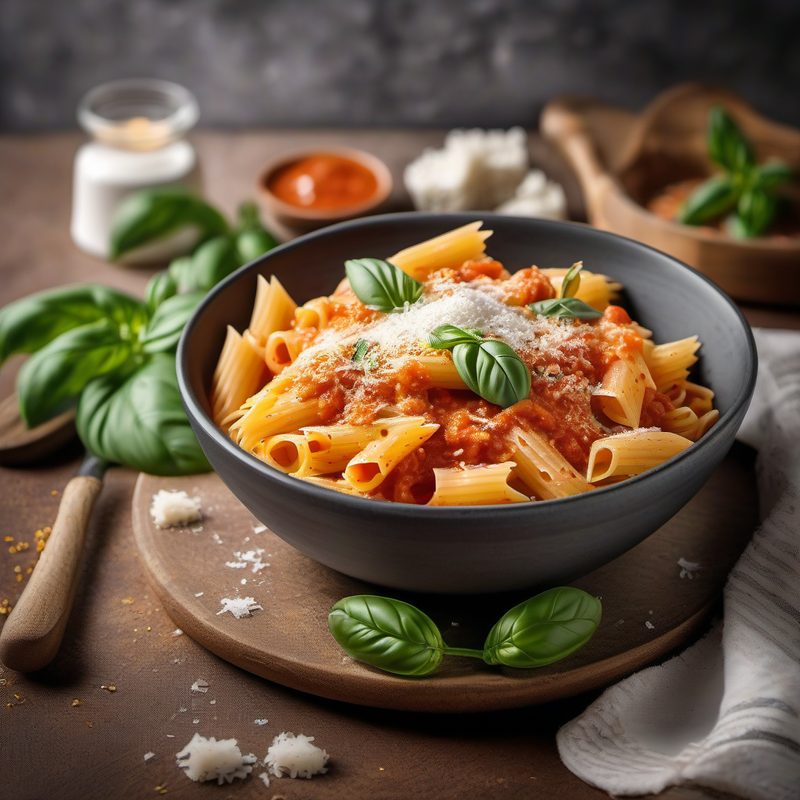
Feretrana Bucatini
A secret recipe from the hills of Montefeltro — thick bucatini tossed with rendered guanciale, slowly simmered tomato passata, and sharp pecorino, finished with a daring crack of black pepper and a splash of white wine. Rustic, bold, and deeply satisfying.
Montefeltro Secret Recipe
Hidden in the rolling hills of Montefeltro — a historic region straddling the border between Marche, Emilia-Romagna, and Tuscany — this recipe has been passed down through generations of local families, rarely shared outside the valley. Bucatini alla feretrana is a testament to the wisdom of the cucina povera tradition: simple ingredients, careful technique, and a patience that transforms humble pantry staples into something extraordinary. The star is guanciale (cured pork cheek), rendered slowly until its fat becomes liquid gold. Onion softened in that rendered fat provides sweetness, while white wine deglazes the pan and adds brightness. The tomato passata simmers for twenty minutes, concentrating into a velvety sauce that clings to every strand of bucatini. A shower of sharp pecorino and a generous crack of black pepper cut through the richness. The dish's name — feretrana — refers to the ancient Roman name for the Montefeltro territory (Ferentrum), a secret whispered from cook to cook, never written in any cookbook until now. Serve it with the reverence it deserves.
Guanciale (cured pork cheek) is the traditional choice for its rich, silky fat and deep pork flavour. If unavailable, substitute pancetta (unsmoked) — the result will be slightly leaner and less intense but still delicious. Do not use bacon; its smoky, sweet character would overwhelm this delicate balance. Pecorino Romano is the classic choice; for the most authentic Montefeltro character, seek out Pecorino Marchigiano or a pecorino from Le Marche.
🥘 Equipment
- Large pot (6-qt / 6 L) for pasta
- Large skillet or sauté pan (12-inch / 30 cm)
- Chef's knife and cutting board
- Wooden spoon or spatula
- Colander
- Grater
- Measuring cups and spoons
📋 Preparation
Step 1 — Prepare the Guanciale and Onion (5 min)
Cut the guanciale into strips about 1 cm (½ inch) wide and 3 cm (1½ inches) long. Strips are traditional in this dish — they provide satisfying, meaty bites throughout, rather than disappearing into the sauce as dice would. Finely chop the onion and set aside.
If your guanciale is particularly lean (less common but possible), you may need the olive oil to help render it. If it's well-marbled, the rendered fat alone will be sufficient.
Step 2 — Render the Guanciale (8 min)
Place the guanciale strips in a cold large skillet. Set over medium-low heat and cook slowly, stirring occasionally, for 6 to 8 minutes. The fat should render gently, leaving the guanciale pieces golden and crisp-edged but still supple — not brittle or overcooked. If the guanciale is lean and not releasing enough fat, add the olive oil after 2 minutes.
The slow rendering is the heart of this dish. Rushing it over high heat will cause the guanciale to seize up, leaving you with tough, chewy meat and insufficient rendered fat. The fat should slowly liquefy, creating a golden pool that will carry the flavours of the entire sauce.
Once rendered, use a slotted spoon to transfer the guanciale strips to a plate, leaving the rendered fat in the pan. You should have about 2 to 3 tablespoons of fat in the pan. If there's more, spoon off the excess; if less, supplement with a little olive oil.
Step 3 — Sauté the Onion (4 min)
Add the finely chopped onion to the rendered fat in the pan. Cook over medium heat, stirring frequently, for 3 to 4 minutes until the onion is soft, translucent, and just starting to take on a pale golden colour at the edges. Do not let it brown deeply — a light golden hue is the target.
The onion provides the quiet sweetness that balances the savoury guanciale and acidic tomatoes. Cooking it properly in the rendered fat is the first layer of flavour.
Step 4 — Deglaze with Wine (2 min)
Pour in the white wine. It will sizzle and steam immediately. Use a wooden spoon to scrape up any browned bits (fond) from the bottom of the pan — these are concentrated flavour. Let the wine bubble and reduce by about half, 1 to 2 minutes.
The wine lifts the fond from the pan and adds acidity that cuts through the richness of the guanciale fat. The alcohol cooks off, leaving behind the wine's fruit and brightness.
Step 5 — Simmer the Sauce (20 min)
Return the rendered guanciale strips to the pan. Add the tomato passata and stir to combine. Bring to a gentle simmer, then reduce the heat to low. Partially cover the pan (leave the lid slightly ajar) and cook for 20 minutes, stirring occasionally. The sauce should burble gently — not boil furiously. It will thicken and deepen in colour as it reduces.
Taste the sauce after 15 minutes. It should be rich, savoury, and balanced — the sweetness of the onion and the acidity of the tomato in harmony. Add a small pinch of salt if needed, but remember that both the guanciale and the pecorino are salty. A generous crack of black pepper at this stage is welcome.
Step 6 — Cook the Bucatini
When the sauce is about 10 minutes from done, bring the large pot of generously salted water to a rolling boil. Add the bucatini and cook according to package directions until al dente (typically 9 to 11 minutes for dried bucatini). Reserve about 1 cup (240 ml) of pasta cooking water before draining.
Bucatini are thick, hollow spaghetti — their cooking time is slightly longer than regular spaghetti. The hollow centre is designed to catch and hold sauce, so don't overcook them. Al dente is crucial for texture.
Step 7 — Toss and Mantecare (3 min)
Drain the bucatini (do not rinse) and add them directly to the skillet with the sauce. Toss vigorously over low heat for about 1 minute, allowing the bucatini to absorb some of the sauce. If the sauce seems too thick, add a splash of the reserved pasta water — the starchy water will help create a silky, clingy coating.
Turn off the heat. Add the grated pecorino and a generous amount of freshly cracked black pepper. Toss energetically, shaking the pan and stirring with tongs, until the cheese melts and emulsifies into the sauce. The finished pasta should be glossy and creamy, every strand coated in the velvety sauce, with the rendered guanciale strips distributed throughout.
The mantecatura (creaming) step is critical: by adding the cheese off heat with a splash of starchy water and tossing vigorously, you create a stable emulsion that clings to every strand of bucatini rather than pooling at the bottom of the bowl. Work quickly — everything must be hot for the emulsion to form.
Step 8 — Plate and Serve (2 min)
Warm 4 shallow bowls by filling them with hot tap water for 30 seconds, then drying them.
Divide the bucatini among the warm bowls, using tongs to create neat, coiled nests. Top each serving with an extra shower of grated pecorino and a final generous crack of black pepper. Serve immediately — this pasta waits for no one.
The finished dish is a study in rustic elegance: glossy, golden-orange bucatini punctuated with golden strips of guanciale and flecked with snowy pecorino and black pepper. The hollow bucatini strands are filled with sauce on the inside and coated on the outside — each mouthful is a perfect balance of pork, tomato, cheese, and heat.
🧑🍳 Chef's Tips
- Guanciale is irreplaceable in spirit, but know your substitutes. True guanciale (cured pork cheek) has a higher fat content and a more delicate, porky flavour than pancetta. If using pancetta, add 1 tablespoon of olive oil to compensate for the lower fat yield and accept a slightly less luxurious result. Never substitute bacon — its sweet, smoky flavour has no place in this delicate balance.
- Render slowly, never rush. The difference between good bucatini feretrana and exceptional bucatini feretrana is patience in the rendering step. Low and slow gives you tender, supple guanciale and clean, flavourful fat. High heat gives you tough, brittle meat and burnt flavours.
- Pecorino only, please. Parmesan is too mild and sweet for this dish. The sharp, salty, slightly funky character of Pecorino Romano (or Pecorino Marchigiano) is what cuts through the richness and balances the sauce. Grate it fresh — pre-grated pecorino contains anti-caking agents that won't melt smoothly.
- Reserve plenty of pasta water. The starchy water is essential for the mantecatura. Without enough, the cheese and fat won't emulsify, and you'll end up with oily pasta and clumps of unmelted cheese.
- Black pepper is a feature, not a garnish. This is a feretrana signature — a bold, abundant crack of black pepper that provides a warm, floral heat that cuts through the richness. Be generous.
- Bucatini are the correct pasta shape. Their thick, hollow form is designed to catch and hold this sauce. If you must substitute, use spaghetti alla chitarra, tonnarelli, or thick spaghetti — but the experience won't be the same.
❌ Common Mistakes
| Mistake | Why | Fix |
|---|---|---|
| Using bacon instead of guanciale | Bacon's heavy smoke and sweetness overwhelm the delicate sauce; the added sugar can cause burning | Use true guanciale from an Italian deli or unsmoked pancetta as a second choice |
| Overcooking the guanciale until crisp | Crispy guanciale becomes tough and brittle, losing its pleasant chew; the fat over-renders | Cook over medium-low heat for 6-8 minutes until golden but still supple — it should be tender, not crunchy |
| Burning the onion | Deeply browned or burnt onion adds bitterness instead of sweetness | Cook over medium heat, stirring frequently, until translucent and just pale gold — about 4 minutes |
| Simmering the sauce too aggressively | Rapid boiling reduces the sauce too quickly and can make it harsh and overly concentrated | Keep the sauce at a gentle burble over low heat — the bubbles should be lazy, not furious |
| Adding cheese over high heat | High heat causes pecorino to seize into a clumpy, stringy mess | Always turn off the heat before adding the cheese, and use pasta water to help it emulsify smoothly |
| Skimping on the black pepper | The dish loses its signature warmth and bite | Be generous — a full teaspoon of freshly cracked pepper is not too much for 4 servings |
💡 Variations
| Variation | How To |
|---|---|
| With a Pinch of Chili | Add ½ teaspoon of red pepper flakes with the onion for a gentle heat that complements the guanciale — a common twist in the Marche hills |
| Smoky Feretrana | If using pancetta instead of guanciale, add ½ teaspoon of smoked paprika with the black pepper at the end for a subtle smoky depth |
| Add Fresh Herbs | Stir in 2 tablespoons of fresh thyme leaves or ¼ cup of fresh parsley with the pecorino — rosemary also works beautifully with the guanciale |
| Richer Version (Montanara) | After adding the pecorino, stir in 1 tablespoon of cold butter and toss until melted and glossy — adds an extra layer of velvety richness |
| Vegetarian Feretrana | Omit the guanciale entirely. Sauté the onion in 3 tablespoons of olive oil. Add 1 tablespoon of tomato paste with the passata for depth, and finish with 1 teaspoon of smoked paprika. The pecorino still provides the savoury backbone |
| Bucatini all'Amatriciana Adjacent | Add ½ teaspoon of red pepper flakes with the onion and reduce the pecorino to ½ cup. This moves the dish closer to the famous Amatriciana style, though the guanciale and wine keep it distinctly feretrana |
❄️ Storage & Leftovers
| Method | Details |
|---|---|
| Refrigerator | Store leftovers in an airtight container for up to 1 day. The sauce will continue to deepen in flavour overnight |
| Reheating | Reheat in a skillet over medium-low heat with a splash of water or pasta water, tossing until warmed through (2-3 minutes). Do not microwave — it will make the pecorino rubbery and the guanciale tough |
| Freezing | The sauce (without pasta) freezes well for up to 2 months. Cool completely, transfer to a freezer-safe container, and thaw overnight in the refrigerator. Reheat gently and toss with freshly cooked bucatini |
| Make Ahead | Render the guanciale and cook the onion up to a day ahead. Refrigerate in the rendered fat. On serving day, simply reheat, deglaze with wine, add passata, and proceed. The full sauce can also be made 1 day ahead and refrigerated; reheat gently before tossing with fresh pasta |
🍷 Wine Pairing
| Wine | Why |
|---|---|
| Sangiovese di Montefeltro (Marche) | The wine of the region — a medium-bodied red with bright cherry, wild herbs, and subtle earthy notes, with moderate tannins that stand up to the guanciale without overwhelming the sauce |
| Rosso Conero (Marche) | A more powerful red from the Adriatic coast — Montepulciano-based, with dark cherry, plum, and a savoury, slightly bitter finish that mirrors the pecorino's sharpness |
| Verdicchio dei Castelli di Jesi (Marche, white) | A crisp, mineral-driven white with green apple, lemon zest, and bitter almond notes — the bright acidity cuts through the rendered fat and cheese while echoing the white wine used in the sauce |
| Rosso Piceno (Marche) | A blend of Montepulciano and Sangiovese — lighter than Rosso Conero, with bright red fruit, soft tannins, and a savoury finish that harmonises with the dish's rustic character |
| Trebbiano d'Abruzzo (Abruzzo) | A full-bodied white with golden apple, pear, almond, and a pleasantly bitter finish — the acidity cuts through the richness and the nutty notes echo the pecorino |
🥗 Suggested Sides
- Simple arugula and shaved fennel salad — Baby arugula and thinly shaved fennel bulb dressed with olive oil, lemon juice, salt, and pepper. The peppery, anise-scented freshness cuts through the richness
- Grilled radicchio with balsamic — Halved radicchio heads grilled or pan-seared until charred and wilted, drizzled with aged balsamic vinegar. The bitterness is a classic pairing with rich pork-based pasta sauces
- Crusty bread (pane di casa or ciabatta) — Essential for sopping up every last drop of the emulsified sauce
- Roasted seasonal vegetables — Oven-roasted peppers, zucchini, and eggplant tossed with olive oil, garlic, and oregano — the sweet, caramelised vegetables complement the savoury sauce
- Marinated olives and pickled peppers — A small antipasto plate to start, with mixed olives and pickled peperoncini, providing briny, tangy contrasts between bites of pasta
📊 Nutrition (per serving, estimated)
| Calories | Protein | Fat | Carbs | Fiber |
|---|---|---|---|---|
| ~550 | 22 g | 22 g | 62 g | 4 g |
Nutritional values are estimates based on 4 servings with 400 g bucatini, 200 g guanciale, 2 cups tomato passata, olive oil, pecorino, and white wine. Actual values will vary significantly based on guanciale fat content, amount of rendered fat removed, and quantity of pecorino used. Guanciale is rich in monounsaturated fats and provides protein and B vitamins, but is also high in sodium and saturated fat — enjoy in moderation. Pecorino is an excellent source of calcium and protein. To lighten the dish, use 150 g (5 oz) of guanciale and reduce the pecorino to ½ cup (50 g) (approximately 470 calories and 16 g fat per serving).
❓ FAQ
What is Montefeltro, and why is this a "secret recipe"?
Montefeltro is a historic region and former county that straddles the borders of Le Marche, Emilia-Romagna, Tuscany, and the Republic of San Marino. The area is known for its rugged hilltop villages, medieval castles, and fiercely guarded culinary traditions. This recipe was passed down orally within local families for generations — the name feretrana comes from Ferentrum, the ancient Roman settlement that gave its name to the region. It was never written in cookbooks until now, making it a true hidden gem of Italian cuisine.
Can I use pancetta instead of guanciale?
Yes, but the dish will be noticeably different. Guanciale (cured pork cheek) has a higher fat content and a more delicate, porky sweetness than pancetta (cured pork belly). If using pancetta, add 1 tablespoon of olive oil to compensate for the lower fat yield, and accept a slightly less luxurious result. Do not use bacon under any circumstances — its smokiness and sweetness are wrong for this dish.
What if I can't find bucatini?
Bucatini are ideal because their hollow centre catches and holds the sauce. The best substitutes are, in order: spaghetti alla chitarra (square-cut spaghetti that also grips sauce well), tonnarelli (thick, square pasta from Rome), spaghetti (use the thickest variety you can find), or perciatelli (a slightly thinner version of bucatini, easier to find in some markets).
The sauce is too thick / too thin — how do I fix it?
If the sauce is too thick after the 20-minute simmer, add a splash of pasta water to loosen it before tossing with the bucatini. If it's too thin, let it simmer a few minutes longer with the lid off to reduce further. The sauce should coat the back of a spoon — not watery, but not paste-like either. The final mantecatura with pecorino and pasta water will also adjust the consistency.
Why does this recipe use white wine instead of red?
The tradition in Montefeltro calls for white wine (usually a local Verdicchio or Trebbiano) to deglaze the pan, providing acidity and brightness without the tannins and heavier fruit of red wine. The white wine allows the guanciale and pecorino to remain the stars. Red wine would create a heavier, more brooding sauce — delicious in its own right, but not feretrana.
Can I make this dish vegetarian?
Absolutely — see the Vegetarian Feretrana variation above. The key is to build depth through slow-cooked onion, tomato, pecorino, and a touch of smoked paprika. The result won't be identical, but it will be delicious in its own right and recognizably in the same family.
Can I make the sauce in advance?
Yes — the sauce (without pasta) can be made up to 2 days ahead and refrigerated, or frozen for up to 2 months. The flavours will meld and deepen. Reheat gently in a skillet, adding a splash of water if needed, and toss with freshly cooked bucatini. Do not cook the pasta in advance — always cook fresh for the best texture.
What does "mantecare" mean?
Mantecare (pronounced mahn-tay-KAH-ray) is an Italian culinary term meaning to cream or emulsify. In pasta cooking, it refers to the technique of tossing hot pasta with fat, cheese, and starchy water off heat to create a creamy, emulsified sauce that clings to every strand. It's the same technique used in cacio e pepe and carbonara.
🔗 Related Recipes
- Pasta Pancetta (#60)
- Spaghetti Abruzzese (#186)
- Carcerata Pasta (#179)
- Amatriciana-style Pasta
- Bucatini Sardines Raisins (#94)
🏷️ Search Tags
Photo reference: vol1_226.png
Recipe from "The Italian Kitchen" by Vita Milanese — Volume 1: Pasta Perfetto
Recipe from The Italian Kitchen by Vita Milanese — Volume 1 · Pasta Perfetto. Discover all volumes on the ebook page.