Faccia Gialla Spaghetti
Golden-yellow cherry tomatoes, briny anchovy sauce, and a nutty pistachio-breadcrumb crunch — this Neapolitan homage to San Gennaro is pasta as edible sunshine, with a crackling golden crust that shatters between your teeth.
| Amount | Ingredient |
|---|---|
| ½ cup (70 g) | Pistachio granules (coarsely ground pistachios) |
| ⅓ cup (40 g) | Fine breadcrumbs (panko or homemade) |
| 1 tbsp (15 ml) | Extra-virgin olive oil |
| Flaky sea salt, to finish |
In Naples, San Gennaro is the city's patron saint, and this vivid golden pasta — Faccia Gialla means "yellow face" — is a playful, reverent tribute. Yellow cherry tomatoes form the beating heart of the dish, slow-cooked until they collapse into a sweet-tart sauce the color of molten gold. A splash of colatura di alici (the legendary Amalfi Coast anchovy essence) adds briny, umami depth without tasting overtly fishy — think of it as liquid sunlight seasoned by the sea. Black olives and capers contribute pops of salt and brine, while the crowning glory is a toasted pistachio-and-breadcrumb crumble that provides textural fireworks in every bite. It's an unlikely symphony of flavors and textures — sweet, briny, nutty, crunchy, silky — that somehow achieves perfect harmony. This is Neapolitan cooking at its most inventive: deeply traditional in spirit yet boldly unconventional on the plate.
For the Pasta and Sauce
For the Pistachio Crumble
Colatura di alici is an ancient Roman-style anchovy essence from the Amalfi village of Cetara. It is intensely savory, deeply umami, and altogether irreplaceable in this dish. If you absolutely cannot find it, substitute a high-quality Thai fish sauce (Red Boat or similar) — the flavor profile is different but the briny-umami effect is similar. Do not use standard anchovy paste, which is too thick and concentrated for this application.
🥘 Equipment
- Large pot (6–8 qt / 6–8 L) for pasta
- 12-inch (30 cm) skillet or sauté pan
- Small nonstick skillet (for the crumble)
- Chef's knife and cutting board
- Microplane or fine grater (for lemon zest)
- Colander
- Ladle or heatproof measuring cup (for pasta water)
- Tongs
- Wooden spoon
- Measuring cups and spoons
📋 Preparation
Step 1 — Make the Pistachio Crumble (5 minutes)
Set a small nonstick skillet over medium heat. Add 1 tablespoon olive oil. Once warm, add the pistachio granules and breadcrumbs. Toast, stirring constantly with a wooden spoon, until the mixture is fragrant and uniformly golden — about 3 to 4 minutes. The breadcrumbs should look like toasted sand, the pistachios warm and aromatic.
Immediately transfer to a small bowl, season with a pinch of flaky sea salt, and set aside. The crumble will continue to crisp as it cools.
Stir constantly and watch closely — breadcrumbs can go from pale to burnt in seconds. The moment you smell toasted nuts and see golden color, pull it off the heat. If you want extra crunch, let the crumble cool completely on a paper towel–lined plate.
Step 2 — Halve the Tomatoes and Start the Sauce (15 minutes)
Halve the yellow cherry tomatoes crosswise and set aside.
Set a 12-inch skillet over medium heat and add 3 tablespoons olive oil. Once the oil shimmers, add the garlic clove (lightly crushed) and dried chili (or red pepper flakes). Cook, swirling occasionally, until the garlic is fragrant and just beginning to take on color — about 1 minute. Do not let it brown.
Add the black olives and capers. Cook for 1 minute, stirring to coat them in the aromatic oil.
Remove and discard the garlic clove and dried chili — their work is done.
Add the halved yellow tomatoes, pinch of sugar, and a handful of torn basil leaves. Stir to combine. Cover the skillet, reduce the heat to low, and cook gently for 15 minutes, stirring once or twice, until the tomatoes have softened and released their juices into a rich, golden sauce. The tomatoes should be tender and broken down but still holding some shape — you want a chunky, rustic sauce, not a smooth purée.
The sugar is not for sweetness — it's a tiny catalyst that helps balance the acidity of the tomatoes and the brininess of the capers and olives. A single pinch is all you need.
Step 3 — Cook the Spaghetti (concurrent with sauce)
About 7 minutes into the tomato cooking time, bring a large pot of generously salted water (about 1½ tablespoons kosher salt per 4 quarts of water) to a rolling boil. Add the spaghetti and cook for 4 minutes less than the package directions indicate. This is crucial — the spaghetti will finish cooking in the sauce, absorbing its golden flavors.
Before draining, reserve 1½ cups (360 ml) of the starchy pasta cooking water.
Step 4 — Finish the Pasta in the Sauce (4 minutes)
Using tongs or a spider skimmer, transfer the undercooked spaghetti directly from the pasta water into the skillet with the tomato sauce. Do not drain it completely — let some pasta water travel with it — you need the starch.
Add about ½ cup (120 ml) of the reserved pasta water to the skillet. Increase the heat to medium-high and cook, tossing and stirring vigorously with tongs, for about 4 minutes, until the spaghetti is al dente and the sauce has thickened and clung to each strand. Add more pasta water a splash at a time if the pasta looks dry — you're aiming for a loose, silky emulsion, not a soupy pool.
Finishing the pasta in the sauce is the heart of this technique. The spaghetti releases starch directly into the sauce as it finishes cooking, creating a creamy, emulsified bond that simply tossing cooked pasta into sauce cannot achieve. This is the same principle behind authentic cacio e pepe and carbonara.
Step 5 — Off-Heat Finishing: Lemon Zest and Colatura (1 minute)
Remove the skillet from the heat. Add the finely grated lemon zest and colatura di alici. Toss once more to combine. Drizzle in an additional 1 to 2 tablespoons of olive oil and toss again — the oil helps emulsify the sauce into a glossy, velvety coating.
Taste and adjust salt cautiously — the colatura, capers, and olives are all briny. Add black pepper if desired.
The colatura and lemon zest go in off the heat to preserve their aromatic intensity. Cooking the anchovy essence would dull its pungent edge, and the lemon zest would lose its bright, volatile oils. This final off-heat flourish is what makes the dish sing.
Step 6 — Serve with the Crumb Topping
Warm four shallow bowls. Divide the spaghetti among them, making sure each portion gets plenty of the golden tomato sauce. Top generously with the pistachio crumble, letting it fall into the crevices of the pasta nest.
Finish with a final drizzle of your best extra-virgin olive oil and a few fresh basil leaves. Serve immediately — the crumble should still be crisp when it hits the table.
The pistachio crumble is the entire point of "Faccia Gialla" — it's the golden crown on a golden dish. Sprinkle it on just before serving so it stays shatteringly crisp. Leftover crumble keeps in an airtight container for 3 days, but this is one garnish you'll want to use generously.
💡 Chef's Tips
- Yellow tomatoes are not optional here. This dish gets its name ("yellow face") and its entire identity from the golden color of the tomatoes. Sun Gold or Sweet 100s cherry tomatoes are excellent substitutes — look for the yellowest, ripest specimens you can find. Red cherry tomatoes will taste fine but miss the visual point entirely.
- Colatura di alici is the secret weapon. This translucent, amber-hued anchovy essence from Cetara (Amalfi Coast) has been made since Roman times. It's briny, deeply savory, and miraculously not fishy in the way whole anchovies can be. Seek it out at Italian specialty stores or online — a bottle lasts forever and transforms any tomato-based pasta into something transcendent.
- Don't skip the sugar. A single pinch balances the acidity of the tomatoes and tames the aggressive brininess of the capers and olives. You won't taste sweetness — you'll taste harmony.
- Crush your own pistachios. Pre-ground pistachio flour is too fine — you want coarse granules (the texture of medium-ground cornmeal) that toast unevenly and provide varied crunch. Pulse shelled, unsalted pistachios in a food processor in short bursts, or crush them with a rolling pin in a zip-top bag.
- Under-cook the spaghetti by 4 minutes. This is non-negotiable. The pasta needs that time in the sauce to absorb the golden tomato flavors and release starch into the emulsion. 4 minutes less than package time, not 2, not 3 — four.
- Use panko for extra crunch. If using standard breadcrumbs, the crumble will be fine-textured and sandy. Panko breadcrumbs give the crumble a lighter, airier crunch that contrasts beautifully with the silky pasta.
❌ Common Mistakes
| Mistake | Why It Hurts | The Fix |
|---|---|---|
| Using red tomatoes instead of yellow | The dish loses its namesake golden color and the visual tribute to San Gennaro | Seek out yellow cherry tomatoes (Sun Gold, Sweet 100s). If unavailable, this dish is worth saving until you find them |
| Adding colatura too early / cooking it | Heat dulls the pungent, aromatic intensity of the anchovy essence | Add colatura off the heat, right before serving, so its briny character remains bright and forward |
| Skipping the pasta-in-sauce finishing step | The sauce sits on top of the pasta rather than clinging to it; the emulsion never forms | Cook the spaghetti 4 minutes shy of al dente and finish it in the sauce with pasta water — this is non-negotiable |
| Burning the pistachio crumble | Burnt pistachios and breadcrumbs add acrid bitterness to a dish that should taste sweet and nutty | Toast over medium heat, stirring constantly, and pull off the heat the moment the mixture turns golden. Transfer immediately to a bowl (it keeps cooking in the hot pan) |
| Adding the crumble too early | The crumble absorbs moisture from the hot pasta and becomes soft and soggy within minutes | Sprinkle the crumble on just before serving. If you need to prepare ahead, keep the crumble in a separate container and add it tableside |
| Overcooking the tomatoes into a purée | The sauce should be chunky and rustic, not smooth — texture is part of the dish's character | Cook the tomatoes covered on low heat until just softened (about 15 minutes). Stir only once or twice. They should hold their shape partially |
| Over-salting the pasta water | Between the colatura, capers, and olives, this dish has intense brininess. Salty pasta water on top can ruin it | Use only 1 tablespoon of salt per 4 quarts of pasta water (instead of the usual 1½). The sauce provides plenty of salinity |
🔗 Related Recipes
- Spaghetti alla Tonnaresca (#174)
- Spaghetti del Poveriello (#187)
- Vermicelli alla Scammaro (#201)
- Spaghetti 'Ntrasciata (Intrasatta) (#185)
- Spaghetti all'Abruzzese (#186)
- Spaghettoni ai Pomi Gialli con Stracciatella e Mandorle (#165)
🏷️ Search Tags
📸 Photo Reference
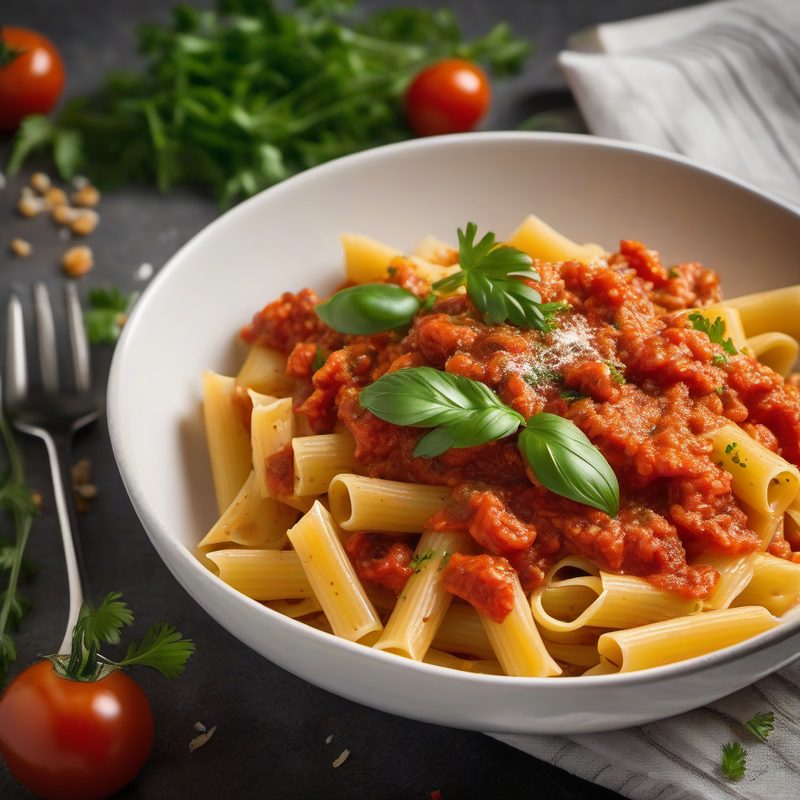
Photo reference: `vol1_208.png` — A dramatic overhead shot of glossy spaghetti in a wide, shallow terracotta bowl. The pasta is bathed in a vibrant sun-gold sauce studded with halved yellow cherry tomatoes, dark olive rings, and tiny green capers. A generous drift of toasted pistachio crumble cascades over the top in golden-brown clusters, some pieces clinging to the pasta strands. A final drizzle of olive oil catches the light, and a few whole basil leaves add bright green accents. Shot on a warm travertine countertop with soft afternoon sunlight coming from the upper right, casting gentle shadows. The mood is celebratory, sun-drenched, and distinctly Neapolitan — the culinary equivalent of a golden hour in the shadow of Vesuvius.
Recipe from "The Italian Kitchen" by Vita Milanese — Volume 1: Pasta Perfetto
Recipe from The Italian Kitchen by Vita Milanese — Volume 1 · Pasta Perfetto. Discover all volumes on the ebook page.