Breakfast Phyllo Dough
A silky, elastic, paper-thin phyllo dough made with simple pantry ingredients — versatile enough for sweet or savory breakfast pies, turnovers, and böreks. This is the foundational dough that transforms a humble handful of flour into impossibly delicate, shatteringly crisp layers.
| Amount | Ingredient |
|---|---|
| 2 cups (250 g) | All-purpose flour (plus more for dusting) |
| ½ tsp | Fine sea salt |
| 1 tbsp | Extra-virgin olive oil |
| 1 tsp | White vinegar (or apple cider vinegar) |
| ½ cup + 1 tbsp (150 ml) | Warm water (about 100°F / 38°C) |
| As needed | Unsalted butter, melted (for layering — about 4–6 tbsp per assembly) |
Phyllo (or filo) dough — from the Greek φύλλο (fýllo), meaning "leaf" — is one of the oldest and most elemental doughs in the Mediterranean tradition. Unlike laminated doughs (puff pastry, croissant) that build layers through folding butter into the dough, phyllo achieves its leaf-like structure entirely through technique: a simple, unleavened dough is kneaded until exceptionally smooth and elastic, rested to relax the gluten, then rolled or stretched into translucent sheets so thin you can read a newspaper through them. Each sheet is brushed with butter or oil before the next is laid on top, creating hundreds of separate layers that puff and crisp during baking. This particular version — pasta filo per colazione (breakfast phyllo dough) — is an Italian take on the classic, enriched with a touch of olive oil and a splash of vinegar to increase extensibility and tenderness. The vinegar is the secret: a small amount of acid relaxes the gluten network, making the dough easier to stretch without tearing. The result is a dough that handles like a dream, bakes into a deep golden, flaky crust, and works beautifully for everything from sfogliatelle and strudel to böreks and breakfast hand pies. It is a hands-on, meditative process — and a deeply satisfying one.
> Note: Active time is 15 minutes of kneading plus 30 minutes of hands-off resting. The rolling and layering (another 15–20 minutes) happens at assembly time.
Use spoon-and-level for flour (don't scoop). The vinegar is non-negotiable — it relaxes the gluten and makes the dough extensible enough to roll paper-thin. Warm water speeds hydration and helps the dough come together smoothly.
🥘 Equipment
- Digital kitchen scale (preferred over volume measures for dough accuracy)
- Large mixing bowl (3-quart / 3 L minimum)
- Bench scraper or flexible spatula
- Plastic wrap or a damp kitchen towel (for covering during rest)
- Rolling pin (standard or thin French-style)
- Clean work surface (wood, marble, or stainless steel)
- Pastry brush (for buttering layers)
- Parchment paper
- Baking sheet or round pie dish (depending on intended use)
- Sharp knife or pizza wheel (for cutting dough)
- Small bowl of water (for wetting hands during kneading)
📋 Preparation
Step 1 — Mix the Dough (5 minutes)
In a large mixing bowl, whisk together the flour and salt until evenly distributed.
Make a well in the center of the flour. Add the olive oil, vinegar, and warm water into the well.
Using your fingers or a bench scraper, draw the flour into the liquid from the edges of the well, working in a circular motion until all the flour is hydrated and a shaggy, rough dough forms. The dough will look dry and clumpy at this stage — this is normal.
Why a well? This traditional method gradually incorporates the liquid into the flour, preventing lumps and ensuring even hydration. It also gives you control — if the dough feels too dry, you can add water a teaspoon at a time.
Step 2 — Knead Until Silky (10 minutes)
Turn the dough out onto a lightly floured work surface. Begin kneading: push the dough away from you with the heel of your palm, fold it back over itself, give it a quarter turn, and repeat.
Knead for a full 10 minutes. Do not shortcut this step — phyllo dough must be exceptionally smooth and elastic to roll paper-thin without tearing.
After 3–4 minutes, the dough will still feel rough and slightly sticky. After 6–7 minutes, it will begin to smooth out and feel more cohesive. By 10 minutes, the dough should be:
- Smooth as silk — satiny to the touch, with no rough patches or tears
- Elastic — when you press a finger into the dough, it springs back slowly
- Supple — stretches slightly when pulled without immediately snapping
If the dough feels sticky at any point, dust your hands (not the dough) with a little flour and continue. If it feels dry and stiff, wet your hands and continue kneading — the moisture will incorporate gradually.
The 10-minute kneading time is critical. Phyllo dough needs a well-developed gluten network to stretch thin without breaking. Under-kneaded dough tears when rolled; over-kneaded dough (rare with hand kneading) becomes tough and resists stretching.
Step 3 — Rest the Dough (30 minutes)
Shape the kneaded dough into a smooth ball. Lightly coat it with a few drops of olive oil (just enough to prevent a skin from forming) and place it back in the bowl.
Cover the bowl tightly with plastic wrap or a damp kitchen towel. Let rest at room temperature for 30 minutes.
Resting is not a pause — it is an essential step. The gluten relaxes during this rest, making the dough extensible rather than springy. A well-rested phyllo dough will roll out easily; an un-rested dough will snap back like a rubber band. If you have time, a 1-hour rest produces even better results.
Step 4 — Divide and Roll (At Assembly Time)
After resting, the dough is ready to be rolled into paper-thin sheets.
To divide: Turn the rested dough out onto a lightly floured surface. Divide it into 6 to 8 equal pieces (for individual layers in a 9×13-inch pan) or into 8 to 10 pieces (for smaller hand pies). Shape each piece into a smooth ball, cover with a damp towel, and let rest for 5 minutes.
To roll: Working with one piece at a time (keep the rest covered), flatten the ball into a disk with your palm. Using a rolling pin, roll from the center outward, rotating the dough frequently to maintain a round or rectangular shape as needed. Roll until the dough is translucent — thin enough that you can see your hand through it or read text through it. This typically means about 1 mm (1/32 inch) thickness.
If the dough resists or springs back, let it rest for another 5 minutes and try again. If it tears, patch it by pressing a small scrap of dough over the tear and rolling once more.
Step 5 — Layer and Bake
Preheat your oven to 375°F (190°C).
Place one sheet of rolled phyllo on your work surface or in the baking dish. Brush evenly with melted butter using a pastry brush — cover the entire surface, reaching to the edges. Place the next sheet on top and brush again. Repeat until all layers are stacked.
Use butter generously but not excessively — each sheet should be evenly coated but not swimming. Too little butter = dry, brittle layers; too much = greasy, heavy results. If using for savory fillings (spinach, cheese, eggs), season each butter layer with a pinch of black pepper or dried herbs.
Bake according to your recipe's instructions. For most phyllo pies and pastries:
- Full pie (9×13-inch): 35–45 minutes, until deep golden brown all over
- Hand pies / böreks: 20–25 minutes, until golden and puffed
- Individual pastries: 15–20 minutes, depending on size
Rotate the pan halfway through for even browning. Cool on a wire rack for at least 10 minutes before cutting — the layers are fragile when hot and need time to set.
🧑🍳 Chef's Tips
- The vinegar is the secret. A small amount of acid (vinegar, lemon juice, or even a splash of wine) relaxes the gluten in the dough, making it significantly easier to roll thin. Do not skip it — plain flour-and-water dough will snap back relentlessly.
- Temperature matters. Use warm water (about 100°F / 38°C) — it helps the flour absorb liquid faster and makes kneading more efficient. If the water is too hot, it will kill the gluten structure; too cold, the dough will be stiff and hard to knead.
- Keep it covered. Phyllo dough dries out within minutes when exposed to air. Always keep dough balls or rolled sheets covered with a damp towel or plastic wrap between steps. A dry crust on the dough will crack and tear during rolling.
- No rolling pin? In parts of the Balkans and Eastern Mediterranean, phyllo is stretched by hand — the dough is lifted, spun, and gently pulled outward from the center, like making pizza. This takes practice but produces even thinner results. Start with a rolling pin and graduate to hand-stretching as you gain confidence.
- Cornstarch for dusting. Instead of flour, use a 50/50 mix of cornstarch and flour for dusting your work surface. Cornstarch prevents sticking without toughening the dough and brushes off cleanly after baking.
- Make extra and freeze. Phyllo dough freezes beautifully. Roll the dough into sheets separated by parchment paper, wrap tightly in plastic, and freeze for up to 3 months. Thaw in the refrigerator overnight before using. Alternatively, freeze the dough as a ball — wrap tightly in plastic, then in a freezer bag — and thaw overnight when ready to roll.
❌ Common Mistakes
| Mistake | Why | Fix |
|---|---|---|
| Under-kneading the dough | The gluten network isn't developed enough to stretch thin — the dough tears during rolling | Knead for the full 10 minutes until the dough is smooth and silky |
| Skipping the rest period | The gluten is tight and springy — the dough snaps back instead of staying thin | Rest for at least 30 minutes; 1 hour is better |
| Rolling too quickly | Uneven thickness — thin spots tear, thick spots don't cook through | Roll slowly, rotate frequently, and check thickness by lifting the dough |
| Letting the dough dry out | A dry skin forms on the surface — it cracks and cracks propagate through the sheet | Always keep unused dough covered with a damp towel or plastic wrap |
| Using too much flour for dusting | Excess flour bakes into chalky, dry patches and prevents layers from sticking together | Use a light dusting — brush off excess flour before buttering each layer |
| Over-buttering | Soggy, greasy layers that never crisp | Use a thin, even coat — about 1½ to 2 teaspoons of melted butter per sheet (for a 9×13-inch sheet) |
| Baking at too low a temperature | The butter melts before the structure sets — the layers collapse into a dense, greasy mass | Bake at 375°F (190°C) or higher — phyllo needs high heat to crisp |
| Cutting while hot | The fragile layers shatter and crumble | Cool on a wire rack for at least 10 minutes before cutting with a sharp serrated knife |
💡 Variations
- Sweet Breakfast Phyllo: Use the butter layers as-is, then fill with a mixture of ricotta, sugar, lemon zest, and cinnamon. Top with a dusting of powdered sugar after baking.
- Savory Breakfast Börek: Add 1 teaspoon dried oregano or thyme to the flour at the mixing stage. Layer with a filling of sautéed spinach, crumbled feta, beaten egg, and black pepper.
- Whole Wheat Phyllo: Substitute up to 50% of the all-purpose flour with whole wheat flour. The dough will be slightly less extensible — roll a touch thicker (about 1.5 mm) to compensate.
- Gluten-Free Version: Use a gluten-free all-purpose blend with xanthan gum. Add an extra tablespoon of water and knead for 12–14 minutes. The dough will be more delicate and may need to be rolled between two sheets of parchment paper.
- Herb-Infused Oil Layers: Instead of plain melted butter, infuse the butter with garlic, rosemary, or sage before brushing. Heat gently (don't brown) and strain before using.
- Yogurt Phyllo: Replace the water with 150 ml of plain whole-milk yogurt thinned with 2 tablespoons of water. The yogurt adds tenderness and a subtle tang — excellent for savory cheese pies.
- Olive Oil Phyllo (Vegan): Replace the butter with extra-virgin olive oil for a vegan version. Use oil sparingly — about 1½ teaspoons per sheet — and brush in thin, even coats. The result will be crisp but slightly less shatteringly flaky than butter-layered phyllo.
❄️ Storage
Uncooked dough (ball form): Wrap tightly in plastic wrap, then place in a resealable plastic bag. Refrigerate for up to 3 days or freeze for up to 3 months. Thaw in the refrigerator overnight before rolling.
Uncooked rolled sheets: Layer sheets between parchment paper, wrap tightly in plastic, and refrigerate for up to 24 hours or freeze for up to 3 months. Thaw in the refrigerator — do not unwrap until fully thawed or the sheets will crack.
Baked phyllo pastries: Store in an airtight container at room temperature for up to 2 days. To re-crisp, place in a 350°F (175°C) oven for 5–7 minutes. Do not refrigerate baked phyllo — it absorbs moisture and turns soft.
Phyllo scraps: Leftover dough trimmings can be buttered, sprinkled with cinnamon sugar or salt and herbs, and baked at 375°F (190°C) for 8–10 minutes for an instant snack or garnish.
🍷 Wine Pairing
| Wine | Why |
|---|---|
| Prosecco Extra Dry | High acidity and fine bubbles cut through buttery layers — ideal with sweet or savory phyllo |
| Vermentino di Sardegna | Bright, herbaceous, mineral-driven — pairs beautifully with spinach-and-cheese phyllo pies |
| Moscato d'Asti | Lightly sparkling, low alcohol, peachy sweetness — perfect alongside sweet ricotta-cinnamon phyllo |
| Franciacorta Brut | Toasty, complex bubbles — a celebratory pairing for elaborate layered phyllo desserts |
🍺 Beer Pairing
| Beer | Why |
|---|---|
| Italian Pilsner | Clean, crisp, high carbonation — cuts through the butter and refreshes the palate between bites |
| Belgian Witbier | Coriander and orange peel notes complement herb-and-cheese phyllo fillings |
| Vienna Lager | Toasty malt sweetness echoes the golden caramelization of baked phyllo — excellent for sweet preparations |
🥗 Suggested Sides
- For savory phyllo: A bright, acidic Greek salad (tomato, cucumber, red onion, olives, feta, lemon-oregano vinaigrette) — the acidity cuts through the buttery richness
- For sweet phyllo: Fresh berries with a drizzle of honey and a dollop of thick Greek yogurt or mascarpone
- For brunch boards: Sliced fresh fruit, cured meats (prosciutto, soppressata), marinated olives, and a ramekin of warm honey for drizzling
- A simple arugula salad with lemon and shaved Parmigiano to accompany cheese-filled phyllo turnovers
- Dried fruit compote (fig, apricot, raisin simmered with orange juice and cinnamon) spooned over sweet phyllo triangles
📊 Nutrition (per serving, based on dough only — 1/8 of recipe, ~44 g)
| Calories | Protein | Fat | Carbs | Fiber |
|---|---|---|---|---|
| 130 | 3 g | 3 g | 22 g | 1 g |
Note: Nutritional values change significantly with butter layers and fillings. A typical butter-brushed phyllo sheet adds approximately 35–40 calories and 4 g fat per layer.
❓ FAQ
Why does my phyllo dough keep tearing when I try to roll it thin?
The most common causes: (1) the dough was under-kneaded — it needs the full 10 minutes to develop the gluten network that gives phyllo its strength; (2) the dough didn't rest long enough — gluten needs time to relax after kneading; (3) the dough has dried out — keep it covered with a damp towel at all times. Try adding 1–2 more teaspoons of water to the dough next time if it feels stiff.
Can I use this dough for baklava?
Absolutely. This is an excellent baklava dough. Roll the dough even thinner than for pies — aim for translucent, almost tissue-paper thin — and layer at least 12–15 sheets with melted butter between each. Follow your baklava recipe for the nut filling and syrup proportions.
What's the difference between phyllo dough and puff pastry?
Everything. Phyllo is an unleavened dough (no yeast, no chemical leaveners) made from flour, water, oil, and a touch of acid. It achieves layers through stacking dozens of paper-thin sheets brushed with butter. Puff pastry is a laminated dough — a yeast-free dough wrapped around a block of butter and folded repeatedly to create hundreds of alternating layers of dough and butter. Phyllo bakes into light, crisp, delicate shards; puff pastry puffs into voluminous, airy, buttery layers. They are not interchangeable.
My baked phyllo turned out soft and limp instead of crisp. What went wrong?
The three most likely culprits: (1) the oven wasn't hot enough — phyllo needs at least 375°F (190°C) to crisp; (2) the filling was too wet — excess moisture from the filling (or from condensation) steams the layers instead of crisping them; (3) the phyllo was stacked too long before baking — brushed butter can soak into the layers over time. Assemble and bake immediately for the crispiest results.
Can I make this dough in a stand mixer?
Yes. Use the dough hook on low speed for 8 minutes instead of hand-kneading for 10. Let the machine do the work, but check the dough frequently — the mixer may develop the gluten faster. Stop when the dough is smooth, elastic, and springs back when pressed.
How thin is "paper-thin"?
Professional phyllo is rolled to about 0.5–1 mm (roughly 1/64 to 1/32 inch). For home cooking, aim for 1 mm — thin enough to see your hand through when you hold the sheet up to the light. The dough should be translucent but not so thin that it disintegrates when you lift it. With practice, you'll develop a feel for the right thickness.
Can I use this dough for savory pies beyond breakfast?
Yes — this dough works for any phyllo application: spanakopita (spinach-feta pie), tiropita (cheese pie), bourekas (stuffed pastries), strudel (apple, cabbage, or mushroom), and even as a crust for quiche or savoury clafoutis. The neutral flavor of the dough pairs with any filling.
🔗 Related Recipes
- Pasta Sfoglia (Puff Pastry, Volume 2) — the laminated counterpart to phyllo; compare the two techniques to understand how fat is incorporated differently
- Cannoli Shells (Volume 2) — another fried, layered dough from the Italian tradition; the rolling technique is similar, though the dough is enriched with wine and sugar
- Focaccia Genovese (Volume 2) — a soft, dimpled, oil-rich bread that demonstrates a completely different approach to Mediterranean baking
- Pane di Matera — Matera Bread (#52) — the slow-fermented, naturally-leavened sourdough counterpart to quick phyllo; a study in contrast between patience and technique
- Coccoli — Tuscan Fried Dough (#171) — a quick, yeasted fried dough that uses similar basic ingredients but a completely different method and result
- Leavened Dough / Basic Pizza Dough (#244) — the foundational yeasted dough; compare the crisp, layered phyllo with the chewy, open-crumb pizza crust
🏷️ Search Tags
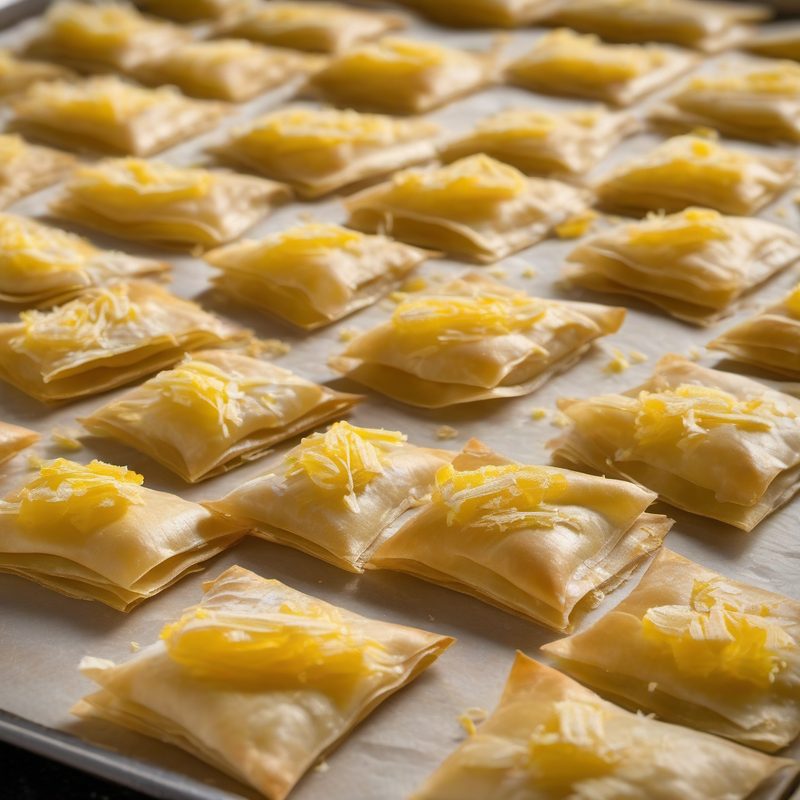
Photo reference: `vol1_330.png` — A rustic wooden surface in warm morning light, a generous sheet of phyllo dough rolled impossibly thin, translucent and delicate, its edges gently curling, a small pile of flour dusted on the board, a wooden rolling pin resting beside it, a small bowl of melted golden butter with a pastry brush next to it, a stack of phyllo sheets ready to be layered, warm sunlight streaming through a window, a sprig of fresh rosemary and a small dish of sea salt on the side, the scene evoking patience, craft, and the quiet pleasure of hands-on baking.
Recipe from "The Italian Kitchen" by Vita Milanese — Volume 1: Pasta Perfetto
Recipe from The Italian Kitchen by Vita Milanese — Volume 1 · Pasta Perfetto. Discover all volumes on the ebook page.