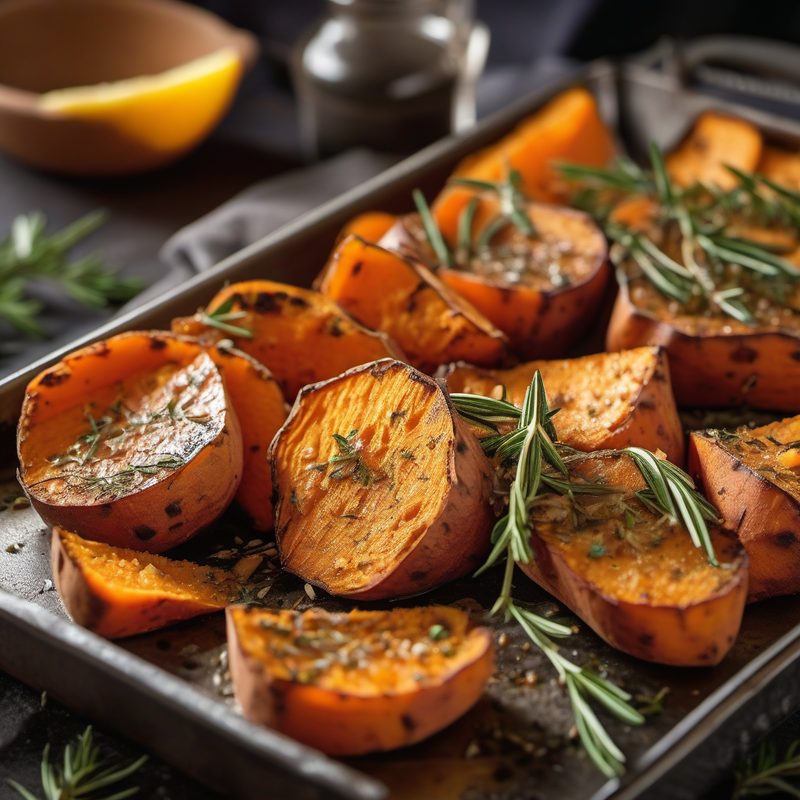
Roasted Sweet Potatoes
| Amount | Ingredient |
|---|---|
| Sweet potatoes | 4 medium (about 800–900 g / 1¾–2 lb total) Scrubbed clean; unpeeled (peel adds texture and nutrients) |
| Extra-virgin olive oil | 3 tbsp (45 ml) A mild, fruity oil — robust oils can overpower the sweet potato |
| Fresh rosemary | 1½ tsp (leaves from 2–3 sprigs), finely chopped Or ¾ tsp dried rosemary, crushed |
| Kosher salt | 1 tsp Or ¾ tsp fine table salt |
| Black pepper | ½ tsp, freshly ground |
Roasted Sweet Potatoes
Category: Contorni (Side Dishes)
Servings: 4
Total Time: 45 minutes
Active Time: 10 minutes
Level of Difficulty: Easy
1. WHY THIS RECIPE WORKS
Roasted sweet potatoes are a staple of rustic Italian contorni — humble, simply prepared vegetables that let the natural flavor of the ingredient shine. Yet all too often, home cooks end up with sweet potato wedges that are either burnt on the outside and raw within, or steam-softened and limp. This recipe eschews complication in favor of precision: a hot oven (200°C / 400°F), generous spacing on the baking sheet, and a single toss with olive oil, salt, pepper, and fresh rosemary. The result is a side dish with crisp, caramelized edges, a creamy, tender interior, and a faintly woodsy, aromatic lift from the rosemary that cuts through the natural sweetness of the potato.
The key insight is cut size and uniformity. Sweet potato wedges cut to roughly 2.5 cm (1 inch) at their thickest point roast in perfect sync — the exterior caramelizes into golden-brown ridges while the interior steams to velvety tenderness. Wedges that are too thin dry out before they soften; wedges that are too thick brown on the outside while staying raw in the center. We also resist the temptation to overcrowd the baking sheet: a single layer with breathing room between each wedge ensures hot air circulates freely, encouraging browning rather than steaming.
3. EQUIPMENT
- Chef's knife and cutting board
- Large mixing bowl
- Rimmed baking sheet (half-sheet pan, 18 × 13 inches / 45 × 33 cm)
- Parchment paper (optional but recommended for easy cleanup)
- Measuring spoons
- Vegetable brush (for scrubbing potatoes)
- Spatula or tongs (for flipping wedges)
4. PREPARATION
- Preheat the oven to 200°C (400°F) with a rack positioned in the middle. Place the baking sheet on the rack while the oven heats so it gets hot — this jump-starts browning on the underside of the wedges.
- Scrub the sweet potatoes thoroughly under cold running water with a vegetable brush. Pat dry. Do not peel — the skin helps the wedges hold their shape and provides a pleasant textural contrast.
- Prepare the rosemary: Strip the leaves from the stems and chop finely. If using dried rosemary, crush it between your palms or with the flat side of a knife to release its oils.
- Line the baking sheet with parchment paper (optional) for easier cleanup.
5. CUT THE SWEET POTATOES
Place each scrubbed sweet potato on the cutting board. Using a chef's knife, cut off the pointed ends (discard or compost). Halve each potato crosswise at a 45-degree angle to create two shorter, sturdier pieces. Halve each piece lengthwise, then cut each half into 2–3 wedges, depending on thickness — each wedge should be about 2.5 cm (1 inch) thick at its widest point. Aim for uniform size across all wedges so they roast at the same rate.
6. SEASON AND TOSS
Place the sweet potato wedges in a large mixing bowl. Drizzle with the 3 tbsp olive oil, then add the chopped rosemary, 1 tsp kosher salt, and ½ tsp black pepper. Toss with your hands or a spatula until every wedge is evenly coated. The oil should glisten on the surface without pooling at the bottom of the bowl — if it pools, redistribute with a few more tosses.
7. ARRANGE ON BAKING SHEET
Carefully remove the preheated baking sheet from the oven. Arrange the sweet potato wedges in a single layer with the cut sides down (flat against the pan) for maximum browning. Leave at least 1 cm (½ inch) of space between each wedge — crowding traps steam and prevents crisping. If the wedges don't fit in a single layer, use a second baking sheet rather than stacking.
8. ROAST
Return the baking sheet to the oven and roast for 15 minutes. Remove the sheet from the oven, flip each wedge with a spatula or tongs so the other cut side faces down. Roast for another 15–20 minutes, until the wedges are deeply golden and caramelized on the edges and a skewer or paring knife slides through the thickest part with little resistance — 30–35 minutes total.
9. FINISH AND SEASON
Remove the baking sheet from the oven. Taste a wedge and adjust seasoning: a light sprinkle of flaky sea salt (such as Maldon) brightens the flavors. If desired, add a final grind of black pepper or a brief drizzle of extra-virgin olive oil for gloss.
10. TO SERVE
Transfer the roasted sweet potato wedges to a warmed serving platter or individual plates. Serve immediately — they are at their absolute best within 5 minutes of leaving the oven, when the contrast between crisp exterior and creamy interior is most pronounced.
11. VARIATIONS
- Agirodolce (Sweet-and-Sour): After roasting, drizzle with 1 tablespoon balsamic vinegar and 1 teaspoon honey. Toss gently and return to the turned-off oven for 2 minutes so the glaze sets.
- Aglio e rosmarino (Garlic-Rosemary): Add 3 cloves of garlic (thinly sliced) to the bowl when tossing the sweet potatoes. The garlic roasts to golden, papery-crisp slivers that add pops of sweetness.
- Peperoncino (Spicy): Add ½ teaspoon red pepper flakes with the rosemary.
- Lemon and Oregano: Substitute the rosemary with 1½ teaspoons dried oregano and finish with a squeeze of lemon juice (about 1 tsp) just before serving — a nod to the southern Italian palate.
- Herb Mix: Replace rosemary with 1 teaspoon each of fresh thyme leaves and fresh sage (finely chopped).
- Roasted Sweet Potato Rounds: Instead of wedges, cut the sweet potatoes into 1 cm (½-inch) rounds for a faster, more evenly browned shape. Reduce roasting time to 20–25 minutes total.
12. MAKE AHEAD & STORAGE
- Make ahead (cut and seasoned): The sweet potato wedges can be cut and tossed with oil, rosemary, salt, and pepper up to 4 hours in advance. Cover and refrigerate in the mixing bowl (or on the baking sheet, wrapped tightly). Bring to room temperature for 20 minutes before roasting; add 3–5 minutes to the roasting time if going directly from fridge to oven.
- Storage: Leftover roasted sweet potatoes keep in an airtight container in the refrigerator for up to 4 days. The crisp exterior will soften upon storage.
- Reheating: For best texture, reheat on a baking sheet in a 200°C (400°F) oven for 5–7 minutes, flipping once. Do not microwave — it will turn them soggy.
- Freezing: Not recommended; frozen roasted sweet potatoes become mushy and watery upon thawing.
13. KEYS TO SUCCESS
- Preheat the baking sheet — a hot pan means the bottom of the wedges start browning the moment they hit the metal. This is the single most impactful step for achieving crisp undersides.
- Cut uniform wedges — wedges of wildly different sizes produce a mix of burnt edges and raw centers. Take 30 seconds to size them consistently.
- Don't overcrowd the pan — steam is the enemy of crispness. If your wedges touch or overlap, use a second sheet or a second batch.
- Flip halfway through — the second flip exposes the opposite cut side to the hot pan surface, ensuring both flat faces get caramelized.
- Serve immediately — roasted sweet potatoes begin to lose their crisp exterior within 10 minutes of leaving the oven. Plan your timing so the rest of the meal is ready when the potatoes come out.
14. COMMON MISTAKES & HOW TO AVOID THEM
| Mistake | Why It Happens | Fix |
|---|---|---|
| Soggy, steamed wedges | Overcrowded pan; pan not preheated | Use a single layer; preheat baking sheet in the oven |
| Burnt exterior, raw center | Wedges too large; oven too hot | Cut to 2.5 cm (1 inch) thickness; verify oven temperature with an oven thermometer |
| Dry, leathery wedges | Wedges too thin; over-roasted | Cut to correct thickness; check for doneness at 28 minutes |
| Uneven browning | Wedges placed randomly; flipping skipped | Arrange all with cut side down; flip after 15 minutes |
| Bland flavor | Under-seasoned; rosemary too old or stale | Salt generously (1 tsp kosher salt per 4 potatoes); use fresh rosemary |
| Greasy wedges | Too much oil; oil not fully absorbed | Use exactly 3 tbsp; toss thoroughly so oil is absorbed, not pooled |
| Rosemary burns in the oven | Whole leaves burn faster than chopped leaves | Chop rosemary finely so it distributes and cooks evenly |
15. PLATING & GARNISH
- Serve on a rustic wooden board, a white platter, or individual plates lined with a clean napkin for a trattoria feel.
- Garnish with a small sprig of fresh rosemary or a light dusting of flaky sea salt (e.g., Maldon) just before serving.
- Pair with a lemon wedge on the side — a squeeze of lemon brightens the sweetness of the potatoes and contrasts with the earthy rosemary.
- For a composed plate, arrange wedges in a fan or a neat row alongside the main protein.
16. WINE PAIRING
- White: A dry, mineral-driven Falanghina, Verdicchio, or Friulano — the wine's acidity and slight bitterness cut through the sweetness of the potatoes and echo the herbal notes of the rosemary.
- Rosé: A dry rosato from Puglia or Abruzzo, such as a Cerasuolo d'Abruzzo — its red-fruit character and crisp finish harmonize with caramelized sweet potato.
- Red (light): A chilled Bardolino or a young Dolcetto — low-tannin reds with good acidity won't overwhelm the delicate sweetness.
- Beer: A Belgian witbier or a German hefeweizen — the citrusy, spicy notes of these wheat beers are a natural match for roasted sweet potatoes and rosemary.
17. COMPOSITION NOTES (for the cook)
Roasted sweet potatoes occupy a unique place in the contorni tradition: in Italy, sweet potatoes (patate dolci) are less common than standard potatoes (patate), and when they do appear, they are almost always simply roasted or baked to concentrate their natural sugars. Unlike northern European or American preparations that load them with marshmallows, brown sugar, or maple syrup, the Italian approach is minimal — a good olive oil, a woody herb like rosemary, and salt. The result is versatile enough to sit alongside a roasted chicken, a seared pork chop, or a fillet of grilled fish, yet satisfying enough to stand on its own as a light vegetarian main when paired with a crisp green salad.
Key ratios to remember:
- Potatoes : Oil = roughly 6 : 1 (by weight) — enough to coat without greasiness
- Potatoes : Salt = roughly 100 : 1 (by weight) — 1 tsp kosher salt per ~900 g potatoes
- Herb : Potatoes = about 1½ tsp fresh rosemary per 4 potatoes — assertive but not overwhelming
18. REGIONAL ITALIAN CONTEXT
Sweet potatoes (Ipomoea batatas) arrived in Europe via the Columbian Exchange in the 16th century and were adopted unevenly across Italy. They are most common in the southern regions — Campania, Puglia, Basilicata, Calabria, and Sicily — as well as Sardinia, where the warm climate allows them to be grown locally. In these regions, patate dolci al forno typically appear as a Christmas or autumnal contorno, roasted alongside chestnuts or other winter vegetables.
Unlike the northern regions, where standard potatoes dominate risottos and gnocchi, the South treats sweet potatoes with the same respect it accords other root vegetables: bake or roast them whole or in wedges, dress them simply, and serve them as an unfussy side to hearty meat dishes such as braciole (stuffed beef rolls), involtini, or roasted pork. The pairing of rosemary and sweet potato is particularly associated with Campanian and Sicilian home cooking, where rosemary grows abundantly and is used as often as oregano.
In Sardinia, patate dolci arrostite are sometimes finished with a drizzle of local miele amaro (bitter honey, such as miele di corbezzolo — strawberry-tree honey) for a sweet-bitter contrast that is unique to the island.
19. ADAPTATIONS
- Vegan: This recipe is already vegan as written. For a richer finish, drizzle with a nut-based "Parmesan" (blanched almonds, nutritional yeast, and salt ground to a powder) before serving.
- Gluten-free: No modifications needed — this recipe is naturally gluten-free.
- Low-FODMAP: Replace the garlic (if using in the aglio e rosmarino variation) with garlic-infused olive oil. Rosemary is safe. Serve in smaller portions — sweet potatoes are moderate in fructans.
- Air-fryer adaptation: Preheat air fryer to 200°C (400°F). Toss wedges with oil and seasonings as directed. Place in the air-fryer basket in a single layer (work in batches if needed). Cook for 15–18 minutes, shaking the basket halfway through, until golden and tender.
- Large batch (8–10 servings): Double all ingredients. Use two baking sheets placed on the upper-middle and lower-middle racks. Rotate and swap the sheets halfway through roasting (at the 15-minute flip). Extend roasting time by 3–5 minutes if needed.
- Sheet-pan meal: Add 4 bone-in, skin-on chicken thighs or 4 pork chops to the baking sheet after the sweet potatoes have roasted for 15 minutes (place the protein cut side up among the wedges). Return to the oven and roast until the meat reaches 74°C (165°F) for chicken or 63°C (145°F) for pork — about 20–25 minutes more. Everything finishes together on one pan.
Buon appetito!
Recipe from The Italian Kitchen by Vita Milanese — Volume 1 · Pasta Perfetto. Discover all volumes on the ebook page.