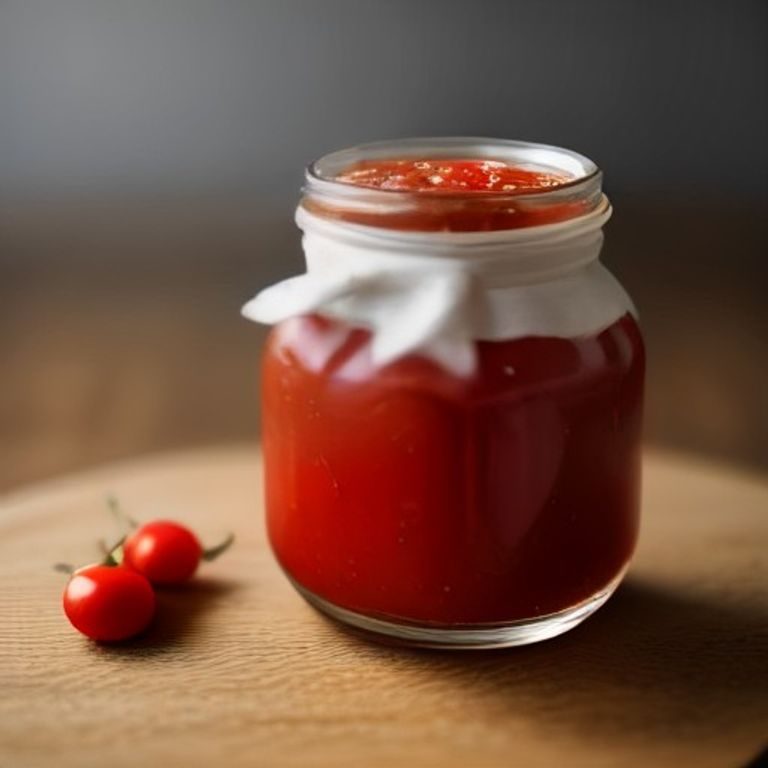
Turkish Ketchup
A rich, homemade ketchup that puts the bottled stuff to shame — slow-cooked ripe tomatoes, bell peppers, onions, and garlic, sweetened with a touch of sugar and spiked with paprika and chili for a deep, complex condiment that tastes like summer in a jar.
| Amount | Ingredient |
|---|---|
| 5½ lb (2.5 kg) | ripe Roma or San Marzano tomatoes |
| 3 | medium onions, roughly chopped |
| 2 to 3 | garlic cloves |
| 2 tbsp | apple cider vinegar or grape vinegar |
| 3 tsp | granulated sugar |
| 1 tsp | sweet paprika |
| 1 | small dried chili (optional, for heat) |
| Salt, to taste |
Turkish ketchup is not the thin, overly sweet condiment you know from fast-food packets. It is a thick, chunky, deeply savory sauce made from real vegetables, slow-cooked until the flavors concentrate into a jammy, spreadable consistency. The sweetness comes from the natural sugars in the tomatoes and peppers, enhanced with a modest amount of sugar. Smoked paprika adds warmth, and a hint of chili provides optional heat. This is the ketchup you will want on burgers, hot dogs, fries, and eggs — it also makes an excellent base for barbecue sauce or a glaze for meatloaf. Making it at home takes patience (the long, slow simmer is essential), but the result is a condiment that tastes nothing like the mass-produced version.
Ingredient notes: Ripe Roma or San Marzano tomatoes are ideal for ketchup — they are meaty, low in seeds, and rich in flavor. Avoid overly watery tomatoes, which will require much longer cooking. Sweet paprika (not spicy) provides color and depth. Apple cider vinegar adds brightness; grape vinegar (aceto d'uva) is traditional in Turkey. The chili is optional — omit for a mild, kid-friendly ketchup.
- Large heavy-bottomed pot or Dutch oven
- Food mill or fine-mesh strainer
- Chef's knife and cutting board
- Wooden spoon
- Sterilized glass jars (for storage)
- Prepare the vegetables (15 minutes). Wash the tomatoes and cut them into rough chunks. Peel and roughly chop the onions. Peel the garlic cloves. If using the chili, leave it whole or roughly chop it, depending on how much heat you want. Combine everything in a large heavy-bottomed pot. Pro tip: Do not bother seeding or peeling the tomatoes at this stage — the food mill will take care of that later.
- Cook the vegetables (45 minutes). Place the pot over medium heat. Bring to a simmer, then reduce the heat to low. Cook, stirring occasionally, for 40 to 45 minutes, until the tomatoes have broken down completely and the onions are very soft. The mixture should be thick and pulpy. Pro tip: Stir occasionally to prevent sticking. The tomatoes will release enough liquid that you do not need to add water. If the mixture looks dry, add ¼ cup (60 ml) of water.
- Pass through a food mill (10 minutes). Set a food mill or fine-mesh strainer over a clean bowl. Pass the cooked vegetable mixture through the mill, pressing firmly to extract as much pulp as possible. Discard the skins and seeds left behind in the mill. Return the strained puree to the pot. Pro tip: A food mill produces the smoothest ketchup. If you do not have one, press the mixture through a fine-mesh strainer with the back of a ladle — it takes longer but works.
- Slow-simmer the ketchup (1 hour). Add the apple cider vinegar, sugar, paprika, and salt to the strained puree. Stir to combine. Bring to a gentle simmer over medium-low heat, then reduce the heat to low. Cook, stirring frequently (every 5 to 10 minutes), for 50 to 60 minutes, until the ketchup has reduced by about half and is thick enough to coat the back of a spoon. The color will deepen to a rich, dark red. Pro tip: The final stage requires attention — as the ketchup thickens, it can burn easily. Stir more frequently toward the end. The ketchup is ready when you can draw a line through it on the back of a spoon and the line holds.
- Taste and jar (5 minutes). Taste the ketchup and adjust: add more salt or sugar as needed. For a spicier ketchup, stir in a pinch of cayenne or more paprika. Ladle the hot ketchup into sterilized glass jars, leaving ½ inch (1 cm) headspace. Wipe the rims, seal with lids, and process in a boiling water bath for 15 minutes if canning for long-term storage, or simply let cool and refrigerate for up to 3 months. Pro tip: The ketchup will thicken further as it cools. If it seems a bit thin at the end of cooking, it will be perfect once cooled.
| Storage | Method |
|---|---|
| Refrigerator | Store in an airtight jar for up to 3 months. |
| Freezer | Freeze in small containers or ice cube trays for up to 6 months. Thaw in the refrigerator. |
Per Serving (1 tbsp): Calories 15, Fat 0g, Carbs 3g, Fiber 0.5g
Recipe from "The Italian Kitchen" by Vita Milanese — Volume 2: Sunday Sauce
Recipe from The Italian Kitchen by Vita Milanese — Volume 2 · Sunday Sauce. Discover all volumes on the ebook page.