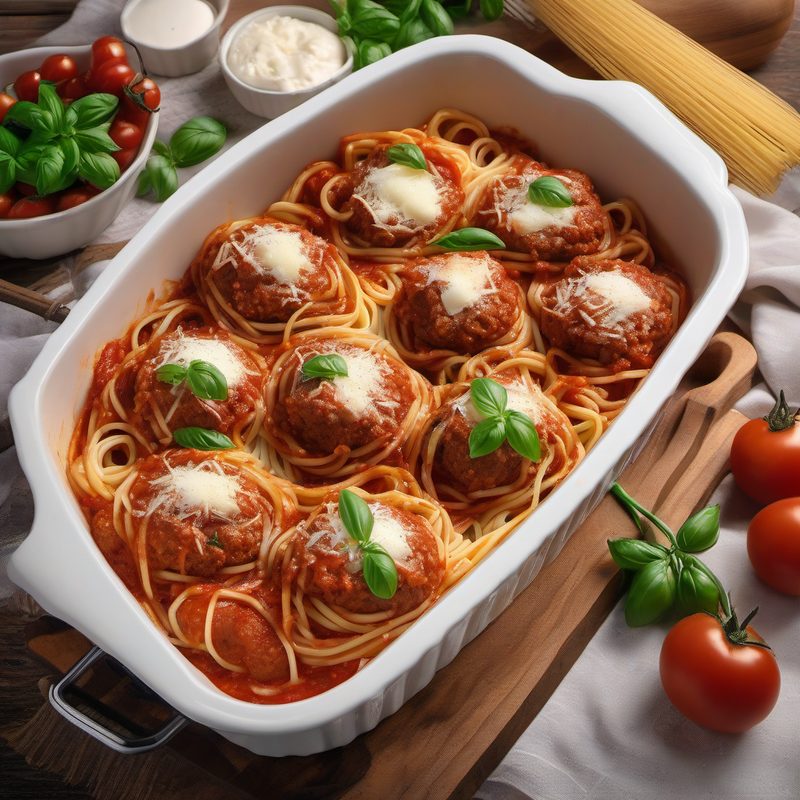
Tagliolini Meatball Nests
| Amount | Ingredient |
|---|---|
| Extra-virgin olive oil | 2 tablespoons |
| Garlic | 3 medium cloves Thinly sliced |
| Crushed tomatoes (passata) | 400 g (14 oz) 1 standard can |
| Fresh basil | 4–5 leaves Torn |
| Kosher salt | ½ teaspoon |
| Red pepper flakes | ¼ teaspoon Optional |
🏷 Category
Primi piatti
👥 Serves
4
⏱ Time
- Prep Time: 30 minutes
- Cook Time: 30 minutes
- Total Time: 1 hour
🥘 Special Equipment
- Large pot (for pasta)
- 12-cup muffin tin
- 12 (3-inch) round parchment paper squares
- 12- or 10-inch nonstick skillet
- Medium bowl
- Small cookie scoop (about 1 tablespoon capacity)
- Tongs
- Spider skimmer or slotted spoon
- Chef's knife and cutting board
- Microplane or box grater (for Parmesan)
For the Mini Meatballs
For the Pasta and Assembly
For the Tomato Sauce
🔧 Before You Begin
- Prepare the muffin tin: Cut 12 squares of parchment (roughly 3 × 3 inches). Lightly brush each cup of the muffin tin with olive oil. Press a parchment square into each cup, folding the edges to create a liner; the parchment should extend above the rim so the nests can be lifted out easily.
- Set up your workstation: Grate Parmesan, mince garlic, chop basil, and measure all ingredients before cooking begins. The assembly window is short.
- Breadcrumbs: If using fresh bread, tear 1 slice of white sandwich bread into pieces and pulse in a food processor to fine crumbs (about 10 one-second pulses). Alternatively, use panko and reduce to 40 g (⅓ cup).
- Pasta choice: Tagliolini is traditional, but angel hair (capellini) or thin spaghetti are excellent substitutes. Avoid thick spaghetti or fettuccine — the nests won't form cleanly.
📏 Key Ratios
| Ratio | Value | Purpose |
|---|---|---|
| Meatball meat-to-binder | 300 g meat : 45 g breadcrumbs : 1 egg | Juicy, tender meatballs that hold shape |
| Pasta-to-sauce | 350 g pasta : 400 g sauce | Saucy but not swimming; nests hold together |
| Meatballs per serving | 6–8 meatballs (24–32 total) | Generous crown on each nest |
> Why this works: The ratio of egg and breadcrumbs to beef is calibrated so that the tiny meatballs stay tender during browning and remain moist after a brief simmer in the sauce. At roughly 50 g of breadcrumbs and one egg per 300 g of meat, the meatballs are bound but not pasty — they have the loose, juicy crumb of a classic polpetta.
📝 Instructions
Step 1: Make the Meatball Mixture (10 minutes)
- In a medium bowl, combine the ground beef, breadcrumbs, grated Parmesan, beaten egg, minced garlic, chopped basil, salt, and pepper.
- Mix gently with your hands or a rubber spatula until just combined — do not overwork or the meatballs will be dense.
- Using a small cookie scoop (about 1 tablespoon) or lightly moistened hands, portion the mixture into 24–32 mini meatballs, each about 2 cm (¾ inch) in diameter. Roll between your palms to form smooth balls.
- Place the formed meatballs on a plate or tray, cover loosely with plastic wrap, and refrigerate for at least 15 minutes. Chilling firms the fat and helps the meatballs hold their shape during browning.
Step 2: Brown the Meatballs (10 minutes)
- Heat 2 tablespoons olive oil in a 12-inch nonstick skillet over medium-high heat until shimmering.
- Add the chilled meatballs in a single layer (work in two batches if necessary to avoid crowding).
- Cook, turning occasionally with a spatula or tongs, until well browned on all sides — about 5–7 minutes total. The meatballs do not need to be cooked through at this stage; they will finish in the sauce.
- Transfer the browned meatballs to a plate and set aside. Do not wipe out the skillet — the browned bits in the pan add flavor to the sauce.
Step 3: Make the Tomato Sauce (15 minutes)
- Reduce the heat to medium. Add 2 tablespoons olive oil and the sliced garlic to the same skillet.
- Cook, stirring constantly, until the garlic is fragrant and just beginning to turn golden at the edges — about 30–45 seconds. Do not let it burn.
- Add the crushed tomatoes, ½ teaspoon salt, and red pepper flakes (if using). Stir to combine, scraping up any browned bits from the bottom of the pan.
- Bring to a gentle simmer, then reduce the heat to medium-low. Return the meatballs to the skillet along with any accumulated juices.
- Add the torn basil leaves. Cover partially and simmer for 10 minutes, stirring occasionally, until the sauce has thickened slightly and the meatballs are cooked through.
- Taste and adjust seasoning with salt and pepper. Remove from heat and keep warm.
Step 4: Cook the Pasta (8 minutes)
- While the sauce simmers, bring a large pot of water to a rolling boil. Add 1 tablespoon kosher salt.
- Add the tagliolini or angel hair pasta and cook according to package directions until al dente — typically 3–5 minutes for fresh tagliolini, 4–6 minutes for dried angel hair.
- Reserve ½ cup of pasta cooking water before draining.
- Drain the pasta in a colander (do not rinse). Shake well to remove excess water.
Step 5: Assemble the Nests (10 minutes)
- Return the drained pasta to the warm pot or a large bowl. Drizzle with 2 tablespoons olive oil and toss gently to coat.
- Working quickly while the pasta is still hot and pliable, use tongs to coil a portion of pasta into each parchment-lined muffin cup, forming a compact nest shape. Each nest should be about 2–3 tight coils of pasta, evenly distributed.
- Lightly press down on each nest to set the shape.
- Spoon about 1½ to 2 tablespoons of tomato sauce (without meatballs) over each nest, letting it seep into the pasta.
- Place 2–3 mini meatballs on top of each nest. Spoon a little extra sauce over the meatballs.
- Let the nests rest for 2–3 minutes — this allows the pasta to absorb some sauce and firm up, making the nests easier to unmold.
Step 6: Serve (5 minutes)
- Using the parchment edges as handles, gently lift each nest out of the muffin tin and transfer to individual serving plates.
- Carefully peel away the parchment paper.
- Spoon remaining warm sauce around the nests.
- Garnish with fresh basil leaves and a generous dusting of grated Parmesan.
- Serve immediately while the pasta is still warm and the nests hold their shape.
🍽 Plating & Presentation
- Per serving: Arrange 3 nests in a triangle pattern on a warm plate, with a pool of extra tomato sauce beneath and around them.
- Garnish: Tear (don't cut) fresh basil leaves over the top — torn edges stay greener longer. A final shower of Parmesan and a drizzle of extra-virgin olive oil adds gloss and richness.
- Recommended tableware: Shallow rimmed bowls or large pasta plates. The raised rim keeps the sauce contained while showing off the neat nests.
- Visual note: The golden-brown meatballs against the red sauce and pale pasta create a classic tricolore effect — the Italian flag on a plate.
💡 Troubleshooting
| Problem | Likely Cause | Solution |
|---|---|---|
| Meatballs are tough/dry | Overmixed or overcooked | Mix just until combined; cook meatballs only until browned, then finish gently in sauce |
| Meatballs fall apart in the pan | Mixture too wet or pan not hot enough | Add 1–2 more tablespoons breadcrumbs; make sure oil is shimmering before adding meatballs |
| Pasta nests won't hold shape | Pasta is too cool or nests are too loose | Work while pasta is still hot; pack coils tightly in the muffin cup; let rest 2 minutes before unmolding |
| Nests stick to muffin tin | Inadequate greasing | Use parchment liners AND brush cups with oil; do not skip either step |
| Sauce is too thin | Not simmered long enough | Uncover and simmer 5 additional minutes to reduce |
| Meatballs not seasoned enough | Undersalting mixture | Taste a tiny raw meatball (microwave 10 seconds) before forming the batch — adjust salt if needed |
🧠 The Science of Pasta Nests
Coiling hot, just-drained pasta into a muffin tin and letting it rest creates a starch-set matrix that holds the nest shape. As the pasta cools from ~90°C to serving temperature (~55°C), the gelatinized starch on the surface of each strand re-crystallizes slightly, forming weak bonds between adjacent strands. The olive oil added to the drained pasta serves a dual purpose: it lubricates the strands so they separate cleanly on the plate, and it slows starch retrogradation (the firming process) just enough to give you a 3–4 minute assembly window before the pasta becomes too stiff to coil without breaking.
🧪 Variations
- Pollo e funghi: Replace ground beef with ground chicken (300 g) and add 100 g finely chopped cremini mushrooms, sautéed and cooled, to the meatball mixture. Substitute sage for basil in the sauce.
- Vegetarian: Replace meatballs with lentil-walnut polpette — pulse 200 g cooked brown lentils with 100 g toasted walnuts, 30 g breadcrumbs, 1 egg, 30 g Parmesan, and seasonings; form and brown as directed.
- Spicy 'Nduja: Add 50 g 'nduja (spreadable Calabrian salami) to the beef mixture for a spicy, smoky kick. Reduce salt to ½ teaspoon.
- Pasta swap: Try fresh pappardelle cut into 3-inch lengths — the wider ribbons create a more substantial, noodle-kugel-like nest.
- Baked finish: After assembling nests in the muffin tin, top each with a tablespoon of shredded mozzarella and run under the broiler for 2–3 minutes until bubbly and golden.
🥗 Suggested Sides
- Simple arugula salad: Toss 100 g baby arugula with lemon juice, olive oil, salt, and shaved Parmesan — the peppery greens cut the richness.
- Roasted fennel: Quarter 2 fennel bulbs, toss with oil and salt, roast at 200°C (400°F) for 25 minutes until caramelized.
- Warm focaccia: Serve alongside to mop up extra sauce.
🍷 Suggested Wine Pairing
- Red: A bright, medium-body Sangiovese (Chianti Classico) or a juicy Dolcetto d'Alba — the acidity cuts through the beef and the tomato sauce, while moderate tannins play nicely with the Parmesan.
- Rosé: A dry, savory Cerasuolo d'Abruzzo rosé complements the basil and tomato without overwhelming the delicate pasta nests.
- White (unconventional): A mineral-driven Gavi di Gavi with enough body to stand up to the meatballs but enough acidity to refresh the palate.
📚 Original Source & Background
- Italian name: Cupcake di tagliolini con polpettine
- English name: Tagliolini Nests with Mini Meatballs
- Region/Heritage: Modern Italian — a playful, restaurant-origin dish that reimagines classic pasta al forno as individual portions. The "cupcake" name references the muffin-tin presentation, not any sweetness.
- Recipe position: 411 in the cookbook series
- Inspiration: The dish draws from tortellini in brodo and pasta al forno traditions, miniaturizing and deconstructing them into a composed, single-serving format. The meatballs (polpettine) are the classic Roman polpette al sugo scaled down to fit atop the nests.
"A nest of golden pasta cradling tender little meatballs — this is Italian comfort food, unfurled."
Recipe from The Italian Kitchen by Vita Milanese — Volume 1 · Pasta Perfetto. Discover all volumes on the ebook page.