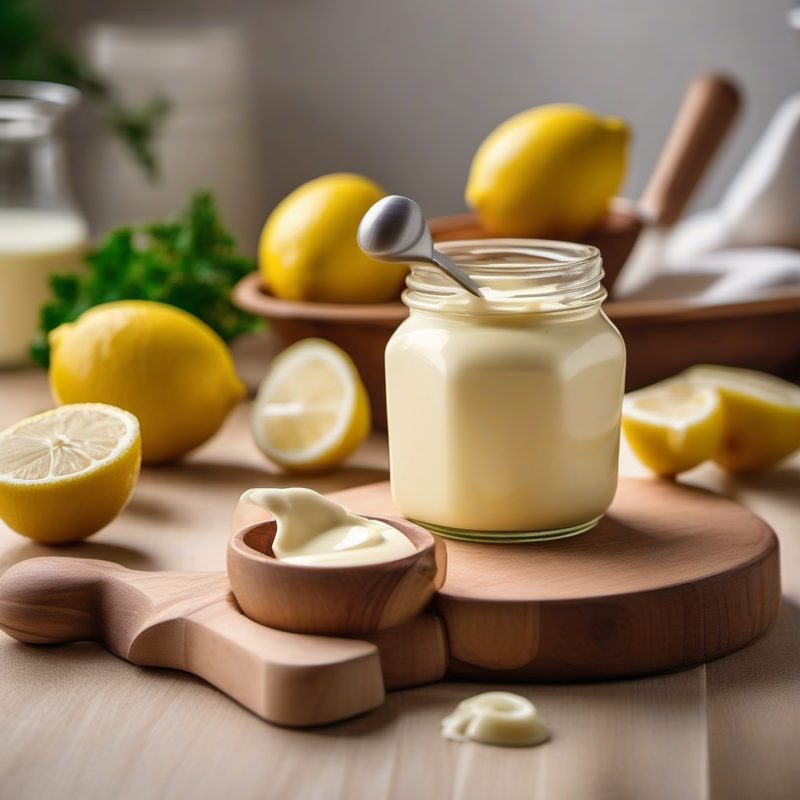
How to Make Mayonnaise (Maionese fatta in casa)
A creamy, stable, foolproof mayonnaise made four ways — immersion blender, food processor, blender, or by hand — this emulsified wonder transforms humble pantry ingredients into a rich, velvety, perfectly balanced condiment that puts any store-bought jar to shame.
| Amount | Ingredient |
|---|---|
| Adding oil too quickly at the start | The emulsion never forms — the oil pools on top of an unemulsified, watery base Add the first ¼ cup of oil drop by drop; only then move to a steady stream |
| Using the wrong container (immersion blender method) | A wide container prevents the blender from creating the suction needed to start the emulsion Use the tall, narrow beaker that came with your immersion blender, or a wide-mouth pint jar |
| Using extra-virgin olive oil alone | The strong, peppery flavor can be overwhelming and the mayonnaise may taste bitter Use a neutral oil (canola, vegetable, safflower) and add EVOO for flavor only if desired |
| Over-whisking or over-blending | Excessive blending incorporates too much air and can cause the mayonnaise to thin out or break Stop as soon as the mixture is thick and creamy — about 25-30 seconds in a machine, 5-8 minutes by hand |
| Lifting the immersion blender too quickly | Unemulsified oil is pulled into the mixture, breaking the emulsion Hold the blender at the bottom for 10-15 seconds, then lift slowly and steadily |
| Making mayonnaise with an egg that is too old | Older eggs have weaker yolks that are less effective at emulsifying Use the freshest eggs possible for maximum yolk strength and stability |
| Not scraping the sides | Pockets of unincorporated oil sit at the sides and can destabilize the whole batch Scrape the sides with a rubber spatula at the end and stir briefly to incorporate |
Homemade mayonnaise is one of those things that seems intimidating until you try it — and then you wonder why you ever bought the jarred stuff. At its core, mayonnaise is simply an emulsion of egg yolk, acid, and oil, held together by the natural emulsifiers in the yolk. Four distinct methods can achieve the same glorious result: the immersion blender method (the fastest and most foolproof), the food processor method (ideal for larger batches), the blender method (quick and efficient), and the classic whisk method (for purists and arm workouts). Each method begins with the same core ingredients and ends with the same thick, glossy, pale-yellow emulsion that's infinitely more flavorful than anything from a shelf. The key is controlling the rate at which oil is incorporated — start drop by drop until the emulsion establishes itself, then add the remaining oil in a steady stream. Master this technique and you unlock the gateway to aioli, tartar sauce, remoulade, Caesar dressing, and countless other sauces.
Ingredient notes: Pasteurized eggs are strongly recommended for safety in raw preparations — they eliminate the risk of salmonella while behaving identically to fresh eggs in emulsions. Room-temperature eggs are critical; a cold egg will slow the emulsion and can cause it to break. Use a neutral-flavored oil like canola, vegetable, or safflower. Extra-virgin olive oil works but produces a much stronger, grassier flavor (reserve it for Mediterranean-style mayonnaise where you want that flavor). The mustard is optional but helps stabilize the emulsion and adds a subtle savory sharpness.
- Immersion (stick) blender with tall, narrow beaker (for immersion blender method)
- Food processor with small bowl and feed tube (for food processor method)
- Countertop blender (for blender method)
- Medium mixing bowl and whisk (for whisk method)
- Rubber spatula
- Small bowl (for rescuing a broken emulsion)
- Airtight jar or container for storage
THE CORE METHOD (all four methods produce identical results):
- Prepare the base. In the appropriate vessel for your chosen method, combine the room-temperature egg, lemon juice, mustard, and salt. Process or whisk briefly until combined and smooth, about 15 seconds.
- Establish the emulsion. With the motor running (or while whisking constantly), add the oil drop by drop — literally one drop at a time — until about ¼ cup (60 ml) has been added and the mixture has thickened noticeably and turned pale. This initial slow addition is non-negotiable: it creates the tight emulsion that allows the remaining oil to be incorporated without breaking.
- Incorporate the remaining oil. Once the emulsion is established and thick, add the remaining ¾ cup (180 ml) of oil in a thin, steady stream while the motor runs or while whisking constantly. The mixture should remain thick and creamy throughout.
- Finish and adjust. Once all the oil is incorporated, continue blending or whisking for another 5 to 10 seconds. The mayonnaise should be thick, creamy, and pale yellow with a soft, spoonable consistency. Taste and adjust salt or lemon juice as needed.
METHOD-SPECIFIC INSTRUCTIONS:
Immersion Blender Method:
Place the egg, lemon juice, mustard, and salt in a tall, narrow jar just wider than the blender head. Pour all of the oil on top — do not stir. Insert the immersion blender to the very bottom of the jar, flat against the base. Turn the blender on to full speed and hold it firmly at the bottom without moving for 10 to 15 seconds, until you see the emulsion starting to form at the bottom (white and creamy). Then slowly lift the blender upward through the oil at a steady pace — the emulsion will follow the blender head. Once you reach the top, pulse 2 to 3 times to incorporate any remaining oil.
Food Processor Method:
Process the egg, lemon juice, mustard, and salt in the food processor until combined, about 15 seconds. With the processor running, add the oil drop by drop through the feed tube until ¼ cup has been added and the mixture thickens. Then add the remaining oil in a thin, steady stream through the feed tube with the motor running until thick and creamy.
Blender Method:
Blend the egg, lemon juice, mustard, and salt on medium speed until combined, about 15 seconds. With the motor running, remove the center cap from the lid and add the oil drop by drop through the opening until ¼ cup has been added and the mixture thickens. Then add the remaining oil in a thin, steady stream. Blend until thick and creamy.
Whisk Method:
In a medium bowl, whisk the egg, lemon juice, mustard, and salt until smooth and slightly frothy, about 30 seconds. Whisking constantly with a wire whisk, add the oil drop by drop — this requires patience and a steady rhythm — until ¼ cup has been added and the mixture thickens visibly and lightens in color. Then add the remaining oil in a thin, steady stream, whisking constantly in a figure-eight pattern, until all the oil is incorporated and the mayonnaise is thick, glossy, and smooth. Do not rush — the whisk method takes about 5 to 8 minutes total but the result is the most satisfying.
Serving Suggestions. Use as a spread on sandwiches, burgers, and wraps; as a base for dressings and sauces (aioli, tartar sauce, remoulade, ranch); as a dip for steamed artichokes, blanched asparagus, or crispy fries; spooned over grilled fish or roasted vegetables; or folded into tuna, chicken, or egg salad.
- Room-temperature ingredients are essential. A cold egg will resist emulsification and can cause your mayonnaise to break. Let the egg sit on the counter for 30 minutes before starting. In a pinch, place the whole egg in a bowl of warm water for 5 minutes.
- Start drop by drop, always. The most common mistake is adding oil too quickly at the beginning. The first ¼ cup must be added one drop at a time to establish the emulsion. If you pour too fast, the mixture will separate.
- For the immersion blender method, use a tall, narrow container. The beaker must be just wide enough to fit the immersion blender head — if it's too wide, the blender won't create enough suction at the bottom to pull the oil into the emulsion.
- For the immersion blender method, the blender must rest flat on the bottom. This is non-negotiable. The head needs to seal against the bottom to trap the egg and acid underneath, creating the initial emulsion.
- For the whisk method, maintain a steady rhythm. Whisk in a figure-eight pattern, scraping the bottom and sides of the bowl. Do not stop whisking until all the oil is incorporated or the emulsion may break.
- Fix a broken mayonnaise. If the mayonnaise separates or looks thin and greasy, crack a fresh egg yolk into a clean bowl and slowly whisk the broken mixture into the new yolk in a thin stream — the fresh yolk provides new emulsifiers to rescue the sauce.
- Pasteurized eggs are worth it for safety. Since this mayonnaise is served raw, using pasteurized eggs eliminates any risk of foodborne illness. Most grocery stores carry pasteurized shell eggs in the dairy section.
| Mistake | Why It Hurts | The Fix |
|---|
- Aioli: Add 1 small clove of grated garlic or ½ teaspoon of garlic paste to the egg and acid before blending.
- Lemon Pepper: Use lemon juice (instead of vinegar, if that's your acid) and add ½ teaspoon of freshly cracked black pepper and 1 teaspoon of lemon zest at the end.
- Herb Mayonnaise: Fold in 2 tablespoons of finely chopped fresh herbs (parsley, chives, dill, tarragon, or a combination) after blending.
- Smoked Paprika & Lime: Replace the lemon juice with lime juice and add ½ teaspoon of smoked paprika and a pinch of cayenne to the egg before blending.
- Sriracha Mayo: Fold in 1 to 2 tablespoons of Sriracha (to taste) after blending for a spicy, slightly sweet condiment.
- Truffle Mayo: Add 1 teaspoon of white truffle oil (use sparingly — it's potent) and a pinch of black pepper after blending.
- Vegan Mayonnaise: Substitute the egg with 3 tablespoons of aquafaba (chickpea can liquid) and proceed with the same method. Results are remarkably similar in texture.
- Chipotle Mayo: Blend 1 chipotle pepper in adobo sauce (or 1 teaspoon of adobo sauce) into the finished mayonnaise for a smoky, spicy southwestern condiment.
- Wasabi Mayo: Stir 1 to 2 teaspoons of wasabi paste into the finished mayonnaise for a pungent, sinus-clearing kick perfect for sushi and fried fish.
| Storage Method | Details |
|---|---|
| Refrigerator | Store in an airtight jar or container for up to 5 days (using pasteurized eggs). The mayonnaise will thicken slightly as it chills. Stir before each use. |
| Freezer | Not recommended — the emulsion breaks completely upon thawing, resulting in a watery, separated mess. |
| Reheating | Do not heat — mayonnaise is a cold emulsion. If it has been refrigerated, let it sit at room temperature for 10 minutes before using for easier spreading. |
Homemade mayonnaise is a supporting player; its wine pairings follow the dishes it accompanies:
- Crisp Sauvignon Blanc (Loire or New Zealand) — High acidity cuts through the rich, oily emulsion and cleanses the palate.
- Dry Vermouth on the rocks — The herbal, slightly bitter notes complement the creamy fat and subtle acidity of the mayonnaise.
- Picpoul de Pinet — A classic oyster-pairing wine from the south of France; its bright, saline edges work beautifully with mayonnaise-dressed seafood.
- Champagne or Crémant (Brut) — Bubbles and high acidity provide the perfect palate cleanser against the richness of the emulsion.
- Chilled dry Sherry (Fino or Manzanilla) — The saline, almondy notes are a surprising and delightful match for garlic aioli or herb mayonnaise.
| Per Serving (about 2 tablespoons) | |
|---|---|
| Calories | 184 |
| Protein | 1 g |
| Fat | 20 g |
| Carbohydrates | 0 g |
| Fiber | 0 g |
Nutrition values are approximate and based on canola oil and a single large egg. Actual values will vary based on oil type and optional additions.
Can I use olive oil instead of vegetable oil?
Yes — but use a light or mild olive oil, not extra-virgin. Extra-virgin olive oil has a strong, peppery flavor that can dominate and sometimes turn bitter in the emulsion. For a balanced flavor, use ¾ neutral oil and ¼ extra-virgin olive oil.
What if my mayonnaise doesn't thicken?
If after the proper slow addition your mayonnaise is still thin and liquid, the emulsion has broken. Pour the mixture into a clean bowl, crack a fresh egg yolk into your vessel, and slowly drizzle the thin mixture back into the yolk while blending or whisking — the fresh yolk provides new emulsifiers to rescue the sauce.
Which method is the easiest?
The immersion blender method is widely considered the most foolproof and requires the least cleanup. The whisk method is the most traditional and rewarding but requires patience and a steady arm — about 5 to 8 minutes of continuous whisking.
How do I know if my mayonnaise has gone bad?
Homemade mayonnaise will keep for about 5 days in the refrigerator (with pasteurized eggs). Signs of spoilage include: an off, sour smell; visible separation that doesn't re-emulsify when stirred; or any sign of mold. When in doubt, throw it out — though with this recipe, you'll likely use it all long before it turns.
Can I double this recipe?
Yes — simply double all ingredients. For the immersion blender method, make sure your container is tall enough. For the food processor method, use the larger work bowl. For the whisk method, double the bowl size and expect a longer whisking time. The drop-by-drop initial addition remains the same regardless of batch size.
Do I have to use pasteurized eggs?
Strongly recommended for food safety, as mayonnaise is served raw. If you cannot find pasteurized eggs, use the freshest eggs possible, keep the mayonnaise refrigerated at all times, and consume within 3 days. Pasteurized eggs eliminate the risk of salmonella entirely.
- Lemon-Herb Yogurt Sauce (Volume 2)
- Fish Taco Sauce (Volume 2)
- Aioli Provençal (Volume 3)
- Tartar Sauce (Volume 1)
- Classic Caesar Dressing (Volume 1)
Recipe from "The Italian Kitchen" by Vita Milanese — Volume 2: Sunday Sauce
Recipe from The Italian Kitchen by Vita Milanese — Volume 2 · Sunday Sauce. Discover all volumes on the ebook page.