Cacio Pepe Risotto
A Roman masterpiece reimagined as a risotto — velvety Carnaroli rice infused with a concentrated three-hour Parmigiano broth, finished with the reserved cheese cream and a thunderous crack of black pepper. The result is a dish that transcends both traditions: the soul of cacio e pepe, the technique of a perfect risotto.
| Amount | Ingredient |
|---|---|
| Reserved Parmigiano cream (from broth preparation) | — |
| 1 tbsp (15 ml) | Extra-virgin olive oil (for drizzling) |
This is not pasta. This is risotto — and it demands a different kind of thinking. Where the classic cacio e pepe pasta relies on a starchy emulsion whipped together in the pasta water, this risotto builds its foundation from the ground up: a painstaking Parmigiano broth that transforms the cheese itself into a clear, savory liquid over the course of hours. The technique is both ancient and modern — an infusion that unlocks the full potential of Parmigiano Reggiano as a broth ingredient, extracting its deep umami without the cloudiness of simply melting cheese into water. The cheese cream that rises to the surface overnight is reserved and stirred in at the end as a mantecatura, giving the risotto an impossibly silky, glossy finish. Freshly cracked black pepper — generous, almost aggressive — provides the necessary heat and bite. The result is a dish that tastes of pure, concentrated Parmigiano, with the texture of the finest risotto and the peppery kick that makes cacio e pepe one of Rome's greatest gifts to the table.
> Note: The Parmigiano broth requires advance planning — the infusion takes 3 hours of low-temperature steeping followed by an overnight rest in the refrigerator. Plan this dish for a day when you can start the broth in the afternoon and finish the risotto the following day. The results are worth every minute.
For the Parmigiano Broth
For the Risotto
For the Mantecatura (Finishing)
Use level measurements. All produce is medium unless specified. The quality of Parmigiano Reggiano is paramount — use a genuine DOP Parmigiano Reggiano aged at least 24 months for the richest, most complex broth.
🥘 Equipment
- Box grater or Microplane (for grating Parmigiano)
- Large pot or Dutch oven (at least 4 qt / 4 L capacity, for the broth infusion)
- Instant-read thermometer or probe thermometer
- Fine-mesh sieve (for filtering the broth)
- Large bowl or container (for overnight refrigeration)
- Skimmer or slotted spoon (for skimming the cream)
- Medium saucepan or risotto pan (for the risotto)
- Wooden spoon or heatproof silicone spatula
- Ladle
- Chef's knife and cutting board
- Serving bowls, warmed
📋 Preparation
Step 1 — Make the Parmigiano Broth (Day 1, 3 hours + overnight)
Grate the cheese. Using a box grater or Microplane, finely grate the entire 300 g (10 oz) Parmigiano Reggiano, including any rind pieces. The rind contains concentrated flavor and should be grated along with the cheese — it will dissolve during the long infusion.
Combine with cold water. Place the grated cheese in a large pot and add 1 L (4 cups) of cold water. Stir to combine. The mixture will look cloudy and milky — this is normal.
Heat slowly to 175–195°F (80–90°C). Place the pot over medium-low heat and warm it gently, stirring occasionally. Use an instant-read thermometer to monitor the temperature. When the liquid reaches the target range, the cheese will begin to melt and the mixture will look like a thin, milky soup.
Reduce and hold at 150°F (65°C) for 3 hours. Once the cheese starts melting, reduce the heat to the lowest possible setting. Maintain the broth at 150°F (65°C) — a bare warmth, not a simmer — for approximately 3 hours. The cheese solids will gradually dissolve into the water, leaving a clear, nutty, deeply savory liquid. Do not let the broth boil or exceed 195°F (90°C), which will cause the proteins to seize and create a cloudy, grainy result.
Cool to room temperature. Remove the pot from heat and let it cool naturally to room temperature. Do not rush this — gradual cooling preserves the clarity of the broth.
Refrigerate overnight. Transfer the cooled broth to a large bowl or container, cover, and refrigerate overnight (at least 8 hours). During this rest, the fat and fine cheese solids will rise to the surface, forming a firm, pale cream layer.
The long, gentle infusion is the defining technique of this dish. Standard methods of melting cheese directly into water produce a cloudy, greasy, separated liquid. By holding the temperature at exactly 150°F (65°C) — well below the protein-coagulation threshold — you allow the cheese to dissolve completely, yielding a crystal-clear broth with the concentrated flavor of aged Parmigiano. This is the same principle used in consommé clarification, applied to cheese.
Step 2 — Prepare the Broth and Cream for Risotto (Day 2, 10 minutes)
Skim the cream. The next day, remove the chilled broth from the refrigerator. A firm, pale-yellow cream layer will have formed on the surface. Using a skimmer or slotted spoon, carefully lift and transfer this Parmigiano cream to a small bowl. Reserve it — this will be used for the mantecatura at the end.
Filter the broth. Line a fine-mesh sieve with cheesecloth or a clean kitchen towel (optional, for maximum clarity). Place it over a clean pot or large measuring cup. Pour the remaining liquid through the sieve, discarding any residual solids. You should now have a clear, golden-amber liquid — the Parmigiano water. Set aside.
The cream that rises overnight is liquid gold — the concentrated fat and flavor of the cheese, separated naturally by the cold rest. This is what will give your risotto its signature silky finish when stirred in at the last moment. If no cream forms (which can happen if the broth was too hot or the cheese was too lean), you can substitute the same weight of room-temperature butter and a splash of heavy cream, but the flavor will not be as complex.
Step 3 — Toast the Rice (2 minutes)
Place a medium saucepan or risotto pan over medium heat. Add the Carnaroli rice directly to the dry pan (no oil yet). Toast, stirring constantly, until the grains feel hot to the touch and the edges become translucent — about 1 to 2 minutes. The rice should smell slightly nutty but not browned.
Remove the pan from heat and set aside while you heat the broth.
Dry-toasting the rice is an unconventional but effective technique for this recipe. Since the broth is pure Parmigiano water with no fat, toasting the rice dry ensures each grain is thoroughly heated before cooking begins, reducing the temperature shock when the broth is added. The toasting also firms the outer starch layer, helping the grains maintain their structure through the cooking process.
Step 4 — Cook the Risotto (16–18 minutes)
Heat the Parmigiano water in a separate small saucepan until hot but not boiling — about 190°F (88°C) . Maintain at a gentle simmer throughout the cooking process.
Return the toasted rice to the medium saucepan or risotto pan over medium heat. Add a ladleful (about ½ cup / 120 ml) of the hot Parmigiano water. Stir constantly with a wooden spoon or silicone spatula.
Continue adding the hot Parmigiano water, one ladleful at a time, stirring constantly and allowing each addition to be mostly absorbed before adding the next. The process should take 16 to 18 minutes total from the first addition.
Taste the rice frequently starting at the 14-minute mark. The rice is done when it is al dente — tender on the outside with a slight resistance at the center. The risotto should be loose and fluid, not stiff — it will continue to thicken as it sits.
Carnaroli rice takes approximately 16–18 minutes to cook when added ladle by ladle. The constant stirring releases the rice's starches, which, combined with the Parmigiano water, creates the signature creamy emulsion. Unlike standard risotto (which uses stock and wine for flavor), this risotto relies entirely on the Parmigiano water for its savory character — so the quality of the broth directly determines the quality of the final dish.
Step 5 — Mantecare (2 minutes)
When the rice is al dente, turn off the heat. The risotto should be loose and slightly soupy — it will tighten as the mantecatura ingredients are added.
Add the reserved Parmigiano cream and 1 tablespoon (15 ml) of extra-virgin olive oil. Stir vigorously with a wooden spoon or silicone spatula for about 30 seconds — the mantecatura. The mixture should become glossy, creamy, and unified, with each grain of rice suspended in a velvety emulsion.
Add a generous amount of freshly cracked black pepper — at least 1 teaspoon (5 ml), but as much as 2 teaspoons (10 ml) for a truly assertive finish. Stir once more to distribute.
Taste and adjust. Add more pepper if desired. The risotto should be intensely savory from the Parmigiano, with a pronounced floral, spicy heat from the black pepper. No additional salt should be necessary — the Parmigiano broth provides ample saltiness.
Mantecatura is the moment the risotto transforms from boiled rice into something transcendent. The vigorous stirring emulsifies the reserved Parmigiano cream and olive oil into the starchy rice, creating an impossibly silky, cloud-like texture. The black pepper here is not a garnish — it is half the soul of the dish, as essential as the cheese. Use freshly cracked pepper from whole black peppercorns for the most aromatic result.
Step 6 — Plate and Serve (1 minute)
Divide the risotto between 2 warmed shallow bowls. It should mound slightly but still spread gently on the plate.
Finish with an extra crack of black pepper and a final drizzle of extra-virgin olive oil over each serving. Serve immediately — risotto waits for no one, and its texture declines rapidly as it cools.
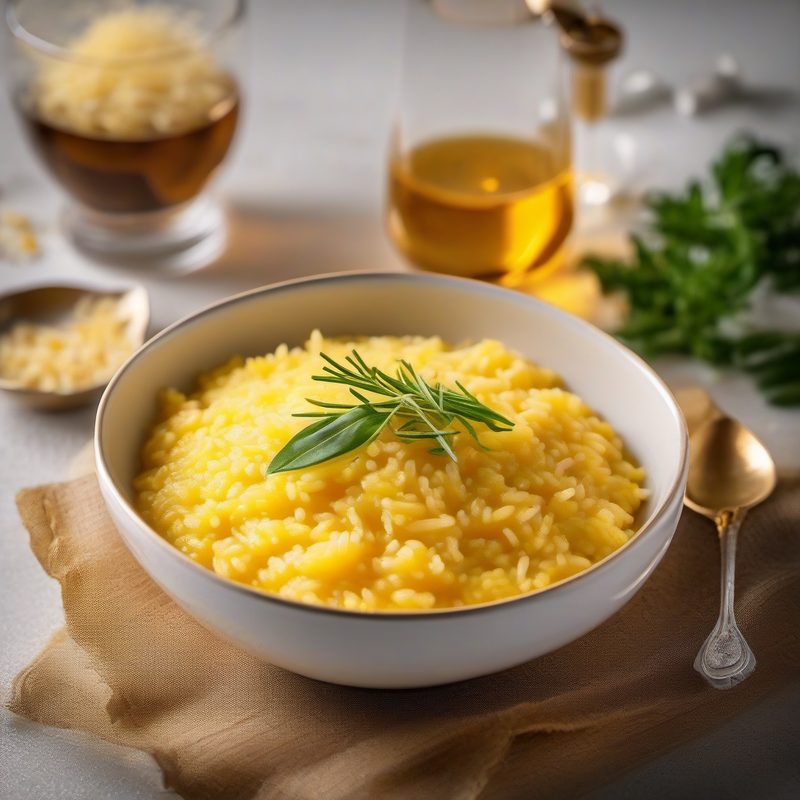
The finished dish is a study in minimalism: pale ivory rice with a glossy sheen, studded with specks of black pepper, and kissed with a golden-green olive oil sheen. It looks simple — almost austere — but one bite reveals a depth of flavor and a silky texture that only hours of patient technique can produce.
🧑🍳 Chef's Tips
- Temperature discipline is everything. The Parmigiano broth must never exceed 195°F (90°C) during the infusion, or the proteins will coagulate and the cheese will separate rather than dissolve. Use a thermometer — don't guess. A reliable instant-read or probe thermometer is essential for this recipe.
- Start with a whole piece of Parmigiano, rind and all. The rind contains the highest concentration of glutamates and tyrosine crystals. Include it in the grating — it will dissolve completely during the 3-hour infusion. Pre-grated cheese will not work; it contains anticaking agents that cloud the broth.
- The cream layer is non-negotiable. If no cream forms on the surface of the broth after overnight refrigeration (which can happen with very lean, very old Parmigiano that has lost most of its moisture), the broth will still be delicious and usable, but the final mantecatura will not be as rich. In this case, add 2 tablespoons (28 g) of cold unsalted butter and 1 tablespoon (15 ml) of heavy cream during the mantecatura step.
- Use Carnaroli rice, not Arborio. Carnaroli has a higher amylose starch content, which means it holds its shape better during the longer cooking process and produces a firmer, more defined al dente texture. Arborio breaks down more readily and can become mushy in this preparation.
- Do not rinse the rice. Rinsing removes the surface starch that is essential for creating the creamy emulsion. Use the rice straight from the package.
- Freshly crack the pepper at the table for the best aroma. Black pepper loses its volatile oils rapidly after grinding. Crack whole peppercorns in a mortar and pestle or with a pepper mill just before serving. The floral, citrusy notes of freshly cracked pepper are one of the joys of this dish.
- Serve in warmed bowls only. Cold bowls will cause the risotto to seize instantly, turning a silky cream into a stiff, gluey mass. Warm bowls in a low oven (200°F / 95°C) or with hot water (dried thoroughly) before plating.
❌ Common Mistakes
| Mistake | Why | Fix |
|---|---|---|
| Allowing the broth to boil | Cheese proteins coagulate at high temperatures, creating a cloudy, grainy broth instead of a clear infusion | Keep the broth at a steady 150°F (65°C) — use a thermometer and adjust the heat as needed |
| Skipping the overnight rest | The cream layer needs time to separate and solidify; without it, the risotto lacks its signature silky finish | Always refrigerate the broth for at least 8 hours — overnight is ideal |
| Using pre-grated cheese | Anticaking agents and preservatives in pre-grated Parmigiano prevent it from dissolving properly | Always grate a whole wedge of Parmigiano Reggiano yourself |
| Adding salt to the risotto | The Parmigiano broth is already salted from the cheese; additional salt will make the dish unpalatably salty | Taste before adding any salt — you almost certainly will not need it |
| Cooking the risotto too quickly | High heat causes the rice to cook unevenly — mushy outside, raw inside | Maintain a gentle, steady simmer; add broth one ladle at a time and stir constantly |
| Skimping on the black pepper | Cacio e pepe is defined by its peppery punch; timid peppering produces a dull, flat dish | Use at least 1 teaspoon of freshly cracked pepper per serving, and don't be afraid to add more |
| Serving on cold plates | The risotto will seize and stiffen instantly on contact with a cold surface | Always warm serving bowls before plating |
| Not stirring during the mantecatura | Gentle stirring won't emulsify the cream and oil into the rice; the result is a loose, separated risotto | Stir vigorously for a full 30 seconds — this is the moment that makes or breaks the dish |
🔄 Variations
| Variation | How To |
|---|---|
| Cacio e Pepe Risotto with Pecorino | Replace half the Parmigiano Reggiano with Pecorino Romano for a sharper, more pungent flavor. The Pecorino adds a salty, sheepy complexity that plays beautifully against the sweet nuttiness of the Parmigiano |
| Cacio e Pepe Risotto with Lemon Zest | Add the finely grated zest of ½ lemon to the risotto during the mantecatura. The bright citrus lifts the richness and adds a subtle aromatic note |
| Cacio e Pepe Risotto with Truffle | Shave fresh black truffle over each serving just before bringing to the table. The earthy, musky aroma of truffle is a classic pairing with aged Parmigiano |
| Cacio e Pepe Risotto with Saffron | Add a generous pinch of saffron threads to the Parmigiano water while heating it. The saffron infuses the entire risotto with a golden color and a honeyed, floral depth |
| Cacio e Pepe Risotto with Mushrooms | Sauté 150 g (5 oz) of mixed fresh mushrooms (cremini, shiitake, oyster) in olive oil until well browned, and fold them into the risotto after the mantecatura. The earthy mushrooms complement the nutty Parmigiano |
| Vegan Cacio e Pepe Risotto | This is a stretch, but possible: replace Parmigiano with a blend of 50 g (½ cup) raw cashew cream (soaked cashews blended with water until smooth) and 2 tablespoons nutritional yeast for umami. Use olive oil and vegan butter for the mantecatura. The result is a different dish, but a tasty one in its own right |
🥶 Storage & Leftovers
| Method | Details |
|---|---|
| Refrigerator | Store in an airtight container for up to 2 days. The risotto will firm up significantly as the starches continue to absorb liquid |
| Freezer | Not recommended — the creamy emulsion breaks upon thawing and the rice texture becomes mushy |
| Reheating (Arancini-style) | The best way to revive leftover risotto: form into small patties (about ½ inch/1 cm thick) and pan-fry in olive oil until golden and crispy on both sides. Alternatively, roll into balls, stuff with a cube of mozzarella, bread, and deep-fry for improvised arancini |
| Reheating (Skillet) | Reheat in a nonstick skillet over medium-low heat with a splash of water or vegetable stock, stirring constantly, until hot. Add a pat of butter and an extra crack of pepper to restore some of the original creaminess |
| Reheating (Microwave) | Not recommended — the microwave will make the rice rubbery and the sauce separate. If there is no other option, add a splash of water and microwave in 30-second bursts, stirring between each |
🍷 Wine Pairing
| Wine | Why |
|---|---|
| Franciacorta Brut (Lombardy) | The brisk acidity and fine bubbles of this méthode traditionnelle sparkling wine cut through the richness of the Parmigiano cream like a palate reset between each spoonful. Classic pairing for aged cheese |
| Gavi di Gavi (Piedmont) | A crisp, mineral-driven white with notes of green apple, citrus, and white flowers. The bright acidity and clean finish provide a refreshing counterpoint to the intense, savory risotto |
| Verdicchio dei Castelli di Jesi (Marche) | A medium-bodied white with pronounced almond and citrus flavors and a distinct saline finish. The nutty, saline notes echo the Parmigiano beautifully |
| Chardonnay (Oaked, from Friuli) | A well-made oaked Chardonnay from Friuli — think hazelnut, butter, and vanilla — mirrors the nutty, creamy character of the risotto. Avoid heavily oaked New World styles; seek a more restrained Italian expression |
| Nebbiolo (Langhe, light chill) | A light, youthful Nebbiolo served with a slight chill (58°F / 14°C). The tannins are gentle, the acidity is high, and the earthy, red-fruited character of Nebbiolo is a classic match for aged Parmigiano. Do not use a heavy Barolo here — it is too tannic and will clash with the pepper |
| Barbera d'Alba (Piedmont) | Bright acidity, dark fruit, and low tannins — Barbera's lively character cuts through the richness of the cheese while its fruit offers a sweet-tart counterpoint to the peppery finish |
| Lambrusco di Sorbara (Emilia-Romagna, chilled) | A dry, pale, sparkling red with bright red berry flavors and racy acidity. Served well-chilled (50°F / 10°C), the bubbles scrub the palate clean and the tart fruit dances against the black pepper |
🥗 Suggested Side Dishes
- Simple arugula salad with lemon vinaigrette and shaved Parmigiano — the peppery greens echo the black pepper in the risotto
- Roasted asparagus with olive oil and flaky sea salt — the clean, grassy flavor provides a refreshing contrast
- Grilled radicchio wedges with balsamic glaze — the bitterness of radicchio cuts through the creamy richness
- Crusty sourdough or ciabatta — for sopping up every last drop of the velvety risotto
- Fennel and orange salad — thinly sliced fennel, blood orange segments, olive oil, and a squeeze of lemon; bright, citrusy, and palate-cleansing
- Sautéed spinach with garlic — quick, simple, and vibrant green against the pale ivory risotto
🔗 Related Recipes
- Concentrated Risotto Broth (#159) — The concentrated version of the Parmigiano-infused stock, useful for quick risottos
- Saffron Risotto Broth (#158) — A saffron-infused stock for risotto alla Milanese
- Pressure Cooker Mushroom Risotto (#155) — A faster, more conventional mushroom risotto using the pressure cooker
- Asparagus Risotto (#143) — A spring risotto with fresh asparagus and Parmigiano
- Puttanesca Risotto (#91) — A bold, briny risotto with olives, capers, and anchovies
🏷️ Search Tags
📸 Photo Reference
Photo reference: `vol1_194.png` — An overhead shot of two shallow white ceramic bowls of cacio e pepe risotto. The risotto is a pale ivory color with a glossy, almost wet-looking sheen, mounded in the center of each bowl. Specks of freshly cracked black pepper are visible throughout — prominent but not overwhelming. A thin drizzle of golden-green extra-virgin olive oil glistens on the surface of each mound. Beside the bowls: a small wooden cutting board with a generous pile of whole black peppercorns, a mortar and pestle, and a chunk of aged Parmigiano Reggiano with a Microplane resting on the rind. A glass of Franciacorta Brut catches the light in the background. A single white linen napkin and a heavy ceramic spoon complete the composition. The lighting is soft and diffused, with warm highlights. The overall mood is elegant, minimalist, and restrained — the food itself is the star.
Recipe from "The Italian Kitchen" by Vita Milanese — Volume 1: Pasta Perfetto
Recipe from The Italian Kitchen by Vita Milanese — Volume 1 · Pasta Perfetto. Discover all volumes on the ebook page.