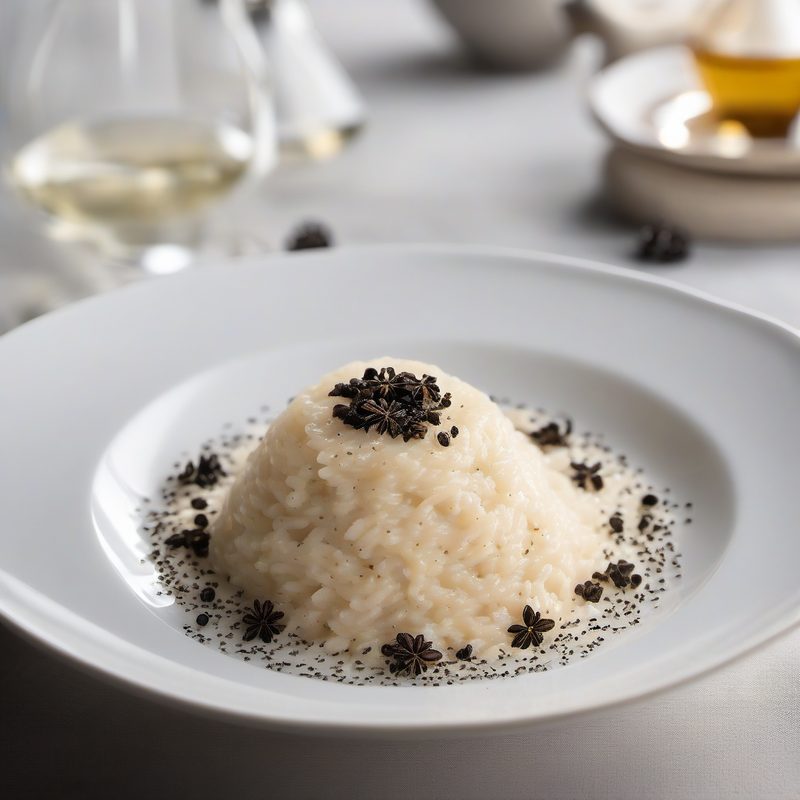
Cacio e Pepe Risotto — Silky Pecorino Method
The Roman classic reborn as risotto, where the genius is in the temperature: a Pecorino cream built separately at 55–60°C, folded in off the heat for a gloss you can't get any other way. Rice, Pecorino, black pepper — nowhere to hide.
| Amount | Ingredient |
|---|---|
| 11¼ oz (320 g) | Carnaroli rice |
| 4 cups (1 L) | light vegetable stock, kept hot |
| ½ cup (100 ml) | dry white wine |
| 4¼ oz (120 g) | Pecorino Romano, finely grated |
| 1 oz (30 g) | unsalted butter, cold and diced |
| 1 tsp (5 g) | black peppercorns, coarsely crushed |
| ¾ tsp (4 g) | fine sea salt, plus more as needed |
There is nowhere to hide in this recipe: rice, Pecorino Romano, and black pepper are the protagonists. The difference between silky and stringy is entirely in the emulsification — so instead of tossing grated Pecorino into a boiling pan (the classic mistake), the cheese becomes a cream first: warm stock whisked into finely grated Pecorino at a controlled 55–60°C, then folded into the risotto off the heat. Toasted pepper, a whisper of white wine, and a cold-butter mantecatura complete a dish of startling elegance.
Ingredient notes: Pecorino Romano is the only cheese — sharp, salty, and essential. Grate it finely so it melts into a cream. Use a light, only moderately salted stock: cacio e pepe is about Pecorino and pepper, and a strong stock would compete with both.
- Wide pan (for the pepper and rice)
- Small bowl (for the Pecorino cream)
- Wooden spoon
- Ladle
- Warm serving plates
- Toast the black pepper (60-90 sec). Place the crushed black pepper in a wide dry pan and toast over medium heat, shaking frequently, until intensely aromatic. Remove about one-third and reserve it for finishing — gentle toasting releases the pepper's volatile aromatics for a deeper flavor than grinding over the finished dish.
- Toast the rice (2 min). Add the Carnaroli to the pan with the remaining pepper and toast dry about 2 minutes, stirring frequently, until the grains are hot and slightly translucent at the edges.
- Deglaze (1 min). Add the white wine and let it reduce almost completely before starting the stock — the classic deglaze-and-reduce.
- Cook the risotto (14-16 min). Add enough hot stock to barely cover the rice. Cook at a gentle simmer, stirring regularly, adding hot stock gradually as it is absorbed, for 14-16 minutes. Keep the risotto slightly looser than you think necessary — the Pecorino will thicken it considerably.
- Make the Pecorino cream (3 min, parallel). While the rice finishes, place the finely grated Pecorino in a bowl. Add about 50 ml of warm — not boiling — stock a little at a time, stirring vigorously, until you have a thick, smooth cream at roughly 55-60°C. Excessive heat makes the cheese proteins coagulate and separate — the dreaded stringy or grainy cacio e pepe.
- Mantecatura (2 min). Remove the risotto completely from the heat and wait 30-60 seconds. Add the cold butter and shake or stir vigorously. Now incorporate the Pecorino cream gradually, stirring continuously, adding a little hot stock if needed. The result should be glossy, creamy, and distinctly all'onda.
- Plate (2 min). Serve immediately on warm, flat plates, tapping underneath so the risotto spreads into a thin, even layer. Finish with the reserved toasted black pepper and a very light dusting of Pecorino. Keep the surface clean and minimal — the ivory-and-pepper contrast is the appeal.
- Never add grated Pecorino to boiling risotto. That's the most common mistake — and the cause of separated, grainy cheese.
- Control the temperature. 55-60°C is the sweet spot for a glossy emulsion; hotter, and the proteins coagulate.
- The separate cream is the trick. It gives you far greater control and makes this recipe surprisingly reliable.
- Keep the stock light. Cacio e pepe is about Pecorino and pepper — a strong stock competes with both.
- Taste before salting. Pecorino Romano is already highly seasoned.
- Keep it looser than usual. The Pecorino thickens the risotto during the mantecatura.
| Mistake | Why It Hurts | The Fix |
|---|---|---|
| Pecorino into boiling risotto | Stringy, grainy mess | Build the cream separately at 55-60°C |
| Boiling stock into the cheese | Coagulated proteins | Warm, not boiling, stock |
| Strong stock | Competes with Pecorino and pepper | Light, lightly salted stock |
| Salting before tasting | Too salty — Pecorino is salty | Taste first |
| Tight risotto before mantecatura | Thick, pasty result | Keep it looser than you think |
| Cold plates | Emulsion tightens too fast | Warm plates only |
- Cacio e Pepe with Lemon: A few drops of lemon zest at the end.
- Spicy Version: A pinch of chili flakes with the pepper.
- Creamy Add: A spoonful of mascarpone in the mantecatura.
- Pasta-Style: The same Pecorino cream technique works for tonnarelli.
- Black Truffle: Shave truffle over the top for luxury.
| Storage Method | Details |
|---|---|
| Refrigerator | Store in an airtight container for up to 2 days. |
| Freezer | Not recommended — the Pecorino emulsion tightens as it cools. |
| Reheating | Don't reheat as risotto — transform leftovers into small cacio e pepe risotto cakes, shallow-fried until crisp. |
This Roman classic pairs with:
- Frascati Superiore — The wine of the Roman hills.
- Grechetto — Crisp and mineral.
- Vermentino — Fresh and saline.
- Cesanese — A light Roman red for contrast.
| Per Serving (about 1¼ cups) | |
|---|---|
| Calories | 480 |
| Protein | 15 g |
| Fat | 15 g |
| Carbohydrates | 68 g |
| Fiber | 1 g |
Nutrition values are approximate and will vary with brand choices and substitutions.
Why make the Pecorino cream separately?
Temperature control is the difference between a glossy emulsion and a mass of separated cheese. Building the cream separately — at 55-60°C — gives you total control and makes the recipe reliable.
Why toast the pepper first?
Gentle toasting releases the pepper's volatile aromatic compounds, producing a deeper, rounder flavor than simply grinding pepper over the finished risotto.
Can I use Parmigiano?
The recipe is built on Pecorino Romano's sharp saltiness — Parmigiano would make a different, milder dish.
Why keep the risotto looser than usual?
The Pecorino cream thickens the risotto considerably during the mantecatura — looser is correct.
What do I do with leftovers?
The Pecorino emulsion tightens as it cools, so don't reheat it as risotto. Make small cacio e pepe risotto cakes, shallow-fried until crisp.
- Cacio e Pepe Risotto di Cannavacciuolo (Volume 3)
- Risotto del Re (Volume 3)
- Risotto al Gorgonzola (Volume 3)
Recipe from "The Italian Kitchen" by Vita Milanese — Volume 3: Risotto & Rice
Recipe from The Italian Kitchen by Vita Milanese — Volume 3 · Risotto & Rice. Discover all volumes on the ebook page.